
report Annual Report Strategic Work Programme


Stability Packt Banner
© 2010 Regional Cooperation Council
 

Structure

The Regional Cooperation Council (RCC) membership consists of 46 countries, organizations and international financial institutions. The RCC has a Secretariat based in Sarajevo, Bosnia and Herzegovina, headed by the Secretary General. The present, and first, RCC Secretary General is Hido Biscevic. Those RCC members contributing to the budget of the Secretariat form the RCC Board, currently comprising 28 members.

The organization’s structure is detailed below, along with a full list of RCC members and members of the RCC Board.

The membership of the RCC consists of the participating states of the South-East European Cooperation Process (SEECP), the United Nations Interim Administration Mission in Kosovo (UNMIK) on behalf of Kosovo in accordance with United Nations Security Council Resolution 1244, the European Union, represented by the Troika, consisting of the EU Presidency, the European Commission and the Council Secretariat, as well as those donor countries, international organisations and international financial institutions actively and substantially engaged in support of regional cooperation in SEE. Requests for RCC membership require the consent of the existing members.

The RCC meeting format consists of the Annual Meeting and meetings of the RCC Board, held quarterly.

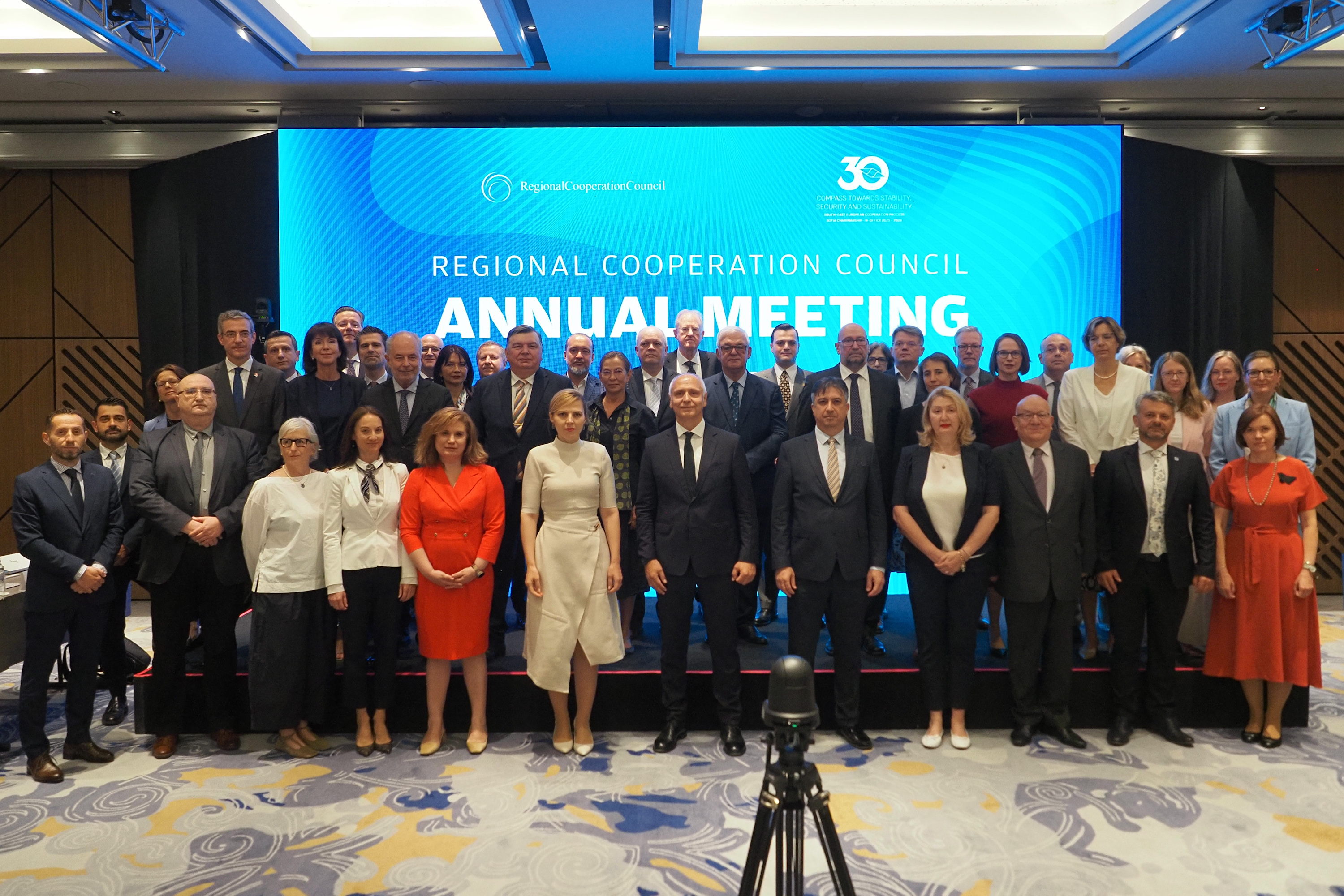
The Annual Meeting of the RCC is held back to back with the SEECP Summit. It is co-chaired by the Secretary General and the Foreign Minister of the SEECP Chairmanship in Office (CiO). The 2010/11 SEECP CiO is Montenegro.

The Annual Meeting of the RCC meets at the level of Senior Civil Servants or above. It ensures the strategic coordination and development of the regional cooperation processes, reviews and endorses the Secretary General’s Annual Report on regional cooperation in SEE as well as the Strategic Work Programme for the following year. The RCC Annual Meeting is open to other countries, international organisations and partners as guests upon request to and/or the initiative of the Secretary General following the consent of the members of the RCC Board.

In between Annual Meetings of the RCC operational guidance and supervision of the RCC is provided by the RCC Board. The Board accepts the Annual Report of the Secretary General and adopts the Strategic Work Programme for the following year, supports the Secretary General in its implementation and reviews progress in the course of the year. The Board consists of those RCC members contributing to the budget of the RCC Secretariat as well as the European Union, represented by the Troika, consisting of the EU Presidency, the European Commission and the Council Secretariat. The RCC Board meets quarterly and is chaired by the Secretary General. RCC Board meetings are convened and prepared by the Secretary General in co-ordination with the SEECP CiO. The RCC Board meets at the level of RCC National Co-ordinators, which are Senior Civil Servants in each RCC member responsible for co-ordination of RCC relevant issues within their respective national administration.

Decisions of the RCC are taken by consensus.

The RCC Secretary General is a strong political figure from the region. Following the endorsement of the RCC Annual Meeting, the Secretary General is appointed by SEECP Foreign Ministers a day before the SEECP Summit. The SEECP Summit approves the appointment. The Secretary General is appointed for 3 years with the possibility to extend his/her term by 2 years.

The Secretariat of the RCC is directed by the Secretary General and supports the RCC as well as the SEECP in fulfilling their tasks by working towards the preparation and implementation of decisions of the RCC Annual Meeting and Board as well as decisions of SEECP Summits and/or Ministerial meetings. The Secretariat provides technical, organisational and analytical support to the Secretary General, the RCC Annual Meeting and Board as well as operational support – if required – in preparing SEECP Ministerial meetings and Summits. It provides a coordination framework for regional cooperation activities within SEE and acts as an information and focal point for such activities.

Apart from its headquarters in Sarajevo, Bosnia and Herzegovina, the Secretariat has a Liaison Office in Brussels with European and Euro-Atlantic institutions. The Secretariat employs 37 staff, 31 in Sarajevo, and 6 in Brussels.

The annual budget of the RCC Secretariat is set at 3 million euro, 1/3 being the contribution by RCC members from South East Europe, 1/3 by the European Commission and the remaining 1/3 by other RCC members and international partners.

The working language of RCC meetings as well as of the Secretariat is English.

RCC Members

Albania
Austria
Bosnia and Herzegovina
Bulgaria
Canada
Council of Europe
Council of Europe Development Bank
Croatia
Czech Republic
Denmark
European Bank for Reconstruction and Development
European Investment Bank
European Union (EU), represented by the Troika, consisting of the EU Presidency, the European Commission and the Council Secretariat, as well as the European Parliament
Federal Republic of Germany
Finland
France
Greece
Hungary
International Organization for Migration
Ireland
Italy
Latvia
The Former Yugoslav Republic of Macedonia
Republic of Moldova
Montenegro
North Atlantic Treaty Organisation
Norway
Organisation for Economic Co-operation and Development
Organisation for Security and Co-operation in Europe
Poland
Romania
Serbia
Slovakia
Slovenia
South East European Co-operative Initiative
Spain
Sweden
Switzerland
Turkey
United Kingdom
United Nations
United Nations Economic Commission for Europe
United Nations Development Programme
United Nations Interim Administration Mission in Kosovo (UNMIK) on behalf of Kosovo in accordance with United Nations Security Council Resolution 1244
United States of America
World Bank

RCC Board

Albania
Austria
Bosnia and Herzegovina
Bulgaria
Croatia
Czech Republic
European Union (EU), represented by the Troika, consisting of the EU Presidency, the European Commission and the Council Secretariat
Federal Republic of Germany
Finland
France
Greece
Hungary
Ireland
Italy
Latvia
The Former Yugoslav Republic of Macedonia
Republic of Moldova
Montenegro
Norway
Poland
Romania
Serbia
Slovenia
Sweden
Switzerland
Turkey
United Nations Interim Administration Mission in Kosovo (UNMIK) on behalf of Kosovo in accordance with United Nations Security Council Resolution 1244
United States of America


developed by ENIGMA