

News Archive

17 April 2025 | News
Zagreb: RCC Secretary General Amer Kapetanović meets Croatian Minister of Foreign and European Affairs Gordan Grlić Radman
Zagreb – As part of the political consultations throughout the South East Europe (SEE), Amer Kapetanović, Secretary General of the Regional Cooperation Council (RCC), held an official meeting today in Zagreb with Gordan Grlić Radman, Minister of Foreign and European Affairs of Croatia.

12 April 2025 | News
Kapetanović: Regional cooperation is a foundation of stability and resilience
Antalya/Sarajevo – The Regional Cooperation Council (RCC) Secretary General, Amer Kapetanović, participated in the Antalya Diplomacy Forum 2025, where he moderated the high-level panel discussion “Regional Ownership for a Prosperous Future in the Balkans.”

10 April 2025 | News
RCC’s WBYL Shines at ESG Adria Summit: Youth Leading the Green Transition
Tivat – The Regional Cooperation Council (RCC)’s EU-funded Western Balkans Youth Lab (WBYL) Project, brought together youth, policymakers, and high-level officials at the ESG Adria Summit in Tivat on 9–10 April, highlighting the critical role of young people in driving the region’s green agenda and building a more sustainable and inclusive future.

09 April 2025 | News
RCC SG at ESG Adria Summit: Regional cooperation is the foundation for future
Tivat – The Regional Cooperation Council (RCC) Secretary General Amer Kapetanović took part in the ESG Adria Summit 2025, that started today in Tivat, delivering a keynote speech focused on advancing regional cooperation as a key to the European future of the Western Balkans. On the margins of the Summit, the RCC’s Western Balkans Youth Lab (WBYL) Project organized a Regional ...

07 April 2025 | News
Nominations for 2024 Champion of Regional Cooperation Dr. Erhard Busek Award open
Sarajevo/Vienna – The Regional Cooperation Council (RCC) and the Federal Ministry for European and International Affairs of Austria (BMEIA) are pleased to announce the opening of nominations for the 2024 Champion of Regional Cooperation Dr Erhard Busek Award. The award recognises an individual or organisation for an outstanding contribution to advancing regional cooperation in South ...

03 April 2025 | News
Kapetanovic: Regional cooperation is key to building financial resilience to disasters
Geneva, Sarajevo - The Regional Cooperation Council (RCC) organised a panel discussion on “Regional Cooperation in Disaster Financial Risk Sharing” on the margins of the 2025 Regional Forum on Sustainable Development (RFSD) for the UNECE region, at the UN Office in Geneva. The event, organised with support of RCC’s participants Greece, Romania, and Türkiye, brought ...

31 March 2025 | News
North Macedonia’s Deputy Prime Minister Visits RCC in Sarajevo
Sarajevo – The Regional Cooperation Council (RCC) welcomed the Deputy Prime Minister of North Macedonia in charge of Good Governance Policies, Mr. Arben Fetai, at its headquarters in Sarajevo. Mr. Fetai met with RCC Secretary General Amer Kapetanović to discuss ongoing regional cooperation efforts, with a particular focus on good governance and public administration reforms across ...

27 March 2025 | News
RCC SG Amer Kapetanović Meets with UN Assistant SG Ivana Živković
Istanbul – The Secretary General of the Regional Cooperation Council (RCC), Amer Kapetanović, met today in Istanbul with Ivana Živković, Assistant Secretary-General of the United Nations and Assistant Administrator and Director, Regional Bureau for Europe and the Commonwealth of Independent States, of the United Nations Development Programme (UNDP), to discuss ongoing and future ...

25 March 2025 | News
RCC Secretary General in an Official Visit to Ankara
Ankara – Secretary General of the Regional Cooperation Council (RCC), Mr. Amer Kapetanović, paid an official visit to Ankara, where he met with Deputy Minister of Foreign Affairs and Director for EU Affairs, Mr. Mehmet Kemal Bozay, reaffirming the strong partnership between the RCC and Türkiye as its Board Participant in advancing regional cooperation, economic connectivity, and ...

14 March 2025 | News
RCC SG Amer Kapetanovic Visits Pristina to Strengthen Regional Cooperation
Pristina – The Secretary General of the Regional Cooperation Council (RCC), Amer Kapetanovic, continued his consultations with authorities across South East Europe with an official visit to Pristina. During his visit, Kapetanovic met with key officials, including the President Vjosa Osmani Sadriu, Prime Minister Albin Kurti, and President of the Assembly Glauk Konjufca.

13 March 2025 | News
RCC Announces Western Balkans Women Entrepreneurs of the Year 2024
Pristina/Sarajevo – The Regional Cooperation Council (RCC) proudly announced the Western Balkans Women Entrepreneurs of the Year 2024 at a ceremony held tonight in Pristina, celebrating six outstanding women who are shaping the region’s business landscape with their innovation, resilience, and entrepreneurial spirit.

13 March 2025 | News
RCC to present Western Balkans Women Entrepreneurs of the Year in Pristina
Pristina – The Regional Cooperation Council (RCC) is to present the 2024 Western Balkans Women Entrepreneurs of the Year at a ceremony to take place this evening in Pristina. The ceremony will be opened by Amer Kapetanovic, RCC Secretary General, Aivo Orav, Head of the EU Office and European Union Special Representative, and Atifete Jahjaga, Founder and Chairwoman of the Board of the ...

12 March 2025 | News
RCC Establishes SEE Network on Disaster Risk Insurance and Risk Sharing
Sarajevo – The Regional Cooperation Council (RCC) has officially launched the South East European (SEE) Regional Network on Disaster Risk Insurance and Risk Sharing, marking a significant step in enhancing disaster resilience across SEE. The decision, adopted today by the RCC Board, reflects a strong regional commitment to developing effective risk-sharing mechanisms, in line with the ...

11 March 2025 | News
Kapetanovic: Regional cooperation is crucial driver of stability in the Western Balkans
Sarajevo – The Secretary General of the Regional Cooperation Council (RCC), Amer Kapetanovic, met today with Denis Zvizdic, Chairman of the House of Representatives of the Parliamentary Assembly of Bosnia and Herzegovina, and the Minister of Foreign Affairs of Bosnia and Herzegovina, Elmedin Konakovic, to discuss the role of regional cooperation in advancing economic and political stability ...

08 March 2025 | News
International Women’s Day: Stronger Women, Stronger and Safer Region
Sarajevo, 8 March 2025 – Today, as the world marks the International Women’s Day, the Regional Cooperation Council (RCC) reaffirms its commitment to women’s empowerment across the Western Balkans. Women’s contributions to business, education, politics, and innovation are driving forces of our societies, yet challenges remain in achieving full gender equality.

26 February 2025 | News
RCC Secretary General Amer Kapetanovic in an Official Visit to Tirana
Tirana – The Secretary General of the Regional Cooperation Council (RCC), Amer Kapetanovic, met with the President of Albania, Bajram Begaj, and the Speaker of the Parliament of Albania, Elisa Spiropali, in Tirana today. The purpose of the visit, which is a part of the RCC Secretary General’s tour of the region, was to discuss regional cooperation agendas and progress made in ...

25 February 2025 | News
RCC Secretary General Amer Kapetanovic Meets Top Officials in Skopje
Skopje – Regional Cooperation Council (RCC) Secretary General Amer Kapetanovic has concluded a productive visit to North Macedonia, holding talks with President Gordana Siljanovska-Davkova, Prime Minister Hristijan Mickoski, President of the Assembly Afrim Gashi, Minister for European Affairs Orhan Murtezani, and Andrej Lepavcov, Director of the Directorate for EU at the Ministry ...

21 February 2025 | News
RCC welcomes Minister of Labor and Social Welfare of Montenegro in its Sarajevo Headquarters
Sarajevo – The Regional Cooperation Council (RCC) Secretary General, Amer Kapetanovic, welcomed Naida Nisic, Minister of Labour and Social Welfare of Montenegro, to the RCC headquarters in Sarajevo today. The meeting focused on regional cooperation in employment and labour mobility, with particular attention to the upcoming Ministerial Conference on Labour Migration, ‘Supporting ...

03 February 2025 | News
Common Regional Market is a path to a better, more secure future
Sarajevo – The Secretary General of the Regional Cooperation Council (RCC), Amer Kapetanovic, delivered a guest lecture titled Growth Plan: Walking the Talk – Regional Cooperation in Action at the Faculty of Political Science in Sarajevo today.

30 January 2025 | News
RCC Secretary General meets top Montenegro Officials in Podgorica
Podgorica, 30 January 2025 – The Secretary General of the Regional Cooperation Council (RCC), Amer Kapetanovic, has kicked off his South East European tour with a visit to Podgorica, where he met with top Montenegrin officials to discuss strengthening regional cooperation, implementation of the Common Regional Market and Green Agenda for the Western Balkans, as well as the activities ...

28 January 2025 | News
Empowering people, integrating economies, and growing together is the only way forward for our region
Bečići, Montenegro – Today, at the High-Level Conference on Regional Economic Integration, the Secretary General of the Regional Cooperation Council (RCC), Amer Kapetanovic, presented the way in which the bold vision for the future of our region through the creation of the Common Regional Market (CRM) for the Western Balkans translates into actions across several key areas.

23 January 2025 | News
RCC: Nominations for Western Balkans Women Entrepreneurs of the Year 2024 are open
Sarajevo – For the fourth consecutive year, the Regional Cooperation Council (RCC) is pleased to announce that the nominations for the Western Balkans Women Entrepreneurs of the Year 2024 have officially begun.

03 January 2025 | News
Amer Kapetanovic takes office as the Secretary General of the RCC
Sarajevo – Mr Amer Kapetanovic assumed his duties of the new Secretary General of the Regional Cooperation Council (RCC) today, following the appointment by the South-East European Cooperation Process (SEECP) Foreign Ministers on 12 June 2024 in Skopje.

30 December 2024 | News
Bregu: Never has our region been as free and as conscious of the importance of cooperation as it is now
Regional Cooperation Council (RCC) Secretary General Majlinda Bregu is concluding her six-year mandate following her appointment in 2019. Bregu’s tenure has been marked by unwavering dedication to strengthening regional ties, fostering EU integration, achieving significant milestones, and driving forward key initiatives for the Western Balkans Six.

20 December 2024 | News
RCC Secretary General Majlinda Bregu awarded for her contribution to regional cooperation
Tirana - The Secretary General of the Regional Cooperation Council (RCC), Majlinda Bregu has been awarded for her inspiring leadership, unwavering commitment and contribution to regional cooperation and EU integration of the region, at a ceremony held in Tirana today. The President of the European University of Tirana, Selami Xhepa presented Ms Bregu with a Certificate of Appreciation celebrating ...

16 December 2024 | News
Only 39% of Citizens Consider Western Balkans a Safe Place to Live
Tirana, 16 December 2024—Today the Regional Cooperation Council (RCC) presented the findings of SecuriMeter 2024 survey at an event held in Tirana, bringing together government representatives, diplomats, international organisations, security practitioners, and media.

15 December 2024 | News
RCC to present findings of SecuriMeter 2024
Tirana, 16 December 2024—Today the Regional Cooperation Council (RCC) presented the findings of SecuriMeter 2024 survey at an event held in Tirana, bringing together government representatives, diplomats, international organisations, security practitioners, and media.

12 December 2024 | News
Bregu: This moment, when all the stars are aligned, is the right time for decisive action
Brussels – In her final address as the Secretary General of the Regional Cooperation Council (RCC) to COWEB on the Western Balkans region in Brussels today, Majlinda Bregu thanked the participants for their unwavering cooperation and dedication to advancing the Western Balkans on the path towards European Union membership.

02 December 2024 | News
BREGU: The Common Regional Market is a mindset
The Regional Cooperation Council (RCC) Secretary General Majlinda Bregu opened a four-day executive training on the Common Regional Market (CRM) for civil servants from parliaments and ministries across the Western Balkans Six.

26 November 2024 | News
RCC REVEALS WINNERS OF THE 2024 REGIONAL BUTTERFLY INNOVATION AWARD
Podgorica - The Regional Cooperation Council (RCC) revealed the winners of 2024 Regional Butterfly Innovation Award at a ceremony RCC organised on the margins of the third Regional Butterfly Innovation Forum, tonight in Podgorica.

26 November 2024 | News
The third Regional Butterfly Innovation Forum opens in Podgorica
Podgorica – The third annual Regional Butterfly Innovation Forum, organised by the Regional Cooperation Council (RCC), opened in the Science and Technology Park in Podgorica today. The Forum, gathering region’s top innovative minds, has been opened by Pranvera Kastrati, Head of RCC's Programme Department, and Marija Bajraktarovic Lanzardi, Director of the Directorate for Digital ...

13 November 2024 | News
Youth Art Can Inspire Communities and Drive Positive Change Across the Region
Belgrade – Young emerging and established artists, cultural policymakers and youth representatives from the Western Balkans Six gathered today in Europe House, Belgrade at the Regional Conference on Youth Cultural Cooperation organised by the Regional Cooperation Council’s (RCC) EU funded Western Balkans Youth Lab 2 with the shared goal of advancing regional cultural collaboration ...

07 November 2024 | News
Bregu: Our commitment to building a resilient, adaptive, and forward-looking security framework is a must
Sarajevo - The 9th Regional Security Coordination Conference dubbed “Working Together in Times of Global Uncertainties”, organised by the Regional Cooperation Council (RCC), in cooperation with the Ministry of Foreign Affairs and International Cooperation of Italy and Ministry of Interior of Italy, opened today in Sarajevo.

06 November 2024 | News
Bregu: Our mission over the past six years has not only been to adapt to the change but to lead it
Sarajevo – The 54th meeting of the Regional Cooperation Council (RCC) Board was held in Sarajevo today, chaired by the RCC Secretary General Majlinda Bregu. The RCC Board participants congratulated Ms Bregu on the successes she brought forth to the regional cooperation agendas during her tenure, and thanked her for dedication and unwavering persistence in leading and pursuing the ...

30 October 2024 | News
Third Phase of the Employment and Social Affairs Platform Project Kicks Off
Budva - The Employment and Social Affairs Platform 3 (ESAP 3) project, jointly implemented by the Regional Cooperation Council (RCC) and International Labour Organisation (ILO), and financed by the European Union, marked the beginning of its third phase implementation, with the two-day event dubbed “Balanced Labour Markets in the Western Balkans: Innovative Solutions for a Sustainable ...

28 October 2024 | News
Western Balkans records 23% rise in tourist arrivals last year
Bar/Sarajevo – With an aim to shape a sustainable future for Western Balkans (WB) tourism, the Regional Cooperation Council (RCC) and German Corporation for International Cooperation (GIZ) organised and co-hosted the conference dubbed A Sustainable Future: Cooperation, Communication, and Connectivity in the Western Balkans' Rural and Adventure Tourism on 24-25 October in Bar. The ...

14 October 2024 | News
Bregu: CRM is key to regional cooperation and global interests
Berlin – The leaders of the Western Balkans Six signed a new phase of the Common Regional Market Action Plan 2025–2028 (CRM 2.0), commending the work of the Regional Cooperation Council (RCC) and partners in preparing the document, at the Summit marking the 10th anniversary of Berlin Process, held in German capital today. The leaders also signed the Agreement on Access to Higher ...

08 October 2024 | News
Bregu: Climate crisis demands urgent action and increased investment
Berlin – The representatives of the Western Balkans Six endorsed a Hamburg Declaration on the Green Agenda for the Western Balkans (GAWB) renewing their commitment to the GAWB at the meeting organized by the Regional Cooperation Council (RCC) in collaboration with the Federal Ministry of Economic Cooperation and Development of Germany and supported by the European Commission, in Hamburg ...

03 October 2024 | News
Bregu: You have the power to make a difference, this is the time to dream
Tirana/Sarajevo - The Regional Cooperation Council (RCC) hosted the finale and Award Ceremony of the fifth edition of the Balkathon, regional digital competition, tonight in Tirana.

01 October 2024 | News
Bregu: Cooperation is not a choice but a must! We owe it to ourselves and to the future generations.
Berlin – The Secretary General of the Regional Cooperation Council (RCC), Majlinda Bregu, took part at the meeting of Ministers of Foreign Affairs of the Berlin Process that took place in German capital today. German Foreign Minister, Annalena Baerbock, praised the work of the RCC and its Secretary General Majlinda Bregu, emphasizing their crucial contribution to the implementation ...

27 September 2024 | News
Bregu: Cooperation as our strongest asset remains our guiding principle
New York – The Regional Cooperation Council (RCC) organised a Meeting of Ministers of Foreign Affairs of the South East European Cooperation Process (SEECP) in cooperation with Tirana SEECP Chairpersonship-in-Office in New York yesterday, at the margins of 79th annual United Nations General Assembly (UNGA).

16 September 2024 | News
Bregu: Trust in regional cooperation continues to rise, reaching 82%
Tirana - The Regional Cooperation Council (RCC) presented the tenth edition of Balkan Barometer, the region's largest public and business opinion survey, in Tirana today.

11 September 2024 | News
CRM2 goes through consultations and commenting with 550 civil society organisations
Tirana – “Common Regional Market as a transformative tool bringing the region closer to the EU has over the past decade, successfully navigated Western Balkans through two significant global crises: the COVID-19 pandemic and the war in Ukraine and energy crises, making real tangible impact on citizens’ lives:

10 September 2024 | News
Data Protection Academy starts in Brussels today
Brussels - The Data Protection Academy for Western Balkans and Eastern Partnership Region opened in Brussels today. The Academy is part of a five-day event organised within the 2nd high-level Data Protection Week by different European institutions and bodies (Directorate-General for Justice and Consumers (DG JUST), European Data Protection Board (EDPB), European Data Protection Supervisor ...

06 September 2024 | News
Applications for Butterfly Innovation Award 2024 are now Open
Sarajevo – The Regional Cooperation Council (RCC) invites young innovators to apply for the 3rd edition of the Regional Butterfly Innovation Award, seeking scalable, market-driven solutions from the Western Balkans. The total Award fund is 30,000 EUR, with the best solution in each of the six categories receiving a prize of 5,000 EUR.

24 August 2024 | News
Heart of Sarajevo for the Best Student Film goes to Nadja Petrovic
Sarajevo – 30th Sarajevo Film Festival concluded with awards ceremony, including the RCC-sponsored Heart of Sarajevo for Best Student Film awarded to Serbian director Nadja Petrovic for her movie “The Smell of Fresh Paint”. This prestigious award, presented during the brimming with anticipation and celebration closing ceremony, highlights not only the triumph of a rising ...

09 July 2024 | News
Bregu: All-inclusiveness is paramount in implementing cybersecurity measures across the Western Balkans
Tirana – The Regional Cooperation Council (RCC), with the support of the European Commission, organised the second High-Level Conference on “Cybersecurity Challenges and Opportunities in the Western Balkans” in Tirana today. The conference features discussions on critical infrastructure, showcasing practical solutions from both private and public sector perspectives, exploring ...

26 June 2024 | News
Bregu: Convergence scenarios put our region on up to 72 year convergence approximation journey
Paris – The Secretary General of the Regional Cooperation Council (RCC), Majlinda Bregu, outlined the importance of regional initiatives in fast-tracking Western Balkan competitiveness path of economic growth, at OECD’s Driving Competitiveness, Achieving Convergence High-Level Conference on South East Europe held in Paris today.

20 June 2024 | News
RCC’s EU-funded WBYL launched Youth Policy Lab on Green Agenda
Sarajevo – Regional Cooperation Council’s (RCC) Western Balkans Youth Lab (WBYL) launched Youth Policy Lab on Green Agenda. Upon the successful first two Youth Policy Labs on Youth Unemployment and Mental Health, Green Agenda is chosen to be a priority topic young people of the Western Balkans want to create policies for which are to bring change.

14 June 2024 | News
Youth Sports Games won Champion of Regional Cooperation Dr Busek Award
Skopje – The Regional Cooperation Council (RCC) and Federal Ministry for European and International Affairs of Austria presented the Youth Sports Games as the winner of the Champion of Regional Cooperation Dr Erhard Busek Award at the reception following the RCC Annual Meeting, on 12 June 2024 in Skopje.

13 June 2024 | News
SEECP participants praise RCC and appoint new RCC SG for 2025-2027
Skopje – The leaders of the South East European Cooperation Process (SEECP) praised the work of the Regional Cooperation Council (RCC) and commended the dedication and commitment of its Secretary General Majlinda Bregu over her tenure. Participants highlighted RCC’s role in the achievements of the Common Regional Market as a stepping stone towards the EU Single Market, and acknowledged ...

12 June 2024 | News
Our mission for past 6 years: not only adapt to change, but lead it
Skopje – The participants of the 16th Annual Meeting of the Regional Cooperation Council (RCC), held in Skopje today, endorsed the RCC Annual Report 2023-2024. The meeting, co-chaired by the RCC Secretary General Majlinda Bregu and Bujar Osmani, Minister of Foreign Affairs of North Macedonia, on behalf of the Chair of the South-East European Cooperation Process (SEECP), discussed developments ...

30 May 2024 | News
Bregu and Mogherini sign MoU between RCC and College of Europe
Tirana – Majlinda Bregu, Secretary General of the Regional Cooperation Council (RCC), and Federica Mogherini, College of Europe Rector, signed a Memorandum of Understanding (MoU) on developing and further strengthening the cooperation between the two institutions, in Tirana today.

24 May 2024 | News
Bregu: European Union will be stronger with Western Balkans firmly in its fold
Ljubljana - The Secretary General of the Regional Cooperation Council (RCC) Majlinda Bregu opened the Civil Society High Level Conference, dubbed Continuing the success story of EU enlargement – Bringing benefits to the Western Balkans in advance of accession, together with Tanja Fajon, Deputy Prime Minister and Minister of Foreign and European Affairs of Slovenia, Oliver Röpke, ...

21 May 2024 | News
RCC’s trademark regional digital competition Balkathon 5.0 is on!
Sarajevo – The Regional Cooperation Council (RCC) is launching its trademark online regional competition for the best digital ideas and solutions from the Western Balkans - Balkathon 5.0. Applications are open until 5 July 2024.

17 May 2024 | News
‘Learning by doing’ name of the game for entering EU Single Market
Tirana - The Secretary General of the Regional Cooperation Council (RCC) Majlinda Bregu spoke at the Belgrade Security Conference (BSC) Leaders Meetings Discussion, held in Tirana today.

16 May 2024 | News
One region, common vision
Kotor – The Secretary General of the Regional Cooperation Council (RCC) Majlinda Bregu took part at the Western Balkans Leaders’ Summit, dubbed One region, common vision, focusing on bringing the region closer to the EU through the EU Growth Plan and the Common Regional Market (CRM) Action Plan, held in Kotor today.

09 May 2024 | News
Statement by the RCC Secretary General on the occasion of Europe Day
Sarajevo – Statement by the Secretary General of the Regional Cooperation Council Majlinda Bregu on the occasion of the Europe Day:

30 April 2024 | News
RCC Secretary General on the Occasion of Labour Day
Sarajevo – May 1st brings workers around the Western Balkans and the world a well-deserved break from work, but also reminds us of ongoing battles for improved working conditions, brain drain, long-term unemployment and undeclared work.
26 April 2024 | News
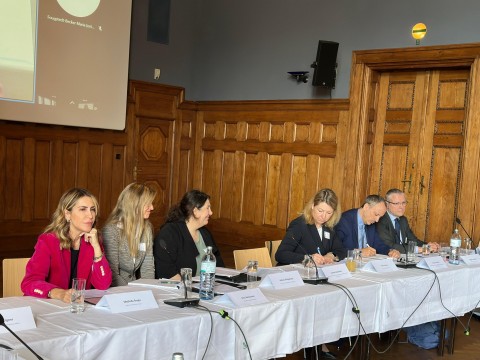
Bregu: No Green Transition of the Western Balkans Without Substantial Support
Vienna – The Secretary General of the Regional Cooperation Council (RCC), Majlinda Bregu, outlined the role of the RCC and the situation in our region regarding the green transition and energy sustainability, at the TRATOLOW Ministerial Western Balkans and Türkiye Conference held in Vienna today.
02 April 2024 | News
2023 nominations open!
Sarajevo/Vienna – The Regional Cooperation Council (RCC) and the Federal Ministry for European and International Affairs of the Republic of Austria (BMEIA) have the pleasure to invite you to nominate an organisation or an individual from South East Europe for the 2023 Champion of Regional Cooperation Dr Erhard Busek Award.
27 March 2024 | News
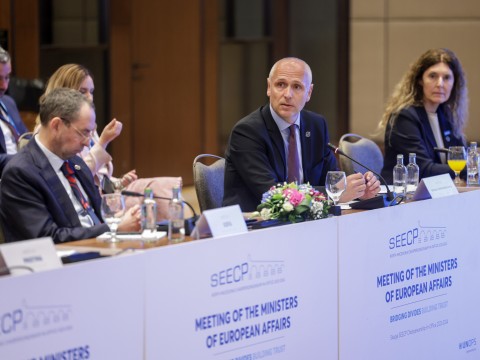
Common Regional Market region's vehicle to EU Single Market
Skopje – Ministers of European Affairs of the South East European Cooperation Process (SEECP) expressed their commitment to the continuation of efforts in two important strategic agendas in our region: the Common Regional Market (CRM) for the Western Balkans aligned with the New Growth Plan for the region, and the South East Europe (SEE) 2030 Strategy, at their meeting held in Skopje ...

18 March 2024 | News
RCC to provide one scholarship for College of Europe Tirana as of 2024
Sarajevo – The participants of the Regional Cooperation Council (RCC) Board approved the Report of the RCC Secretary General, Majlinda Bregu, on the activities of the organisation in the period November 2023 – February 2024, and commended the work of RCC, confirming their full approval of the forthcoming phase's planned activities, at the 51st Board meeting, held online today. ...
12 March 2024 | News
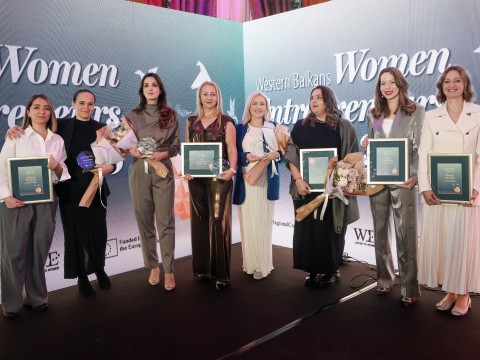
RCC announces Western Balkans Women Entrepreneurs of the Year for 2023
Sarajevo - Western Balkans Women Entrepreneurs of the Year for 2023 are: Rigerta Loku - Green Woman Entrepreneur; Ilda Humić - Social Star Woman Entrepreneur; Hana Qerimi - Young Woman Entrepreneur; Nikolina Kovačević - Tourism Woman Entrepreneur; Irena Chaushevska Danilovska - ICT Woman Entrepreneur; and Marija Ivanković Jurišić - Artistic Woman Entrepreneur; as announced at ...

12 March 2024 | News
Western Balkans Women Entrepreneurs of the Year to be announced tonight
Sarajevo – The Regional Cooperation Council (RCC) is to present the 2023 Western Balkans Women Entrepreneurs of the Year at a ceremony to take place this evening in Sarajevo.

08 March 2024 | News
Women’s economic empowerment is not a luxury
“The most dangerous phrase in the language is “We’ve always done it this way”. It’s 8 March today, and the buzzword you are getting from all around is “Women’s day”. So, the note of ours on this day is on women. Women continue to face disadvantage and discrimination in all areas of economic life. Mothers around the Western Balkans are particularly ...
29 February 2024 | News
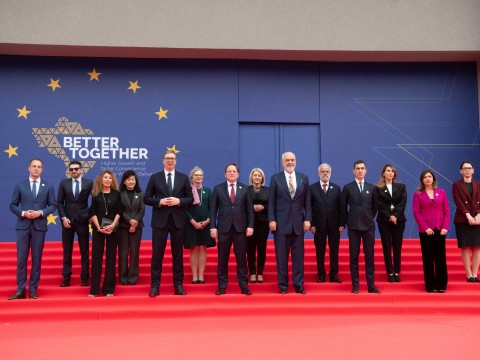
Bregu: The time is ticking on defining the future of our region
Tirana - In a Joint Statement issued at the Growth and Convergence for the Western Balkans Six Conference held in Tirana today the Leaders of the Western Balkans Six (WB6) commended the work of the Regional Cooperation Council (RCC), underscored the region's commitment to integration and emphasized enhanced cooperation with the EU.
08 February 2024 | News
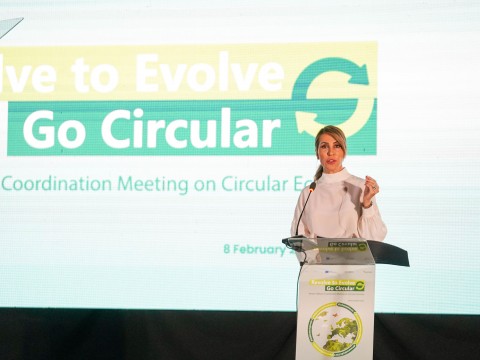
Bregu: Circular economy can create jobs and unlock economic opportunities
The Regional Cooperation Council (RCC) launched the Western Balkans Green and Circular Economy Stakeholders Platform, consisting of government, business, donor, and CSO representatives, at a high-level meeting taking place in Pristina today.

01 February 2024 | News
RCC: Nominations for Western Balkans Women Entrepreneurs of the Year 2023 are open
Sarajevo – For the third year in a row, Regional Cooperation Council (RCC) is pleased to announce that the nominations for the Western Balkans Women Entrepreneurs of the Year 2023 have officially begun.
22 January 2024 | News
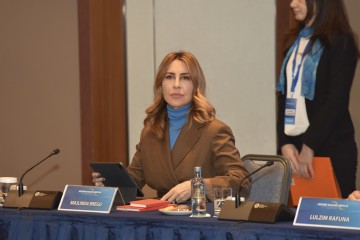
New Phase of the Common Regional Market to Be Ready for Leaders' Endorsement at the Next Berlin Process Summit
Skopje - The Secretary General of the Regional Cooperation Council (RCC), Majlinda Bregu, took part in the Western Balkans Meets EU, a WB leaders' meeting in Skopje today. The meeting dedicated to the Growth Plan for the Western Balkans has been hosted by the Prime Minister of North Macedonia, Dimitar Kovachevski.

15 December 2023 | News
The Second EU-Western Balkan Youth Forum, hosted by the RCC, ends in Novi Sad
The second edition of the EU Balkan Youth Forum (EUBYF), organised by the Regional Cooperation Council (RCC) in cooperation and with funding of the Italian Ministry of Foreign Affairs and International Cooperation, as well as RCC’s EU-funded WB Youth Lab project (WBYL), ended in Novi Sad today. The Forum gathered more than 30 young people from Western Balkans (WB) and European Union ...
13 December 2023 | News
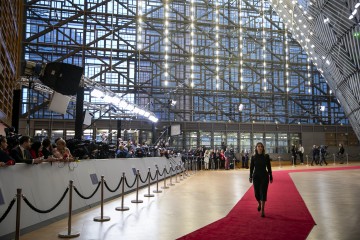
Bregu: Fully functional Common Regional Market can be our vessel to the EU Single Market
Brussels - The European Union (EU) and Western Balkan (WB) leaders reiterated the shared commitment to step up the efforts to enhance integration of the Western Balkans with the EU single market, with the WB Common Regional Market (CRM) serving as a stepping stone for region’s EU integration, at the EU-WB Summit hosted by the EU Council in Brussels today.
12 December 2023 | News
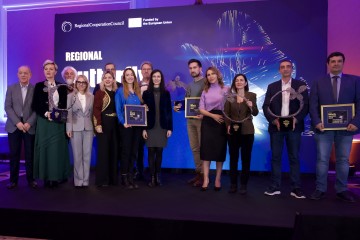
RCC Reveals Winners of the 2023 Regional Butterfly Innovation Award
Sofia – The Regional Cooperation Council (RCC) revealed the winners of the 2023 Regional Butterfly Innovation Award, at a ceremony RCC organized with the Ministry of Foreign Affairs of Bulgaria, held in Sofia today. “Congratulations - we hope the Butterfly Innovation Award supports you in navigating challenging markets. Several of last year’s awardees have enhanced their ...
11 December 2023 | News
European Union-Western Balkans Cooperation in Focus This Week
RCC to present winners of the Regional Butterfly Innovation Award 2023 in Sofia The Regional Cooperation Council (RCC) is to present the winners of the second edition of Regional Butterfly Innovation Award at a ceremony co-organised with the Ministry of Foreign Affairs of Bulgaria, on 12 December 2023 in Sofia. The Awards will be presented by the RCC Secretary General Majlinda Bregu ...
08 December 2023 | News
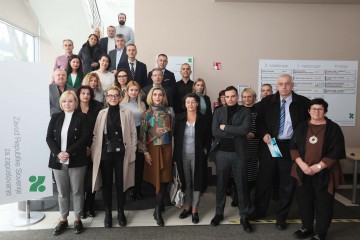
RCC ESAP 2: Western Balkan Public Employment Services Visit Employment Service of Slovenia to discuss aligning Western Balkan practices with the EU requirements
RCC ESAP 2 Organised a Two-day Thematic Study Visit to Employment Service of Slovenia to discuss Active Labour Market Policies and Measures: good practices, IT solutions, databases, statistics and reporting

24 November 2023 | News
Bregu: Can you put a price tag on people leaving the region? In a way, yes, you can
Western Balkans is ranked among some of the economies most affected by brain drain, with expectations to lose around one million young people in the coming decade. People leaving the region does not only pose a risk to workforce availability but also threatens additional pressure to health care and pension systems in the region as well. If these projections are to come true, the Western Balkans ...
23 November 2023 | News
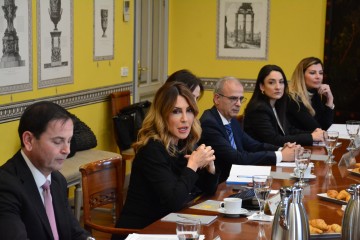
RCC Secretary General promotes regional cooperation at the Elcano Royal Institute in Madrid
Madrid – The Secretary General of the Regional Cooperation Council (RCC), Majlinda Bregu, took part at the event dedicated to the discussion on the Western Balkans accession to the European Union and the role of regional cooperation and RCC, organised within the Spanish Presidency of Council of the European Union by the Elcano Royal Institute in Madrid today.
21 November 2023 | News
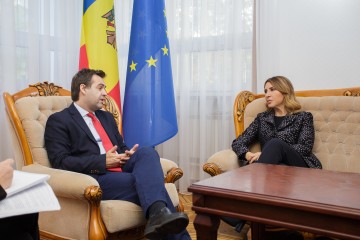
RCC Secretary General meets Moldovan Deputy Prime Minister in Chisinau
The Regional Cooperation Council (RCC) Secretary General Majlinda Bregu was in a visit to Moldova today where she met with the Deputy Prime Minister and Minister of Foreign Affairs and European Integration, Nicu Popescu, to discuss the EU integration of the region and Moldova’s role in the South East Europe Cooperation Process (SEECP) and the RCC.
14 November 2023 | News
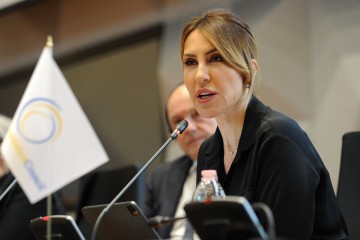
Bregu: Brain Drain is Becoming not just Human Capital but Security Issue Too
Rome - "Migration is becoming one of the biggest problems of today, because countries are emptying. Not just those that result in the inflow of migrants to our region, but also because of the emigration from our region further to the west. Hence, the term of security challenges is dramatically changing. Security challenge is not just conflict resolution or prevention but it is also climate ...
08 November 2023 | News
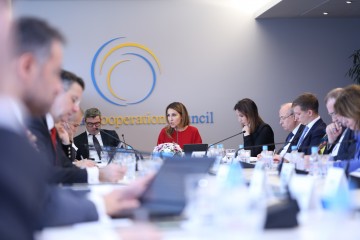
RCC Board praises the work of the organisation and its Secretary General
Sarajevo – Opening the 50th meeting of the Regional Cooperation Council (RCC) Board in Sarajevo today, the RCC Secretary General, Majlinda Bregu, shared positive outcomes and feedback to the start of implementation of EU-WB Roaming Reductions and the results of continuing regional cooperation presented in the last couple of weeks at the Berlin Process Summit and other meetings.
27 October 2023 | News
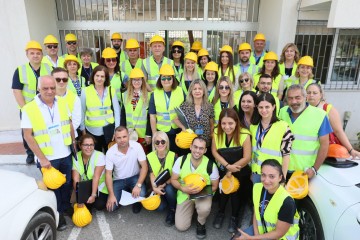
RCC ESAP 2: Western Balkan Enforcement Authorities Explore Cyprus' Approach to Undeclared and Discuss Platform Work
RCC ESAP 2 Organised a Two-day Thematic Study Visit to Cyprus Labour Inspectorate, Focused on Tackling Undeclared Work in the Western Balkans within Its Mutual Assistance Projectshttp://esap.online
23 October 2023 | News
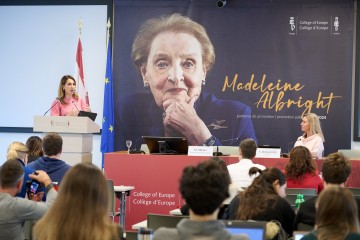
Bregu: It is precisely in our diversity that the true potential for cooperation lies
Bruges - “The Western Balkans is like a canvas, painted with all hues of history and diversity, a tapestry of languages, cultures, and painful conflict. Yet it is precisely in this diversity that the true potential for cooperation lies. But, Western Balkans is Europe. Since the EU enlargement process is taking decades, regional cooperation is establishing a norm, not a normative, but ...
19 October 2023 | News
Imagine. Innovate. Create: RCC opens applications for Butterfly Innovation Award 2023
Sarajevo – The Regional Cooperation Council (RCC) is inviting creative minds to apply for the 2nd round of Regional Butterfly Innovation Award for innovative, scalable, and market-based solutions from the Western Balkans. The Butterfly Innovation Award fund is set at 30,000 EUR, where the best solution in each of the 6 categories will get the prize of 5,000 EUR.
16 October 2023 | News
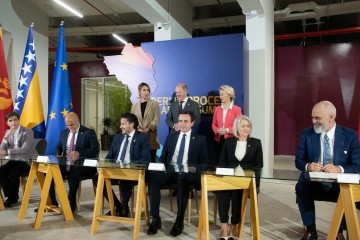
Bregu: Another agreement prepared by the RCC signed today in Tirana
Tirana – The Heads of Governments of the Western Balkans Six signed one more agreement under the Common Regional Market (CRM) Action Plan’s mobility agenda, a process facilitated by the RCC - on the recognition of professional qualifications of nurses, veterinary surgeons, pharmacists, and midwives – at the Berlin Process Summit held in Tirana today.
13 October 2023 | News
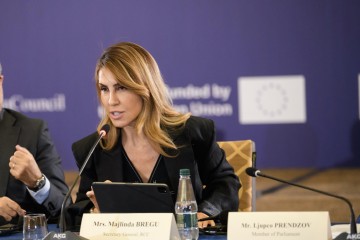
Bregu: Role of Parliaments in the Berlin Process is to transform the pledges to reality
Tirana - "The ultimate legal responsibility in the ratification process of most of regional agreements and commitments lies with the parliaments. This once again makes evident the need for stronger engagement of Parliaments in this process, not only to formally add to its democratic legitimacy but to transform the pledges in reality through the ratification process of regional agreements ...
12 October 2023 | News
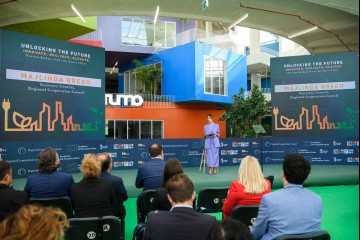
Bregu: Supporting cities in accelerating their transition to environmentally-friendly & digitally advanced urban environments is imperative
Tirana – The first Local Self-Governments Forum, organised by the Regional Cooperation Council (RCC) together with the Municipality of Tirana and the Network of Association of Local Authorities of South East Europe (NALAS), opened in Tirana today.
11 October 2023 | News
Tirana: RCC to host the first regional Local Self-Governments Forum
Tirana - The Regional Cooperation Council (RCC) is inviting you to the first Local Self-Governments Forum on 12 October in the Pyramid of Tirana. The Forum: Unlocking the Future: Innovate, Eco-vate, Elevate - Western Balkans Unite for Smart Cities, is being organised by the RCC, together with the Municipality of Tirana and the Network of Associations of Local Authorities of South East Europe ...
06 October 2023 | News
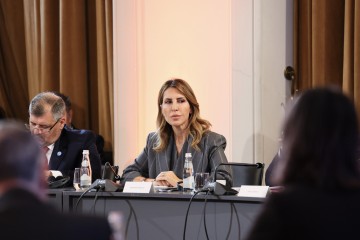
Bregu: Making the enlargement credible both for the region and the EU lies ahead of us, with keys in our hands
Tirana – “A success story of EU-rules based regional cooperation and a symbolic entry ticket to EU single market saw the light of the day on 1 October – when the EU-Western Balkans roaming reductions came into effect. A demonstration of commitments made and pledges upkept. Against a very difficult backdrop in our region currently, this 1 October we managed all together, ...
05 October 2023 | News
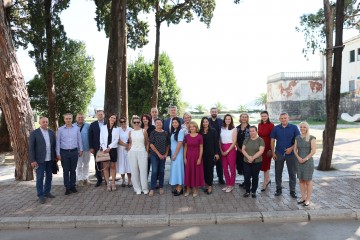
RCC ESAP 2: Strengthening Capacities of Western Balkans’ Public Employment Services for Alignment of the Labour Market Policies Databases with the EU Requirements
ESAP 2 organised regional workshop for Western Balkans’ Public Employment Services on classification and recording of Labour Market Policies and roadmaps for their alignment with the EU practices
04 October 2023 | News
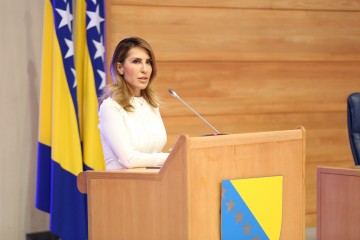
Bregu: By working on digital transformation we are working on Europeanisation of our region
Sarajevo – The sixth Western Balkans Digital Summit (WBDS), hosted by Bosnia and Herzegovina and supported by the Regional Cooperation Council (RCC), opened this morning in Sarajevo.
03 October 2023 | News
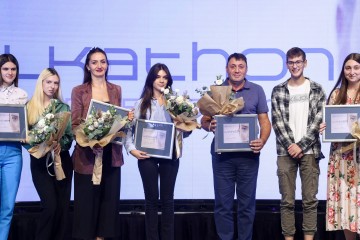
Bregu: Balkathon is a platform for development of young people's entrepreneurial skills and creating new jobs
Sarajevo - The Regional Cooperation Council (RCC) presents winners of the fourth Western Balkans online competition for the best digital solutions, BALKATHON 4.0:
02 October 2023 | News
Who will win 2023 Balkathon? Follow us live tomorrow and find out
Sarajevo – The grand finale of the fourth Regional Cooperation Council (RCC)’s online competition for the best digital solutions in the Western Balkans, BALKATHON 4.0 is to take place tomorrow, Tuesday, 3 October 2023 starting at 10.00 hrs in Sarajevo. The event will be livestreamed at RCC’s YouTube channel.
02 October 2023 | News
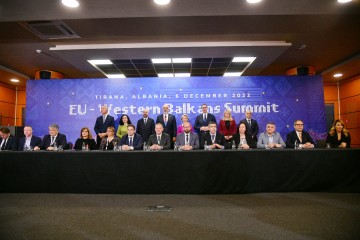
Bregu: EU-Western Balkans roaming reductions in force as of today
TIRANA, October 2, 2023 — In a significant stride towards regional cooperation and affordable mobile communication, the EU-Western Balkans Roaming Declaration, signed at the EU-Western Balkans Summit in Tirana on December 6, 2022, has officially taken effect, marking 1 October 2023, as a date of change.
29 September 2023 | News
RCC ESAP 2: Western Balkan Enforcement Authorities Address Challenges of Under-declared Work
Tirana – Under-declared work/envelope wages was a topic for discussion of the enforcement authorities from the Western Balkans at the one-day regional Workshop organised by the Regional Cooperation Council's (RCC) Employment and Social Affairs Platform project (ESAP2) in Tirana, Albania today. The Workshop followed the successful completion of the Mutual Assistance Project (MAP) ...
26 September 2023 | News
Bregu: A human-centric Europe, with Western Balkans firmly in its fold, is the best investment in peace and security for the entire continent
Tirana – “A human-centric Europe, that is adapted, reformed, rebooted and more - with Western Balkans firmly in its fold - is the best investment in peace and security for the entire continent! The Western Balkans has made significant progress in the last two decades, but we are not where we wanted and should be and unfortunately, friction amongst countries persists, and conflicts ...
21 September 2023 | News
Bregu: When global institutions and frameworks are stretched thin, regional bodies can step in to provide stability, continuity, and direction
New York - "The Western Balkans has made significant progress in the last two decades, but the Western Balkans is not where its inhabitants or outside peacemakers hoped we would be twenty-plus years after the guns went largely quiet. Unfortunately, friction amongst economies persists, and conflicts can hinder investments and economic growth in the region. Having in mind this and the ...
15 September 2023 | News
Bregu: Western Balkans faces security challenges daily
Tirana – “As a region where geopolitical and strategic interests compete, Western Balkans faces security challenges daily, and the aggression against Ukraine didn’t make it any easier on us. According to Western Balkan citizens, their perception of security has been strongly affected by crime in general - organised crime in particular, as well as drugs and human trafficking, ...

19 August 2023 | News
Anna Gyimesi gets Heart of Sarajevo for the Best Student Film
Sarajevo - Anna Gyimesi from Hungary won Heart of Sarajevo for the Best Student Film with a movie Falling, at the 29th Sarajevo Film Festival. This award, patroned by the Regional Cooperation Council (RCC), was presented at the SFF closing ceremony last night in Sarajevo. Brava Anna for this impressive achievement! This remarkable start to your career undoubtedly hints at a series of ...
25 July 2023 | News
Support for regional cooperation among Western Balkan business people has risen from 69% last year, to 74%
Sarajevo – Last week, the Regional Cooperation Council published the results of the annual Balkan Barometer 2023 Public Opinion Survey. To complete the picture of our region’s opinions about regional cooperation, EU integration, trust in the public institutions and media, their biggest concerns, employment, climate change, security, digital life, transport, rule of law, travel, ...
18 July 2023 | News
69% of Western Balkan citizens agree that what brings them together is more important than what separates them
Sarajevo - For the 9th time in a row, the Regional Cooperation Council is publishing the results of Balkan Barometer - the annual survey among six thousand people from the entire Western Balkans, giving an overview of their opinions on regional cooperation, EU integration, trust in the public institutions and media, their biggest concerns, employment, climate change, security, digital life, ...
13 July 2023 | News
RCC’s trademark digital competition - Balkathon 4.0 - is on! Apply Now!
Sarajevo – For the fourth year in a row, the Regional Cooperation Council (RCC) is launching region’s trademark online competition for the best digital ideas and solutions from the Western Balkans - Balkathon 4.0. Applications are open until 13 September.
12 July 2023 | News
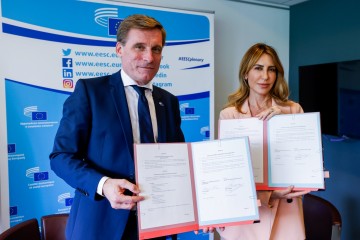
RCC, EESC set to deepen civil society and youth engagement in region’s reform processes
Brussels – The Secretary General of the Regional Cooperation Council (RCC), Majlinda Bregu, and the President of the European Economic and Social Committee, Oliver Röpke, signed a Memorandum of Understanding (MoU) on cooperation between the two organisations, in Brussels today. The purpose of the MoU is to further and streamline cooperation in strengthening the inclusion of civil ...
08 July 2023 | News
Bregu: European leadership, power, and unity have never been more needed in the Western Balkans
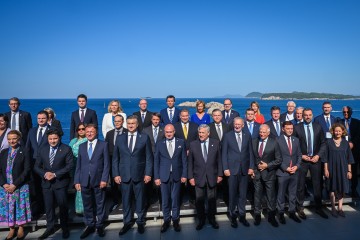
"The language of power is the language of leadership. By necessity, and maybe not by choice, the EU is learning every day that speaking the language of power is power itself. European leadership, power, and unity have never been more important, more needed, and more obviously in the interests of EU Member States and other regions worldwide, including the Western Balkans," said Majlinda ...
05 July 2023 | News
Bregu: 49% of Western Balkan citizens are concerned the climate change is affecting their health
Budapest - "According to our recent Balkan Barometer, 49% of the citizens of the WB are concerned that climate change is affecting their health. Moreover, Pollution of Air (57%), Water (44%), and Soil (39%) are listed as the greatest environmental concerns in communities. All Western Balkan countries except Albania rely on coal as their main energy source. 67% of households still use ...
30 June 2023 | News
Bregu: Crucial step to reinforcing critical digital capacities in our region is phasing in EU policies and programmes
Brussels – “Today’s accession to the Digital Europe Programme for four economies from our region is a major development and crucial step to reinforce critical digital capacities in EU and WB. What once seemed almost utopic is now a reality since 2021 - with the regional roaming fees eliminated. We continue to keep our promises on the roaming agenda. During the first Regulatory ...

29 June 2023 | News
Bregu: Regional approach to cybersecurity, in line with EU standards, is a must
The Regional Cooperation Council (RCC), in cooperation with DG NEAR, organised a two-day high-level conference on cybersecurity in the Western Balkans, on 28-29 June 2023 in Brussels.
27 June 2023 | News
Bregu: More cooperation crucial in addressing regional tensions
Podgorica – Heads of State and Government of South East European Cooperation Process (SEECP) commended the work of Regional Cooperation Council (RCC) and recognised its unique role and accomplishments in promoting cooperation, overall development of the region and advancing towards a common future in the European Union, acknowledging RCC’s significance as a focal point for streamlining ...
23 June 2023 | News
Kapetanovic: With already 334 victims of firearms in 2023 in our region, it is high time to reduce its supply, demand and misuse
Tirana – “The widespread proliferation and misuse of firearms poses a great threat to our societies. Only in the first quarter of 2023, 821 firearm incidents were reported in South East Europe, resulting in 334 victims. Our 2022 SecuriMeter survey indicates that 12% of Western Balkans citizens would consider owning a gun, which is twice as much compared to 2021. On the other hand, ...
21 June 2023 | News
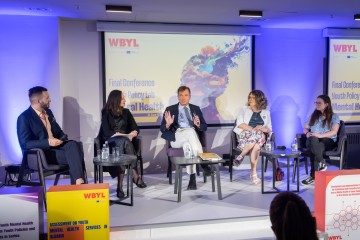
Young People from the Region Present Their Own Visions and Plans on How to Improve Youth Mental Health
Belgrade – Thirty young people and policy makers from the entire Western Balkans presented the outcomes and recommendations that have emerged from their diligent efforts to address youth mental health in their economies at the Final Conference on Youth Mental Health, organised by the Regional Cooperation Council (RCC)’s EU-funded Western Balkans Youth Lab Project (WBYL), in Belgrade ...
16 June 2023 | News
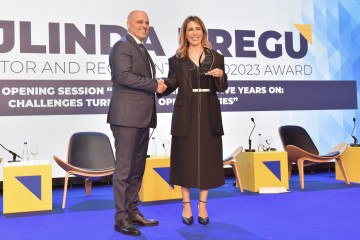
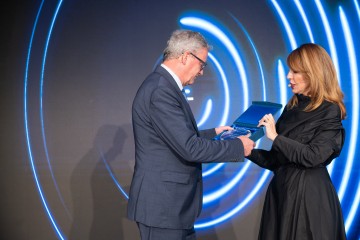
RCC wins annual Prespa Forum Dialogue 2023 award
Struga – The Secretary General of the Regional Cooperation Council (RCC), Majlinda Bregu, took part at the annual Prespa Forum Dialogue (PFD) 2023, taking place 15-16 June 2023 in Struga, North Macedonia, where she received the PFD Award on behalf of RCC, spoke at the panel on regional cooperation, and held a series of bilateral meetings with EU and regional high officials. ...
12 June 2023 | News
Bregu: Region’s special potential lies in the diversity of possible entrepreneurial engagement that has not been fully utilized just yet
Frankfurt – The Regional Cooperation Council (RCC) Secretary General Majlinda Bregu was in Frankfurt, Germany, today, taking part at the Digisustain Conference at a panel dedicated to regional competencies and green investment opportunities in the Western Balkans. Digisustain gathers innovators, representatives of non-governmental sector, financial institutions and best-practice leaders ...
06 June 2023 | News
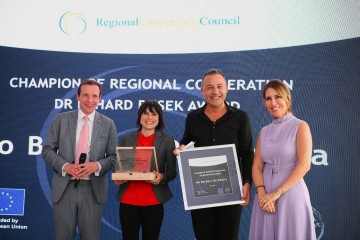
No Borders Orchestra is the Champion of Regional Cooperation for 2022
Sarajevo/Vienna – The Regional Cooperation Council (RCC) and Federal Ministry for European and International Affairs of the Republic of Austria (BMEIA) have the pleasure to announce that the winner of the Champion of Regional Cooperation Dr Erhard Busek Award for 2022 is No Borders Orchestra (NBO).
05 June 2023 | News
Bregu: Our region deserves a re-energised enlargement process and membership advantages in advance of full accession
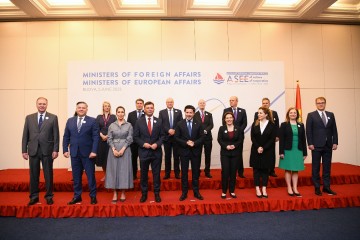
Budva – Ministers of Foreign Affairs (MFA) of the South East European Cooperation Process (SEECP) commended the efforts of the Regional Cooperation Council (RCC) in fostering regional cooperation and integration of the Western Balkan economies into the European Union (EU), focusing on the set of specific achievements in the past twelve months: RCC-coordinated EU-WB roaming ...
04 June 2023 | News
Bregu: This year marks one of the most impactful ones for the Western Balkans when it comes to regional cooperation
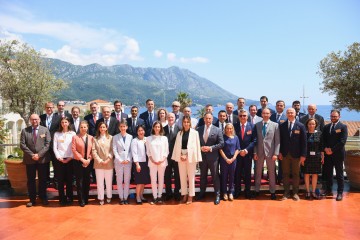
Budva - "This year marks one of the most impactful ones for the Western Balkans, marking the long-awaited turning point towards commitments taken by the economies of the region, through the Common Regional Market (CRM). With integrity, collegiality and competence - three words of tradition and challenge, we as RCC, together with our regional organisations and in close partnership with ...

29 May 2023 | News
Bregu: Half of all mental disorders begin before the age of 14. What is ‘an ounce of prevention’ when it comes to mental health, and do we take enough care of that?
Our region was recently shocked with an event that happened in Serbia when a young teenage boy killed ten people at school, including nine classmates. A horrible tragedy that rendered all of us silenced for days. In a matter of 24 hours after the school tragedy, another mass murdered happened in our region, when a young 21-year-old man killed 8 people. For all of us in this region those events ...
25 May 2023 | News
RCC Board approves organisation’s Annual Report 2022/23, and adopts Financial Report 2022
Sarajevo – The participants of the Regional Cooperation Council (RCC) Board approved the organisation’s Annual Report 2022/23 and adopted the Financial Report 2022 at their 49th meeting held in Sarajevo today. The Annual Report 2022/23 is expected to be endorsed at the RCC Annual Meeting and adopted at the SEECP Ministerial Meeting to take place on 4 and 5 June 2023, respectively, ...
04 May 2023 | News
Moderate progress of the Western Balkan economies regarding the European Pillar of Social Rights
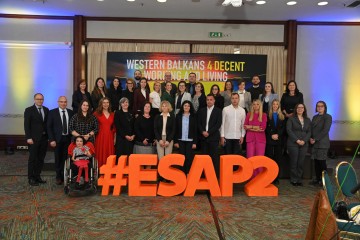
(Sarajevo/Skopje) - The Employment and Social Affairs Platform 2 (ESAP 2) project of the Regional Cooperation Council (RCC) presented the 2022 edition of individual economy and regional overview reports on performance of the Western Balkan (WB) economies regarding the European Pillar of Social Rights (EPSR) at the two-day hybrid event „Western Balkans 4 Decent working in living“, ...
04 May 2023 | News
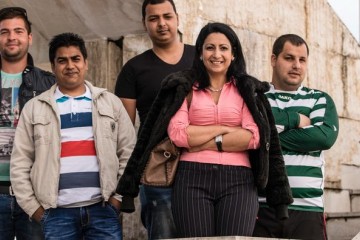
European Union launches the third phase of its Roma Integration programme in partnership with the Council of Europe
The European Union is launching the third phase of the Roma Integration programme in partnership with the Council of Europe. It will contribute to the socio-economic integration of the Roma population in the Western Balkans and Türkiye. The programme will work with the governments in the region to increase their capacities to tackle challenges faced by Roma in the fields of housing, ...

29 April 2023 | News
BREGU: There is a price to pay for speaking the truth - how much are we willing to spend in “killing the fake news”?
Disinformation is false information deliberately and often covertly spread, such as through the planting of rumors, in order to influence public opinion or obscure the truth. Fake news spreads six times faster than true news.
28 April 2023 | News
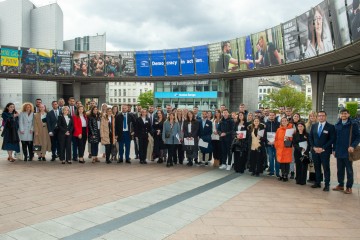
WBYL supported dialogue between Members of Parliament and civil society from Western Balkans in Brussels
From 25 to 27 April 2023, the Bridging the Gap initiative promoted dialogue between civil society and elected representatives from the region and from the European Union. The event was co-organized by the European Parliament's Mediation and Dialogue Support Unit and the European Commission's Directorate-General for European Neighbourhood Policy and Enlargement Negotiations together ...
20 April 2023 | News
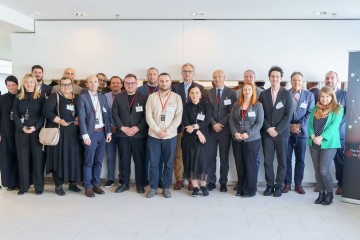
RCC gathers key Western Balkan stakeholders for a workshop on media literacy and countering hybrid threats and disinformation
Helsinki - The Regional Cooperation Council (RCC), in partnership with the European Centre of Excellence for Countering Hybrid Threats (Hybrid CoE) and with support from the Italian Ministry of Foreign Affairs and International Cooperation, gathered 20 key Western Balkan stakeholders - government, institutions, media, media regulatory authorities from the Western Balkans and civil society ...
18 April 2023 | News
Who is, in your opinion, Champion of Regional Cooperation in South East Europe? Nominate one by 17 May 2023!
Sarajevo/Vienna – The Regional Cooperation Council (RCC) and the Federal Ministry for European and International Affairs of the Republic of Austria (BMEIA) have the pleasure to invite you to nominate your favourite for the Champion of Regional Cooperation Dr Erhard Busek Award.
04 April 2023 | News
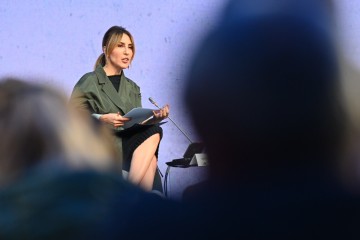
Bregu: Economic importance of tourism can make or break any region
Tirana – “Western Balkans pre-pandemic tourism showed positive trends. More than 12 million people visited the region, which brought a profit of 7.2 billion EUR. Tourism made 10.2% of the region’s GDP and accounted for more than 25% of exports. While one can go figure digging through reports, the core question for all of us is how to position Western Balkans at the world ...
03 April 2023 | News
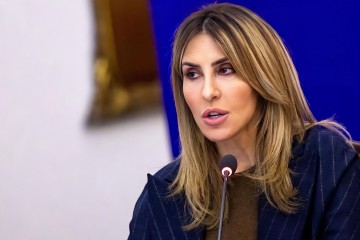
Bregu: CRM will bring the Western Balkans closer to EU Single Market
RCC Secretary General spoke before Albanian Parliament of the RCC’s co-oganisation of the upcoming Berlin Process Summit in Tirana this fall Tirana – The Secretary General of the Regional Cooperation Council (RCC) Majlinda Bregu spoke before the Albanian Parliament’s National Council of European Integration (NCEI) in Tirana today about co-organisation ...
30 March 2023 | News
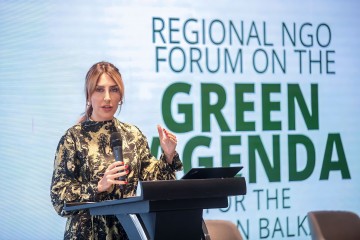
Bregu: Region should remain steadfast on sustainable, green transition and decarbonisation path
“The Green Agenda for the Western Balkans is a dynamic and evolving initiative that, like a living organism, requires collective efforts of both the governmental and non-governmental sectors to nurture, grow and shape towards a sustainable plan for the future. In a developing region, such as ours, the concerns are related to daily life, and this makes it more difficult to think about ...
28 March 2023 | News
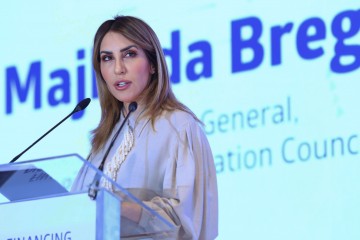
Bregu: Digitalisation momentum in Western Balkans calls for improvement e-service accessibility improvement and reduction of digital divide
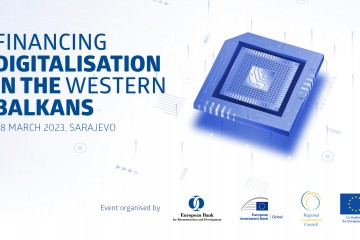
Sarajevo – Regional Cooperation Council (RCC), European Bank for Reconstruction and Development (EBRD) and European Investment Bank (EIB) gathered region’s ministers and other high ranking government officials, local and international experts in digital projects, key donors and financial institutions, as well as business representatives from the Western Balkans at the “Financing Digitalisation ...
27 March 2023 | News
RCC, EBRD, EIB organising Investing in Digitalisation in the Western Balkans Conference tomorrow in Sarajevo
Sarajevo – The Regional Cooperation Council (RCC), European Bank for Reconstruction and Development (EBRD) and the European Investment Bank (EIB) Global are organising Investing in Digitalisation in the Western Balkans Conference, that is to take place on Tuesday, on 28 March 2023 in Sarajevo.
15 March 2023 | News
Bregu: Continued all-inclusive regional cooperation remains key in strengthening economic resilience of Western Balkans
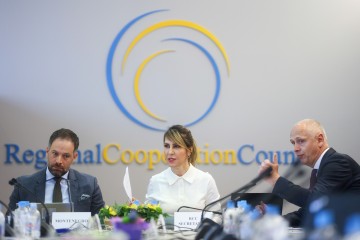
Sarajevo – “External risks arising from the current geopolitical crisis and the rise in commodity prices reinforce the purpose of the Common Regional Market agenda. Continued all-inclusive regional cooperation remains the key towards strengthening economic resilience of the Western Balkans,” said Secretary General of the Regional Cooperation Council (RCC), Majlinda Bregu, ...
10 March 2023 | News
UN Women and RCC join forces to advance women’s empowerment in the Western Balkans
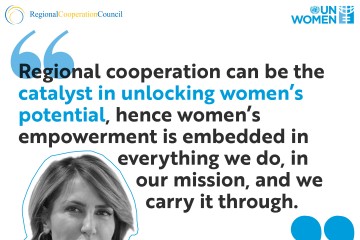
UN Women Regional Office for Europe and Central Asia (ECA) and Regional Cooperation Council (RCC) will join forces to advance the digital transformation in the Western Balkans to promote cooperation in the region, as well as advance women’s economic empowerment, and the green agenda.
09 March 2023 | News
RCC presents Western Balkans Women Entrepreneurs of 2022
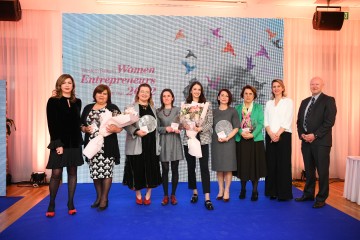
Tirana - Dhurata Thanasi Daneri, Snjezana Köpruner, Elki Shehu, Mirjana Babic, Zagorka Blazevska, Marijana Gligoric are Western Balkans Women Entrepreneurs of the Year 2022, as presented at a ceremony organised by the Regional Cooperation Council (RCC) in Tirana today.

08 March 2023 | News
RCC to present Western Balkans Women Entrepreneurs of the Year 2022
Sarajevo/Tirana – On the International Women’s Day, the Regional Cooperation Council (RCC) is to present the Western Balkans Women Entrepreneurs of the Year 2022, at a ceremony to be held on 9 March in Tirana.
02 March 2023 | News
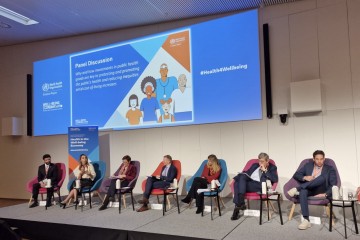
Bregu: Wellbeing, health and thriving population should be foundation of every growth policy
Copenhagen – “Economic growth cannot be the only and ultimate policy objective. Collective wellbeing, healthy and thriving population where no one is left behind should be the foundation of every growth policy. The ambitious post-pandemic recovery aspirations are crushed against the stark realities of our fellow citizens in South East Europe who struggle with galloping inflation ...
17 February 2023 | News
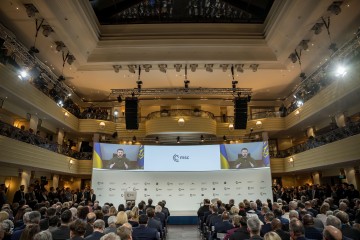
Bregu: Western Balkans is an important piece of the European security and stability puzzle
The annual 59th Munich Security Conference (MSC) started in Munich today gathering world leaders to discuss topics of global security, defence, technology, and sustainability while keeping the focus on the still ongoing Russian invasion of Ukraine. Alongside many world and European leaders, the MSC was attended by Olaf Scholz, German Chancellor, Emanuel Macron, French President, Volodymyr ...
07 February 2023 | News
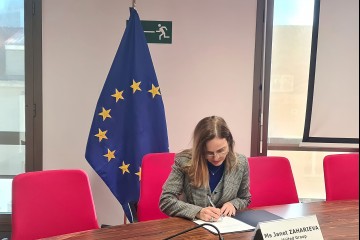
United Group Joins the EU-WB Roaming Declaration
Brussels/Sarajevo - United Group, one of the largest telecommunications and media operators in the South East Europe including Nova, Total TV, Telemach, SBB and more regional telecommunication platforms, signed the European Union (EU)-Western Balkans (WB) Roaming Declaration at a meeting of telecommunications operators from EU and WB in Brussels today organised by the European Commission ...
03 February 2023 | News
RCC: Nominations for Western Balkans Women Entrepreneurs of the Year 2022 open
Sarajevo – The Regional Cooperation Council (RCC) is happy to announce that the nomination process for the Western Balkans Women Entrepreneurs of the Year 2022 has begun! The RCC launched this initiative last year in the framework of the Common Regional Market Action Plan 2021-2024 and the Women Economic Empowerment Agenda to recognise women who have started and developed their own ...
23 January 2023 | News
Bregu: Hundreds of stories of citizens being unable to meet relatives due to visas are soon to be in the past
Sarajevo – The long, cumbersome procedures and high visa refusal rate have significantly declined the number of Kosovan and Bosnian and Herzegovinian citizens visiting each other over the course of the last few years.

18 January 2023 | News
Bregu: To have wider choices, earn more, and live better - Choose STEM Future
Sarajevo – The Regional Cooperation Council (RCC) is launching a campaign dubbed “Choose STEM future” to encourage young women and girls to pursue careers in STEM (science, technology, engineering, and math) by bringing forth inspiring role models of successful women in STEM profession from the Western Balkans (WB). This campaign was created as part of the regional Women ...
08 December 2022 | News
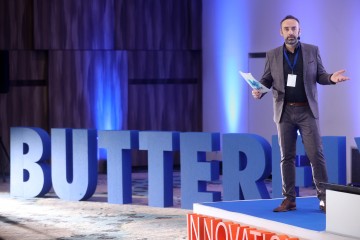
RCC hosts the Second Butterfly Innovation & Business Forum in Sarajevo
Sarajevo – The Regional Cooperation Council (RCC), in partnership with the EU4DigitalSME - Innovation and Digitalisation in SMEs in BiH project implemented by Deutsche Gesellschaft für Internationale Zusammenarbeit (GIZ) GmbH and Enterprise Europe Network (EEN), hosted the Second Butterfly Innovation & Business Forum on 6-7 December 2022 in Sarajevo.
06 December 2022 | News
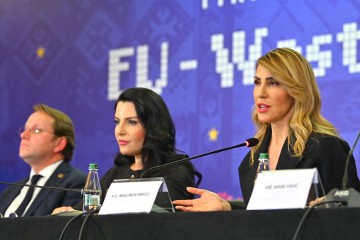
Reduction of data roaming prices between WB and EU to start as of 1 October 2023
At the EU-Western Balkans Summit held in Tirana today, the telecommunications operators from the European Union (EU) and the Western Balkans signed a Roaming Declaration enabling the reduction of the roaming charges between the EU and the Western Balkans as of 1 October 2023.
24 November 2022 | News
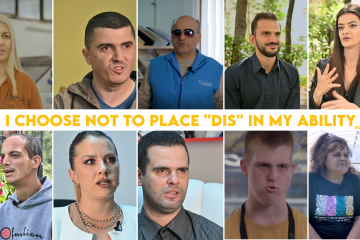
Looking at Social Ability to Provide Equal Opportunities for Persons with Disabilities
Sarajevo – In the Western Balkans economies “most of the progress was registered in the areas of inclusion of children with disabilities, especially in the process of deinstitutionalisation of children with disability, inclusive education and support services offered at the community level”, reads the Regional Overview of Western Balkan Economies Regarding the European Pillar ...
22 November 2022 | News
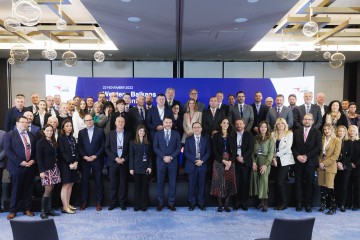
RCC, WB6CIF gather European investors, present opportunities and advantages of doing business in the Western Balkans
Ljubljana – The Regional Cooperation Council (RCC) and the Western Balkans 6 Chamber Investment Forum (WBCIF) gathered European investors from Austria, Croatia, Italy and Slovenia, WB investment promotion agencies, ministries responsible for investment policy and promotion, regional organisations and international financial institutions to present opportunities and benefits of investing ...
18 November 2022 | News
Bregu: 82.9% of Western Balkan citizens agree that regional cooperation can help in improving economic resilience
Rome/Sarajevo – “The EU and the Western Balkans share many evolving, borderless security threats, from radicalisation, violent extremism, and return of Foreign Terrorist Fighters to irregular migration, organised crime, corruption, disinformation and cyber-attacks. Such joint priorities have been re-validated by the war in Ukraine by also making clear the important role of ...
15 November 2022 | News
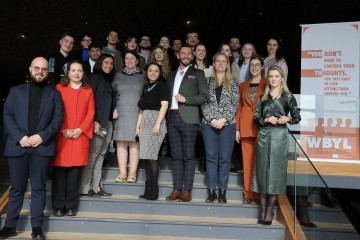
WB Youth Lab: Youth working on mental health policies to build the region as an environment of care
Pristina – “Deteriorating mental health among youth during pandemic led to multiplied negative effects in the long run, which was an alarm to act. We have made first steps towards bridging the gap between the mental health needs and the policy solutions. Cooperation, innovative approach, equality and participation on equal basis among youth and policy makers have brought excellent ...
09 November 2022 | News
RCC Board participants praise the organisation, congratulate its Secretary General on the excellent, for our region extremely important job done
Sarajevo – Opening the 47th meeting of the Regional Cooperation Council (RCC) Board in Sarajevo today, the RCC Secretary General, Majlinda Bregu, shared very positive outcomes of regional cooperation presented in the last couple of weeks during the Berlin Process Summit and related meetings.
03 November 2022 | News
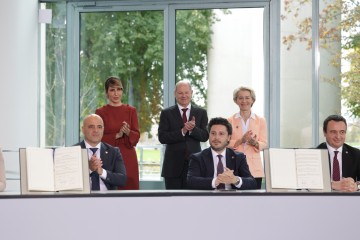
Bregu: It’s done - the three RCC-coordinated centrepiece mobility agreements finally see the light of day
Berlin – The Heads of Governments of the Western Balkans Six signed the three mobility agreements under the Common Regional Market (CRM) Action Plan’s mobility agendas - on Freedom of Movement with Identity Cards, on Recognition of Higher Education Qualifications, and on Recognition of Professional Qualifications for Doctors of Medicine, Dentists and Architects – at the ...
24 October 2022 | News
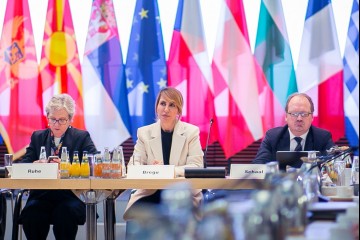
Bregu: Keeping the Green Agenda implementation torch lit is difficult, but there are no U-turns in a climate change-vulnerable region like ours
Berlin/Sarajevo – “Keeping the torch lit on the implementation of the Green Agenda for the Western Balkans that was developed in times of stability was a hellishly difficult task in these times of adversity. It is clearly overshadowed by the impact of the war and the pan-European energy price surge. There will be no quick fixes and silver bullets for this colossal challenge ahead ...
21 October 2022 | News
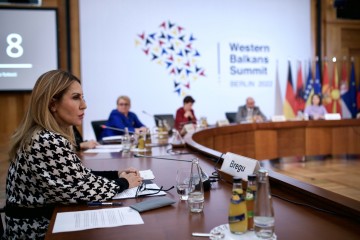
All-inclusive regional cooperation and Common Regional Market deliver results
Berlin/Sarajevo – The Western Balkans (WB) Foreign Ministers approved three regional agreements - on Freedom of Movement with Identity Cards, on Recognition of Higher Education Qualifications, and on Recognition of Professional Qualifications for Doctors of Medicine, Dentists and Architects – at the WB-EU ministerial meeting, organised within the Berlin Process by the German Government ...
21 October 2022 | News
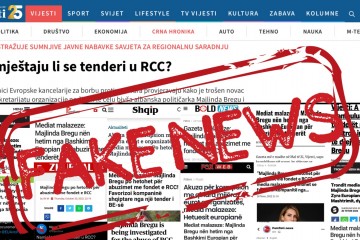
RCC to ascertain the rationale behind defamation and insinuations against the organisation and its Secretary General
The Regional Cooperation Council (RCC) is well known for being a serious and responsible organisation therefore does not comment on either hearsay speculations or fabrications.
19 October 2022 | News
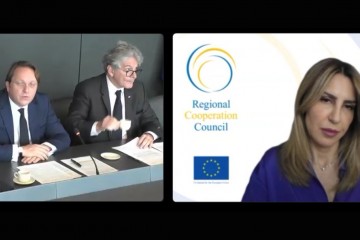
European Union and Western Balkans mobile operators to work together on steps, ought to start EU-WB roaming charges reduction soon
Sarajevo/Brussels – The European Union (EU) and the Western Balkans (WB) mobile operators met today to discuss the Roadmap on lowering the roaming charges between the EU and our region, at the meeting organised by the European Commission. Olivér Várhelyi, EU Neighborhood and Enlargement Commissioner, Thierry Breton, EU Internal Market Commissioner, and Majlinda Bregu, ...

24 September 2022 | News
RCC co-organises SEECP foreign ministers' meeting in New York
New York – "Entire South East Europe finds itself facing similar challenges and similar opportunities, from energy security to food crisis, and regional cooperation is the key for them in the period to follow," said Majlinda Bregu, Secretary General of the Regional Cooperation Council (RCC), at the meeting of the South East Europe Cooperation Process (SEECP) foreign ministers, ...
21 September 2022 | News
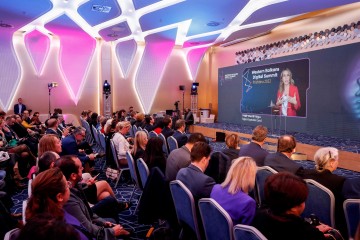
Bregu: Digitalisation necessitates an intergenerational approach
Pristina – “Today is a great day for Pristina. It is the centre of gravity of one of the greatest Berlin Process initiatives – the Western Balkans Digital Summit. Pristina today bursts and radiates with the dynamism of so many start-ups, companies, experts and policy makers – all united in their drive to harness the potentials of digitisation for our region’s ...
06 September 2022 | News
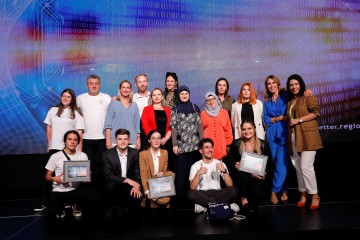
Bregu: Balkathon is the image and positive narrative of our thriving region in this exceptionally uncertain outlook
Pristina - The Regional Cooperation Council (RCC) presents winners of the third Western Balkans online competition for the best digital solutions, BALKATHON 3.0:
04 September 2022 | News
Bregu: 12 teams consisting of region’s youngsters to present their products at Balkathon finale
Sarajevo – The finale of the third Western Balkans’ online competition for the best digital solutions, BALKATHON 3.0 is to take place on Tuesday, 6 September 2022, at the event starting at 10.00 hrs in Pristina, and live on the Regional Cooperation Council (RCC) YouTube channel and Facebook page.
20 August 2022 | News
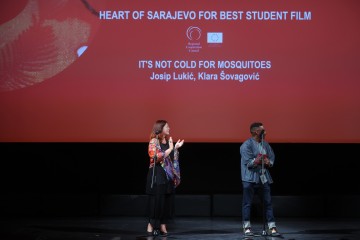
Croatians Klara Sovagovic and Josip Lukic gets Heart of Sarajevo for the Best Student Film
Sarajevo - Klara Sovagovic and Josip Lukic, young Croatian directors, won Heart of Sarajevo for the Best Student Film with a movie It's Not Cold for Mosquitoes, at the 28th Sarajevo Film Festival. This award, whose patron is the Regional Cooperation Council (RCC), has been presented at the SFF closing ceremony last night in Sarajevo.
03 August 2022 | News
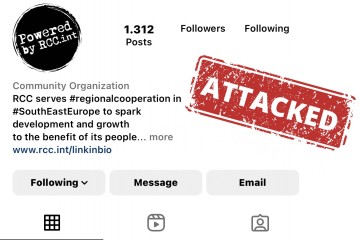
RCC's Instagram account under attack
RCC’s official Instagram account was attacked yesterday and is inactive until further notice. If u notice any activity from our account please do not interact. Cyberattacks are very much real, especially on social media. Be careful and mindful.
28 June 2022 | News
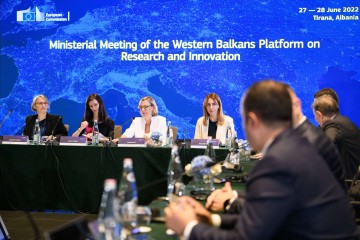
Bregu: Having an environment that supports innovation and creativity helps our democracies to be stronger
Tirana – “There is a political decision on when our economies will become full EU member states, but there is also a responsibility all of us carry on how to make our economies closer to the European standards present here in this region. So, for all of us who share a sense of discomfort after the last week’s EU summit, I have to say there are deep and concrete figures and ...
28 June 2022 | News
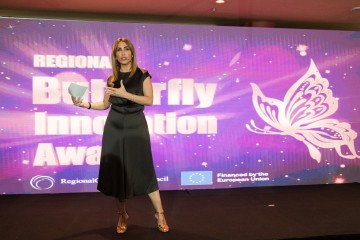
Bregu: We hope Butterfly Innovation Award will shine a light on the regional innovation community and its undiscovered potential
Tirana – “This spring we launched the first Regional Butterfly Innovation Award. ‘What is now proved was once only imagination’- this Blake’s quote fits perfectly the 154 ideas in six competing categories - largely exceeded our boldest expectations. Women led almost half of the teams or most team members were women. This competition proves that innovation can ...

26 June 2022 | News
RCC to award six best innovative solutions from the Western Balkans
Sarajevo/Tirana – The winners of the first Butterfly Innovation Award competition the Regional Cooperation Council (RCC) launched in April this year are to be presented on Monday, 27 June 2022 in Tirana, Albania, on the side-lines of the Ministerial Meeting of the Western Balkans Steering Platform on Research and Innovation & Education and Training. The Award Ceremony has been co-organised ...
24 June 2022 | News
Bregu: Support of Western Balkan citizens to regional cooperation remains stable at 76%
Brussels – “While many things change, our public and business perceptions surveys remain a truthful source of sentiments across the region. At times, the results surprise us, sometimes they serve as a wake-up call, while on other occasions they confirm that our efforts are not in vain as citizens and businesses feel the benefits of our work. 76% of Western Balkan citizens find ...

22 June 2022 | News
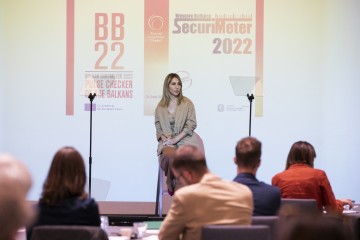
RCC to Present 2022 Balkan Barometer & SecuriMeter in Brussels on Friday
Brussels/Sarajevo – The Regional Cooperation Council (RCC) is to present the 2022 editions of Balkan Barometer and SecuriMeter, on Friday, 24 June 2022, starting at 10:00, in Brussels. This is the 8th edition of Balkan Barometer, and the second one for Western Balkans SecuriMeter. The entire presentation will be streamed live at RCC’s YouTube and Facebook.
17 June 2022 | News
Bregu: Establishing one single market should stay the ultimate goal of Western Balkans
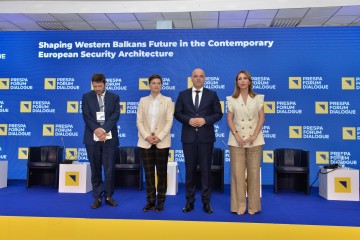
Ohrid – “Rome is not built in one day, and building a single market is easier said than done. The process of Western Balkans economic integration and its EU integration is not an easy one, but I hope it will not take us 35 years to get there, as it took the European Union to build one single market. None of us in this region has any luxury of losing any single day, especially ...

14 June 2022 | News
RCC Youth Lab Project hosts the final conference on youth employment in the Western Balkans
Budva/Sarajevo – “Inadequate employment opportunities are one of the biggest problem young people face. One in 3 young persons are unemployed, which means the Western Balkans youth unemployment rate is almost double the EU rate of 17%. According to Balkan Barometer 2022 – 18 out of 100 Western Balkan citizens worry about the brain drain, while 5 year ago that number was ...
11 June 2022 | News
Dr. Erhard Busek Champion of Regional Cooperation
Sarajevo/Thessaloniki – “In one of his last conveys he said: “Equating the EU with the Europe means leaving out a quarter of the continent – and a rather important part, as Eastern and Southeastern Europe border on world powers and vital regions.” Busek was gentle, humanitarian, liberal, a man who believed in a meeting of the minds as a key to the European endeavour. ...
10 June 2022 | News
Bregu: We defined and put forward the leading regional cooperation & integration frameworks, now one market is the ultimate goal of Western Balkans
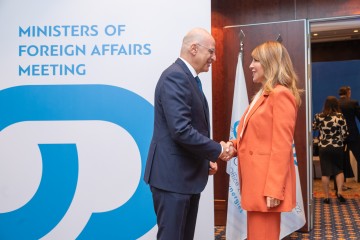
Thessaloniki - The Secretary General of the Regional Cooperation Council (RCC) Majlinda Bregu took part at the South East Europe Cooperation Process events - the meeting of SEECP Ministers of Foreign Affairs and the Summit of SEECP leaders - in Thessaloniki today. The meetings’ participants commended the work of the RCC and its Secretary General as well as the achievements in streamlining ...
09 June 2022 | News
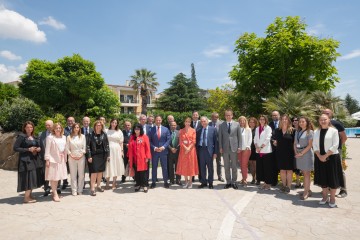
Bregu: As long as we continue to subscribe to dialogue, compromise and cooperation, we invest in long-term stability, security and prosperity
Thessaloniki – “Under the political guidance of SEECP and in consultations with all relevant actors and stakeholders, RCC identified those gaps in which the region should invest with technical as well as political capital. These all fall under the category of sustainable development, green and digital transformation, pooling of knowledge and resources, and enhancing inclusivity. ...
08 June 2022 | News
Champion of Regional Cooperation to round off 14th RCC Annual Meeting
Sarajevo/Thessaloniki – Regional Cooperation Council (RCC) is to hold its 14th Annual Meeting on Thursday, 9 June in Thessaloniki. RCC Secretary General Majlinda Bregu will present the RCC Annual Report and major accomplishments and results of the organisation in the past year while putting it in the context of current political and economic situation in the region.
01 June 2022 | News
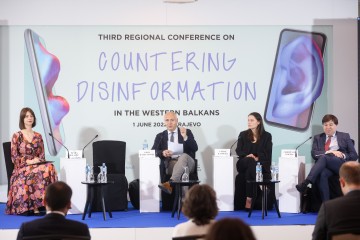
Kapetanovic: Disinformation is neither an overnight phenomenon nor can it have an overnight solution
Sarajevo - The Western Balkans has unfortunately always been susceptible to divisive narratives that always bring along hatred and violence. As the events unravel it is our constant responsibility to cultivate understanding and awareness of this phenomenon in our region. Good news is that the Western Balkan citizens have understood a detrimental potential of disinformation – as 74% ...
31 May 2022 | News
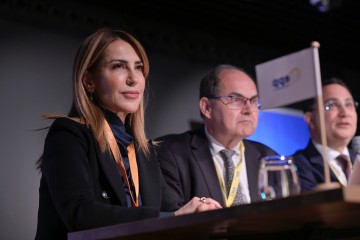
Bregu: Regional cooperation is complex and hard hitting, but it’s the way forward
Rotterdam – “Our realities today are drastically different, with the war in Ukraine sending shockwaves and exacerbating two trends that were already in the making: slowed growth and inflation. For an illustration, food and beverage prices increased between 7% in Albania and 13% in Serbia. Overall inflation is projected to reach whooping 6.3% in 2022. But beside inflation and higher ...
23 May 2022 | News
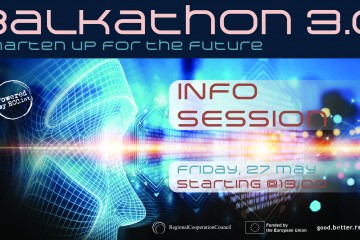
Balkathon 3.0 info session set for Friday, 27 May 2022
Sarajevo - If you're interested in participating in the Balkathon 3.0 but aren't sure where to start, join us for a brief event this Friday, 27 May at 13:00 CET! During info session we will briefly explain all details about Balkathon registration process and answer on all your questions. Info session will be held online via Zoom platform.
18 May 2022 | News
Bregu: With slowed growth & inflation, higher energy & food prices, Western Balkans will have to amp-up regional cooperation
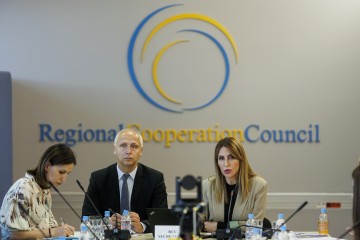
Sarajevo - It is very difficult to sugar-coat the severity of economic effects of the war on the Western Balkans. It is equally difficult to accurately predict the true and longer-term impact, or to identify the opportunities for the region along the way. Our realities today are drastically different, with the war in Ukraine sending shockwaves and exacerbating two trends that were already ...
12 May 2022 | News
Bregu: Removing barriers is the first step in positioning Western Balkans at the world tourism map
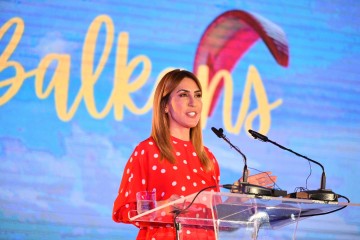
Tirana – “Tourism has a vast potential as a major catalyst for job creation and a driving force for economic growth and development especially for tourism dependent regions like ours. In 2019 more than 12 million people visited Western Balkans, which brought us a profit of 7.2 billion euros. The post-pandemic period of 2021 shows 70% recovery in all tourism visits, while WB regional ...

11 May 2022 | News
RCC to host Western Balkans Ministerial Conference on Tourism Development
Tourism has a great potential to accelerate progress and transform threats into opportunities
06 May 2022 | News
Balkathon 3.0 is on: RCC supports the best digital solutions in the Western Balkans
Sarajevo – For the third time in a row, the Regional Cooperation Council (RCC) is launching an online competition for the best digital ideas and solutions from the Western Balkans - Balkathon 3.0. Applications are open until 16 June.

20 April 2022 | News
Bregu: Enhanced regional cooperation and clear enlargement prospect for the region are vital to overcome challenges
Brussels/Sarajevo – “The war in Ukraine will affect economic growth in the region. Although share of economic output directly tied to Russia and Ukraine is relatively small for the Western Balkans as a whole, the economic ties on essential sectors such as energy and agriculture have exposed the region vulnerability and raised the inflation. The escalation of conflict is already ...

08 April 2022 | News
Regional Cooperation Council and Roma Integration project Celebrate International Roma Day
Belgrade – 8 of April is International Roma Day, a time to celebrate the culture, heritage, and accomplishments of Roma. The journey of Roma is one marked by injustice, but it is also a story of happiness, pride and satisfaction. Despite the challenges they face, Roma continue to move forward and develop their culture and traditions. As this day provides an opportunity for Roma ...
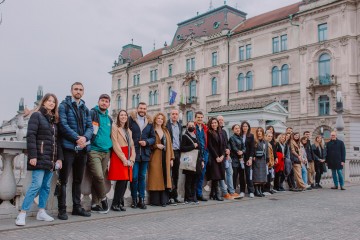
07 April 2022 | News
WBYL: Giving Western Balkans’ youth an insight into the best EU practices and standards is a base for future regional transformative policies
Ljubljana/Zagreb – “The best way to exchange knowledge and practice and to hear and see first-hand what it makes for successful and strong youth cooperation is to bring youth from the Western Balkans’ National Youth Councils or Youth Umbrella Organisations to the EU to witness work of well-established EU National Youth Councils. Besides expanding cooperation networks, this ...
31 March 2022 | News
Imagine. Innovate. Create: RCC Launches Western Balkans Butterfly Innovation Award
Sarajevo – The Regional Cooperation Council (RCC) is launching a Regional Butterfly Innovation Award seeking innovative, scalable and market-based solutions from the Western Balkans. The Butterfly Innovation Award fund is set at 30,000 EUR, where the best solution in each of the 6 categories will get the prize of 5,000 EUR.
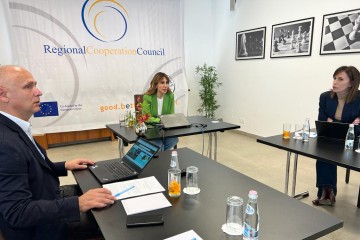
16 March 2022 | News
Bregu: European perspective important for socio-economic progress, but also for security and stability
Sarajevo/Tirana – “The times we are living in are not glamorous, on the contrary these are dark moments. We are all heartened and deeply saddened by the unjust war Ukrainian people are going through. The economic impact of the war stretches beyond Ukraine's borders. Concern is present in the Western Balkans, as the geopolitical and economic problems make our region sensitive ...
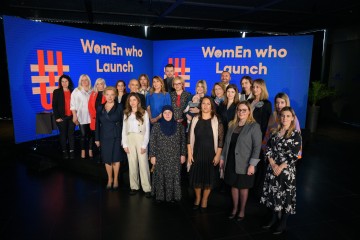
11 March 2022 | News
Bregu: When women engage, take responsibilities, grow and help each other they can be a rising tide that lifts all boats
Tirana – “The Regional Cooperation Council (RCC) is launching today the first Regional Women in Entrepreneurship Network in the Western Balkans. We will not boil the sea right away. But sometimes the smallest act can lead to the biggest impact. We will engage ourselves not only to connect women with each other but also to lend a helping hand with the informational support and ...
08 March 2022 | News
Western Balkans: RCC to present ‘Women Who Launch – Regional Network of Women in Entrepreneurship’
Sarajevo/Tirana – Instead of happy 8th of March, the Regional Cooperation Council (RCC) is announcing the launching of the Western Balkans (WB) Regional Network of Women in Entrepreneurship, at an event taking place this Friday (11 March) in Tirana. The Launch will gather a number of businesswomen from the entire region, and also serve as an opportunity to recognise WB Women Entrepreneurs ...
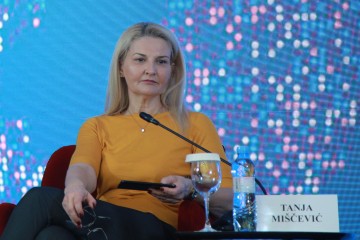
24 February 2022 | News
Miscevic: Emigration is a major challenge to the Western Balkans, but it could also be a great opportunity
Belgrade – “War risks scrambling the logic of our common endeavour to make the Western Balkans a better region. But let me start with the information that by 2020 more than 4.6 million people have left the Western Balkans. People leave the region for various reasons, mainly because of large income gaps between their home economies and the western region. All this affects the WB ...

20 February 2022 | News
Bregu: Western Balkans’ growth potential can be unlocked only through regional economic integration
Munich – “European integration and transatlantic cooperation should not look decoupled in the Western Balkans (WB). It’s high time to put the process of EU accession of the WB into the spotlight before too late becomes a lifetime. This is the centre of gravity for the future of the Western Balkans. The European perspective is the drive that makes the process of cooperation ...

19 February 2022 | News
Youth are the ones whose opinions lead to progress of the region
RCC’s Western Balkans Youth Lab organized Regional Youth Meeting with youth co-chairs in Skopje Skopje - “Western Balkans Youth Lab project is based on the inputs of Western Balkans youth and throughout the Project we have included young people in every step of the process. Now seeing you co-chairing the processes on equal footing with policy-makers shows us that we have focused ...

12 February 2022 | News
RCC to recognise Western Balkans Women Entrepreneurs of the Year
Sarajevo – The Regional Cooperation Council (RCC) has a pleasure to announce that we are launching the Western Balkans Women Entrepreneurs of the Year initiative, one that will hopefully become a tradition, to recognise women who have started and developed their own business and contributed to new and sustainable jobs for other women and men in our region.
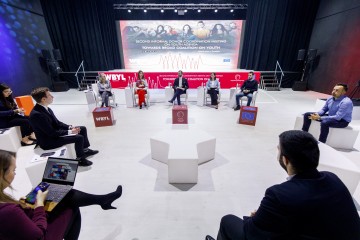
16 December 2021 | News
Second Informal Donor Coordination Meeting on Western Balkans Youth Agenda held in Sarajevo
Sarajevo – “Youth accounts for 21.27% or more than 20% of our entire population. They are our present and our future and I believe that all of us have to give our best to make sure that they stay in and contribute to this region now and in the years to come,” said Maja Handziska Trendafilova, Head of Regional Cooperation Council (RCC) Programme Department, at the opening ...

16 December 2021 | News
Bregu: In January 2022 RCC will launch the first regional Butterfly Innovation Award to encourage young innovators around the region
Bregu: In January 2022 RCC will launch the first regional Butterfly Innovation Award to encourage young innovators around the region RCC hosts the first Western Balkans Butterfly Innovation & Business Forum Skopje/Sarajevo – “On average, only 1 or 2 out of 100 caterpillars make it to become butterflies. Similarly, between 90% and 95% of start-ups worldwide fail within ...
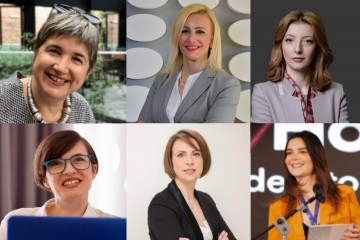
14 December 2021 | News
Bregu: It will take 257 years to close the current gender gap worldwide
Sarajevo – “Women in the Western Balkans account for only 27.5% of business owners and just 14.2% of companies’ top managers are females. Despite an evolving ecosystem of start-ups and innovation hubs in the Western Balkans, the number of women start-up entrepreneurs remains low, accounting for only 10-12% of founders. It will take 135.6 years to close the current gender ...
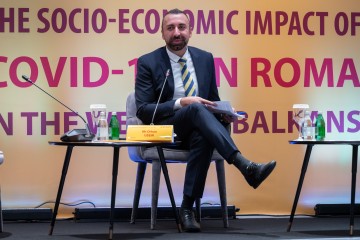
13 December 2021 | News
Usein: The school dropout rate of Roma children increased by 11%, while every second Roma reported reduced income due to the impact of Covid-19
Belgrade (13/12/2021) – “The regional analyses on the impact of Covid-19 on Roma in the region confirmed that the highest (negative) consequences for Roma are detected in the areas of employment and education. Three out of four Roma children did not receive any help during online lectures, both from their teachers or classmates, and the dropout rate increased by almost 11% at ...

10 December 2021 | News
Bregu: By risking the youth potential we are risking the engine of a sustainable regional future
Tirana/Sarajevo – “Statistics tell us that two thirds of young people would be willing to emigrate; that the total education costs of people who leave the region in one year vary from 840 million to 2.46 billion EUR; and that about one fifth are unemployed and nearly a quarter are neither in employment, nor in education or training. But the comprehensive transformation of the ...
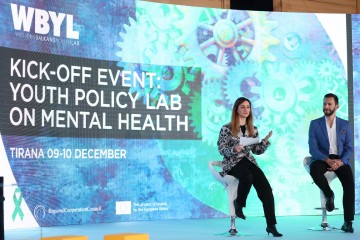
09 December 2021 | News
RCC: Western Balkans Youth Lab on Mental Health kicks off in Tirana
Tirana – The Youth Lab on Mental Health, organised by the Regional Cooperation Council’s (RCC) Western Balkans Youth Lab Project (WBYL), has kicked off in Tirana today.
06 December 2021 | News
Bregu: EU and Balkans security challenges are becoming ever more interrelated amidst new global threats
Paris/Sarajevo – “The European Union and the Western Balkans security challenges are becoming ever more interrelated and connected to a set of a new global threats. We have to face that we are at an inflection point. We might soon be facing a crisis—a humanitarian and security crisis, as security issues are common, so common and collective should also be our response,” ...
25 November 2021 | News
Bregu: Being Europeans is not written in DNA but what you believe and fight for
“It’s not breaking news any longer that our youth is leaving the region. One out of 3 youngsters, age 18-24, in the Western Balkans confirms that they are ready to leave their homeland. We should understand the message – their choice of destination shows what’s missing in their own societies. We just need to observe, listen and the most importantly act –give ...
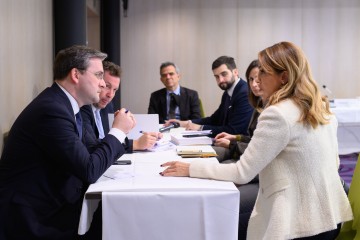
15 November 2021 | News
Bregu: The antidote to slowing down EU enlargement process is more ambitious integration of Western Balkans in the EU single market policies
Brussels/Sarajevo: “European perspective of the Western Balkans is the drive that makes the process of cooperation beneficial to all in the long-term. I believe EU has all the leverage needed to keep the EU perspective in WB alive. Without a credible path to EU membership, the WB could easily succumb to regional nationalism” said Secretary General of the Regional Cooperation Council ...
08 November 2021 | News
70% of Western Balkan citizens believe that incoming migrants are a security risk
RCC organised a webinar on Paradigm Change in Afghanistan to discuss possible implications for South East Europe Sarajevo - “Mismanagement of the sudden large influx of migrants in the Western Balkans has likely contributed to the fact that 70% of Western Balkan citizens believe that incoming migrants are a security risk, according to RCC’s Securimeter. There is no reason to ...
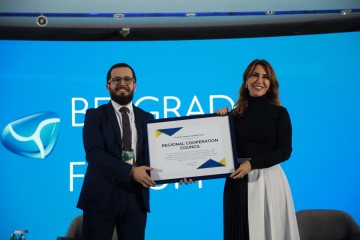
26 October 2021 | News
Bregu: RCC takes pride in achieving more tangible results for Western Balkan citizens
Belgrade – Regional Cooperation Council (RCC) has been awarded by the European Western Balkans for its unwavering commitment to the European future of the region, continued strengthening of regional cooperation and connecting the region by facilitating the Roam-Free-Western-Balkans, as well as principled promotion and work on furthering economic cooperation in the Western Balkans. RCC ...
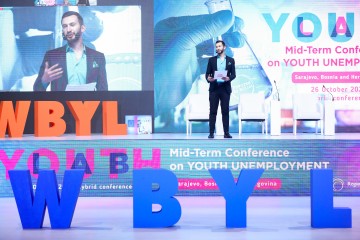
26 October 2021 | News
Youth-Tailored Solutions Require Youth Participation
Sarajevo/Online – “Cooperation, innovative solutions, equality, participation - these are the things we need today more than ever, as we establish an environment in which youth and policy makers sit together to constructively explore the ways in which youth priorities and needs can be met. To that end, let me congratulate the 40 members of the Pool of Experts being with us today ...
15 October 2021 | News
Bregu: European perspective of Western Balkans is the drive that makes the process of cooperation beneficial
Sarajevo – “European perspective of Western Balkans is the drive that makes the process of cooperation beneficial to all in long-term. It is of highest importance that both the region and the EU deliver on the respective commitments – particularly when we take into account that optimism regarding the time of accession has been declining. More ambitious actions for ...
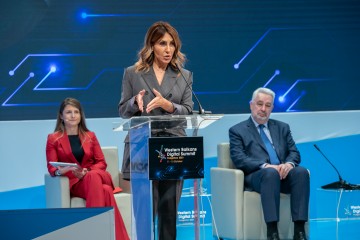
13 October 2021 | News
Bregu proposes creation of ‘Digital Identity’ system for Western Balkan citizens, modelled on the EU one
Podgorica – “We are racing to reach high standards of EU MS. Despite trying to run with the same speed as EU MS, we started our race later and hence we can never reach EU unless “phasing in” in EU policies is duly implemented,” said Majlinda Bregu, Secretary General of the Regional Cooperation Council (RCC) at the closing of the 4th Digital Summit of the Western ...
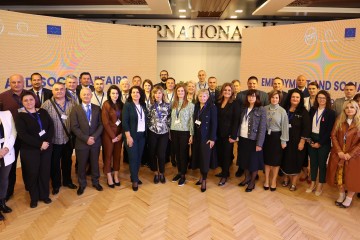
13 October 2021 | News
RCC’s ESAP 2 project gathered its partners and beneficiaries at a 2-day hybrid event to discuss employment and social affairs
Sarajevo/Tirana – Western Balkans’ Social Scoreboard, and individual and regional overview reports on performance of the Western Balkan economies regarding the European Pillar of Social Rights, prepared by Employment and Social Affairs Platform 2 (ESAP 2) project of the Regional Cooperation Council (RCC), was presented at the two-day hybrid event ‘Employment and Social Affairs ...
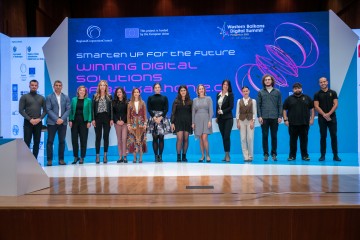
12 October 2021 | News
Digital Solutions: Six new ‘made in Western Balkans’ products presented at the 4th Digital Summit
Sarajevo/Podgorica – Six new ‘made in Western Balkans’ digital products have been presented at the 4th WB Digital Summit in Podgorica today. Authors of the products connecting digital with organic food, agriculture, sales, health, transportation services, small businesses, and environment-friendly plastic are all the winners of the second Balkathon, regional annual competition ...

10 October 2021 | News
Western Balkans Digital Summit opens in Podgorica tomorrow
Sarajevo/Podgorica - The Regional Cooperation Council (RCC) is once again supporting the biggest digital event in the region - the Western Balkans Digital Summit (WBDS) - the forth in a row annual event on digital cooperation in the region. This year, WBDS will be hosted by the Montenegrin Government and will be held in hybrid mode, from 11 to 13 October 2021, closing with the Ministerial ...

06 October 2021 | News
Bregu: It is crunch time to deliver on reducing roaming costs between the EU and Western Balkans
Brdo pri Kranju/Sarajevo – “As the agendas of regional cooperation build in intensity and challenges get bigger, we witness daily that the process of cooperation among Western Balkan Six cannot afford a stalemate,” said Regional Cooperation Council (RCC) Secretary General, Majlinda Bregu, at the EU-Western Balkans Summit that gathered EU and WB leaders at Brdo pri Kranju ...
18 September 2021 | News
Bregu, Escobar discuss regional economic integration
Secretary General of the Regional Cooperation Council (RCC), Majlinda Bregu met with US State Department officials, including newly appointed US Deputy Assistant Secretary of State, Gabriel Escobar in Washington yesterday to discuss regional cooperation, single market in the region, security cooperation and Western Balkans green agenda.
17 September 2021 | News
Italy to host EU-Balkan Youth Forum in November
Rome/Sarajevo – The Italian Ministry of Foreign Affairs and International Cooperation, in partnership with the Regional Cooperation Council (RCC), is going to host the EU-Balkan Youth Forum on 22-26 November 2021 in Rome. The Forum is to gather students from all over Europe to talk about the common challenges of the future of Europe and Balkans' full EU membership.
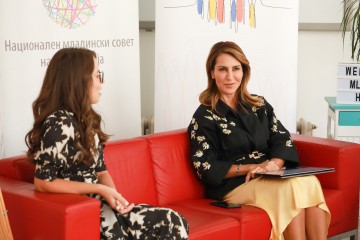
07 September 2021 | News
Bregu: It is time for youth to be louder and play smarter
Skopje – “I would highly encourage you to leave the region. Yes, go abroad and see other cultures, but come back. Only by learning from others we can make our region better place for all of us and make a change. That is why we do not want to invent algorithm, but to make youth voices being heard. In that regard, I want to compliment you for trying hard to implement policies and ...
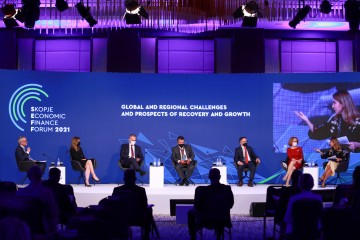
06 September 2021 | News
Bregu: RCC to launch regional coalition on jobs and skills to keep youth in the region
Skopje – “There is still high interest of youngsters to stay in the region. And this is our advantage. They are our greatest asset. They are the engine driving regional cooperation and EU accession because they see the opportunities and they do not carry the historic baggage of conflict from previous generations.”, said Majlinda Bregu, Secretary General of the Regional Cooperation ...

20 August 2021 | News
Romanian Alexandru Mironescu gets Heart of Sarajevo for the Best Student Film
Sarajevo - Young Romanian Director, Alexandru Mironescu, with his movie Summer Planning, got a Heart of Sarajevo for the Best Student Film, at an award ceremony of the 27th Sarajevo Film Festival held last night. The Regional Cooperation Council (RCC) is a patron of this award since its inception in 2017.
13 August 2021 | News
Bregu: Cooperation between youth is crucial for the future of the region
Sarajevo - For the 5th time in a row the Regional Cooperation Council (RCC) is the patron of the 'Heart of Sarajevo' award for the Best Student Film at the 27th Sarajevo Film Festival (SFF), opening today and lasting until 20 August.
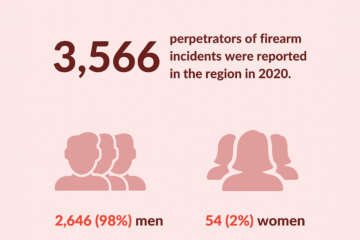
16 July 2021 | News
98% of firearm incidents perpetrators in the region are men
Sarajevo/Belgrade - 3,566 perpetrators of firearm incidents were reported in South East Europe (SEE) in 2020. For 2,700 perpetrators whose gender was specified, 98% or 2646 are men and only 2% or 54 are women, reveals the latest regional Armed Violence Monitor report, issued by the South Eastern and Eastern Europe Clearinghouse for the Control of Small Arms and Light Weapons (SEESAC), a regional ...
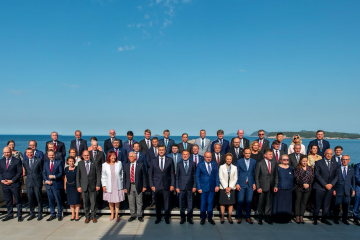
10 July 2021 | News
Bregu: Kinship, solidarity and political pragmatism give sense to regional cooperation, benefits of which have been proven time and time again
Dubrovnik/Sarajevo – “It is not bureaucracy and business as usual agenda that gives a sense to regional cooperation. It’s kinship, solidarity and political pragmatism. That’s what we are trying to do. To give a face to valued cooperation in a process where people are participating. Benefits of cooperation have been proven time and time again, success stories that RCC ...
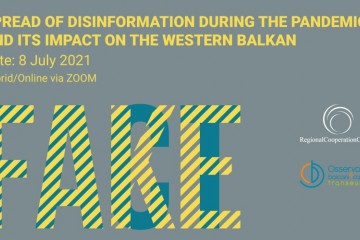
08 July 2021 | News
Kapetanovic: Addressing the spread of disinformation should be an integral part of the overall security policy
Sarajevo – “SecuriMeter data show us that people of the Western Balkans perceive three areas of public life to be threatened by intentional disinformation: economy and finance (57%), trust in public institutions (54%), and trust in elected representatives (51%). With that in mind, it makes sense to conclude and reiterate that addressing the spread of disinformation should be viewed ...
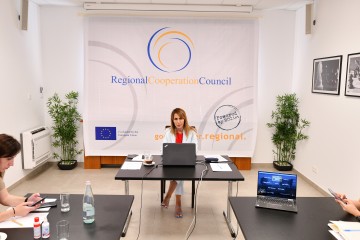
05 July 2021 | News
Bregu: Let the Roaming Free be the turning point for the regional cooperation - “Borderless Connectivity” benefits everyone
RCC Secretary General Bregu takes part in the Berlin Process Summit hosted by German Chancellor Merkel Tirana/Berlin/Sarajevo – “We know regional cooperation will prevail on the strength of its ideas and ideals, not on the disputes and the name of documents. We know economies of the region will be competitive when they should be, and collaborative when they must be. We just ...
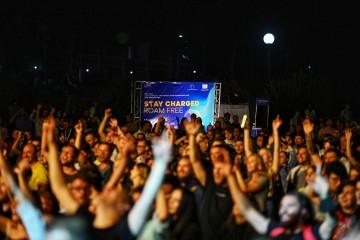
02 July 2021 | News
Regional Roaming Agreement is clear: Roaming charges in the Western Balkans are now ZERO
The Regional Cooperation Council is pleased and happy that the roam like at home has entered into force in the Western Balkans as of 1 July. We take pride and are happy that this successful process we facilitated in eliminating barriers, borders, and tariff related to mobile traffic in the region has finally happened. It is result of the hard work between the region’s governments, regulatory ...
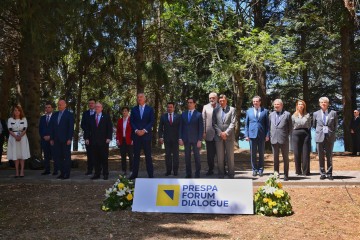
02 July 2021 | News
Bregu: 71% of young people from Western Balkans would go live and work abroad – this is an alarm bell for us all
Ohrid – “The prospect of potential EU membership has been a driving force during all these years, for all Western Balkan economies. According to the Balkan Barometer data, the support of Western Balkans citizens of the EU membership is steadily increasing. Compared to 2016, when it was supported by 39% of WB citizens, 62% of the citizens are supporting it now. We don’t know ...
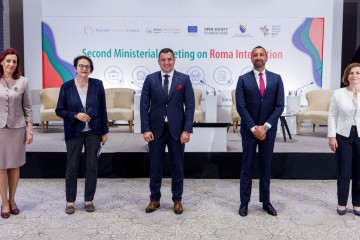
28 June 2021 | News
Bregu: Discrimination against Roma remains very high, and we have to take actions to reduce and prevent it
Sarajevo – “According to the Balkan Barometer 2021, around 40% of the businesses in the Western Balkans are still reluctant to hire Roma even when they meet the criteria. 63% of Western Balkan citizens do not want their children to share the classroom with Roma children. So, while Poznan Declaration adopted by the region’s leaders 2 years ago clearly stipulates achievements ...
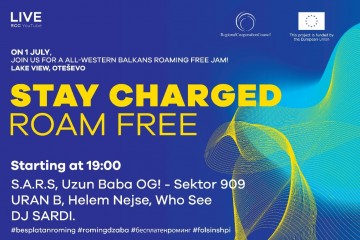
27 June 2021 | News
As of 1 July roaming in the Western Balkans will be 0 - Stay Charged, Roam Free
Sarajevo – As of 1 July 2021 the entire Western Balkans will be a roaming free zone. Roaming costs between Albania, Bosnia and Herzegovina, Kosovo*, Montenegro, North Macedonia and Serbia will be zero.
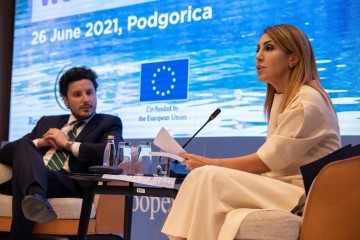
25 June 2021 | News
Bregu: People want and need to be connected in many ways and Roaming Free region is one of the ways enabling it
Podgorica – “People want and need to be connected in many ways and Roaming Free region is one of the ways enabling it. Looking back three years ago, when the Western Balkan Leaders decided to lower the roaming prices within the region, no one had thought that we would have region with 0 roaming charges that soon. And here we are, counting days before Roaming Free Western Balkans,” ...
24 June 2021 | News
Bregu: Balkan Barometer reveals human uncertainty and vulnerability are main concerns followed by some goodish news on benefits of regional cooperation
Tirana – “This, seventh in a row, Balkan Barometer shows human uncertainty and vulnerability are the main concerns followed by some goodish news which is the consciousness about the benefits of regional cooperation. For 49% of Western Balkan citizens, unemployment is the biggest problem, as it is for young people as well, while 46% are most worried about the economic situation. ...
22 June 2021 | News
RCC to Present Balkan Barometer 2021 - Public and Business Viewpoints on Situation in our Region
Tirana – The Regional Cooperation Council (RCC) is to present the 2021 edition of Balkan Barometer on Thursday, 24 June 2021, starting at 10:00, in Tirana. This is the 7th edition of annual public and business opinion survey commissioned by the RCC which examines Western Balkan citizens and businesses perceptions and expectations towards a variety of thematic areas, such as the EU integration ...
17 June 2021 | News
Bregu: Voice, concerns, hopes & expectations of the people from the region are core of the RCC work
Antalya – Leaders of the South-East European Cooperation Process (SEECP) approved the RCC-developed strategy for socio-economic development of South East Europe (SEE) in the next decade – SEE2030 Strategy, at their Summit held in Antalya, Turkey today.
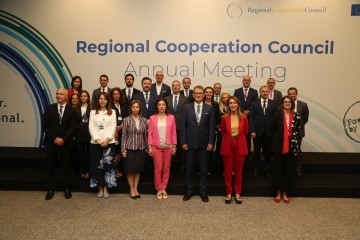
16 June 2021 | News
Bregu: 2020 was difficult, but a real progress and achievements have been made for development of our region
Antalya – “Last year, ruled by the pandemic has definitely showcased the extent of our interconnectivity and interdependency and demonstrated that in cooperating, we boost our strengths and resilience. It is clear that regional socio-economic integration is crucial for regional development. There is no doubt about the fact that cooperation brings mutual benefit to its participants. ...
11 June 2021 | News
Data do matter for identifying effective measures and policies in addressing labour markets’ structural weaknesses, including informal employment in particular
Sarajevo/Online – “In 2019, the average employment rate in the Western Balkans (WB) grew to a historically high level, with new jobs being created throughout the region. New job creation by in large came to a halt in 2020 due to the effects of the coronavirus. Despite overall economic growth prior to the pandemic, relatively low activity and employment rates compared to ...
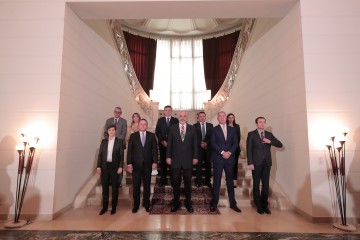
10 June 2021 | News
Bregu: The distance between the vision & plan for Common Regional Market calls for more resolute actions
Tirana – “EU integration support in the Western Balkans continues to increase: this year it is backed up by 62% of citizens compared to 59% of last year. The support of our citizens and businesses of regional cooperation is even higher - 77% of citizens believe regional cooperation can contribute to better political, economic or security situation at home, while 69% of businesses ...

09 June 2021 | News
Kapetanovic: Justice system professionals are key players in guaranteeing equal rights to all
Sarajevo – Regional Cooperation Council (RCC) in cooperation with the Council of Europe (CoE) Programme for Human Rights Education for Legal Professionals (HELP) and GIZ Open Regional Fund for South East Europe - Legal Reform launched on 9 June the online course ‘Access to justice for women’ within the framework of the activities of SEE Judicial Training Institutes network ...
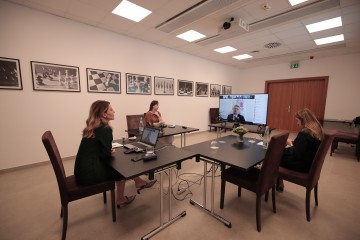
08 June 2021 | News
Bregu: Common Regional Market is a rule of thumb, not a law of nature
Sarajevo/Tirana – “Common Regional Market (CRM) is a rule of thumb, not a law of nature. It doesn’t apply to every single national vision a government or economy in the region has, nor to every kind of good or bad bilateral relations. It is a broaden-and-build plan, endorsed by the Leaders of this region to enable a better region. The RCC is only trying to steer an intense ...

31 May 2021 | News
Bregu: With regional youth unemployment rate at 35.1% the need to act is clear, as youth is our most precious asset
Sarajevo/Online – “Youth and jobs has not been a good combination in the Western Balkans for some time. The average regional youth unemployment rate in 2020 was 35.1%, which is more than double the European Union (EU) rate of 16.9%. Some of it can be blamed on the COVID 19 pandemic that stopped job creation, but changing the situation with youth unemployment requires eliminating ...
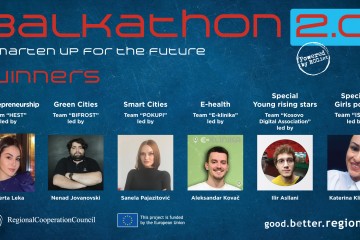
28 May 2021 | News
Bregu: Congratulations to all Balkathon winners who showed young people of our region are innovative and creative
Sarajevo/ Podgorica/Tirana – The Regional Cooperation Council (RCC) presents winners of the second Western Balkans online competition for the best digital solutions, BALKATHON 2.0:
27 May 2021 | News
BALKHATHON 2.0 award ceremony: Six Best Teams to be Awarded for their Digital Solutions
Sarajevo/Podgorica – Winners of the second Western Balkans’ online competition for the best digital solutions, BALKATHON 2.0 are to receive their awards tomorrow, 28 May 2021, at the final event starting at 10.00 hrs live on the Regional Cooperation Council (RCC) YouTube channel and Facebook page.
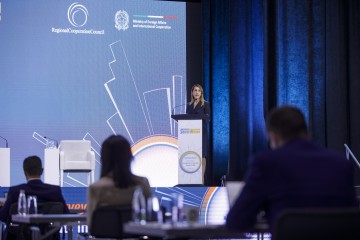
24 May 2021 | News
Bregu: 70% of Western Balkans citizens are afraid their children or young relatives might be radicalised online
Sarajevo – “The current global pandemic made it clear that security threats are not taking any time off. The region finds it very important to work on addressing the security challenges in the Western Balkans. It is quite interesting that 55% of those 82% who point out organised crime as the main security threat say it is corruption that fuels its existence,” said Secretary ...
23 May 2021 | News
RCC to present Western Balkans SecuriMeter - the first-ever regional Public Opinion Survey on Security
Sarajevo - The Regional Cooperation Council (RCC) with support of Italian Ministry of Foreign Affairs and International Cooperation will present the first-ever regional Public Opinion Survey on Security issues – Western Balkans SecuriMeter on Monday, 24 May 2021, starting at 10:00 CET. The presentation can be followed on Zoom and live on RCC social media channels, Youtube and Facebook. ...
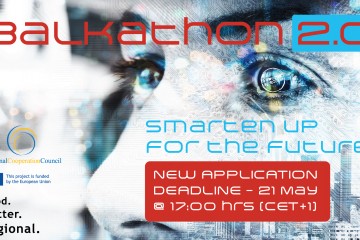
19 May 2021 | News
Balkathon 2.0 Application Deadline Extends Until 21 May at 17.00 CET
You see yourself as the creator of new age? You have an idea that you want to develop? You seek an opportunity that will help your idea become reality? We have one word for you – Balkathon2.0

19 May 2021 | News
Bregu: Regional cooperation with clear, targeted goals and meeting deliverables is more urgent than ever
Sarajevo/Tirana–“Regional cooperation with clear, targeted goals and meeting deliverables is more urgent than ever. Establishing a Common Regional Market which will attract investors, support real added value of industries, promote innovation, ensure digitalization and bring the Western Balkans closer to the EU standards, will smoothen recovery and enhance resilience to future ...

11 May 2021 | News
Balkathon 2.0 Info Session Set for Friday, 14 May
Sarajevo – With Balkathon 2.0 in motion for almost a week now, the Regional Cooperation Council (RCC) is organizing Info session day on Friday, 14 May 2021 at 13.00 for all interested participants. During the Info session the RCC staff will explain all details about Balkathon registration process and answer questions related to the competition. The info session will be held online via ...
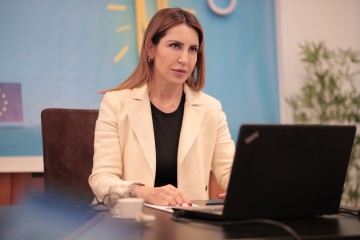
07 May 2021 | News
Bregu: Region’s efforts on the Common Regional Market reform agenda are widely recognized & supported
RCC hosts the first Donor Coordination meeting on Common Regional Market Sarajevo/Tirana – “Region’s efforts regarding the Common Regional Market (CRM) reform agenda are widely recognized and supported, including at the recent G7 Foreign and Development Ministers’ Meeting, where the leaders supported further progress on regional cooperation through the Common ...

05 May 2021 | News
BALKATHON 2.0 IS ON: Apply till 19 May and you can win mentoring and one of six awards from the 54.000 EUR award fund
For the second time the RCC is organising an online competition for best digital solutions – Balkathon 2.0 Sarajevo – After last year’s successful Balkathon, the Regional Cooperation Council (RCC) is organising the second Western Balkans’ online competition for the best digital solutions Balkathon 2.0 – we are looking for a fresh, innovative and unique ideas ...

04 May 2021 | News
Bregu: Cooperative policies won’t happen unless they have domestic support at home and we commit ourselves to meeting what was promised
Roaming free Western Balkans Six as of 1 July: Stay Charged, Roam Free! “1.4 million people in the Western Balkans are registered as unemployed. Out of that number, 760,000 are women, while 173,000 are young people. There are 1 million more men working in the Western Balkans than women. Are you still wondering why we need the Common Regional Market?

19 April 2021 | News
Bregu: 93% of young people in the Western Balkans believe public administrations should involve young people in decision-making
Sarajevo, Tirana – “According to Balkan Barometer 2021, 93% of young people in the Western Balkans age 18-24 believe that public administrations should strengthen mechanisms for consulting and involving young people in decision-making. This clearly shows the path for all our further actions in which youth, policy makers and donors will sit together to discuss in constructive way ...
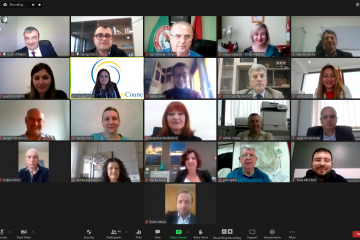
19 April 2021 | News
Greater engagement of social partners in tackling undeclared work in the Western Balkans is much needed, authorities and social partners agree
Sarajevo – “The Regional Cooperation Council’s (RCC) Employment and Social Affairs Platform 2 (ESAP 2) project aims to support regional cooperation among the Western Balkan (WB) economies in transforming undeclared work into declared work, pursuing a holistic integrated strategic approach, akin to that of the European Union (EU). Enhanced cooperation between enforcement ...

16 April 2021 | News
Balance between prevention and deterrence one of key elements for successful, structured approach to formalizing undeclared work
Sarajevo – “COVID 19 pandemic introduced many new challenges to labour markets globally and in Western Balkans, as this region has low activity and employment rates on one hand and high rates of informal work on the other. Current times are very challenging and the pandemic is impacting both formal and informal jobs. We at the RCC ESAP 2 project are glad and honored to partner ...

15 April 2021 | News
Bregu: Men outnumber women in the region’s labour force by more than a million
Sarajevo/New York – The Regional Cooperation Council (RCC) and the United Nations Development Programme (UNDP) launched today the Regional Network of Women in STEM (Science, Technology, Engineering, and Mathematics) as part of a RCC-UNDP joint initiative on Women Economic Empowerment (WEE), drawing on the Common Regional Market Action Plan 2021-2024.
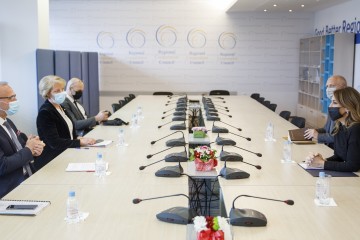
14 April 2021 | News
Bregu, Grlic-Radman discuss South East Europe Strategy 2030 and Green Lanes between EU and WB
Sarajevo – The Secretary General of the Regional Cooperation Council (RCC), Majlinda Bregu, welcomed the Minister of Foreign and European Affairs of Croatia, Gordan Grlić-Radman, at the organisation’s headquarters in Sarajevo today.
08 April 2021 | News
Western Balkans endorses Tirana Declaration to Support Tourism in the Region
Sarajevo/Tirana – Ministers and representatives of the six Western Balkans (WB) governments endorsed the Tirana Declaration on supporting sustainable tourism recovery and growth in the region, at the high-level regional conference marking the finalisation of the Regional Cooperation Council (RCC)’s EU-funded Tourism Development and Promotion project, held in Tirana today.

08 April 2021 | News
Message on the occasion of 8 April, the International Roma Day
Today we mark one of the most important days for all Roma: the jubilee 50th Anniversary of the First World Romani Congress held back in 1971 in London.
06 April 2021 | News
Tirana Declaration endorsement to mark the finalisation of RCC’s Tourism Development and Promotion project
Sarajevo, Tirana – The Regional Cooperation Council (RCC) and its Triple P Tourism Project are organising a 2-day Regional Conference - Tourism as a Key to Sustainable Development which will kick off on 7 April marking the finalisation of the RCC’s EU funded Triple P Tourism Development and Promotion project. Paving the way for tourism and travel industry rehabilitation, the participating ...
17 March 2021 | News
Bregu: 69% of Western Balkans businesses believe quality of regional cooperation is important for quality of their business
Sarajevo – The Regional Cooperation Council (RCC) hosted the Minister of Foreign Affairs of Serbia, Nikola Selaković, in its Sarajevo headquarters today, where he met with the RCC delegation led by the organisation’s Secretary General, Majlinda Bregu, discussing the regional cooperation and the implementation of the Common Regional Market Action Plan in particular.
11 March 2021 | News
Bregu: 77% of Western Balkans citizens agree that the relations in the region are better than a year ago
Sarajevo/Tirana – “The months since our last meeting in October have been difficult with the onset of new Covid-19 waves and new variants of the virus turning things topsy-turvy with a downward spiralling. In terms of regional cooperation, the big good news was the success of the Sofia Summit of the Berlin Process and the endorsement of the Declaration on Green Agenda for the ...

08 March 2021 | News
RCC’s “WE’’ Campaign Continues: Only once you are authentic, can you truly bring your best into the business!
Sarajevo/Tirana/Belgrade – “Business world is harsh for young people, especially women in Western Balkans, where they account for only 27.5% of business owners, and just 14.2% of companies’ top managers are female. Gender prejudices are not vanished yet, but there are always those who "fight" them and win, like Zoja Kukic, an entrepreneur from Serbia. And we, as ...
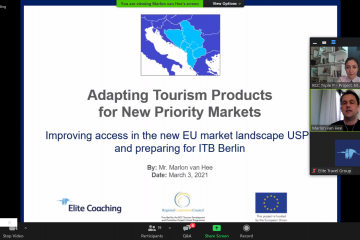
05 March 2021 | News
Adapting Tourism Products for New Priority Markets webinars
Elite Travel Group in association with RCC Triple P – Tourism Development and Promotion Project funded by the EU started a series of free webinars on 3rd March 2020 aiming to provide a rapid response for the post-pandemic Western Balkan tourism sector to restart.

02 March 2021 | News
Bregu: Futourismo is a new hope to help our region recover its tourism
Tirana/Sarajevo – Seven teams from the Western Balkans: • Guidi for app Veni, Vidi, Guidi • BIB for 'Be in Balkan' Mobile Application, • Digital Clinic for e-Health Tourism • TED for Safe Traveling Western Balkans • Sanatec7 for 'Virtual Culture' • ...

01 March 2021 | News
Six Western Balkans projects aimed at helping region’s tourism to be awarded 15.000 EUR each, at a ceremony tomorrow
Sarajevo/Tirana – On 3 February 2021, the Regional Cooperation Council (RCC) and its Triple P Tourism Project launched the 1st regional FUTOURISMO competition, seeking innovative digital solutions that will help mitigate the negative impact of the COVID-19 pandemic in the heavily affected sector of tourism.
25 February 2021 | News
RCC, CEF reinforce cooperation to support region’s European Integration
Secretary General Bregu and Director Repansek sign Memorandum of Understanding between the two organisations Ljubljana/Tirana/Sarajevo – Secretary General of the Regional Cooperation Council (RCC), Majlinda Bregu,and Director of the Center of Excellence in Finance (CEF), Jana Repanšek,signed a Memorandum of Understanding (MoU) on mutual cooperation between the ...
23 February 2021 | News
Roaming free Western Balkans as of 1 July 2021 brings the region one step closer to the WB-EU roaming charges reduction
Sarajevo – “The signing of the Western Balkans Regional Roaming Agreement in April 2019 was a historic accomplishment and one of the key deliverables of the Digital Agenda for the Western Balkans, producing tangible benefits for citizens while testing our commitment and confidence in regional dialogue. I am confident the region will deliver again and after the pandemic ends, our ...

03 February 2021 | News
RCC launches FUTOURISMO, regional competition to boost tourism in the Western Balkans
Sarajevo - The Regional Cooperation Council (RCC) and its EU funded Tourism Project are organising the first Western Balkans FUTOURISMO competition, seeking innovative digital solutions that will help mitigate the negative impact of the COVID-19 pandemic in the heavily affected sector of tourism.
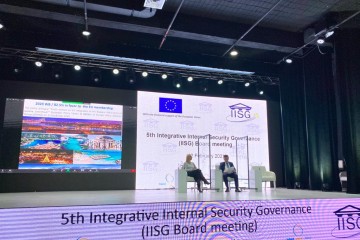
02 February 2021 | News
Integrative Internal Security Governance (IISG) holds its 5th Board meeting for the first time under the RCC umbrella
Sarajevo – The Western Balkan interior ministers adopted the annual work plan and the two methodologies of the Integrative Internal Security Governance (IISG), and also approved the membership of seven new IISG partners at the fifth meeting of the IISG Board held for the first time under the umbrella of the Regional Cooperation Council (RCC) in Sarajevo today.

05 January 2021 | News
RCC: Supporting Western Balkans tourism through art
Sarajevo - The Regional Cooperation Council (RCC) nurtures a beautiful blossom in its midst, with a substance more resilient than any form we try to give to our incentives, the project that promotes tourism, the natural beauties and unique art of our blessed countries.
18 December 2020 | News
Bregu: We must change in order to provide healthier environment, cleaner air, to preserve fresh and drinking water, to survive
Sarajevo/Tirana - "The overwhelming 74% of Western Balkans (WB) citizens see pollution as a problem, which is not surprising, considering that this region holds the most polluted cities in the world, because 70% of our electricity is produced by burning coal. Not only this, 16 thermal power plants in the WB produce more pollution than 250 plants in the EU. Air pollution is directly responsible ...
14 December 2020 | News
Bregu: Instead of creating policies FOR youth we believe in co-creating policies WITH youth
Sarajevo/Tirana/Brussels - “Youth makes 21% of Western Balkans population. If we know that youth unemployment in the Western Balkans is over 35%; that it takes around 2 years for a young person to land the job after the school; that 25% of youth are not in employment, education and training; or that 71% of our youth are thinking to leave the region and find jobs abroad – than ...
11 December 2020 | News
Bregu: Hire women, promote women and invest in women - that is our future
Sarajevo/Tirana/New York - "What we are launching today is a platform which will allow us all to strategise on how to best contribute to unlocking women power in the region. The reasons are obvious. Prior to pandemic, almost two-thirds of working-age women in the Western Balkans were either unemployed or outside the labour force. Unlocking the potential of half the population is not ...
10 December 2020 | News
RCC, UNDP to launch ‘Women’s Economic Empowerment: Areas for joint actions in the Western Balkans’ initiative
Tirana/Sarajevo - The Regional Cooperation Council (RCC) and the United Nations Development Programme (UNDP) will be launching an initiative, 'Women’s Economic Empowerment: Areas for joint actions in the Western Balkans', aiming to enhance collaboration among different stakeholders and underpin systemic change in addressing gender inequalities and co-designing initiatives on ...
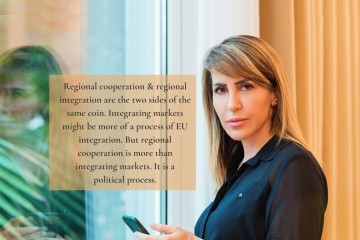
07 December 2020 | News
‘Regional cooperation’ and ‘regional integration’ are the two sides of the same coin
Brussels/Sarajevo - "‘Regional cooperation’ and ‘regional integration’ are the two sides of the same coin. Integrating markets might be more of a process of EU integration. But regional cooperation is more than integrating markets. It is a political process. That is why the Common Regional Market Action Plan, signed by WB6 leaders in Sofia last month, is a good ...
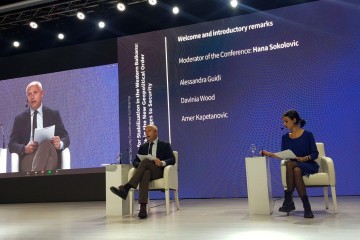
20 November 2020 | News
Over-securitisation of illegal immigration can be dangerous, but neglecting its detrimental potential can be equally dangerous too
Sarajevo – “Illegal immigration is a complex, multifaceted phenomenon which no single country can fix alone. We should take into account the opinion of 63% of Western Balkan citizens who perceive it as a direct security threat. Over-securitisation of this issue can be dangerous, but neglecting its detrimental potential can be equally dangerous too. Currently, bilateral and regional ...
19 November 2020 | News
Addressing livelihood topics of social rights - jobs, wages, access to education, health care – more important than ever
Sarajevo/Brussels/Tirana – “It is no longer news that Western Balkan societies fall short in many socio-economic aspects. We, together with our partners – governments in the region, European Union (EU) and many others, work to reduce this gap between the region and the EU. Common Regional Market recently adopted in Sofia is a plan on how to overcome these challenges by boosting ...
17 November 2020 | News
Tackling undeclared work in times of COVID 19 pandemic focuses on prevention of declared work sliding back into the undeclared zone
Online – “Main aim of our work being promotion of regional cooperation in transforming the undeclared into declared work in the Western Balkans has so far resulted in gathering of the relevant region’s institutions around the regional Network. Today, at its 2nd plenary meeting the Western Balkans Network Tackling Undeclared Work shows commitment to deal with this demanding ...
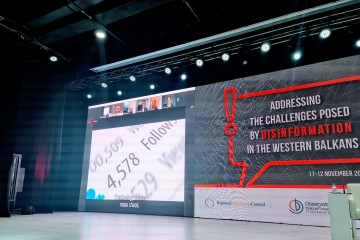
12 November 2020 | News
Miscevic: We must work together on developing a culture of critical media literacy in our societies and build disinformation resilience
Sarajevo - “We must immediately begin to work together on developing a culture of critical media literacy in our societies and build disinformation resilience. Developing resistance to fake news should be viewed almost like a key component of the overall security policy of any Western Balkan economy,” said Tanja Miscevic, RCC’s Deputy Secretary General, at the opening of ...
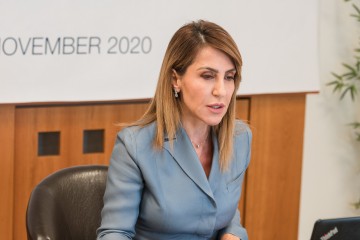
10 November 2020 | News
Transformation will not happen overnight but setting bold goals will accelerate the change if we can work together
Sofia - A new phase of regional economic integration started today with the Western Balkans Six leaders endorsing the Common Regional Market Action Plan, and the Green Agenda for the Western Balkans, both facilitated by the Regional Cooperation Council (RCC), at the Berlin Process Summit held online in Sofia today.
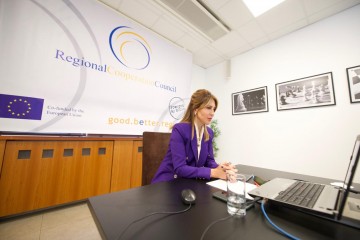
09 November 2020 | News
Western Balkan governments will have to shoulder responsibility to implement Common Regional Market
Sofia - “Tomorrow the six Western Balkan leaders will endorse the new Action Plan for this region - Common Regional Market. Common Regional Market is not a novelty from the scratch: It is a great plan based on four freedoms, the same as EU Single Market, strengthened with investment, digital, industry and innovation. We are proud to have shouldered the heavy burden of this process together ...
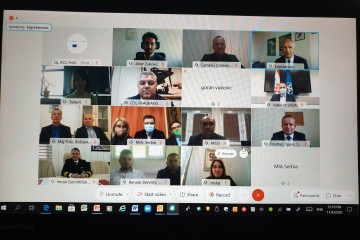
04 November 2020 | News
RCC to assume SEEMIC Chairmanship in 2021
02 November 2020 | News
While EU and the world are advancing to fit to the Digital Age, we need to run twice as fast to close the discrepancies
Tirana/Sarajevo – “At the last years' Digital Summit in Belgrade we witnessed a success story when the ministers of the Western Balkans (WB) six in charge of information and communication technologies signed the new Regional Roaming Agreement, paving a way for roaming free WB in 2021. I’m confident the region will deliver again having full support from European Commission ...
26 October 2020 | News
We now pay between 83% and 96% less roaming charges in the entire Western Balkans, and as of July 2021 roaming costs will be 0
Tirana/Sarajevo – The Third Western Balkans Digital Summit (WBDS) has been opened in Tirana today, continuing its legacy, which started at the WBDS Skopje in 2018 – the first ever WB DS that initiated digital policy dialogue on WB digital transformation at the highest prime ministers level, followed by the DS in Belgrade in 2019 with the signing of the Regional Roaming Agreement. ...
25 October 2020 | News
Tirana to host Ministerial Meeting on Roma Integration: housing, civil registration, data collection & budgeting in focus
Tirana - The Ministers responsible for integration of Roma in the Western Balkans economies will meet in Tirana on Tuesday to discuss the progress achieved in the first year of implementation of the Declaration on Roma Integration endorsed at the Poznan Summit last year. The Roma Integration Declaration set important targets for the governments to achieve before they can join the EU, as Roma ...

23 October 2020 | News
Tirana to host the 3rd Western Balkans Digital Summit
Tirana/Sarajevo – The Regional Cooperation Council (RCC) is once again supporting the biggest digital event in the region - the Western Balkans Digital Summit (WBDS) - the third in a row annual event taking the digital cooperation to the next level. This year WBDS will be hosted by the Albanian Government and will be in hybrid format, with online sessions during 26-28 of October 2020, ...
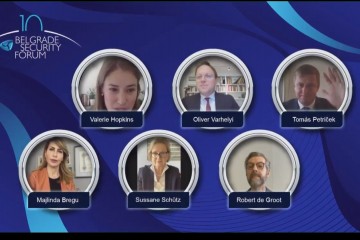
22 October 2020 | News
CRM is a stepping stone for the WB to align with EU single market rules
Belgrade/Sarajevo – “Some estimates say that regional economic integration in the Western Balkans could generate up to 2.5% of GDP growth should the level of integration reach the level of EFTA, and should it reach the EU level of integration, it could generate 6.7% of GDP growth. Therefore, I am pleased that by Sofia Summit on 10 November we will have a very good roadmap action ...
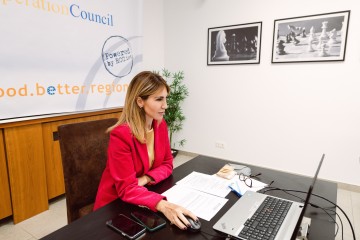
16 October 2020 | News
Bregu: The region needs common market to ensure free movement of business people, drivers and citizens in the Western Balkans
Sarajevo/Tirana/Skopje - “We are not a perfect region, but we want to make the best out of an imperfect picture. As a first step from today the Regional Cooperation Council is proud to facilitate an all-inclusive regional agreement on movement with ID cards. Our commercial and trade relations in the region cannot run anymore on business as usual basis. We have to have a common market, ...
15 October 2020 | News
Bregu: Common Regional Market is the way forward
Sarajevo, Tirana - “Multi Annual Action Plan for Regional Economic Area (MAP REA) is in its final stage of implementation. Now it’s clear that the region has benefited from this regional frame but is also ready for an upgrade. We have the Regional Roaming Agreement, Regional Investment Reform Agenda, Digital Summits as a success stories that remind us of the power of togetherness ...
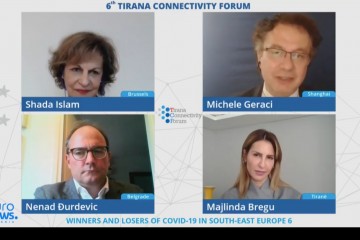
01 October 2020 | News
Economic integration among the Western Balkans 6, and with the EU, is the most important in this moment
Tirana/Sarajevo – “I believe that closer relations in the process of European integration of the region, especially economic integration among the Western Balkans (WB) 6, and with the EU, are the most important in this moment. Because regional economic integration of the WB is not a self-standing process, but an instrument to increase region’s convergence with the EU single ...

30 September 2020 | News
Gender equality does not concern only women, but the whole society and gender mainstreaming benefits men just as it does women
Sarajevo – “The good news is that the percentage of women in armed forces in Western Balkans is increasing. According to regional ministries of defence, the share of women soldiers is 13% in Albania, 8,46% in BiH, 5% in North Macedonia, 8,17% in Montenegro and 15,68% Serbia. NATO average is 10,9%, while in Bulgaria that share grow from 12% to 20% in just a decade. Slovenia has ...
30 September 2020 | News
Moving Away from “Reducing Undeclared Work” Approach to “Transforming It into Declared Work” in the Western Balkans
Sarajevo – “Informal economy is a chronic problem of many economies, Western Balkans’ in particular, as estimates show that up to 30% of the employed persons in the region work undeclared. Today’s meeting is about to explore ways on how all institutions in charge of this issue – Labour Ministries, Inspectorates and Tax Authorities, can coordinate their work on ...
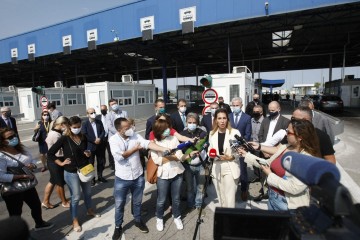
22 September 2020 | News
Bregu: With joint border crossing points Western Balkans could save 800 mil euro a year – we should set them among WB but also with EU
Sarajevo/Skopje/Belgrade – “If we would have more joint border crossing points and if those would be working 24/7, with all the regulation in place, phytosanitary proc
02 September 2020 | News
Growing number of internet users is potential for blossom of cybercrime, we need to step up protection
Sarajevo – “The world we live in has never been more connected. The number of Internet users has exceeded 4.5 billion, so 60% of world population is already online, and more than a half will be using social media by the end of 2020. Western Balkans is not legging behind these numbers; the number of users in Bosnia and Herzegovina increased by 81% in the last 15 years, in Kosovo* by 80%, ...

28 August 2020 | News
What would we expect from a more geopolitical EU?
Bratislava/Tirana/Sarajevo – “What would we expect from a more geopolitical EU? Simple: Clear and bold decisions to acknowledge the good of having Western Balkans in the EU as well as the damage associated with long prolong EU membership. Western Balkans citizens would expect more resilient and righteous decisions from EU Member States. Their domestic political landscape and worries often ...
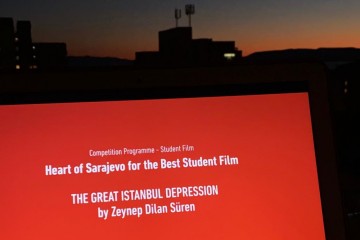
20 August 2020 | News
Heart of Sarajevo for the Best Student Film 2020 goes to Zeynep Dilan Süren for “The Great Istanbul Depression”
Sarajevo – The Regional Cooperation Council (RCC) is delighted to confirm that the young director Ms Zeynep Dilan Süren from Turkey with the movie “The Great Istanbul Depression” won the Heart of Sarajevo for the Best Student Film, an award Powered by RCC since the inception of this competition category in 2017, at the official ceremony at 26th edition Sarajevo Film Festival (SFF), ...

16 August 2020 | News
Miscevic: We need to focus on helping resolving issues young people are facing in order to keep them in our region
Sarajevo – “I am happy the RCC put youth and resolving issues they are facing, especially related to their career developments, and jobs in focus, with our EU-funded Youth Lab project that was launched beginning this year, but also through a series other activities, including our support for students, young filmmakers, from the region, through the Sarajevo Film Festival for 4 years in ...

13 August 2020 | News
Bregu: We’ve got your back, it’s youth time!
Sarajevo – For the 4th time in a row the Regional Cooperation Council (RCC) is the patron of the 'Heart of Sarajevo' award for the Best Student Film at the 26th Sarajevo Film Festival (SFF), which this year, due to the corona virus pandemic, goes fully online.
16 July 2020 | News
Bregu: Balkathon – Smarten up for the future is not only regional response to pandemic outbreak but also a mind-setter for the changing, digital world
Sarajevo – Miron Lukač on behalf of Portal World Team from Bosnia and Herzegovina, Albana Mucaj on behalf of the Kallz Training Center Team from Albania, and Dritan Mollanji on behalf of Symmetric Team from Albania were awarded for their best innovative solutions for Smart Tourism, Digital Learning and Online Payments at the final session of Balkathon, the 1st Regional Online Competition ...
15 July 2020 | News
BALKATHON FINALS: Best Digital Solutions from the Western Balkans to be Awarded at the Final Session of the 1st Regional Online Competition
Sarajevo - 1st Regional BALKATHON ends tomorrow, 16 July 2020, with selection of the 3 best innovative digital solutions out of 88 applicants from the Western Balkans, at the final online session.
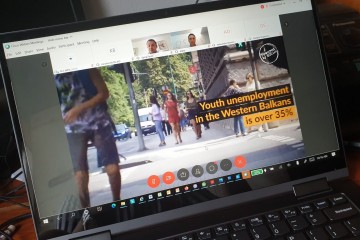
03 July 2020 | News
Youth Unemployment in the Western Balkans: Youth is Crucial in Designing of Employment Policies
RCC’s Western Balkans Youth Lab and Employment and Social Affairs Platform Projects organized webinar tackling policymaking and youth unemployment in the region Sarajevo – “Numerous stories of unemployed young people across the region who want the leave in pursuit of a job and better life are loud and yet also seem silent. That is why the Western Balkan Youth Lab (WBYT) project ...
02 July 2020 | News
1st Western Balkans Balkathon is ON: Apply and RCC will support best ideas for innovative digital solutions development with 10,000 EUR
Sarajevo - Regional Cooperation Council (RCC) is organising the first online Western Balkans’ Balkathon competition to trigger digital innovative and practical business solutions. The regional online Balkathon aims to help the Western Balkans citizens and businesses to recover from effects of the COVID-19 pandemic outbreak that has hit businesses and citizens in the first quarter of 2020 ...
01 July 2020 | News
Bregu: Regional Roaming Agreement was a regional success story
Sarajevo/Tirana – “On this date a year ago we started paying less money for our phone bills, as the Regional Roaming Agreement entered into force reducing roaming costs across the region (Albania, Bosnia and Herzegovina, Kosovo*, Montenegro, North Macedonia and Serbia), as much as 99% in some cases. Data traffic increased for more than 60%, outgoing calls in roaming for more than ...
25 June 2020 | News
Bregu: It is up to the region to retain commitment to cooperation and bring forth tangible progress to citizens
Tirana/Sarajevo/Prishtina – The two meetings have been held today within the South East European Cooperation Process (SEECP) - the meeting of the SEECP Ministers of Foreign Affairs and the RCC Annual Meeting, which RCC co-organised with the outgoing Kosovo SEECP Chairmanship-in-Office (CiO).

24 June 2020 | News
Bregu: Cooperation is the only blueprint that holds the promise of ‘Stronger Together’
Sarajevo – “The regional cooperation continues to grow in prominence with an overwhelming majority of citizens supportive of its role in improving the political, economic and security situation in their home economies - 77%, and 65% of them believes that what brings WB citizens together is more important than what separates us. The quick spread of COVID -19 was a grim reminder ...
23 June 2020 | News
The Shape of the Things to Come - Presentation of Balkan Barometer 2020
Sarajevo – The Regional Cooperation Council (RCC) will present 2020 edition of Balkan Barometer on Wednesday 24 June 2020. This annual public and business opinion survey of the RCC examines the perception and expectations on life and work, prevalent socio-economic and political trends & regional and European integration in the Western Balkan. The 2020 edition presents for the first ...
16 June 2020 | News
Minister Cakaj visits RCC, meets Secretary General Bregu and expresses Albania’s support to RCC and regional cooperation
Sarajevo – Acting Minister of Foreign Affairs of Albania, Gent Cakaj, visited the Regional Cooperation Council (RCC) office in Sarajevo today on the sidelines of his official visit to Sarajevo and meetings with highest Bosnia and Herzegovina’s officials. Minister Cakaj said that he would consider his visit to Sarajevo incomplete without the visit to the RCC, as Albania is very ...
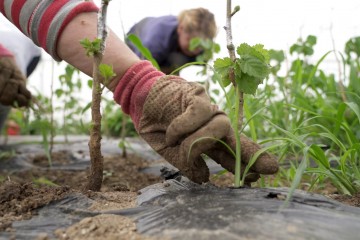
12 June 2020 | News
ESAP 2: Undeclared work in the Western Balkans needs to be formalized, to increase both public revenues and social security
Sarajevo – “The global pandemic caused by the COVID 19 virus has had a profound impact on businesses and workers, as well as economies across the Western Balkans. The undeclared workers, however, have been disproportionately affected since they generally work in low productivity jobs and have little to no savings, and are also mostly excluded from the government’s aid packages. ...
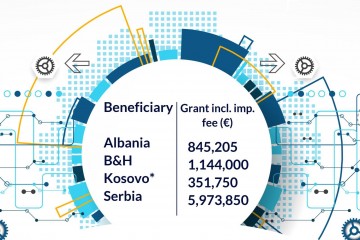
10 June 2020 | News
WBIF awards €8.3 million worth of grants financed by the EU for Western Balkans’ Digital, Environment and Social projects
Sarajevo/Brussels – Good news for the region come from the Brussels today as Western Balkans Investment Framework (WBIF) Steering Committee approved eight grant applications for technical assistance from Albania, Bosnia and Herzegovina, Kosovo* and Serbia, at its session held online today. The projects 8,3 million EUR worth, financed by the European Union, covering digital, environment ...
08 June 2020 | News
Tourism in the Western Balkans: Where and How in the Times of the Pandemic?
Sarajevo – “These are very difficult times for the Western Balkans’ tourism as the consequences of the global corona virus pandemic took the highest toll on travel and tourism industries. For our region it is especially important to find the ways to support these industries and help them recover, given that tourism contributes to the region’s GDP with over 10%”, said Snjezana Derviskadic, ...
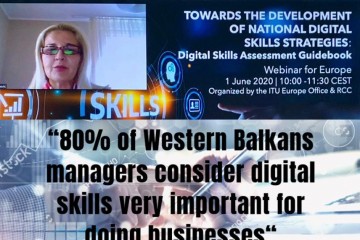
01 June 2020 | News
Balkan Barometer: 80% of Western Balkans managers consider digital skills very important for doing businesses
Sarajevo/Belgrade/Zurich – “Benefits of digital technologies are multi-fold. Not only they can generate greater benefits from macroeconomic perspective but could also ease procedures and make borders less visible, processes less heavy, supply of new services to customers simpler and businesses much faster,“ said Tanja Miščević, Deputy Secretary General of the Regional Cooperation ...
26 May 2020 | News
Bregu: Western Balkans needs to switch its development trajectory from physical capital accumulation to knowledge accumulation
Sarajevo/Tirana/Geneva - “Still unpublished latest edition of the RCC’s annual public and business survey for the Wester Balkans - Balkan Barometer 2020 shows that, as expected, internet was extensively used for communication purposes with the proliferation of social media (69%), while traditionally it was less popular for education (30%) and online shopping (22%). E-government ...

22 May 2020 | News
Green Agenda and Biological Biodiversity for the Western Balkans as important as all other Development Agendas
Sarajevo/Belgrade – “All economic and social development agendas, crucial for the development of our region and its EU-accession journey have to be accompanied by the equal efforts of environment protection and climate change responses. Biodiversity, in that context, is high on the list of priorities as endangering the other species makes us, humans, highly vulnerable as well. ...
19 May 2020 | News
RCC presents its new “Western Balkans Youth Lab” Project: It’s time to change– young people should take the lead
Sarajevo – The Western Balkans not rarely offers shocking facts about youth. From brain drain to labour migration, from mismatch of diplomas with labour market, prejudices or steep unemployment figures. We have decided to act by example. About 20% of all employees in the Regional Cooperation Council (RCC) are young people, and only in the past two months 5 of them have joined us.
18 May 2020 | News
Western Balkans: Amazing virtual museum tours
18th May is International Museum Day and today we are coming together to celebrate the history, art and cultural heritage throughout the museums in the Western Balkans. Museums around the world have closed to prevent the spread of COVID-19, meanwhile their virtual tours are still open and trending. From the comfort of your couch, through the following Western Balkans museums you are able ...
14 May 2020 | News
Bregu: Pandemic created a common awareness that at least for now humankind takes precedence over politics and disputes
Sarajevo – “For all its aggressiveness, the COVID-19 crisis also offers glimmers of hope. It has connected Western Balkans even more, this time in a fight against an invisible enemy. It has persuaded us that cooperation should be resilient. It has created a common awareness that at least for now humankind takes precedence over politics and disputes, while borders are considered ...

08 May 2020 | News
Italian operational protocols for treatment of COVID-19 patients shared with Western Balkans
Sarajevo/Tirana – “Italy has once again given a helping hand to the Western Balkans, and for that we are very grateful. Our Italian friends so generously shared with us their experience and operational protocols for treatment of patients infected with COVID 19. We, the RCC, had this modest task to translate these documents into all the languages of the region and share them with our partner ...
06 May 2020 | News
Bregu: No brilliant regional plan can succeed without strong political leadership and fully synchronized EU- WB trajectories
Sarajevo/Tirana/Zagreb - Now, almost 4 years after we initiated the work on Regional Economic Area (REA) the region is ready to embark on the next phase of deepening regional economic cooperation assure the WB6 economies to have ownership first, and bringing the region closer to the EU internal market. While it is my pleasure to officially commit today the full readiness and dedication ...

30 April 2020 | News
RCC Initiates Regional Working Group on Digital Upskilling in the Western Balkans
Sarajevo – In an attempt to address high digital skills gap present in the Western Balkans and especially obvious in the current situation of economies’ lockdown when many jobs have moved from onsite to online, the Regional Cooperation Council (RCC) initiated and hosted the first meeting of the regional Balkan Digital Skills Multi Stakeholder Working Group.

23 April 2020 | News
Regional innovation fund could trigger economic recovery of the Western Balkans
Sarajevo – In an attempt to address high digital skills gap present in the Western Balkans and especially obvious in the current situation of economies’ lockdown when many jobs have moved from onsite to online, the Regional Cooperation Council (RCC) initiated and hosted the first meeting of the regional Balkan Digital Skills Multi Stakeholder Working Group.
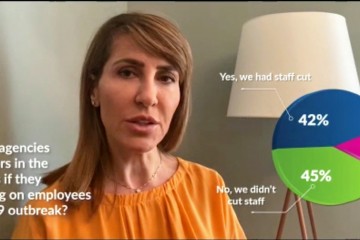
18 April 2020 | News
Bregu: Tourism in the Western Balkans already feels the pinch of COVID-19 pandemic
Sarajevo – “As this pandemic keeps billions of people at home, one sector is already feeling the pinch - tourism. One in five booked trips to Western Balkans planned for 2020 is cancelled. And this makes situation notoriously difficult, knowing that tourism contributes to 10.2% of the region’s GDP in the Western Balkans, while 11.4 % of the total employees are from Travel & ...
08 April 2020 | News
Roma, as all other citizens, are respecting the imposed measures, understanding that when one is in danger, the whole region is in danger
Belgrade/Sarajevo – “To all my fellow Roma, I would like to congratulate 8th of April, the International Roma Day, which marks Roma history, culture, language and heritage. Unfortunately, this year the celebration must take place under extraordinary circumstances, due to the COVID-19 outbreak and the enforced preventive measures. Roma, like others, are also affected by this common ...

07 April 2020 | News
COVID - 19 pandemic causes by far the largest-ever cyber security threat to the region and world
Sarajevo - On 6 April, Regional Cooperation Council (RCC) hosted an online consultative meeting of South East Europe National Security Authorities (SEENSA) participants, in order to set the course for the implementation of planned activities in light of the restrictions imposed by the Covid-19 pandemic, as well as to discuss the potential role of the platform in managing and mitigating ...
24 March 2020 | News
Statement by RCC Secretary General Majlinda Bregu on EU Member States’ decision to open negotiations with Albania and North Macedonia
Tirana/Sarajevo – “Good news for us today as the EU Member States reached a long overdue political agreement to open the accession talks with Albania and North Macedonia, confirming that the future of the Western Balkans is in Europe. I wholeheartedly congratulate both Albania and North Macedonia which demonstrated their determination to advance the EU reform agenda and continue ...
23 March 2020 | News
On its way - Green Corridor enabling easy supply of goods within the Western Balkans and between the region and the European Union
Sarajevo – On the initiative of the Regional Cooperation Council (RCC), representatives of the Governments from South East Europe, European Union (EU) and regional stakeholders are working on the establishment of the Green Corridor within the region and between the Western Balkans (WB) and the EU. The Corridor is envisaged as a set of special procedures that would enable unhindered ...
20 March 2020 | News
Bregu: The only way to prevent shortages of medical equipment or food in WB is to simplify and harmonize sanitary controls – a Green Corridor
Tirana/Sarajevo – The Secretary General of the Regional Cooperation Council (RCC), Majlinda Bregu, spoke last night at the Tirana based RTV Klan’s Opinion show, about the major distress in the region after the European Commission Implementing Regulation (EU) 2020/402, which imposes new rules, for the export of personal protective equipment and medical equipment outside the EU. ...

19 March 2020 | News
RCC WE campaign continues with young Western Balkans’ women studying science, technology, engineering, mathematics
Sarajevo – Ivana Todorovska is a smart hard-working young woman, a student of Analytical Biochemistry at the Faculty of Natural Sciences and Mathematics in Skopje. Ivana’s message to all of us, young women and girls in particular, is that although it is very hard to become a scientist, she won’t stop trying.

18 March 2020 | News
Bregu: Cooperation is crucial in having effective response to fight the pandemic
Sarajevo – “These are days of rapid developments by a minute, both at the level of EU and our region and timing, information sharing and coordination is of essence. Cooperation is crucial in having the effective response to fight the pandemic.
08 March 2020 | News
RCC’s ‘’WE’’ campaign: Don’t be afraid to dream and to make your dreams come true!
Sarajevo – “We are in the 3rd decade of 21st century and yet the tales of successful business women are not frequent but rather breaking news. In the Western Balkans even more so as only 1 in 5 women owns a business. And not only that – employment rate of women in the region in 2018 was only 43.7%”, said Majlinda Bregu, Secretary General of the Regional Cooperation Council (RCC).
05 March 2020 | News
Society should provide young people with knowledge and skills to resist negative influence and propaganda of extremists and radicalized groups
Tirana – “Numbers speak louder than words on the scope of vulnerability of youth to online radicalisation and violent extremism, often leading to terrorism. The World Bank finds that 23% of youngsters in the Western Balkans, aged between 16-24, are neither in school, job, nor in training, feeling excluded from social developments. Combined with registered significant increase in ...

04 March 2020 | News
RCC tourism project exceeds plans; total number of development grants reaches 36
Sarajevo – “With the award of the eight new grants to be implemented over the next six months throughout the Western Balkans, we have reached the total number of 36 tourism development and promotion grants, which well exceeds the originally set target to have some 30 development initiatives implemented through our tourism project,” said Snjezana Derviskadic, RCC Tourism Development ...
03 March 2020 | News
Kapetanovic: Responsible journalism is about consequences it causes to a society rather than about number of clicks or likes
Skopje – “Security challenges of our times are indeed very many - from an outbreak of deadly viruses to outbreak of violent extremism, often leading to terrorist attacks, and fake news not meant to inform, but to mislead. And on top of that journalism is confronted with yet another outbreak – social media. So the real challenge for journalists is finding a way to stop chasing only ...
21 February 2020 | News
RCC presents Balkan Monumental Trail, a new regional tourism route
BELGRADE – “We are very pleased to have used today, the Belgrade International Fair of Tourism, as a staging ground for the launch of the new joint regional cultural tourism route called the Balkan Monumental Trail,” said Snjezana Derviskadic, RCC’s Tourism Development and Promotion Project Team Leader.
21 February 2020 | News
Bregu: Without strategic innovation Western Balkans will not turn inventions into investments – we need to think bigger
Tirana – “Without a strategic innovation function that can enhance the capacities to incubate and accelerate new technologies, companies in the Western Balkans will continue to stockpiling undeveloped inventions and this will not return in an investment. We risk falling into the trap of having breakthrough ideas that are incrementally executed. Innovation in the region is 33,7 % while ...
17 February 2020 | News
Bregu: Affinity, empathy and kinship give sense of cooperation and solidarity, not bureaucracy and “business as usual”
Brussels – “As an Albanian, I’m overwhelmed and most emotional by the immense support shown here today. The November earthquake was maybe the longest minute of my life so far. It is heartbreaking to hear testimonies of those who lost their dearest ones and face the uncertainty of the future for the ones that had lost their home. It is not bureaucracy and a “business as usual” ...
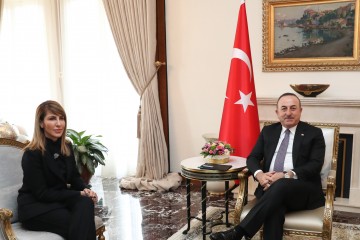
10 February 2020 | News
Bregu: Regional cooperation is all about joint solutions to common challenges
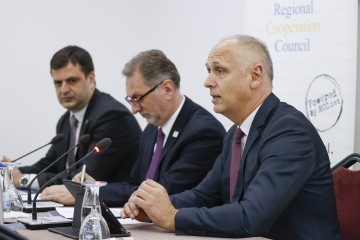
10 February 2020 | News
Kapetanovic: The art of diplomacy is finding functional solutions for real-life issues
Pristina – “There are achievements, success stories, but there are also bilateral disputes in our region as well as a lot of mistrust and suspicion. Bilateralism sometimes threatens to diminish regionalism. But what is the art of diplomacy if not finding a way to work around disputes to find a functional solution to concrete, real-life issues which we face? We can find an alternative ...
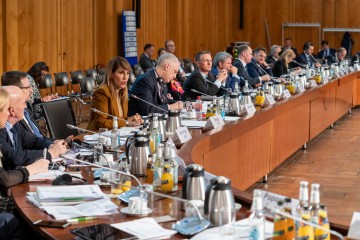
31 January 2020 | News
Bregu: We are committed to enable the region to be an exporter of security
Berlin – “Nearly half of all respondents of the RCC’s Balkan Barometer are unhappy with the security situation in their economy - with estimates that five out of the six surveyed economies, Albania excluded, make the world’s top 20 list for civilian gun ownership. However we are happy to notice that the security reality in the region have already started improve for the better”, ...
31 January 2020 | News
Bregu: This is much needed opportunity to work together on transformation of our countries into the future EU member states
Berlin – The Republic of France has decide to re-join the Regional Cooperation Council (RCC), announced French Minister of Europe and Foreign Affairs, Jean-Yves Le Drian, at the high-level meeting of the Franco-German Coordination Initiative on Small Arms and Light Weapons Control in the Western Balkans, taking place in Berlin today.
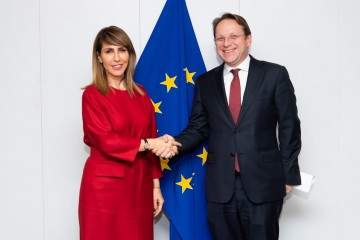
30 January 2020 | News
RCC Secretary General Bregu meets Commissioners Varhelyi and Gabriel in Brussels: RCC remains reliable EU partner in the region
Brussels – “2020 is a critical year for the region and mutual relations between the EU and the Western Balkans but also for unhindered economic growth. RCC remains a reliable partner of the EU in the region but also a reliable partner of the region in the EU. We all have high hopes and expectations of new, positive developments during the Croatian Presidency of the EU and the upcoming ...
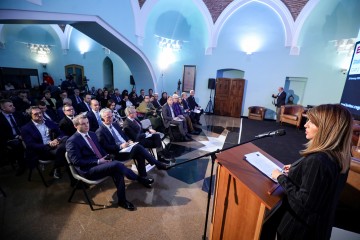
28 January 2020 | News
Bregu: Brain drain the biggest challenge of this decade - Western Balkans working age population declined by more than 400,000 in past 5 years
Sarajevo – “More than 700 000 jobs have been added to the workforce during the past seven years and unemployment has moved for almost a quarter (23%) to around 16%, across the region. They say a tide lifts all boats, large and small. However, not everybody benefited from these economic and labour market improvements during the last decade”, said Majlinda Bregu, Secretary General ...
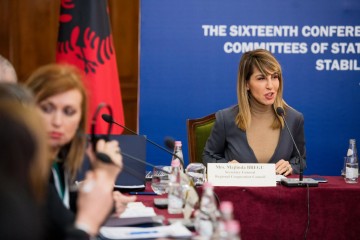
17 January 2020 | News
Bregu: Parliamentary dialogue and cooperation remain a steady beacon in the ongoing struggle for democracy
Tirana – “In times when politics is in critical condition, Parliamentary dialogue between the Western Balkans and EU on the future of the region is much needed. Therefore I would propose to start an institutionalised dialogue In this regard, and the regional Cooperation Council (RCC) stands ready to facilitate it” said RCC Secretary General Majlinda Bregu at the opening of the ...
08 January 2020 | News
RCC: Listen to Women as no challenge can keep them from fulfilling their dreams
RCC’s Women Empowerment - WE- campaign continues featuring remarkable women from the Western Balkans and brings you Uta Ibrahimi - “At the beginning they told me climbing was for men and I did a lot of work to prove them wrong and change that mentality. You can do the same, just listen to women!”

27 December 2019 | News
Bregu: I am gratified that during the leaving year regional cooperation delivered, even under stress
Sarajevo - At the end of 2019, it is time to wrap up the year, summing up activities of the Regional Cooperation Council (RCC) and announcing our future plans: Here is the statement of our Secretary General, Majlinda Bregu on this occasion:
25 December 2019 | News
RCC fully committed to regional cooperation
Sarajevo – There have been many discrepancies and a lack of clear information on the role of the Regional Cooperation Council (RCC) in the so called “Mini-Schengen” initiative meetings. Regional Cooperation Council is invited to “Mini-Schengen” meetings together with EU, USA, WB, EBRD & EIB, to hear the proposals of the Western Balkan (WB) leaders.
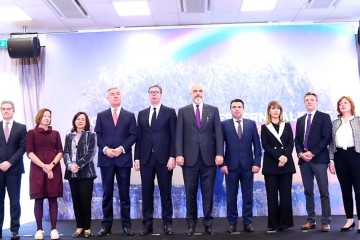
21 December 2019 | News
Bregu: Pleased to see that Western Balkans regional initiative focuses on people and clearly outlines EU integration as its final goal
Tirana – “We at the Regional Cooperation Council (RCC) are pleased to see that this regional initiative places primary focus on people, particularly that it clearly outlines our ultimate destination – the European Union (EU). We also welcome ambitious list for the next meeting already in January 2020, especially in the part on the framework agreement allowing citizens to live, ...
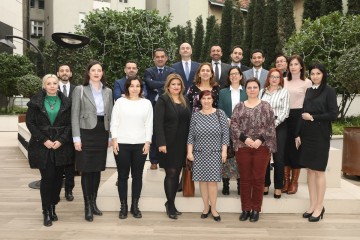
13 December 2019 | News
Housing is essential to one's sense of dignity, safety, and inclusion
Belgrade - The RCC’s Roma Integration 2020 project held its fourth Task Force meeting in Belgrade on 12 and 13 December 2019. The key stakeholders of the project reviewed the status of activities in the seven participating economies, discussed the status of implementation of the Declaration of the Western Balkans Partners on Roma Integration and EU Enlargement (Poznan Declaration), ...
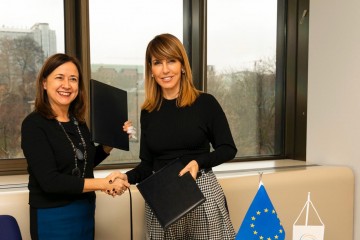
11 December 2019 | News
EU boosts support for regional cooperation in the Western Balkans
Brussels - In the margins of the Western Balkan Sherpas meeting, which took place in Brussels today in the run-up to the EU-Western Balkans Summit in May 2020, the European Commission reinforced its support to regional cooperation in the Western Balkans. The signed contract for continued cooperation with RCC worth EUR 12.5 million aims at further strengthening RCC’s activities over the ...
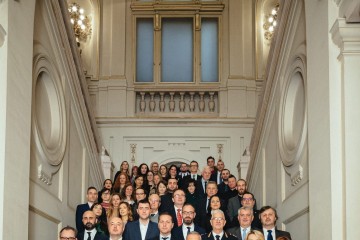
05 December 2019 | News
RCC: We need dynamic regional responses to modern security challenges
Trieste – “83% of Europeans agree that fake news is a threat to democracy, yet it has become a new normalcy, sitting between a freedom of speech and freedom to hate. Fake news is vastly contributing to hate speech which adds fuel to the fire of nationalism and violent extremism, especially on social media. That is a path towards youth radicalisation, a global problem, to which our region ...
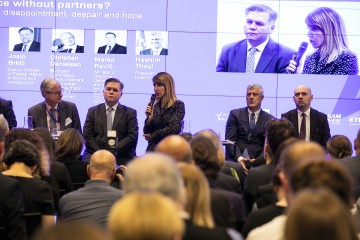
03 December 2019 | News
Bregu: It’s time to come with a clear stand on the accession process of the Western Balkans
Brussels – “Time to end pretence! EU should honour its Treaty and come with a clear stand on the accession process of the Western Balkans. Thanks to the new EU Commission president Ursula von der for clearly articulating the vision of Europe as a continent. We hope this will be the goal and approach of all EU Member States. And we in the region need to roll up our ...
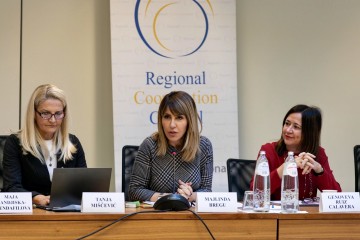
02 December 2019 | News
Bregu: It’s high time for the Western Balkans to address challenges and sensitivities with a clearer and ambitious vision
Brussels – “The region is at a different landscape. It is high time to address challenges and sensitivities with a clearer and ambitious vision. We are initiating the process of the new economic vision beyond 2020 in close consultation with all six Western Balkan (WB) economies and the European Union (EU)”, said Majlinda Bregu, Secretary General of the Regional Cooperation Council ...

02 December 2019 | News
RCC continues developing tourism in the Western Balkans: 3rd call for proposals for tourism development grants published
SARAJEVO – As the Regional Cooperation Council (RCC) implemented and EU funded Tourism Development and Promotion Project enters its final stage, the RCC published the 3rd Call for Proposals for the award of tourism development grants in the Western Balkans. The total value of the call is 320,000 euros which will be used to fund up to 7 different projects.
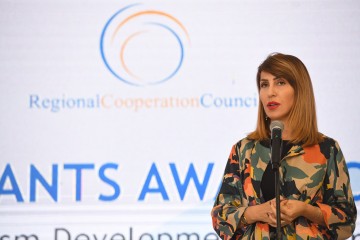
22 November 2019 | News
16 New Grants for Tourism Development and Promotion in Western Balkans Awarded by RCC, EU
Durres – “Today, with presenting the results of the completed 12 and awarding 16 new grants for the tourism development and promotion in the Western Balkans, we are showing you a part of the success story from this region, and it is not a success of policy-making or GDP but of the people. For us, tourism project is not just a matter of how many grantees are with us today – 16, or 12 ...
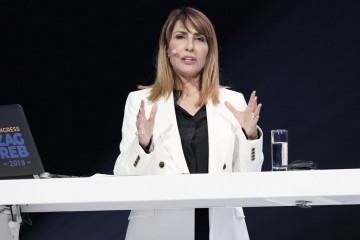
21 November 2019 | News
Bregu: Demographic trends in the Western Balkans and the EU are the best illustration of the real aspirations and needs of the citizens
Zagreb – “Both Europe and Western Balkans are changing demographically, frequently as a model of ‘sending’ and ‘receiving’ countries, as most of around 230,000 citizens have legally migrated from the region to the EU in 2018 alone, while more than 5 million (or 1/4 of the actual population) have migrated in the last 7 years. With young people these figures are even higher: although ...
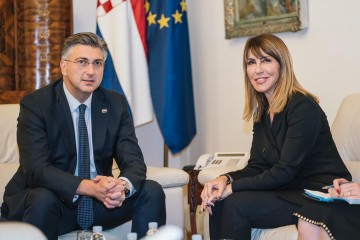
19 November 2019 | News
Bregu: The region vests high hopes in the upcoming Croatian Presidency of the EU Council in 2020
Zagreb – “Priorities of the Croatian 6-month Presidency of the European Union (EU) Council beginning in January 2020 stressing the usage of full potential of infrastructure and human resources, connectivity and networking of the economies, mesh well with the regional cooperation goals set in our Regional Economic Area action plan (MAP REA). Western Balkan economies expect a lot of ...
18 November 2019 | News
RCC takes IISG – Western Balkans’ internal security governance platform under its wing
Skopje – “We will be bigger. As of next year the Regional Cooperation Council (RCC) will coordinate one of the most important agendas of the region: security. Security threats do not need any visa or border checks”, said the RCC's Secretary General, Majlinda Bregu after today’s 4th meeting of the Integrative Internal Security Governance (IISG) Board, held in Skopje, at which functional ...
12 November 2019 | News
Bregu: For us at RCC, the Regional Cooperation is a Developing Story
Sarajevo – “We have been asked and received a lot of questions on Novi Sad and Ohrid meetings, the so called “mini-Schengen” and our role in this.
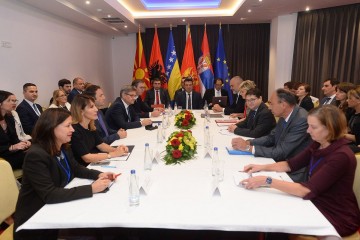
10 November 2019 | News
Bregu: RCC supports all initiatives contributing towards EU ‘single market’-like agenda for Western Balkans
Ohrid – “The Regional Cooperation Council supports all initiatives that contribute towards an EU ‘single market’-like agenda for our region, based on the four freedoms. The initiatives should fully mirror the EU models and in such a way represent a stepping stone to our full EU integration”, said Regional Cooperation Council (RCC) Secretary General Majlinda Bregu ...
08 November 2019 | News
Bregu: Regional integration cannot move ahead without EU integration
Geneva – “I know that from our point of view it is sometimes hard to grasp that we are living in times of the world’s Fourth Industrial Revolution. But we are, and the region needs all incentives available to cope with it, and use it for its best advantage and harvest economic growth and stability. Therefore the Memorandum of Understanding (MOU) the RCC signed today with renowned World ...
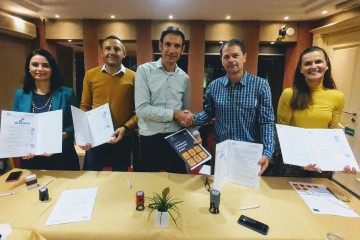
08 November 2019 | News
Via Dinarica expands its regional coordination structure throughout Western Balkans
Non-governmental organisations from Albania, Kosovo* and Serbia joined today Via Dinarica regional coordination structure during a meeting organised by the RCC implemented and EU funded Tourism Development and Promotion Project in Tirana.
07 November 2019 | News
Via Dinarica just keeps getting better
It is 11 o’clock on an idle Monday and about to start raining in a tiny village of Rekë e Allagës in Rugova Mountain, all green with pine trees. Fetije Nikiqi is well under way to prepare cheese pie in a wooden stove while Hozefa Indorewala looks to the sky from the porch thinking just how far up the mountain have his friends gone and how damp might they be as they return for lunch.
07 November 2019 | News
Gender mainstreaming and the role of women in armed forces for the first time focus of the SEEMIC meeting
Ljubljana - “The role of women in armed forces is an important topic and I am pleased we are discussing it today in Ljubljana in particular, as Slovenia sets a remarkable example for the region with the ratio of over 70% of women making up its Armed Forces. Especially when we know that nowhere in the region women comprise even one quarter of Armed Forces. Gender mainstreaming, or gender ...
06 November 2019 | News
Roma housing situation: Better legalize than bulldoze!
Sarajevo – “I am pleased to announce that the new methodology we proposed for mapping of illegal settlements in which Roma live will be applied, as pilot projects, in two municipalities per each of the Western Balkans six (plus Turkey?) aiming to replicate it later across the region," said Orhan Usein, the Team Leader of the Regional Cooperation Council’s (RCC) Roma Integration ...
05 November 2019 | News
Low women employment and labour market skills mismatch in Western Balkans call for stronger cooperation
Istanbul – “The women unemployment in the Western Balkans is 60%. Analyses show a big mismatch in the labour market(s) between the demands and offered sets of skills and knowledge. Almost half of the students in the region enrol into the Humanities, Social Sciences and Business study programmes (49%) and only 24% of them choose Science, Technology, Engineering, and Math (STEM) subjects, ...
30 October 2019 | News
Bregu: While waiting for EU plans for the region, we should focus on connectivity through regional cooperation and serious domestic reforms
Tirana – “Instead of having a focused discussion on Connectivity agenda and how much out of the 1 billion euro of the European Union’s (EU) grants from 2015 to 2020 was spent or how important connecting people and markets in the region is, etc. this October, this meeting included, the region is re-focused to its EU prospects and answering the “What comes next?” question”, ...
25 October 2019 | News
Number of cyberattacks targeting smartphones has increased by 50% in the first half of 2019
Tirana – The year 2020 will be devoted to further strengthening the capacities of the National Security Authorities (NSA) in industrial security and cyber security, as concluded at the meeting of Heads of NSA from South East Europe (SEENSA), held in Tirana on 24 October 2019.

23 October 2019 | News
RCC: Listen to Women - Meet Aida, an opera singer from Sarajevo who won the fight against breast cancer
Sarajevo – “They say what doesn’t kill you, makes you stronger. This is what happened to me, literally. I discovered the bump entirely by accident, by self-examination. Soon after that I went through tests, and the rest is history. Self-exam is important, but it is also important to visit your doctor, therefore, do not hesitate, book a doctor’s appointment today”, Aida Čorbadžić, ...
18 October 2019 | News
Bregu: Air pollution biggest environmental threat to health in WB – EU should consider this as ‘Fundamentals First’- air pollution knows no borders
Belgrade – „Six cities in the Western Balkans (WB) are among the top 20 cities with the highest air pollution in the world, and air pollution is the single biggest environmental threat to human health. Cancer and tumor, the most serious health concerns in the region, are linked with the air pollution. This speaks volumes on prioritising citizens’ health when considering ...
17 October 2019 | News
Bregu: Western Balkans citizens need incentive from the EU
Sarajevo – “While awaiting the European Union’s Summit’s official decision on the opening accession negotiations with Albania and North Macedonia today, for us in the Regional Cooperation Council (RCC) and for the entire region as well, it is quite important to reiterate that Western Balkans is an integral part of the EU. The EU integration process needs always to ...
15 October 2019 | News
RCC: Western Balkans pay for undeclared work - with significant portion of public revenues, lack of fair competition and decent working conditions
Sarajevo – “Informal employment is work that is legal in itself but not declared to the authorities for tax, social security and/or labour law purposes. As such, it plays an important role in all Western Balkan economies, as widespread informality deprives governments of potential tax revenue, produces unfair competition and often affects workers’ rights and decent working conditions. ...
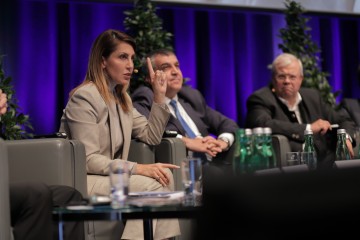
07 October 2019 | News
Bregu: Whenever there is a political will, things in the region move forward
Salzburg – “Keeping the regional cooperation alive is a task that is easier said than done. For example, we had a very good, successful, story in the digital component of the Regional Economic Area in the Western Balkans – Regional Roaming Agreement, which confirmed that whenever there is a political will, things in the region move forward. Unlike that, agreement on mobility of professionals ...
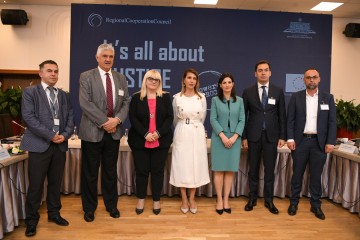
04 October 2019 | News
Bregu: There Is No Other Way to Build the Common European Future of the Region than the consolidation of Rule of Law - It’s All about Justice
Tirana – “Albania and Northern Macedonia are eagerly awaiting mid-October's decision on opening of the EU negotiations, which reflects on the entire region, as a necessity to maintain the reforms under way and take the next step in the European integration process. So, it is not a coincidence that this meeting is taking place in Tirana today, for the same reason the next justice ministerial ...
25 September 2019 | News
Bregu at SEECP meeting in New York: A free travel agreement - the new challenge for the region
New York/Sarajevo - “Two months ago in Poznan, we launched a challenge for the region: a free travel agreement - based on the spirit and the word of already existing set of bilateral agreements which allow free travel with ID cards. This regional agreement should be facilitated by RCC as an important sign of the regional ownership and by the same spirit of Multi-annual Action Plan on a ...
24 September 2019 | News
Bregu: It’s the right moment for Western Balkans to show its strengths and ownership on region’s EU future
New York/Sarajevo – “It’s beyond Poznan time, which makes it the right moment for the Western Balkans to show its strengths and ownership on the EU future of the region. We should address shortcomings of the Regional Economic Area and adjust it to fit our realities – include social dimension in its goals, ensure free movement of citizens across the region and act fast to reverse the ...
15 September 2019 | News
RCC: Listen to women – they are the key to unlocking the economic potential of this region
Sarajevo – Statistics show that more than 700.000 new jobs were created in the past 7 years in the Western Balkans, but only 4.3% of these were taken up by youth under 24 years of age. For a young person it takes about 2 years to get a job.
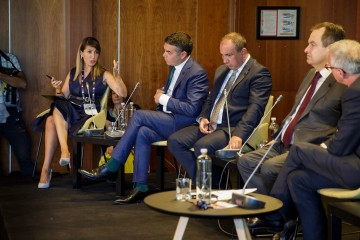
03 September 2019 | News
European Union will always be an unfinished business without the Western Balkans
Bled – „European Union will always be an unfinished business without the Western Balkans. The price for stagnation and postponing further the decision on the opening of accession negotiations with Albania and North Macedonia is, in short, a risk. The non opening would bread instability, immigration, unconstructive influence of other geopolitical actors. Any positive moment can precipitate ...
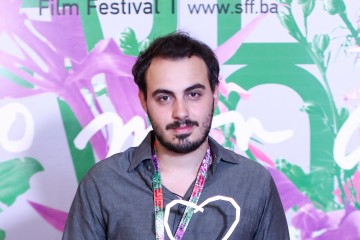
23 August 2019 | News
Heart of Sarajevo for the Best Student Film 2019 goes to Nikola Stojanovic for “Sherbet”
Sarajevo – The Regional Cooperation Council (RCC) is delighted to confirm that the young director Nikola Stojanovic from Serbia with the movie “Sherbet” won the Heart of Sarajevo for the Best Student Film, an award Powered by RCC since the inception of this competition category, at the official ceremony at 25th edition Sarajevo Film Festival (SFF), held last night.

20 August 2019 | News
RCC championing young filmmakers at the Sarajevo Film Festival
Sarajevo – For the 3rd time in a row the Regional Cooperation Council (RCC) is the patron of the 'Heart of Sarajevo' award for the Best Student Film at the 25th Sarajevo Film Festival (SFF). We continue to support creative young filmmakers in pursuit of their own path and professional development, because YOUNG PEOPLE MATTER!
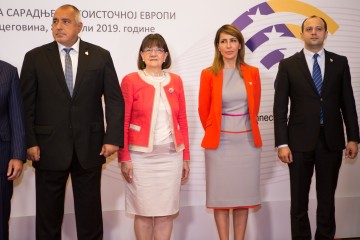
09 July 2019 | News
SEECP leaders praise RCC, entrust it to pursue connectivity agenda of the region and prepare region’s strategy beyond 2020
Sarajevo – “By thanking Bosnia and Herzegovina for excellent cooperation in the past year of their Chairmanship-in-Office (C-i-O) of the South East European Cooperation Process (SEECP), their contribution in leading and advancing regional cooperation through the SEECP framework, I would like to congratulate the incoming C-i-O by Kosovo, looking forward to continue working together ...
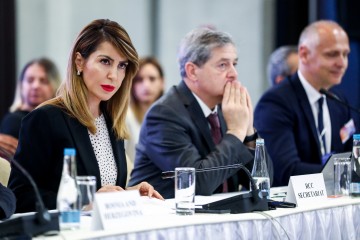
08 July 2019 | News
Bregu: RCC keen to embark on any challenges with full support of regional and EU partners - we don’t need to loose time in order to find it again
Sarajevo – „A year behind us was a dynamic one and we are prepared to continue just as dynamic in the next one. We, at the Regional Cooperation Council (RCC) are ready and keen to embark on any challenges ahead of us but we cannot do it without the full support of our regional and European partners, as we don’t need to loose time in order to find it again”, said Majlinda Bregu, Secretary ...
07 July 2019 | News
RCC to Present Balkan Barometer 2019 at the Annual meeting of the organisation in Sarajevo
Sarajevo - The Regional Cooperation Council (RCC) is to present the 5th, 2019 edition of its public and businesses viewpoints survey – Balkan Barometer (BB) at the Annual meeting of the organisation that is taking place on 8 July 2019 in Sarajevo, Bosnia and Herzegovina.
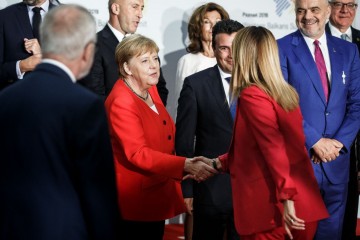
05 July 2019 | News
Bregu: Western Balkan should embark on serious, wide-ranging facilitation agenda, including movement of people, goods, services and capital
Poznan – “Two years after the Western Balkans’ (WB) Prime Ministers endorsed the Multi-annual Action Plan for the Regional Economic Area (MAP REA) in Trieste the region has not fully embraced the opportunities offered by the Regional Economic Area. Flows of goods, services, capital and people continue to be obstructed. We all could draw an important lesson from the Regional ...
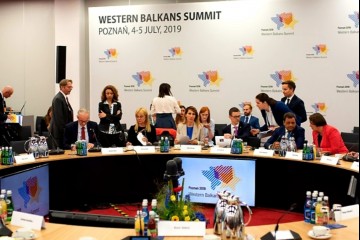
04 July 2019 | News
Bregu: Western Balkans needs to fully embrace and capitalize on the Regional Economic Area
Poznan – “Two years since the endorsement of Multi-annual Action plan on Regional Economic Area (MAP REA) in Trieste and one year since London our region can show only a mixed track record at best. Western Balkans (WB) did not fully embrace Regional Economic Area (REA) and as a result vast potentials of regional economic integration remain untapped. There are many bilateral disputes ...
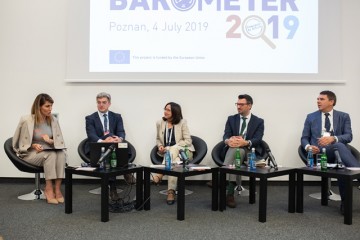
04 July 2019 | News
Bregu: Balkan Barometer 2019 clearly shows public and business appreciation of regional cooperation and need to strengthen it
Poznan – “There's no better way to stress the need for stepping up the regional cooperation than quoting the citizens and businesses of the Western Balkans (WB) who overwhelmingly, with 74% and 67% respectively, believe in regional cooperation. The recent success with dropping of roaming charges WB-wide as of 1 of July is an example of how regional cooperation is becoming a steady pattern ...
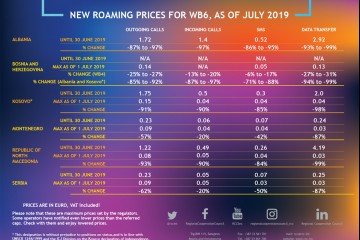
01 July 2019 | News
Roaming Prices Drastically Drop across Western Balkans: Speak more, surf more – pay less!
Sarajevo – The Regional Cooperation Council (RCC) is happy to announce that as of today, roaming prices across the entire Western Balkans (WB) have dropped drastically. Citizens of the WB will be able to speak, surf, SMS much more and pay much less.

28 June 2019 | News
RCC’s #EU2U video/photo contest to take creative young people from South East Europe to Sarajevo Film Festival
Sarajevo - #EU2U-EUrope in my eyes video/photo Contest that the Regional Cooperation Council (RCC) launches today aims to encourage video/photo creativity of young people who would, through their video or photo creations, show what they like about European Union (EU) and Europe in general.
18 June 2019 | News
Bregu: Western Balkans can punch way above its weight if given a chance
London – “Share of the European Union (EU) in both Foreign Direct Investments (FDI) and exports in the region is well over 70%. For all the talk about the growing Russian and Chinese economic clout in the Western Balkans six (WB6), only 3% of exports in 2018 went to Russia, and less than 0.6% to China”, said Secretary General of the Regional Cooperation Council (RCC), Majlinda Bregu, ...

14 June 2019 | News
Economic growth goes hand in hand with human capital development – investment in education must increase
Luxemburg – “Years in a row our opinion survey Balkan Barometer shows that unemployment is the biggest concern for 67% of the citizens in the Western Balkans (WB), and our alarms should have already gone off, triggering adequate reactions. This region has talent everywhere but their skills have to be developed properly. The answer is in coordinated and coherent policies that will ...
13 June 2019 | News
Bregu: Progress achieved by Western Balkans’ EU aspirants now calls for the European Union’s concrete and fast action
Berlin – “It is not just about enlargement any longer but rather about unification of Europe because the European Union (EU) without Western Balkans (WB) is incomplete. This region is Unions geostrategic interest zone. On the other hand, coming from the region, I would like to see the Western Balkans taking strong ownership of the regional cooperation, so it would work and move together ...

10 June 2019 | News
RCC launches the next grant call: 750,000 EUR for developing tourism in the Western Balkans
SARAJEVO – The Regional Cooperation Council (RCC), under its Tourism Development and Promotion EU funded project, launched today the second in a row grant call for projects developing the tourism offer in the Western Balkans. While the grants scheme totals EUR 1.62 million, this second tranche is making available EUR 750,000 for the implementation of some 14 pilot projects worth up to EUR ...
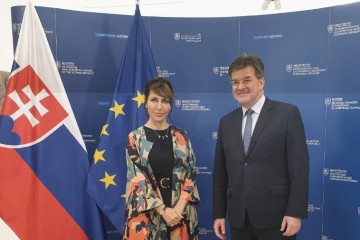
08 June 2019 | News
Bregu: Integration into Regional Economic Area is a win-win for everyone
Bratislava – The Secretary General of the Regional Cooperation Council, Majlinda Bregu, met with Minister of foreign Affairs of the Slovak Republic, Miroslav Lajcak, in Bratislava today. The two officials discussed the upcoming Western Balkans’ Berlin Process Summit in Poznan in July, in particular the deliverables when it comes to the implementation of the Multiannual Action Plan for ...
08 June 2019 | News
Via Dinarica connectivity in the Accursed Mountain gets an upgrade
PEJE/PEČ - Community Development Fund, beneficiary of the RCC implemented and EU funded tourism development grant scheme, organize today a FAM trip for tour operators and media to inaugurate 6 newly developed sections of Via Dinarica trail in Kosovo* connecting it with the trail portions in Albania and Montenegro.
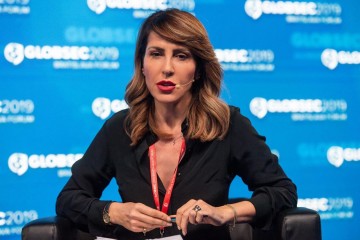
07 June 2019 | News
Bregu: EU will never be complete without Western Balkans - let’s move from “geopoetics” to geopolitics
Bratislava – “The EU without the Western Balkans will never be complete. But it cannot assume that business as usual will provide stability in the Western Balkans. It should take a much more political and strategic approach in the region. Let’s move from “geopoetics” to geopolitics. The EU must be ready to realistically make the Western Balkans its geopolitical priority and ...

07 June 2019 | News
New circuit trail and tales of river log-driving enrich Via Dinarica
PODGORICA - A new attraction for hikers of Via Dinarica’s White Trail passing through Tara River Canyon in Montenegro was presented today in Podgorica.
07 June 2019 | News
New regional hiking trail comes to life: Mokra Gora Mt., Beauty of the Balkans
ZUBIN POTOK - A brand new regional hiking trail running across Mokra Gora Mountain from Montenegro, across Kosovo* to Serbia was inaugurated today in Zubin Potok. The trail was developed by the Institute for Territorial Economic Development – InTER through an RCC implemented and EU funded tourism development grant scheme.
06 June 2019 | News
Powered by RCC, Accursed Mountains show their cultural edge
TIRANA – Stunningly beautiful nature of the Accursed Mountains settled between Albania, Kosovo* and Montenegro just got its cultural edge. From now on, colourful legends, verbal history, songs, dances, crafts and cuisine of local communities living in remote mountainous villages are going to be part of the hiking tours through this region.

05 June 2019 | News
The Tales of 4 Fortresses - Creative History Balkans Tour enriches regional tourism offer
NOVI SAD – With the summer at our door, the Western Balkans cultural tourism offers just got richer. EXIT Foundation, a beneficiary of the RCC implemented and EU funded tourism development grant scheme and a winner of the RCC’s champion of regional cooperation award, launched today in Novi Sad the Creative History Balkans Tour which takes visitors to four amazing fortresses in the region.
05 June 2019 | News
Legends of fortresses get new interpretation
DANILOVGRAD - Danilovgrad Municipality, through an RCC provided and EU funded tourism development grant, has revived three fortresses in three Western Balkans economies.
05 June 2019 | News
Funds should be invested where it is most needed
The way regional budget programs are designed in their current financial systems, seem to be rigid and lack flexibility of intervention either to introduce a new product related directly to Roma budgeting, or to measure its efficiency.
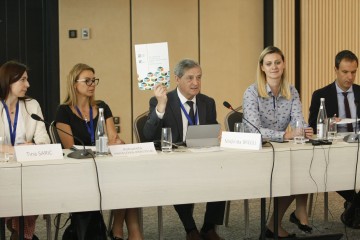
04 June 2019 | News
Turdiu: Mobility of students is essential for developing common European values, understanding and appreciation of each other’s’ cultures
Belgrade – Ministers in charge of education from the Western Balkan (WB) economies have welcomed the Declaration on Mutual Recognition of Academic Qualifications in the Western Balkans, at the 8th Ministerial Meeting of the Western Balkans Platform on Education and Training organized by the European Commission in Belgrade, 3–4 June 2019 Belgrade, Serbia.
31 May 2019 | News
Monitoring of the SEE 2020 Strategy implementation ahead of its final year
Podgorica – Monitoring Committee of the South East Europe 2020 (SEE2020) Strategy, convened by the Regional Cooperation Council (RCC), met for the 8th time in Podgorica today to review the 1st Draft Annual Report on Implementation of the Strategy (ARI).
30 May 2019 | News
New horseback riding route connects Western Balkans
Subotica – The latest Western Balkans tourism attraction – a 500 kilometres long horseback riding route running from Vojvodina in the north to Hercegovina in the south – was inaugurated today in Subotica.
29 May 2019 | News
Kapetanovic: Cyber security one of the RCC’s top priorities
Ljubljana – “The issue of cyber security in general but also in the context of fight against terrorism and online radicalization has become a new security hot spot and challenge at national, regional and global level. This is why cyber security is one of the priorities of the Regional Cooperation Council (RCC) both in terms of capacity building and from security point of view”, ...
28 May 2019 | News
Bregu: The best investment in the Western Balkans is to create opportunities for its youth to stay
Bucharest – “Young people are one fifth of the overall population of the Western Balkans (WB), and they are the most educated share of our workforce. Still, we haven’t managed to create a system of opportunities for these young people to work and engage in their societies in the region, while they rightfully expect us to. We need to invest more in the youth, to make them stay and invest ...
27 May 2019 | News
Bregu: Investing in human capital paves the way towards economic development of the region
Istanbul – “Much needed sustainable transformation of the region into a knowledge-based economy with equal opportunities for all citizens is a comprehensive agenda. It combines innovation, research and development, education, employment and social inclusion policies. We cannot continue focusing on economic growth strategy without addressing the Human Capital Development”, said Majlinda Bregu, ...
24 May 2019 | News
RCC: Wrapping up Regional Investment Deliverables for Poznan Summit
Brussels – “Western Balkans (WB) is a welcoming environment for investments, with corporate profit tax rates ranging from 9% to 15%, being among the lowest in Europe and monetary and financial systems strongly dependent on euro. And yet, one of our the strongest assets is human resource base, given that over the last years more than 1.6 million of highly qualified people were added ...
22 May 2019 | News
Kapetanovic: Dislocation of youth from socio-economic trends makes them vulnerable to radicalization
Pristina – “The youth are extremely exposed group to various forms of emerging challenges in our region, as more than 20% of them between 16 and 25 years of age have no job, are not involved in training education, and 1 out of 2 want to leave their homeland not believing in betterment of their society”, said Amer Kapetanovic, Head of Regional Cooperation Council’s (RCC) Political ...

18 May 2019 | News
Hidden Gems of Skopje Old Town surface up with new cool mobile app
Skopje - Starting today, visitors of the Skopje Old Town, Čaršija, will be able to experience it in a completely new way. Coming to their service is the mobile application – Skopje Gems - that provides seven guided cultural tours through Čaršija and takes visitors to the doorsteps of shops owners who keep traditional crafts and cuisine alive, as well as to museums and religious and ...
16 May 2019 | News
RCC Board meets: RCC stands ready to firmly push the integrative agenda and the European narrative forward
Sarajevo – “It is stock-taking time, to see what the RCC has been doing, both the accomplishments and the effects of the regional cooperation process on the people in the region, with many of the most pressing issues in the Western Balkans embedded in our work”, said Secretary General of the Regional Cooperation Council (RCC), Majlinda Bregu opening the 37th Board meeting ...

14 May 2019 | News
Futuristic World War II monuments making comeback as Balkan’s tourism attraction
SARAJEVO - Among the Western Balkans cultural tourism routes that the Regional Cooperation Council (RCC)’s Tourism Development and Promotion project is currently developing, is the so called Balkan Monumental Trail that encompasses region’s iconic World War II (WWII) monuments.
13 May 2019 | News
Region works to implement “Speak more, pay less” principle the Western Balkans committed to
Brussels – “One month after the signing of the new Regional Roaming Agreement (RRA2) for the Western Balkans (WB) at the Digital Summit on 4 April 2019 in Belgrade, the focus is on steps needed to ensure its smooth, uniform and efficient implementation. WB citizens and all our partners are very keen to see positive results and we should make best efforts to succeed,” said Gazmend Turdiu, ...

10 May 2019 | News
The region has spoken – the hottest summer spots in South East Europe selected
Sarajevo – The time has come for the Regional Cooperation Council (RCC) to announce the winners of its #looking4summer photo/video contest featuring summer beauties of the South East Europe (SEE), which were selected in a joined excercise of Instagram and Facebook users and the RCC crew. And here they are:
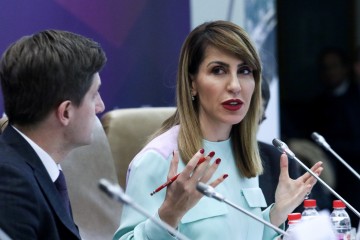
09 May 2019 | News
Bregu: Divided we fall, united we stand
Sarajevo – “Western Balkan economies are united by need and a sense of emergency and awareness that there is a clear reason why regions come together in the world. Divided we cannot stand, because we are small economies, each one with its own problems. But all together we could be an interesting market. This is why we should be more focused on regional cooperation, as it is a very model ...
07 May 2019 | News
Cultural diversity connects Sarajevo, Kotor and Novi Sad
SARAJEVO - Sarajevo Meeting of Cultures (SMOC), beneficiary of the RCC implemented and EU funded Tourism Development and Promotion Grant Scheme, presented today in Sarajevo a new regional tourism route based on cultural diversity of the Western Balkans.
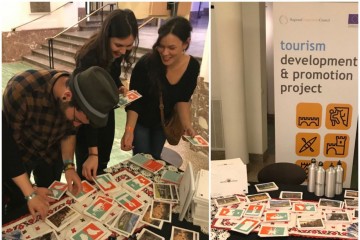
29 April 2019 | News
Balkan Trafik! Festival: Promoting the best of the Western Balkans in the European Union
Brussels – For the past few days Brussels replaced its political foretoken as a European political centre and became a hub for Western Balkan art and culture. The 13th edition of Balkan Trafik! Festival (BTF), which took place 24-28 April, promoted the best of the Western Balkans (WB) and the South East Europe (SEE) in the European Union (EU) through a series of concerts, exhibitions, theatre ...
26 April 2019 | News
RCC’s ESAP: Share of informal employment in Western Balkans ranges from 18 to 33% - holistic approach necessary to tackle this issue
Sarajevo – “Share of informal/undeclared employment in the region varies from 18,1% in Republic of North Macedonia to 33% in Montenegro1 ,”said Nand Shani, Team Leader of the Regional Cooperation (RCC)’s Employment and Social Affairs Platform (ESAP). Tackling this widespread phenomenon was the main topic of the workshops, organized throughout the Western Balkans by ESAP ...
26 April 2019 | News
RCC powers Balkan Trafik! Festival, promotes cultural tourism
SARAJEVO – 13th edition of the Balkan Trafik! Festival which promotes cultures of the South East Europe through theatre, literature, cinema, music, graphic arts, gastronomy, street art, and workshops is taking place in Brussels from 24 to 28 April 2019.
25 April 2019 | News
Tourism industry accounts for 14 percent of employment in the Western Balkans
Belgrade – Planning of most viable itineraries along the two new Western Balkans cultural routes that are currently under development was the main topic discussed by the representatives of tourism agencies and tour operators from the region, at the meeting organized by the Regional Cooperation Council (RCC)’s EU funded Tourism Development and Promotion Project, in Belgrade today.
24 April 2019 | News
Bregu: Exercising real elements of mutual interests and good relations day by day of utmost importance for presenting the other face of this region
Sarajevo – Majlinda Bregu, Secretary General of the Regional Cooperation Council (RCC) took part in the coordination meeting of the Berlin Process focusing on the preparations for the July 2019 Western Balkans summit in Poznan, in Sarajevo today.

23 April 2019 | News
Kapetanovic: We have to focus on tangible actions and results in countering & prevention of terrorism & violent extremism in the region
Tirana – The seventh meeting of the Regional Cooperation Council (RCC)’s Group of National Focal Points (NFP Group) for Prevention and Countering Violent Extremism (P/CVE) in South East Europe (SEE) is held in Tirana today.

19 April 2019 | News
Bregu: Majority of online harassment of WOMEN happens on social media and we need to STOP it #DigitalRespect4Her
Sarajevo - The European Commission recently launched the #DigitalRespect4Her Campaign to raise awareness about online violence against women and promote good practices to tackle this issue.
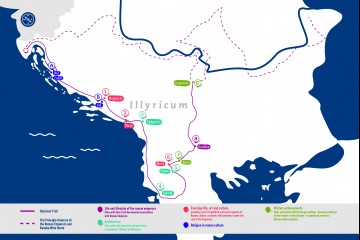
19 April 2019 | News
RCC grant recipient introduces new regional cultural tourism product: The Illyricum Trail
BELGRADE - Danube Competence Center (DCC), beneficiary of the RCC Tourism Development and Promotion Project’s grant scheme, funded by the European Union, introduced yesterday in Belgrade the new and upcoming Western Balkans branch of the Roman Emperors and Danube Wine Route’s called the Illyricum Trail.
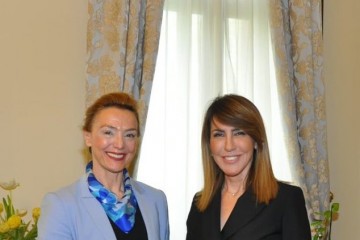
18 April 2019 | News
RCC Bregu: Connecting within the region and with the EU of utmost importance for the Western Balkans
Zagreb – Majlinda Bregu, Secretary General of the Regional Cooperation Council (RCC) paid an official visit to Zagreb today within the series of political consultations in the South East Europe (SEE). During the visit she met with Marija Burić Pejčinović, Deputy Prime Minister and Minister of Foreign and European Affairs, and Domagoj Ivan Milošević, Chairperson of the European Affairs ...
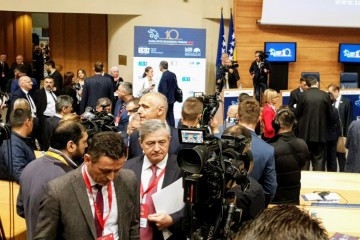
17 April 2019 | News
RCC at Sarajevo Business Forum: Better connectivity essential to creating new jobs and attracting investments in the Western Balkans
Sarajevo - Gazmend Turdiu, Deputy Secretary General of the Regional Cooperation Council (RCC) moderated the Leaders Panel dedicated to the ‘One Region, One Economy’ concept as a vision for the future of Western Balkans, at the 10th edition of Sarajevo Business Forum (SFB) that kicked off in Sarajevo today.
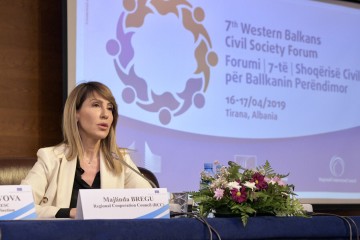
16 April 2019 | News
Bregu: Western Balkans citizens believe civil society is key correctional factor, to hold governments accountable for their actions
Tirana – „The level of civic trust in governments and politics in general in the Western Balkans (WB) is alarming, as 60% of citizens do not trust neither the governments, parliaments nor the judicial systems, according to findings of new edition of the Balkan Barometer, based on the data from 2018”, said Majlinda Bregu, Secretary General of the Regional Cooperation Council (RCC), ...
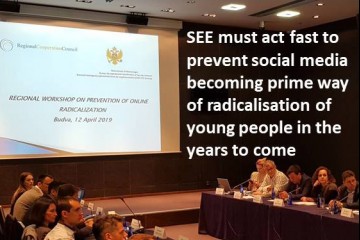
12 April 2019 | News
Social media might become prime way of radicalization of young people in the years to come
Budva – Online radicalization in South East Europe (SEE) and ways to deal with this global phenomenon on the regional level are the main topics at the regional Workshop on prevention of online radicalization, being held in Budva today.
10 April 2019 | News
RCC’s Amer Kapetanovic: Security cooperation in the region has enormous potential that needs to be up-scaled
Tirana –The South East European National Security Authorities’ (SEENSA) met in Tirana today, at the meeting co-organized and co-chaired by the Regional Cooperation Council (RCC) and the National security agency (NSA) of Albania.
09 April 2019 | News
Bregu: If we want to move forward a new approach to education, promoting skills and supporting creativity is a must
Ulcinj – “If we want to move forward a new approach to education, promoting skills and supporting creativity is a must, said Majlinda Bregu, Secretary General of the Regional Cooperation Council (RCC) addressing the participants of the 1st Forum “Science and Innovation 2030 for the Western Balkans”, organised by the Ministry of Science of Montenegro and Podgorica Club in Ulcinj today.
09 April 2019 | News
Western Balkans agrees to create regional database of research infrastructure
Ulcinj – The Regional Cooperation Council (RCC) together with the Ministry of Science of Montenegro organised a Regional Workshop on Mapping Research Infrastructure, that took place on 8 April in Ulcinj. The workshop aimed to support the Western Balkan economies in the process of mapping the existing research infrastructure through exchange of practices and experiences. In addition, the ...
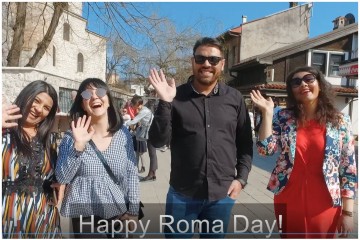
08 April 2019 | News
Marking the International Roma Day: Meet Roma and let them meet you!
Sarajevo/Belgrade – Today is the day we celebrate Romani culture, history, language, heritage and experiences. But it is also an opportunity to continue voicing the necessity of improving the lives and welfare of Roma as equal citizens of our societies, which is the mission of the Regional Cooperation Council (RCC)’s Project Roma Integration 2020.
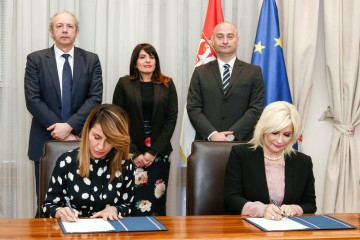
05 April 2019 | News
RCC’s Roma Integration 2020 project continues its work on improving the lives and welfare of Roma as equal citizens in EU Enlargement region
Belgrade – Secretary General of the Regional Cooperation Council (RCC), Majlinda Bregu and Deputy Prime Minister of Serbia and Minister of Construction, Traffic and Infrastructure, Zorana Mihajlović, signed a Memorandum of Understanding in Belgrade today, extending Serbian hospitality to the second phase of the RCC’s Roma Integration 2020 project, which is seated in Belgrade.
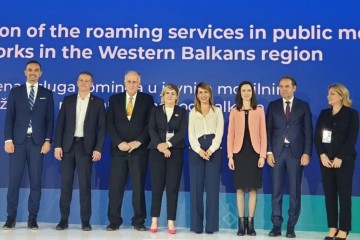
04 April 2019 | News
Region seals the deal – 2021 roaming free Western Balkans
Belgrade – “A deal is a destination! Today’s signature of the Roaming Free Agreement is a step that makes a difference in the region. Amid all scepticism let us say loudly: Europe delivers”, said Majlinda Bregu, Secretary General of the Regional Cooperation Council (RCC) upon signing of the new Regional Roaming Agreement (RRA) at the second WB Digital Summit in Belgrade ...

01 April 2019 | News
RoamLike@Home in the Western Balkans: People see it as important as free movement; businesses believe it will spur trade
Sarajevo – The people of the Western Balkans (WB), businessman/woman, travellers, students, youngsters, everybody, are in unison when it comes to bringing down the roaming charges in the region – they are looking forward to it and see it as a great benefit to them personally and their businesses. The Regional Cooperation Council (RCC) has asked people in all 6 region’s capitals what ...

26 March 2019 | News
Bregu: Western Balkans Digital Summit and Poznan Summit are our chances to showcase we can deliver together as a region
Brussels – “Upcoming second WB Digital Summit in Belgrade, as well as the Poznan Summit are our chances to showcase that we can deliver together as a region,” said Secretary General of the Regional Cooperation Council (RCC), Majlinda Bregu, at the meeting of the Multi-Annual Action Plan for Regional Economic Area (MAP REA) Coordinators from the six Western Balkan economies (WB6), in ...
22 March 2019 | News
Bregu: Western Balkans should be EU’s geopolitical priority, but WB must outdo itself to become quality EU integration partner
Sarajevo – The Secretary General of the Regional Cooperation Council (RCC), Majlinda Bregu took part in the informal meeting of the Working Party on the Western Balkans Region (COWEB) in Sarajevo today, convened by the Romanian Presidency of the Council of the European Union (EU), in cooperation with the South East European Cooperation Process (SEECP) Chairmanship-in-Office (CiO) held by ...
21 March 2019 | News
RCC Secretary General Bregu calls for more efficient future action and better communication with the citizens
Sarajevo – Coordination Board of the Regional Cooperation Council’s (RCC) South East Europe’s growth Strategy (SEE 2020) has met in Sarajevo today, to reflect on the implementation results, identify potential action synergies for further cooperation as well as post-2020 regional priorities and strategic framework.
20 March 2019 | News
Turdiu: Our task is to translate political will and commitments into concrete actions and results
Tirana – The Western Balkan Six (WB6) Component Contact Points (CCPs) in charge for implementation and monitoring of the Multi-Annual Action Plan for Regional Economic Area (MAP REA) reflected on the results of MAP REA implementation during the period July-December 2018, at their third meeting, organized by the Regional Cooperation Council (RCC) in Tirana yesterday.
15 March 2019 | News
Bregu: Challenges in front of us in enhancing regional cooperation in time of uncertainty, will be even bigger
Sarajevo – Secretary General of the Regional Cooperation Council, Majlinda Bregu, for the first time since the inception of the duty, chaired the meeting of the organisation’s Board at the RCC Secretariat offices in Sarajevo, yesterday.
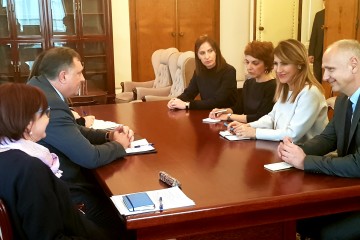
14 March 2019 | News
Bregu: Politics should act to the citizens’ concerns and deliver fast
Sarajevo – Majlinda Bregu, Secretary General of the Regional Cooperation Council (RCC) paid an official visit to Milorad Dodik, Chairman of the Bosnia and Herzegovina Presidency, in Sarajevo today.
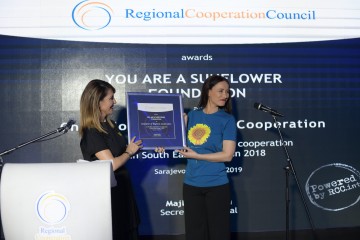
13 March 2019 | News
Bregu: Spreading the spirit of solidarity and tolerance beyond borders teaches young generations what really matters
Sarajevo – Secretary General of the Regional Cooperation Council (RCC), Majlinda Bregu presented the award of the Champion of Regional Cooperation for 2018 to the Founder and Chair of You are a Sunflower Foundation, Albana Osmani at the reception marking the 11th anniversary of the RCC in Sarajevo tonight.
12 March 2019 | News
Western Balkans tourism on the rise: Powered by RCC, cultural and adventure tour operators promote the region at the ITB Berlin
Berlin – Over the last five days, 19 tour operators from the Western Balkans promoted the regional tourism offer at a joint Western Balkans – Powered by RCC.int stand at the world’s leading travel trade show, ITB Berlin, which gathers some 10,000 exhibitors and over 100,000 visitors.
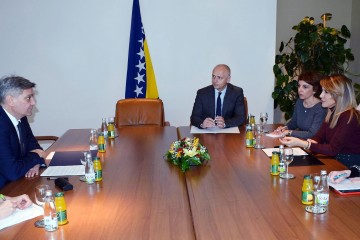
12 March 2019 | News
Bregu, Zvizdic discuss Western Balkans’ progress towards regional economic area
12 March 2019 | News
Cooperation of Judiciaries in the Western Balkans leads to transparent, reliable and predictable Rule of Law practices for the citizens
Sarajevo – Regional Cooperation Council (RCC) hosted today representatives of the Western Balkans’ Ministries of Justice gathered around the RCC-led Working Group on Justice, at their regular meeting, 12th in the row.

12 March 2019 | News
You are a sunflower - Champion of Regional Cooperation in South East Europe in 2018
Sarajevo – Regional Cooperation Council (RCC) has selected You are a sunflower as the Champion of Regional Cooperation in South East Europe in 2018. The award will be officially presented to Ms Albana Osmani, Head of You are a sunflower, by Majlinda Bregu, RCC Secretary General, at the ceremony marking the 11th anniversary of the RCC, in Sarajevo on 13 March 2019.
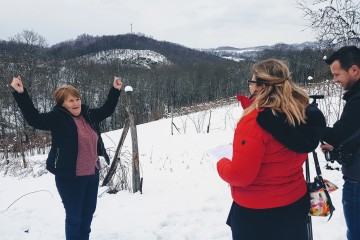
08 March 2019 | News
Listen to women – they are the key to unlocking the economic potential of this region
Sarajevo - Instead of happy 8th of March, the Regional Cooperation Council (RCC) is introducing the idea of the “WE”, starting with Nada Markovic, a pioneer of the first female cooperative in Bosnia and Hercegovina.
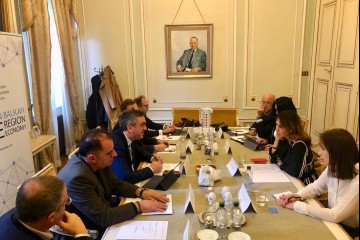
07 March 2019 | News
RCC Bregu: Cooperation in attracting investments, upskilling youth and women and connecting people priorities for the Western Balkans
Trieste – Majlinda Bregu, Secretary General of the Regional Cooperation Council (RCC) visited the seat of the Western Balkans Six Chamber Investment Forum (WB6 CIF) in Trieste today, where she met with Safet Gerxhaliu, Secretary General, Marko Čadež, President of the Governing Board of the Serbian Chamber of Commerce and representatives of Chambers of Investment from Western Balkan economies.
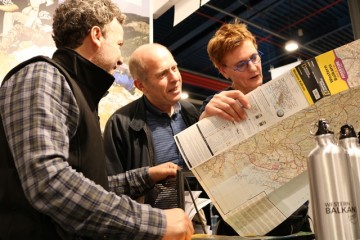
04 March 2019 | News
Powered by RCC: Western Balkans’ adventure tourism takes Utrecht fair
Utrecht – Over the last three days, ten tour operators from the Western Balkans presented the best of regional adventure tourism offer at the Fiets en Wandelbeurs fair at Jaarbeurs in Utrecht, Netherlands, within the Regional Cooperation Council’s (RCC) EU-funded, Tourism Development and Promotion Project.

01 March 2019 | News
RCC’s Photo/video Contest ‘LOOKING FOR THE SUMMER’ in South East Europe starts today!
Sarajevo – The Regional Cooperation Council (RCC) launches photo/video contest titled ‘LOOKING FOR THE SUMMER’ (#looking4summer) aimed at promoting the most desirable tourism destinations in South East Europe.
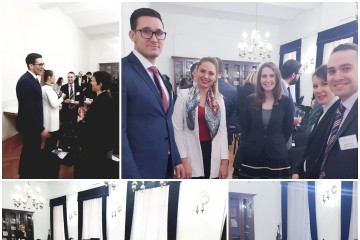
28 February 2019 | News
Turdiu: Young diplomats are the leaders of tomorrow and promoters of our region to the EU and the world
Sarajevo – The Regional Cooperation Council, in cooperation with the Ministry of Foreign Affairs of Bosnia and Herzegovina, organized training for the region’s young diplomats from South East Europe, in Sarajevo today.
22 February 2019 | News
RCC introduces new regional cultural and adventure tourism routes at the International Fair of Tourism in Belgrade
Belgrade – The RCC’s Tourism Development and Promotion Project introduced today the three new Western Balkans cultural routes and presented the development work done by the three tourism grants recipients at the largest international tourism fair in the South East European – IFT Belgrade.
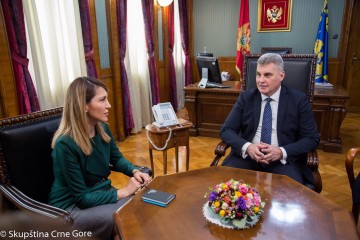
22 February 2019 | News
RCC Bregu: We will keep pushing the region for concrete deliverables by Poznan summit
Podgorica – On the second day of her visit to Montenegro, Secretary General of the Regional Cooperation Council (RCC), Majlinda Bregu met with the Speaker of the Parliament, Ivan Brajović, Prime Minister, Duško Marković, Minister of Foreign Affairs Srđan Darmanović, and Minister of Economy, Dragica Sekulić.
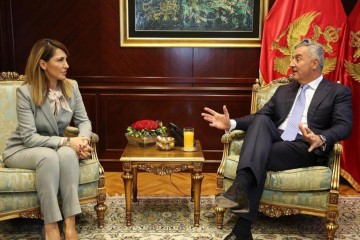
21 February 2019 | News
RCC Bregu: Western Balkans is on the move, to step up reforms and strengthen regional cooperation
Podgorica - Majlinda Bregu, Secretary General of the Regional Cooperation Council (RCC) started her consultations in Podgorica today by meeting Milo Đukanović, President of Montenegro.
19 February 2019 | News
Preparations for the 2nd Western Balkans' Digital Summit enter its final stage
Belgrade – The preparations for the upcoming 2nd edition of the Western Balkans' Digital Summit entered its final stage.
18 February 2019 | News
Once Western Balkans reach new roaming agreement among itself, EU ready for reduction of roaming tariffs between WB and EU, as of July 2019
Skopje – The Secretary General of the Regional Cooperation Council (RCC), Majlinda Bregu is in Skopje today, where she met with the EU Commissioner for Digital Economy and Society, Mariya Gabriel.
08 February 2019 | News
‘Roam Like at Home’ speak more, pay less: Western Balkans agrees on text of new Regional Roaming Agreement
Brussels – Representatives of the ICT Ministries and Regulators from Western Balkans Six (WB6) economies agreed on the text and the next steps leading towards signing of the new Regional Roaming Agreement (RRA2), at the third negotiations organized by the Regional Cooperation Council (RCC) in Brussels today.
05 February 2019 | News
Bregu: Practical and effective discussion on the need for credible regional cooperation
Belgrade - Secretary General of the Regional Cooperation Council (RCC), Majlinda Bregu met with the Prime Minister of Serbia, Ana Brnabić, First Deputy Prime Minister and Minister of Foreign Affairs, Ivica Dačić, Deputy Prime Minister, Minister of Trade, Tourism and Telecommunications, Rasim Ljajić, and Deputy Speaker of the National Assembly, Veroljub Arsić.
04 February 2019 | News
Bregu: Mutual interests to lead the way on the Western Balkans’ European path
Belgrade – At the beginning of the two-day official visit to Belgrade, the Secretary General of the Regional Cooperation Council (RCC), Majlinda Bregu met with the President of Serbia, Aleksandar Vučić, today.
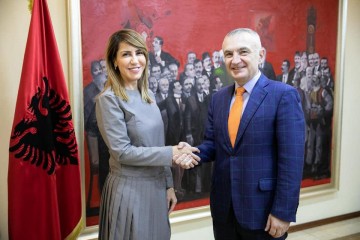
03 February 2019 | News
Bregu: 2019 is “a year of delivery” - citizens of the Western Balkans expect more
Tirana – The Secretary General of the Regional Cooperation Council (RCC), Majlinda Bregu, was in an official visit to Tirana where she met with the President of Albania, Illir Meta, Minister of Finance and Economy, Anila Denaj, Minister of Education, Sport and Youth, Besa Shahini, Minister of Infrastructure and Energy, Belinda Balluku, and Acting Minister of Foreign Affairs Gent Cakaj.
01 February 2019 | News
30 million EUR earmarked for Western Balkans in Broadband connectivity under Western Balkan Investment Framework (WBIF)
30 million EUR are earmarked for the investment projects in digital infrastructure (fixed broadband connectivity) for the Western Balkans, through the Western Balkan Investment Framework (WBIF).
31 January 2019 | News
Open Science concept would contribute to Western Balkan societies’ higher return on investment
Brussels – The Western Balkan (WB) economies presented current situation and actions undertaken in the development of Open Science and Open Access policies for research data at the meeting of the Working Group on Open Science, held under the auspices of the Regional Cooperation Council (RCC) in Brussels, yesterday.

31 January 2019 | News
Domestic reforms and regional cooperation - the two preconditions for economic development of the region
Brussels – Sustainable economic growth and development of the Western Balkans (WB) was in the focus of gathering of representatives of EU institutions, diplomatic missions, think tanks, non-governmental and business organizations, organized by the Regional Cooperation Council (RCC) in cooperation with the Friedrich-Ebert-Stiftung’s (FES) EU Office, at the RCC Liaison Office in Brussels ...
29 January 2019 | News
RCC SG Bregu: European integration of Western Balkans is not a territorial, but transformational agenda
Vienna – “European integration of Western Balkans is not a territorial agenda. It is a transformational agenda, which in the broader orientation towards fundamental European values has worked. The EU has been the single most important leverage in the region to promote democracy, rule of law, respect for human rights and minorities. EU’s enlargement policy has for fact delivered in shaping ...
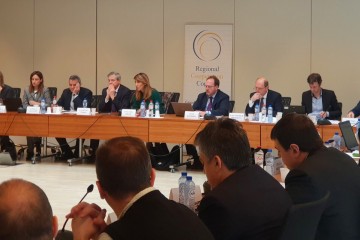
24 January 2019 | News
RCC: ‘Roam Like at Home’ speak more, pay less
Brussels – The second round of negotiations on the new Regional Roaming Agreement (RRA2) for the Western Balkans (WB), organized by the Regional Cooperation Council (RCC), is being held in Brussels today.
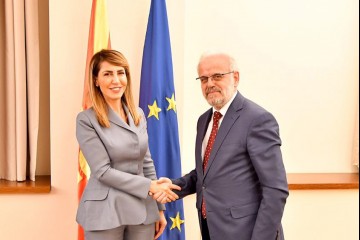
22 January 2019 | News
RCC’s Majlinda Bregu: Skopje gives a tailwind for the entire region
Skopje – The Secretary General of the Regional Cooperation Council (RCC), Majlinda Bregu, was in an official visit to Skopje in the past two days where she met with the President of the Assembly, Talat Dzaferi; Prime Minister, Zoran Zaev; Deputy Prime Minister and Minister for European Affairs, Bujar Osmani; Deputy Prime Minister responsible for economic affairs and coordination with the ...

21 January 2019 | News
RCC Secretary General: Each negotiation is a story of impact and dialogue for individuals, communities and economies
The 2nd round of negotiations on mutual recognition of professional qualifications in the Western Balkans (WB) for Doctors of Medicine, Dentists, Architects and Civil Engineers started in Skopje today.
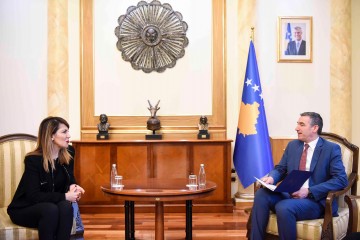
18 January 2019 | News
Secretary General Bregu: Inter-connected, we will push each other forward
Pristina – Secretary General of the Regional Cooperation Council (RCC), Majlinda Bregu, visited Pristina today and met with the Speaker of the Parliament Kadri Veseli, Prime Minister Ramush Haradinaj, Minister of Foreign Affairs, Behgjet Pacolli, and Minister of Innovation and Entrepreneurship, Besim Beqaj.
18 January 2019 | News
On-the-job-training programme important for strengthening the Western Balkans labour market outcomes
Western Balkans’ Public Employment Services and Labour Ministries peers review on-the-job training programmes and practices Tirana – Representatives of Public Employment Services (PES) and Ministries of Labour from the Western Balkans economies gathered in Tirana for a 2-day regional workshop to review on-the-job training programmes. The Workshop was organised by the Employment ...
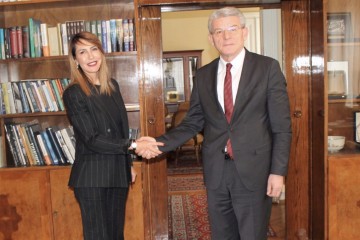
09 January 2019 | News
RCC Secretary General Majlinda Bregu pays the first official visit to Presidency of Bosnia and Herzegovina
Sarajevo – Majlinda Bregu, the new Secretary General of the Regional Cooperation Council (RCC), met with Sefik Dzaferovic, one of the three members of Presidency of Bosnia and Herzegovina, in Sarajevo today. This is the first meeting organised of envisaged tour of visits that RCC Secretary General will have with leadership of the South East Europe participants.

04 January 2019 | News
Statement of the Secretary General of the Regional Cooperation Council Majlinda Bregu
Beyond differences and geographical boundaries there lies a common interest! Jean Monnet was firm in his conviction that the “European nations had to unite in order to survive”. The same holds true for Western Balkan’s. To maintain weight in a world that is changing fast, we need to leverage our relations. Cooperation is the crux of the matter.
04 January 2019 | News
Majlinda Bregu takes office as the Secretary General of the Regional Cooperation Council
Sarajevo – Mrs. Majlinda Bregu assumed her duties of the new Secretary General of the Regional Cooperation Council (RCC) today, following the appointment by the South-East European Cooperation Process (SEECP) Foreign Ministers in Brdo pri Kranju, Slovenia on 23 April 2018.
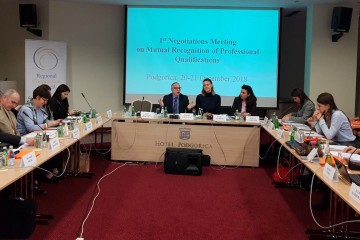
21 December 2018 | News
Western Balkan Six kick-off negotiations on mutual recognition of professional qualifications
Podgorica - The Western Balkan Six (WB6) kicked-off negotiations on an Agreement, which will enable common and shorter procedures for recognition of professional qualifications for Doctors of Medicine, Dentists, Architects and Civil Engineers. The appointed negotiations teams from the WB6 economies discussed the Draft Agreement on Recognition of Professional Qualifications for Doctors ...
19 December 2018 | News
SEE 2020 Strategy’s Monitoring Committee kicks off new Strategy’s monitoring cycle
Vienna - 7the meeting of the Regional Cooperation Council’s (RCC) South East Europe 2020 (SEE 2020) Strategy’s Monitoring Committee took place in Vienna today marking the beginning of the new SEE 2020 monitoring cycle.
13 December 2018 | News
Western Balkans moving towards a roaming free region
Brussels – Representatives of the economies from the Western Balkans (WB) gathered in Brussels today to discuss on the new Regional Roaming Agreement (RRA), at the meeting of the Western Balkans Roaming Policy organized by the Regional Cooperation Council (RCC).
13 December 2018 | News
Preparations for the next WB6 Prime Ministers Summit continue at the 4th Meeting of Working Group on Recognition of Academic Qualifications in the Western Balkans
Sarajevo - The 4th meeting of the Joint Education Reform Initiative of South Eastern Europe (ERI SEE) and Regional Cooperation Council’s (RCC) Working Group on Recognition of Academic Qualifications (WG RAQ) took place in Sarajevo today.
11 December 2018 | News
3rd Meeting of the Western Balkans 6 Working Group on Capital/Financial Markets
Podgorica - The third meeting of the Western Balkans Six 6 (WB6) Working Group on Capital/Financial Markets, organised by the Regional Cooperation Council (RCC), took place in Podgorica today, deliberating on the possibilities of advancing this work towards the overall financial markets development and discussing possible deliverables for the next Summit of the WB6 Prime Ministers in ...
10 December 2018 | News
More jobs and changed approach to employment of Roma community in the enlargement region necessary to combat poverty and social dependence
Budapest - Regional conference on innovative approaches to employment of Roma, jointly organized by the Regional Cooperation Council (RCC)’s projects Roma Integration 2020 and Employment and Social Affairs Platform (EASP), and Roma Education Fund (REF) started in Budapest today.
06 December 2018 | News
Svilanovic: Cyber security became new hotspot and serious challenge at global, regional and local level
Istanbul – The Third Regional Coordination Conference for Counter-Terrorism (CT) and Prevention and Countering Violent Extremism (P/CVE) in South East Europe (SEE), organized by the Regional Cooperation Council (RCC) in cooperation with the Government and the Ministry of Interior of Turkey, together with Integrative Internal Security Governance Initiative (IISG), opened in Istanbul, Turkey, ...
06 December 2018 | News
Western Balkans endorses development of joint tourism routes
VIENNA – The South East Europe Tourism Expert Group (TEG) endorsed a joint plan establishing the regional cultural and adventure tourism routes for the Western Balkans six, at the meeting held in Vienna today.
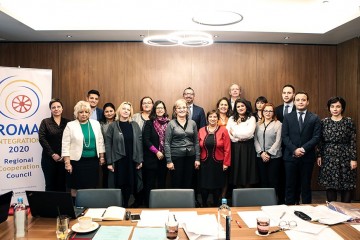
05 December 2018 | News
Enlargement region governments expressed will to secure equal opportunities, development and non-discrimination of Roma community
Skopje – Governments of the Western Balkans and Turkey agreed to work on a Regional Declaration on Roma and EU enlargement at the Third Task Force meeting of the Regional Cooperation Council (RCC)’s Roma Integration 2020 (RI2020) project, held in Skopje. They also agreed to continue and enhance efforts for full equality and integration of Roma in the enlargement region.
04 December 2018 | News
Enlargement process, integration, transformation challenges - main topics of 19th edition of EU-Western Balkans Summit in Brussels
Brussels – For the third year in a row the Regional Cooperation Council (RCC) partnered with the Brussels-based think-tank Friends of Europe (FoE), with the support of the European Commission, Konrad Adenauer Stiftung, United Nations Development Programme (UNDP) and the United States European Command, in organizing the annual EU-Western Balkans Summit. This year’s 19th edition of the ...
27 November 2018 | News
Meeting on Cybersecurity and CSIRTs Cooperation in Western Balkans: Cybersecurity a necessity of modern societies
Limassol - Western Balkans’ Computer Security Incident Response Teams (CSIRTs) met in Limassol, Cyprus today, within International Telecommunication Union's (ITU) Cyber Drill - ALERT (Applied Learning for Emergency Response Teams) for Europe Region that is taking place to from 26-30 November 2018. The meeting was co-organised by the Regional Cooperation Council (RCC), ITU and The Geneva Centre ...
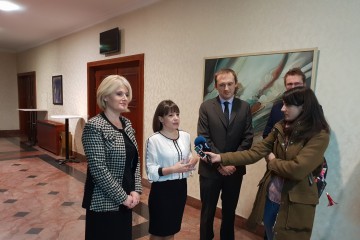
27 November 2018 | News
RCC ESAP: Internship Programmes in focus of Regional Peer Review Workshop in Skopje
Skopje – A two-day a regional peer review workshop focusing on internship programmes ended in Skopje today. The Workshop was organised by the Regional Cooperation Council’s (RCC) Employment and Social Affairs Platform (ESAP) project.
22 November 2018 | News
RCC hosts the 3rd meeting of the SEE Network of Judicial Training Institutions
Zagreb – The Regional Cooperation Council (RCC) hosted the 3rd Meeting of the South East Europe (SEE) Network of Judicial Training Institutions “Rule of Law at the heart of enlargement process – regional cooperation”, in Zagreb, Croatia on 21-22 November 2018.
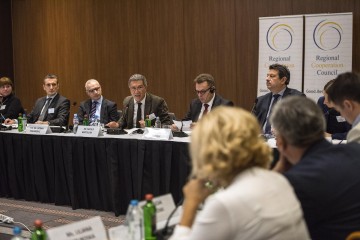
21 November 2018 | News
Svilanovic: Western Balkans should work on preserving its environment and address climate change, regardless of its EU accession process
Skopje – Western Balkans ministers in charge of the environment called for further strengthening of synergies and regional cooperation for the implementation of the environment and climate change priorities in the region, in line with the EU acquis, as well as supported mainstreaming of environment, climate and sustainable development objectives in all policy areas, enhancing cross-sector ...
20 November 2018 | News
Skopje to host 3rd Ministerial Panel on Environment and Climate Action in the Western Balkans
Skopje – The Regional Cooperation Council (RCC) is organising the 3rd in row Ministerial Panel on Environment and Climate Action in the Western Balkans, which is to take place in Skopje tomorrow. The event is organized together with the host Ministry of Environment and Physical Planning.
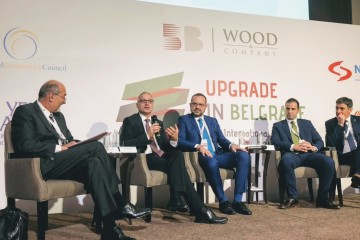
15 November 2018 | News
Svilanovic: Region’s economies need to improve legislation on capital markets, focusing on protection of investors
Belgrade – The Regional Cooperation Council (RCC) hosted the panel: The Future of Regional Capital Markets as a partner of the 17th Conference of the Belgrade Stock Exchange ‘Upgrade in Belgrade 2018’ being held in Belgrade today.
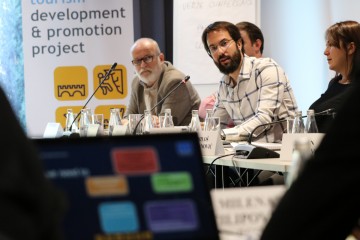
14 November 2018 | News
RCC’s tourism project develops regional umbrella identity: Western Balkans - Crossroads of Civilisations
Podgorica - The Regional Cooperation Council (RCC)’s Tourism Development and Promotion Project prepared and presented the new joint regional umbrella identity concept dubbed “Western Balkans - Crossroads of Civilisations”, at the WB Tourism Focus Group meeting held today in Podgorica.
14 November 2018 | News
RCC organizes training of teams for negotiations on mutual recognition of professional qualifications in the Western Balkans
Tirana – The Regional Cooperation Council (RCC) concluded a two-day training session for the negotiations teams who will conduct the negotiations on the Agreement on the Mutual Recognition of Professional Qualifications of Doctors of Medicine, Dentists, Architects and Civil Engineers between the 6 Western Balkan economies (WB6) in Tirana today. The training was the first step in the ...
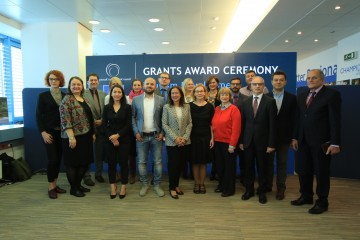
09 November 2018 | News
548.000 EUR worth grants awarded for improvement of Western Balkans cultural and adventure tourism
Sarajevo - The Regional Cooperation Council (RCC)’s EU-funded Tourism Development and Promotion Project has awarded the first twelve, out of 30 + grants in total value of EUR 548,000, in Sarajevo today. These grants are awarded to the best project proposals received through the public call for proposals looking for ideas intended to improve a joint Western Balkans cultural and adventure ...
08 November 2018 | News
The work of the Regional Working Group for Developing Regional Standards for Roma Responsible Budgeting continues at its third meeting
Rome – The Working Group for Developing Regional Standards for Roma Responsible Budgeting, comprising of the National Roma Contacts Points (NRCP) representatives of Ministries of Finances from the economies in the enlargement region, Regional Cooperation Council (RCC)’s Roma Integration (RI2020) Action Team and independent budget experts, continued discussion on regional budgeting standards ...
08 November 2018 | News
RCC to award first twelve grants for Western Balkans tourism development and promotion
Sarajevo – The Regional Cooperation Council (RCC) will award the first twelve grants in total worth of EUR 550,000 for the development and promotion of tourism in the Six Western Balkans economies, at a ceremony in Sarajevo tomorrow.
07 November 2018 | News
Region’s Military Intelligence Chiefs discuss cyber security challenges in the Western Balkans
Tirana – The South East European Military Intelligence Chiefs (SEEMIC) adopted the Open-source intelligence (OSINT) assessment dedicated to ‘Challenges to critical infrastructure cyber security in South East Europe ' at their 10th Conference held on 7 November 2018 in Tirana, Albania. The event was co-organised by the Regional Cooperation Council (RCC) and the Defence Intelligence and ...
06 November 2018 | News
Western Balkans continues regional discussions to decrease roaming prices
Brussels – Representatives of the Western Balkans (WB) economies started the discussions for the adoption of the new Regional Roaming Agreement aimed at reducing the roaming prices for the benefits of all Western Balkan consumers, covering calls, SMS and data traffic for the entire region.
31 October 2018 | News
Svilanovic: Romani women are the most vulnerable group and region desperately needs to ensure their economic independence
Belgrade – The regional conference on economic situation of Romani women in the European Union enlargement region, organized by the Regional Cooperation Council’s (RCC) Roma Integration 2020 (RI2020) in cooperation with the Government of Serbia and CARE International Balkans, has started in Belgrade today.
30 October 2018 | News
Western Balkans agree to step up the work on research infrastructure
Sarajevo – Six Western Balkan (WB6) economies agreed to step up their work on research infrastructure in the region. Specifically the WB6 agreed to develop policies to open access to the existing research infrastructures (RIs) for researchers from the region, to cooperate in development of national RI Roadmaps as a basis for a regional map of RIs, and to kick off joint work on ...
29 October 2018 | News
RCC ESAP: Supporting exchange of experience on development and implementation of sector budget support
Skopje – Employment and Social Affairs Platform (ESAP) project of the Regional Cooperation Council (RCC) supported the visit of the Albanian delegation from the Ministry of Economy and Finance to Skopje today.
25 October 2018 | News
RCC hosts workshop for Western Balkans journalists on media coverage of terrorism and violent extremism topics
Budva - The Regional Cooperation Council (RCC) hosts a Regional Workshop on media coverage of violent extremism-related topics for journalists from the Western Balkans, in Budva, Montenegro, today.
22 October 2018 | News
Western Balkans promotes its adventure tourism offer at Adventure Travel World Summit – Powered by RCC.int
Sarajevo – Regional Cooperation Council’s (RCC) Tourism Development and Promotion Project took the tour operators from the six Western Balkans economies to the annual Adventure Travel World Summit (ATWS), which was held in Montecatini, Italy last week, to promote their offers and products. The ATWS is the single largest adventure travel gathering that enables business-to-business ...
19 October 2018 | News
RCC organises regional workshop for journalists from the Western Balkans on media coverage of terrorism and violent extremism topics
Budva - The Regional Cooperation Council (RCC) is organising a Regional Workshop on media coverage of violent extremism-related topics for journalists from the Western Balkans, on 25 October 2018, in Budva, Montenegro.
18 October 2018 | News
RCC Board meets for the 35th time
Sarajevo – The Board of the Regional Cooperation Council (RCC) met for the 35th time at the organisations’ Secretariat in Sarajevo, Bosnia and Herzegovina today.
11 October 2018 | News
RCC begins operationalisation of Regional Investment Reform Agenda - RIRA
Sarajevo – The Regional Cooperation Council (RCC) began operationalisation of the Regional Investment Reform Agenda (RIRA), with a series of consultations with Western Balkans Six (WB6) economies, on the development of their individual-economy Investment Policy Reform Action Plans (IRAPs), the last of which was held in Sarajevo today. The RIRA and IRAPs are a part of the Multi-Annual Action ...
10 October 2018 | News
RCC’s Roma Integration 2020 at 2018 EU Platform on Roma Inclusion in Brussels
Brussels – The Regional Cooperation Council’s (RCC) Roma Integration 2020 (RI2020) Action Team prepared a set of recommendations intended to resolve the housing situation of Roma in a sustainable way and contribute to the progress of full realisation of the fundamental rights of Roma, and shared them with participants of the 2018 EU Platform on Roma Inclusion, organized by the European ...

09 October 2018 | News
RCC hosts the third meeting of MAP REA Coordinators from Western Balkan Six
Brussels – The Regional Cooperation Council (RCC) hosted the 3rd meeting of Coordinators of Multi-Annual Action Plan (MAP) on Regional Economic Area (REA) in Western Balkan Six (WB6), discussing the implementation results, next milestones, the most pressing challenges and reiterating commitments, in Brussels today.
08 October 2018 | News
Western Balkan Six open negotiations on mutual recognition of professional qualifications of doctors of medicine, dentists, architects and civil engineers
Brussels – The Western Balkans began the negotiations on mutual recognition of professional qualifications of doctors of medicine, dentists, architects and civil engineers at the 1st meeting of Lead Negotiators convened by the Regional Cooperation Council (RCC) in Brussels today.
05 October 2018 | News
Local Employment Partnerships in Focus of Regional Peer Review Workshop
Sarajevo/Tesanj/Prnjavor - Employment and Social Affairs Platform (ESAP) project of the Regional Cooperation Council (RCC) organised a regional 3-day Workshop on Local Employment Partnerships, which started in Sarajevo and continued with field visits to municipalities of Tesanj and Prnjavor that ended today.
03 October 2018 | News
Second National Platform on Roma Integration held in Skopje
Skopje – The second national platform on Roma Integration, gathering representatives of the government, civil society organizations, the Delegation of the European Union and relevant international organisations, to assess the Roma integration policy achievements made in 2017 and agree on priorities for 2018, met in Skopje today.
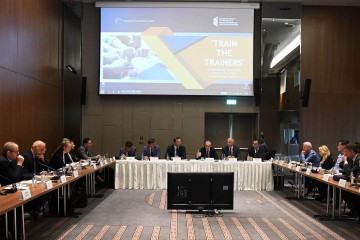
03 October 2018 | News
Svilanovic: Trained security practitioners are invaluable in prevention and countering of violent extremism and radicalization in Western Balkans
Skopje - A seminar on prevention and countering of violent extremism (P/CVE) in the Western Balkans (WB) gathering security practitioners from the region and distinguished regional and international lecturers is being held in Skopje today. The seminar has been organised by the Regional Cooperation Council (RCC) in cooperation with the Ministry of Interior of The Former Yugoslav Republic of ...
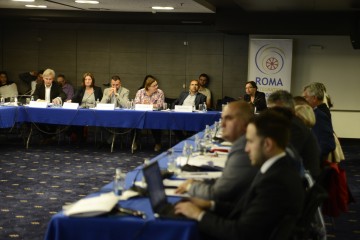
28 September 2018 | News
Third National Platform on Roma Integration in Bosnia and Herzegovina held in Sarajevo
Sarajevo – The third National Platform on Roma Integration in Bosnia and Herzegovina, organized by the Regional Cooperation Council’s (RCC) Roma Integration 2020 in cooperation with the Ministry for Human Rights and Refugees of Bosnia and Herzegovina, was held in Sarajevo today. It gathered relevant officials from all levels of governance in charge of Roma integration and representatives ...
25 September 2018 | News
Svilanovic: This might be ‘a make or break’ year for Regional Economic Area in the Western Balkans
New York – The Regional Cooperation Council (RCC) hosted a working breakfast of the Western Balkans Foreign Ministers and the Commissioner for European Neighbourhood Policy and Enlargement Negotiations, Johannes Hahn, in New York today. This informal gathering was organised in the framework of the forthcoming Session of the United Nations’ (UN) General Assembly.
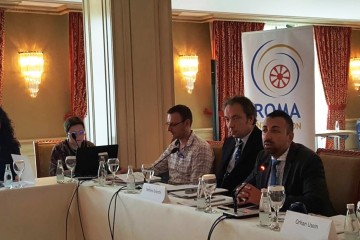
21 September 2018 | News
Pristina hosts third National Platform on Roma Integration
Pristina - Under the framework of the Regional Cooperation Council’s (RCC) Roma Integration 2020 (RI2020), the third National Platform on Roma Integration in Kosovo*, jointly organized by the RI2020 Action Team and the Office of the Prime Minister was held in Pristina today.
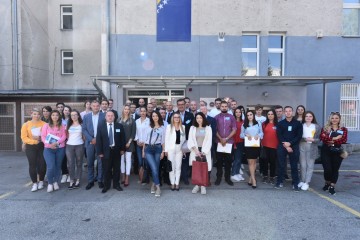
18 September 2018 | News
Sarajevo: Students from BiH universities discuss early signs of radicalisation among youth and its prevention
Sarajevo – Close to 50 students from various Universities across Bosnia and Herzegovina gathered in BiH capital today at the one-day Workshop, organised by the Regional Cooperation Council (RCC) at Faculty for Criminalistics, Criminology and Security Studies of University of Sarajevo, to discuss the early signs of radicalisation in their local communities, vulnerable targeted population, ...
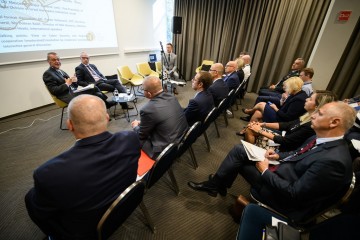
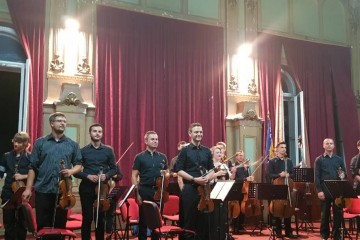
23 August 2018 | News
RCC supports Western Balkans tour of No Borders Orchestra
Sarajevo – The Regional Cooperation Council (RCC) supported the Western Balkans tour of the No Borders Orchestra (NBO) that ended last night with a concert in Belgrade after earlier performances in Budva, Prizren and Sarajevo.

17 August 2018 | News
Film „Last call“ directed by Hajni Kis winner of the Heart of Sarajevo for the Best Student Film at 2018 Sarajevo Film Festival
Sarajevo – Regional Cooperation Council (RCC) is proud to confirm that the young director Hajni Kis with her film „Last call” won the Heart of Sarajevo for the Best Student Film, under RCC's patronage, at the 24th edition Sarajevo Film Festival (SFF) that is to close tonight.
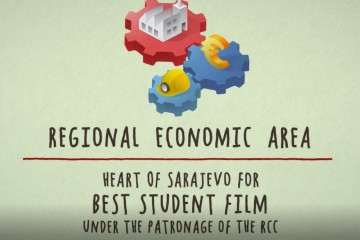
09 August 2018 | News
RCC continues fuelling regional cooperation in the field of youth creativity and tourism
Sarajevo – For the second year in a row, the Regional Cooperation Council (RCC) is the international partner of the Sarajevo Film Festival (SFF), as a patron of the 'Heart of Sarajevo' award for the Best Student Film. The festival kicks-off tomorrow, 10 August 2018, and includes filmmakers from 12 South East European economies, which is an impressive regional representation.

31 July 2018 | News
Pristina: ESAP helps Ministry of Labour and Social Welfare to develop its monitoring framework
Pristina – In the period April-July 2018, the Regional Cooperation Council (RCC) through its Employment and Social Affairs Platform Project (ESAP) helped the Ministry of Labour and Social Welfare of Kosovo* to develop the strategy monitoring tools and increase their capacity to plan and perform a monitoring process, including reporting and feedback on the progress in the implementation ...

17 July 2018 | News
Horizon Europe should contribute to closing research & innovation EU-Western Balkans gaps
Western Balkan Six propose recommendations ahead of the adoption of the EC’s research and innovation Horizon Europe programme Sarajevo - Following the conclusions of the meeting of the Western Balkans Working Group on Research and Development (R&D) that took place in Brussels on 13 June 2018, the ministries responsible for science of the Western Balkan Six, prepared and issued ...

15 July 2018 | News
RCC launches tourism development grant scheme; 1.62 million euro made available
Sarajevo – Regional Cooperation Council (RCC) Secretariat launched today 1.62-million-euros worth grant scheme that will be utilised to improve infrastructure and quality of services along regional cultural and adventure tourism routes.
12 July 2018 | News
RCC's ESAP: Albanian Public Employment Service visits their colleagues in Pristina
Pristina – Upon request of the representatives of the Albanian Public Employment Service (PES), the Regional Cooperation Council's (RCC) Employment and Social Affairs Platform (ESAP) project, within its technical assistance facility, took the Albanian PES on a study visit to their PES colleagues in Pristina.
11 July 2018 | News
RCC Secretary General takes part at the Western Balkans London Summit
The Secretary General of the regional Cooperation Council (RCC), Goran Svilanovic, took part at the Western Balkans (WB) Summit on 10 July in London.
06 July 2018 | News
RCC’s Balkan Barometer 2018: Satisfaction of people and businesses on overall situation in the region is steadily improving
Brussels – The Regional Cooperation Council (RCC) revealed results of 2018 edition of the Balkan Barometer (BB), an annual survey of citizens and business communities’ opinion on the situation in the region, in Brussels today. The main findings of the survey show that satisfaction of people and businesses on the overall situation in the region, while still below average, is steadily improving.
05 July 2018 | News
Major milestone in SEE 2020 Strategy implementation: Western Balkans ADDS more than 600 000 JOBS
Brussels – Governing Board of the Regional Cooperation Council’s (RCC) South East Europe 2020 Strategy (SEE 2020) endorsed the 2018 Annual Report on Strategy’s implementation (ARI), at its fifth meeting held in Brussels today, in the eve of the presentation of the RCC’s Balkan barometer 2018.
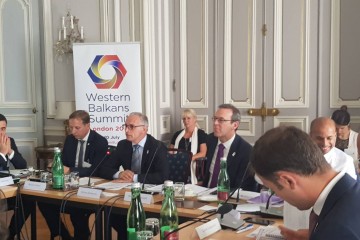
04 July 2018 | News
Svilanovic: Notable progress achieved in the implementation of Multi-Annual Action Plan on Regional Economic Area in the Western Balkans
Vienna – Secretary General of the Regional Cooperation Council (RCC) Goran Svilanovic presented key results of the implementation of Multi-Annual Action Plan on Regional Economic Area (MAP REA) at the ministerial panel dedicated to this topic of the Economy Ministers’ Meeting of the London Western Balkans Summit held in Vienna today.
03 July 2018 | News
Second Meeting of the Working Group for Developing Regional Standards for Roma Responsible Budgeting
Bucharest – The second meeting of the Working Group for Developing Regional Standards for Roma Responsible Budgeting, organised by the Regional Cooperation Council (RCC)’s Roma Integration 2020 (RI2020), took place in Bucharest today.

03 July 2018 | News
RCC to present SEE2020 strategy implementation results and its Balkan Barometer 2018 this week in Brussels
Brussels – The Regional Cooperation Council (RCC) is to present the implementation results of the region’s growth strategy, South East Europe 2020 (SEE2020) on 5 July 2018 in Brussels, and day after, on 6 July also in Brussels, the RCC will reveal the results of its 4th edition of the public and business opinion survey – Balkan Barometer 2018. Both are an integral part of the RCC’s ...
02 July 2018 | News
Genoveva Ruiz Calavera: The RCC instrumental in facilitating co-operation bringing the Western Balkans closer to one another and to the EU
Sarajevo – Genoveva Ruiz Calavera, Director for the Western Balkans at the European Commission’s (EC) Directorate-General for European Neighbourhood Policy and Enlargement Negotiations (DG NEAR) visited the offices of the Regional Cooperation Council’s (RCC) Secretariat in Sarajevo today, as a part of her Western Balkans tour.
28 June 2018 | News
New RCC project to focus on development of cultural and adventure tourism in the Western Balkans
SARAJEVO – The Regional Cooperation Council (RCC) officially marked the beginning of its 3-year project dedicated to the development and promotion of tourism in the Western Balkans, in Sarajevo today. The project will help six Western Balkans economies to diversify and consolidate their cultural and adventure tourism products, build and promote a joint offer, which would be competitive ...
27 June 2018 | News
RCC’s Tourism Expert Group adopts “Crossroad of Civilisations” as a regional tourism identity, agrees on tourism routes to be developed
Sarajevo – The South East Europe Tourism Expert Group (TEG) adopted “Crossroads of Civilisations” as a regional tourism identity that will be applied throughout all the routes development efforts in the framework of the Regional Cooperation Council (RCC)’s Tourism Development and Promotion project, at its 7th meeting held on 27 June 2018 on Jahorina Mountain near Sarajevo. The RCC’s ...
27 June 2018 | News
Regional Cooperation Council to launch Tourism Development and Promotion project for Western Balkans
Sarajevo – The Regional Cooperation Council (RCC) will launch its project on Tourism Development and Promotion in the Western Balkans on 28 June 2018, in Sarajevo, presenting its team, planned activities and expected results.
26 June 2018 | News
Western Balkans endorses key principles on recognition of academic qualifications
Brussels – Ministers in charge of education from the Western Balkan economies endorsed a set of key principles on automatic recognition of academic qualifications in the region at the 7th Ministerial meeting of the Western Balkans Platforms on Education and Training & Research and Innovation, organised by the European Commission (EC), in Brussels today. These principles build upon the ...
26 June 2018 | News
Usein: Data collection system to be improved for assessment of progress in integration of Roma
Belgrade – National Platform on Roma integration in Serbia, providing wide public dialogue with the relevant institutions and civil society and others concerned with the issue of Roma integration, at the same time ensuring transparency of the Roma related policy, participation in decision making and accountability of the implementing institutions towards the public, met in Belgrade today.
25 June 2018 | News
Digital Agenda for the Western Balkans Launched in Sofia
Sofia – Digital Agenda for the Western Balkans (WB) was launched in Sofia today, at the Digital Assembly 2018, a key annual policy event organised by the European Commission Directorate-General for Communications Networks, Content and Technology, and the Bulgarian Presidency of the Council of the European Union (EU), that gathers more than 1,000 stakeholders and policymakers to debate EU ...
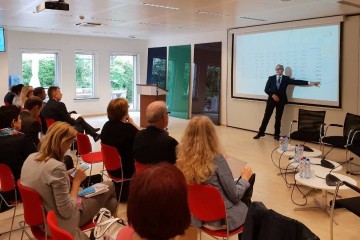
20 June 2018 | News
Brussels: RCC's ESAP presents Western Balkans employment and labour market trends and developments
Brussels – Regional Cooperation Council' s (RCC) Employment and Social Affairs Platform (ESAP) Project presented in Brussels today employment and labour market trends and developments in the Western Balkans (WB). The policy discussion gathered representatives of WB Ministries of Labour and Public Employment Services (PES), European Commission’s Directorates-General for Employment, Social ...
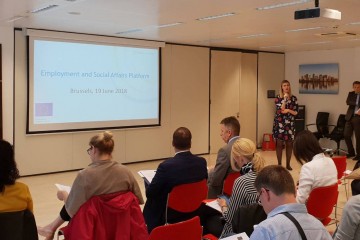
19 June 2018 | News
RCC’s Employment and Social Affairs Platform Project: Joint actions to enhance performance and promote mutual learning among Western Balkans Ministries of Labour and Public Employment Services agreed
Brussels - Representatives of the Western Balkans (WB) Ministries of Labour and Public Employment Services (PES) met in Brussels today, within the framework of the Regional Cooperation Council’s (RCC) Employment and Social Affairs Platform Project (ESAP), to discuss main trends and challenges in employment and labour markets in the region, as well as key outcomes of regional cooperation ...
14 June 2018 | News
Initial steps towards mutual recognition of Academic Qualifications in Western Balkans made by Joint Regional Working Group
Brussels – Joint Working Group on Recognition of Academic Qualifications (WG RAQ) has initiated steps towards recognition exercise for the Western Balkans (WB) as well as an online system to support fast-track recognition between Western Balkans economies, at its 3rd meeting held in Brussels today under auspices of the Regional Cooperation Council (RCC) & Education Reform Initiative ...
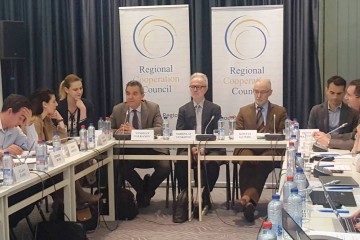
13 June 2018 | News
RCC: Western Balkans Working Group on Research and Development meets in Brussels
Brussels – The meeting of the Western Balkans Working Group on Research and Development (R&D) took place in Brussels on 13 June 2018. The participants focused on the possible participation of the Western Balkans in the Horizon Europe, which is the EC's proposal for a € 100 billion research and innovation funding programme for seven years period (2021-2027). This programme is ...
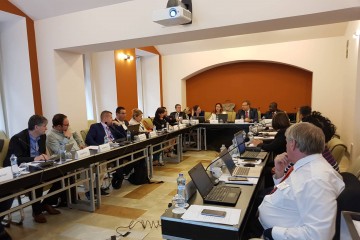
12 June 2018 | News
RCC hosts regional meeting on coordination and harmonization of spectrum policies in the Western Balkans
Prague - Coordination and harmonisation of spectrum policies in the Western Balkans (WB) was discussed at the regional meeting organised by the Regional Cooperation Council (RCC) that took place in Prague, Chez Republic today.
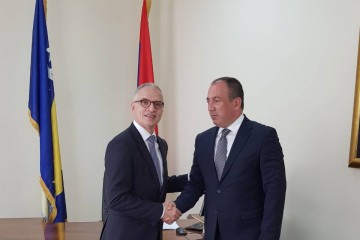
12 June 2018 | News
RCC Secretary General and BiH Foreign Minister meet to discuss BiH's SEECP C-i-O
Banja Luka – The Secretary General of the Regional Cooperation Council (RCC), Goran Svilanovic, met the Foreign Minister of Bosnia and Herzegovina, Igor Crnadak, in Banja Luka today.
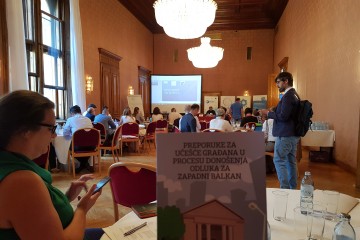
11 June 2018 | News
Participation of public in policy-making allows for citizens’ views and concerns to be addressed
Vienna – In an attempt to increase awareness of regional standards in the field of public participation in policy-making processes in the Western Balkans (WB), the Regional Cooperation Council (RCC) together with the Regional School of Public Administration (ReSPA), and the Centre for Public Administration Research (KDZ) organised a Regional Conference titled ‘Unlocking Benefits of Public ...
11 June 2018 | News
Second National Platform Meeting on Roma Integration in Albania held in Tirana
Tirana - The second National Platform Meeting on Roma Integration, aimed at reviewing the status of implementation of National Action Plan for Integration of Roma and Egyptians in Albania for the period from 2016 to 2020, took place in Tirana today. The meeting was organized by the Regional Cooperation Council (RCC)’s Roma Integration 2020 (RI 2020) Action Team, in close cooperation with ...
08 June 2018 | News
RCC’s ESAP Project and Western Balkans’ Public Employment Services invited to present their joint work at Annual Meeting of the EU PES Network
Sofia – Western Balkan’s Public Employment Services (PES) gathered around Regional Cooperation Council’s (RCC) Employment and Social Affairs Platform (ESAP) Project were, for the first time ever, invited to participate as observers in a 9th Annual Meeting of the European Union’s (EU) PES Network, that took place in Sofia, Bulgaria 7-8 June 2018.
08 June 2018 | News
Western Balkans' Judicial Training Institutions and Working Group on Justice meet in Podgorica
Podgorica - Regional Cooperation Council (RCC) convened meeting of the Western Balkan Judicial Training Institutions (WB JTIs), Councils for Judiciary and Working Group on Justice (WGJ), held on 7-8 June 2018 in Podgorica, Montenegro.
06 June 2018 | News
RCC publishes Study on Climate Change in the Western Balkans: Alarming increase of temperature over the whole territory
Sarajevo – Regional Cooperation Council (RCC) published a Study on climate change in the Western Balkans, showing alarming increase of temperature over the whole territory, with observed temperature increase of 1.2ºC in the near future, destined to warm further by 1.7 – 4.0°C and even exceeding 5.0°C by the end of the century, depending on the global effort in greenhouse gasses ...
31 May 2018 | News
Peers from Ministries' of Labour and PES from the region talk about youth employment
Herceg Novi – Representatives of the Ministries of Labour and Public Employment Services (PES) offices from the Western Balkan (WB) economies together with relevant regional and international experts in the field, shared experiences and discussed youth employment programmes at the regional peer-review workshop, organised by the Regional Cooperation Council’s (RCC) Employment and ...
31 May 2018 | News
Usein: Housing remains the most challenging issue for Roma integration in the region
Bar – A two day conference “Holistic Approach to Housing for Roma in the Enlargement Region”, organized by the Regional Cooperation Council (RCC)’s Roma Integration 2020 (RI2020) Action Team, started in Bar today.

30 May 2018 | News
Third National Platform meeting on Roma Integration in Montenegro held in Podgorica
Podgorica – The third National Platform meeting on Roma Integration in Montenegro for 2018, organized by the Regional Cooperation Council (RCC)’s Roma Integration 2020 (RI2020) Action Team in close cooperation with the Ministry of Human and Minority Rights of Montenegro, took place on 30 May in Podgorica.
30 May 2018 | News
Climate Change Discussed at the meeting of the Regional Working Group on Environment
Skopje - Regional Cooperation Council (RCC) and the Ministry of Environment and Physical Planning hosted the 7th meeting of the Regional Working Group on Environment (RWG Env) in Skopje, today.
30 May 2018 | News
Combating terrorism and violent extremism cannot be done without full support of judicial institutions
Tirana – The Regional Cooperation Council (RCC) and Albanian Ministry of Justice are hosting a regional workshop on law enforcement/judicial services and state attorneys/prosecutors in dealing with terrorism and violent extremism and connected crimes, in Tirana today. It gathers judges, prosecutors and experts from the Western Balkans, guests from the international organisations and ...
18 May 2018 | News
RCC Presents Preliminary Findings of the SEE 2020 Draft Annual Implementation Report to Monitoring Committee
Podgorica - Monitoring Committee of the South East Europe 2020 (SEE 2020) Strategy met for the 6th time, under auspice of the Regional Cooperation Council (RCC), in Podgorica today, to discuss and provide comments on the Strategy’s early draft Annual Implementation Report (ARI).
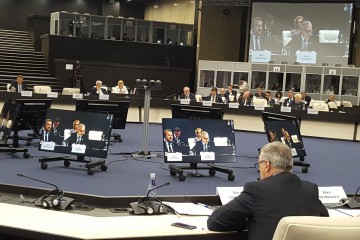
17 May 2018 | News
RCC at the Sofia Western Balkans Summit: Regional Cooperation Council proliferated regional cooperation across all sectors
Sofia – The Secretary General of the Regional Cooperation Council, Goran Svilanovic, took part at the EU-Western Balkans Summit hosted by the Bulgarian Presidency of the Council of the EU, in Sofia today. The Summit is dedicated to strengthen links between the EU and the Western Balkans in infrastructure, digital and human connectivity. It brought together EU and WB leaders, as well as ...
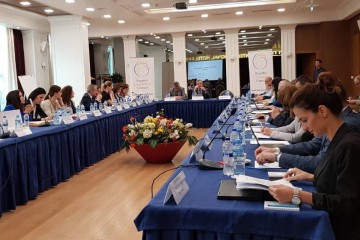
15 May 2018 | News
RCC presents draft MAP REA Implementation Monitoring Report
Tirana - Component Contact Points (CCPs) of the Multiannual Action Plan for the Regional Economic Area (MAP REA) for the Western Balkans Six (WB6) met for the second time at the meeting convened by the Regional Cooperation Council (RCC), in Tirana today, to discuss monitoring results and reporting on MAP REA implementation.
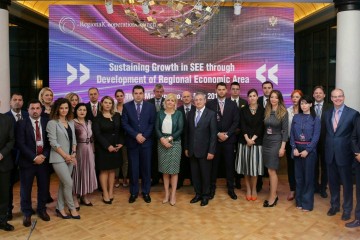
11 May 2018 | News
Regional Investment Reform Agenda (RIRA) Endorsed at the SEEIC Ministerial Meeting
Tivat - The Regional Investment Reform Agenda (RIRA) was endorsed by representatives of the six Western Balkan (WB6) economies at the Ministerial meeting of the South East Europe Investment Committee (SEEIC) held in Tivat, Montenegro today.
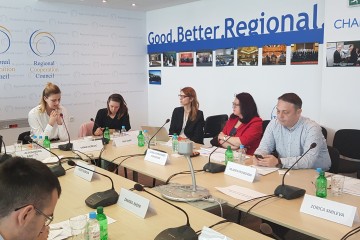
07 May 2018 | News
Western Balkans confirms Recommendation to open negotiations on Mutual Recognition of Professional Qualifications
Sarajevo – Representatives of six Western Balkan economies gathered in the Joint Working Group on Mutual Recognition of Professional Qualifications (JWG on MRPQ) at their meeting held in the Regional Cooperation Council (RCC) headquarters in Sarajevo today confirmed recommendation to open negotiations on mutual recognition agreement of professional qualifications.

30 April 2018 | News
RCC’s ESAP helps Employment Agency in Pristina in drafting their Rules of Procedure
Pristina – During a two months period at the beginning of 2018, the Regional Cooperation Council’s (RCC) Employment and Social Affairs Platform Project (ESAP) provided expert support in drafting the rules of procedure of the Advisory Board of the newly established Employment Agency of Kosovo*. ESAP also assisted this Employment Agency in the development of internal rules of ...
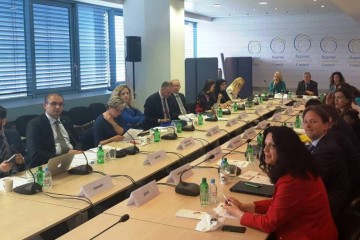
27 April 2018 | News
Preparations for Sofia and London Summits Continue: RCC's SEEIC reviews Regional Investment Reform Agenda
Sarajevo – The Regional Cooperation Council’s (RCC) South East European Investment Committee (SEEIC) met at the plenary session in RCC premises today, back-to-back with Sarajevo Business Forum.
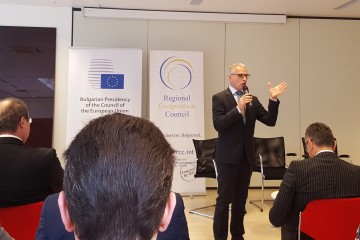
25 April 2018 | News
Brussels: Bulgarian EU Presidency, RCC host conference on the Western Balkans’ European perspective
Brussels - Bulgarian Presidency of the Council of the European Union together with the Regional Cooperation Council (RCC) hosted a conference on the Western Balkans’ European perspective through growth, good governance and enhanced cooperation, in Brussels today.
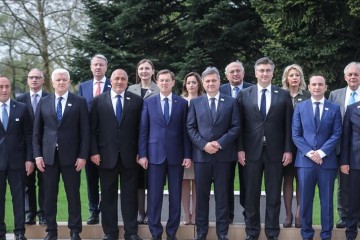
24 April 2018 | News
SEECP Summit Participants praise work of RCC, thank outgoing and approve new Secretary General
Brdo pri Kranju – The leaders of the South-East European Cooperation Process (SEECP) participants commended and congratulated the Regional Cooperation Council (RCC), for serving as a sui generis organisation promoting regional cooperation in South East Europe, approving at the same time the appointment by the SEECP Ministers of Foreign Affairs of Majlinda Bregu as Secretary General ...

23 April 2018 | News
RCC’s ESAP help Montenegro Employment Agency in upgrading their Information Technology System
Podgorica – The Regional Cooperation Council’s (RCC) Employment and Social Affairs Platform Project (ESAP)provided technical assistance to the Employment Agency of Montenegro in upgrading the Information Technology System in accordance with the European Employment Service (EURES) requirements.
23 April 2018 | News
South East European Foreign Ministers Appoint next RCC Secretary General
Brdo pri Kranju - Ministers of Foreign Affairs of the South-East European Cooperation Process (SEECP) appointed Majlinda Bregu as Secretary General of the Regional Cooperation Council (RCC), starting on 1 January 2019 and of Igor Luksic as RCC Secretary General starting on January 2022, at their meeting held in Brdo pri Kranju, Slovenia, today. In this post, Bregu will succeed Goran ...
23 April 2018 | News
RCC Annual Meeting endorses nomination of Majlinda Bregu as the next RCC Secretary General for the term 2019-2021
Brdo pri Kranju – The 10th Annual Meeting of the Regional Cooperation Council (RCC), held in Brdo pri Kranju today, endorsed the RCC Annual Report 2017/2018 and the nominations of Majlinda Bregu as the next RCC Secretary General for the term 2019-2021 and Igor Luksic for the term 2022-2024.
20 April 2018 | News
ESAP: Regional Workshop on Employment of Persons with Disabilities in the Western Balkans
Belgrade – The Regional Workshop on Employment of Persons with Disabilities (PWD) in the Western Balkans (WB), which was held in Belgrade on 19-20 April 2018, was organised jointly in the framework of two regional projects: Regional Cooperation Council’s (RCC) Employment and Social Affairs Platform (ESAP) and Promoting Inclusive Labour Market Solutions in the Western Balkans.
19 April 2018 | News
Skopje: The first Western Balkans Digital Summit finishes
Skopje – The first ever, two-day Western Balkans Digital Summit finished in Skopje today. It brought together close to 800 participants, 50 companies and more than 50 speakers, including Prime Ministers and Ministers responsible for digital agenda from the Western Balkans (WB), EU Berlin Process participants, representatives of European Commission (EC), Regional Cooperation Council ...
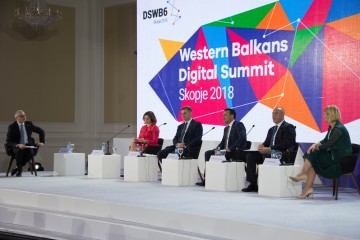
18 April 2018 | News
The first Western Balkans Digital Summit opens in Skopje
Skopje – The first ever Western Balkans Digital Summit, bringing together Prime Ministers and Ministers responsible for digital agenda from the Western Balkans (WB), EU Berlin Process participants, European Commission (EC), Regional Cooperation Council (RCC), representatives of IT industries and businesses, academia, and youth, opened in Skopje today.
18 April 2018 | News
Cyber Security: Regional Expert Conference and Workshop on Countering Online Radicalisation
Belgrade - Regional Cooperation Council (RCC) organised a two-day regional Conference and Workshop tackling countering online radicalisation in the context of cyber security in Belgrade on 17-18 April 2018.
17 April 2018 | News
RCC, RAI sign memorandum of understanding, broadening cooperation between the two organisations
Belgrade – Secretary General of the Regional Cooperation Council (RCC) Goran Svilanovic and Chairperson of the Regional Anticorruption Initiative (RAI) Davor Dubravica signed a Memorandum of Understanding (MoU) on mutual cooperation between the RCC and RAI, on the margins of the RCC-organised Conference 'Countering online radicalization in the context of cyber security', in Belgrade on ...
16 April 2018 | News
Regional Investment Reform Agenda in focus of the RCC-organized meeting
Vienna – The Regional Cooperation Council (RCC)’s Joint Working Group on Investments (JWGI) of the South East Europe Investment Committee (SEEIC) and Central European Free Trade Agreement (CEFTA), discussed Regional Investment Reform Agenda (RIRA), at the meeting held in Vienna today.
12 April 2018 | News
RCC with EC Organize Workshop on Smart Specialisation in the Western Balkans
Ljubljana - Regional Cooperation Council (RCC) and the Directorate-General Joint Research Centre (DG JRC) of the European Commission co-organised a joint Workshop on Governance of Smart Specialisation (S3) and Training on Entrepreneurial Discovery Process (EDP) in the Western Balkans, which was held at Technology Park in Ljubljana on 11-12 April 2018.
12 April 2018 | News
ESAP: Self-employment programmes in the Western Balkans discussed in Pristina
Prishtina – Representatives of Ministries of Labour and Public Employment Services (PES) from the Western Balkans discussed self-employment programmes at a two-day regional workshop within the framework of the Regional Cooperation Council’s (RCC) Employment and Social Affairs Platform (ESAP) project, held in Prishtina on 11-12 April 2018.

08 April 2018 | News
RCC and its RI2020 congratulate the International Roma Day
Sarajevo, Belgrade – The Regional Cooperation Council (RCC) and its Roma Integration 2020 Action Team congratulate the International Roma Day, being marked today .
05 April 2018 | News
Western Balkans Roaming Policy Actions Discussed at the Meeting in Brussels
Brussels - Regional Cooperation Council (RCC) together with the European Commission (EC) brought together the representatives from the Western Balkans economies’ line ministries and regulatory authorities, relevant experts from EC’s Directorate‑General for Communications Networks, Content and Technology (DG CONNECT) and DG for Neighbourhood and Enlargement Negotiations (NEAR) as ...
03 April 2018 | News
Skopje to host the first Western Balkans Digital Summit
Skopje – The first Western Balkans Digital Summit is to take place on 18-19 April in Skopje, bringing together Heads of Governments from the Western Balkans (WB), Ministers responsible for digital agenda from WB and European Union (EU) member states participating in the Berlin Process, European Commission (EC), Regional Cooperation Council (RCC), representatives from IT industries and ...
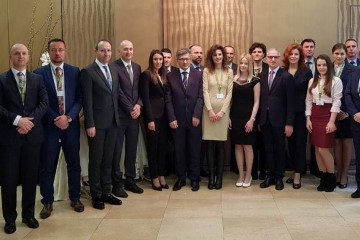
29 March 2018 | News
RCC: Ljubljana hosts 3-day training for young diplomats and SEENSA meeting
Ljubljana – Personnel security and awareness raising issues were the main topics of the South East European National Security Authorities (SEENSA) expert working group meeting, which was hosted by the Republic of Slovenia’s Government Office for the Protection of Classified Information (NSA) and the Regional Cooperation Council (RCC) in Ljubljana today.
27 March 2018 | News
Exploring models for automatic recognition of academic qualifications in Western Balkans and working on design of a joint exercise and online system for recognition of academic qualifications in Western Balkans
Podgorica - The Joint Working Group on Recognition of Academic Qualifications (WG RAQ) adopted the Group’s Terms of Reference and the Plan of Work, at their second meeting jointly organized by the Regional Cooperation Council (RCC) and Education Reform Initiative of South Eastern Europe (ERI SEE) in Podgorica on 26 March 2018.
16 March 2018 | News
Svilanovic at the meeting of WB Foreign Ministers in Sarajevo: It is “action time” for the Western Balkans
Sarajevo – The Secretary General of the Regional Cooperation Council (RCC), Goran Svilanovic, takes part in the meeting of Western Balkans (WB) Six Foreign Ministers in Sarajevo today. The meeting is dedicated to the recently published EU’s strategy on the enlargement perspective of the region, implementation of the Berlin Process’ 2017 Trieste Summit outcomes, and preparation ...
15 March 2018 | News
Regional Cooperation Council supports panel discussion of Silent Balkan Majority 'Tourism, culture and sport connect the region'
Svilanovic: Tolerant, forward looking people are the future of this region Jahorina/Sarajevo – Secretary General of the Regional Cooperation Council (RCC) Goran Svilanovic took part in the latest panel discussion of informal citizens' group from the Western Balkans „Silent Balkan Majority titled „Tourism, culture and sports connect the region“, as a part of the RCC’s support ...
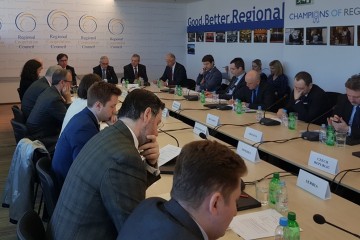
15 March 2018 | News
RCC Board meets for the 34th time
Sarajevo – The Regional Cooperation Council (RCC) Secretary General Goran Svilanovic presented the Report on the organisation's activities in the last quarter of the past year at the first meeting of the Board of in 2018, held in Sarajevo today.
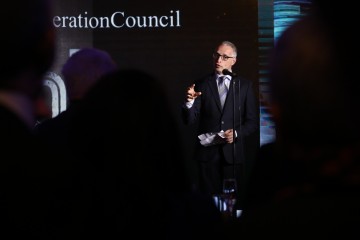
15 March 2018 | News
RCC celebrates its 10th Birthday, awards EXIT as Champion of Regional Cooperation for 2017
Sarajevo – The Regional Cooperation Council (RCC) marked its 10th birthday by presenting a brief overview of the past 10 years of the organisation’s activities to its partners, stakeholders and friends and awarding the EXIT Festival as Champion of Regional Cooperation for 2017, at a reception in Sarajevo last night.
13 March 2018 | News
RCC hosts 4th Donor Coordination Meeting for the Western Balkans
Brussels – Regional Cooperation Council (RCC) is hosting the 4th Annual Meeting of Donor Coordination for the Western Balkans, in Brussels today.
12 March 2018 | News
SEE 2020 Strategy Implementation: Programming Document for period 2018-2020 endorsed by the Strategy’s Participants
Brussels – Representatives of the South East Europe’s (SEE) economies participating in implementation SEE 2020 Strategy endorsed the Programming Document for the period 2018-2020, at the 6th Meeting of the SEE 2020 Programming Committee held in Brussels, under auspices of the Regional Cooperation Council (RCC), today, 12 March 2018.
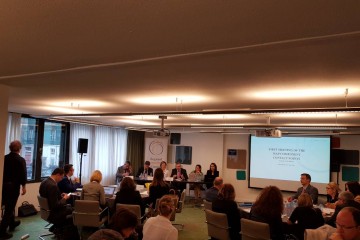
12 March 2018 | News
WB6 Component Contact Points discuss Monitoring, Reporting and Deliverables in MAP REA implementation
Brussels - Component Contact Points (CCPs) from the Western Balkans Six (WB6) economies involved in implementation of Multiannual Action Plan for the Regional Economic Area (MAP REA) met to discuss the deliverables of the MAP REA implementation to be achieved by the upcoming High level Summits in Sofia and London. Moreover, the meeting informed CCPs from the WB6 on several aspects of ...

07 March 2018 | News
Belgrade theatre play “They” in Sarajevo with support of the Regional Cooperation Council
Sarajevo – The Regional Cooperation Council (RCC) brought contemporary ballet choreodrama “They” (‘Oni’) of the National Theatre in Belgrade to Sarajevo, which was hosted by National Theatre Sarajevo last night, within the Sarajevo Winter Festival 2018.
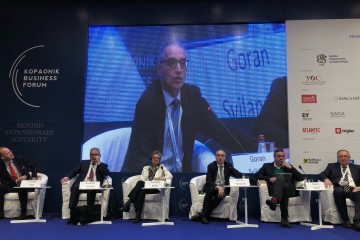
05 March 2018 | News
Western Balkans’ Regional Economic Area on the Agenda of Kopaonik Business Forum 2018
Kopaonik – Regional Cooperation Council’s (RCC) Secretary General Goran Svilanovic moderated a panel titled ‘Western Balkans - challenges: Regional economic area?’ within the 25th edition of the Kopanonik Business Forum, at Kopaonik today.
27 February 2018 | News
10 years of Regional Cooperation Council
With the region, for the region Sarajevo - Today the Regional Cooperation Council (RCC) marks its 10 birthday. Our journey began on 27 February 2008 in Sofia at the meeting of Foreign Ministers of South-East European Cooperation Process (SEECP), when the RCC was officially launched, as the SEECP operational arm, under which auspices it continues to operate.
21 February 2018 | News
Western Balkans should enhance its competitiveness and improve its market orientation to fight unemployment
Although the Western Balkans region suffered the dramatic employment fall in the period following the global economic crisis 2008-2011, “the situation recovered over the subsequent five years and by 2016 total employment had again reached 6.5 million, representing an increase of 8.9%”, reads recently published report ‘Labour Markets in the Western Balkans: Performance, Causes and Policy ...
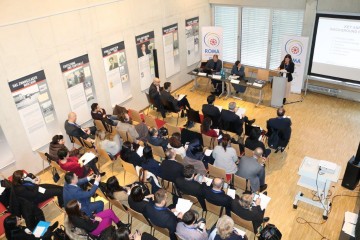
13 February 2018 | News
Discrimination against Roma and anti-Gypsyism in the enlargement region in the focus of the Berlin workshop
Berlin – A two-day workshop addressing discrimination and anti-Gypsyism in the enlargement region, organized under the auspices of the Regional Cooperation Council’s (RCC) Roma Integration 2020 (RI2020) project, opened in Berlin today. The main objective of the workshop, gathering more than 80 ministerial officials from the Western Balkans and Turkey, is to ensure officials from ...
06 February 2018 | News
New EU Strategy for the Western Balkans sets out credible enlargement perspective maintaining the focus on regional cooperation
Sarajevo – The newly published EU Strategy for the Western Balkans (WB) reiterates regional cooperation and good neighbourly relations as keys for progress of the Western Balkans’ economies on their European path, naming the Regional Cooperation Council (RCC) among those that provided a new momentum for dialogue.
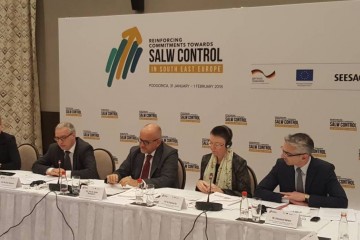
01 February 2018 | News
Regional Deputy Ministers of Interior and Foreign Affairs Commit to Joint Approach to Small Arms and Light Weapons Control
Podgorica – Deputy Ministers of the Interior and Foreign Affairs from the region expressed determination to strengthen their commitments towards Small Arms and Light Weapons (SALW) Control in South East Europe (SEE), as agreed in the Joint Statement at the High Level Regional Conference - Reinforcing Commitments towards Small Arms and Light Weapons Control in South East Europe, held in ...

30 January 2018 | News
Vocational Training Centres analyse their legal framework with RCC’s ESAP assistance
Pristina – Regional Cooperation Council's (RCC) Employment and Social Affairs Platform Project (ESAP) project provided technical assistance to Vocational Training Centres in Kosovo* in analysing their current legal framework and the documents related to vocational training, and proposed a concept for service contracts or Public-Private Partnership arrangements that could ...
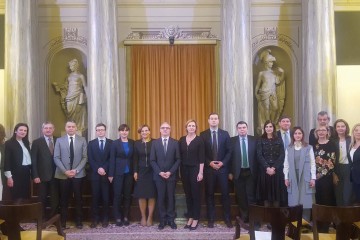
30 January 2018 | News
Second Meeting of MAP Coordinators and B2G Meeting on MAP takes place in Trieste
Trieste – The second meeting of the Coordinators for the RCC’s Multi Action Plan (MAP) for a Regional Economic Area (REA) in the Western Balkans six (WB6) took place in Trieste today. The meeting provided an overview on the key developments in MAP implementation in each of the WB6 economies and defined clear deliverables/targets for the Sofia and London Summits this spring/summer.

29 December 2017 | News
RCC's ESAP assists Ministry of Labour and Social Welfare in Pristina to establish an integrated information system
Pristina – The Regional Cooperation Council (RCC), through its Employment and Social Affairs Project (ESAP), provided a support upon request of Kosovo* on establishing an integrated information system in the Ministry of Labour and Social Welfare. ESAP analysed the current systems and databases and proposed a concept for the new system, including detailed procedures for its ...

22 December 2017 | News
Belgrade audience thrilled with Sarajevo play ‘Divlje meso’
RCC supported guest performance of ‘Divlje meso’ by Sarajevo National Theatre in Belgrade
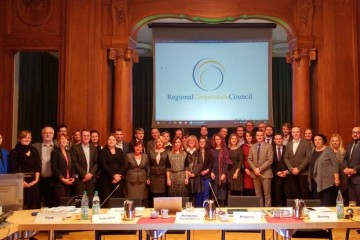
20 December 2017 | News
Preparations for Western Balkans Digital Summit 2018 Continue
Berlin - The Regional Cooperation Council (RCC) in cooperation with the European Commission and German Federal Ministry for Economic Affairs and Energy continued with preparations of the Western Balkans (WB) Digital Summit 2018 at the two-day meeting held in Berlin, Germany on 19-20 December 2017. This meeting is a follow-up of the constituting meeting held at RCC in Sarajevo in October.
19 December 2017 | News
Fragmentation of capital market in WB6 compels for regional actions and further integration
First Meeting of the Western Balkans Six Capital Market Authorities Vienna - In line with its activities on the implementation of the Multi Annual Action Plan (MAP) for a Regional Economic Area (REA), the Regional Cooperation Council (RCC) organised the first meeting of the Western Balkans Six (WB6) Capital Market Authorities “Diversification of financial systems to boost investment’, ...
18 December 2017 | News
RCC Secretary General takes part the Berlin Process’s meeting of Western Balkans Sherpas
Brussels – The Secretary General of the Regional Cooperation Council (RCC), Goran Svilanovic, took part at the meeting of the Berlin process’ Sherpas, organized by the European Commission, in Brussels today. The meeting focused on each of the Western Balkans (WB) economies’ reform measures in implementing the Multiannual Actin Plan (MAP) to create a Regional Economic Area in WB ...
15 December 2017 | News
The WB 6 Start Work on the Model for Automatic Recognition of Academic Qualifications
Belgrade – By formalising the Joint Education Reform Initiative of South East Europe (ERI SEE) – Regional Cooperation Council (RCC) Working Group on Recognition of Academic Qualifications (WG RAQ) the Western Balkans Six (WB6) have officially started its work on finding the model for automatic recognition of academic qualifications in the region. The 1st formal meeting of the WG RAQ took ...
08 December 2017 | News
First Regional Meeting on the Digital Integration
Brussels - The first regional meeting on Digital Integration, in line with the Regional Cooperation Council's (RCC) activities on the implementation of the Multi Annual Action Plan (MAP) for a Regional Economic Area (REA), was held in Brussels on 7-8 December 2017.
07 December 2017 | News
Regional Working Group on Justice and Western Balkans’ Judicial Training Institutions held a joint meeting
Brussels – Joint meeting of the regional Working Group on Justice (WGJ) and Western Balkans Judicial Training Institutions (WB JTIs) group was held in Brussels on 6-7 December 2017, under auspices of the Regional Cooperation Council (RCC).
06 December 2017 | News
Regional Workshop on Smart Specialisation in Research and Development
Brussels – Workshop on Smart Specialization for the Research and Development (R&D) and Industrial Working Group organised by the Regional Cooperation Council (RCC) was held in Brussels, on 6 December 2017.
05 December 2017 | News
Representatives of the Western Balkans presented developments in Open Science and Open Access policies in their economies together with EU Member States
Brussels - Representatives of the Western Balkans presented developments in Open Science and Open Access policies in their economies together with EU Member States at 5th meeting of the EU network of National Points of Reference on Scientific Information (NPR) in Brussels, on 5 December 2017.
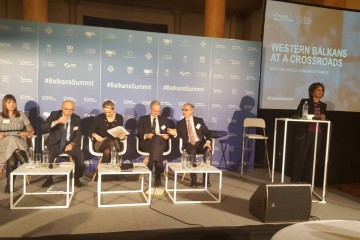
05 December 2017 | News
Challenges and Responses of the Western Balkans discussed at the Policy Summit in Brussels
Brussels – The 18th edition of policy summit on the Western Balkans under the title: Western Balkans at a Crossroads: New Challenges, Changing Dynamics, organised by the leading Brussels-based think-tank Friends of Europe (FoE), with the support of the European Commission, Regional Cooperation Council (RCC), Konrad Adenauer Stiftung, United Nations Development Programme (UNDP) and Rockefeller ...
01 December 2017 | News
Monitoring Committee of the SEE 2020 Strategy Meets
Vienna - The 5th meeting of SEE 2020 Strategy Monitoring Committee, organised by the Regional Cooperation Council (RCC), took place in Vienna on 1 December 2017.
30 November 2017 | News
Meeting of the South East Europe 2020 (SEE 2020) growth Strategy’s Coordination Board
Vienna - SEE 2020 Strategy Coordination Board met at its 10th meeting in Vienna on 30 November 2017.
30 November 2017 | News
RCC: Second Regional Coordination Conference for Counter-Terrorism and Prevention and Countering Violent Extremism opens in Brdo pri Kranju
Svilanovic: Departures from the region to Syria and Iraq almost completely stopped by mid-2016 Brdo near Kranj – Second Regional Coordination Conference for Counter-Terrorism (CT) and Prevention and Countering Violent Extremism (P/CVE) in South East Europe (SEE), discussing the enhancement of cooperation and coordination of CT and P/CVE programmes and activities in the region, commenced ...
28 November 2017 | News
Regional Workshop on Prosecution, Detention, Rehabilitation and Reintegration of Returning Foreign Terrorist Fighters begins today
Rakitje – Regional expert workshop “Prosecution, Rehabilitation, and Reintegration of Returning Foreign Terrorist Fighters”, organised by Centre for Security Cooperation - RACVIAC in cooperation with Regional Cooperation Council (RCC) and Organization for Security and Co-operation in Europe (OSCE) Mission to Bosnia and Herzegovina started in Rakitje, Croatia, today.
22 November 2017 | News
RCC, ETF continue building human capital in the region
Brussels – The Regional Cooperation Council’s (RCC) Secretary General, Goran Svilanovic, and newly appointed Director of the European Training Foundation (ETF), Cesare Onestini, signed an agreement on continuation of cooperation between the two organisations, in Brussels today.
21 November 2017 | News
UNCTAD, RCC present Investment Policy Review of South East Europe
Geneva – The Investment Policy Review (IPR) of South East Europe (SEE), conducted by the United Nations Conference on Trade and Development (UNCTAD) with the support of the Regional Cooperation Council (RCC), has been presented in Geneva today.
21 November 2017 | News
RCC: Chisinau Hosts Cyber Security Drill for Europe and CIS Regions
Chisinau – Three-day cyber drill - Joint ALERT (Applied Learning for Emergency Response Teams) for Europe and CIS Regions, hosted by Ministry of Economy and Infrastructure of Moldova, has started in Moldovan capital today.
17 November 2017 | News
Bonn: Western Balkans reaffirms its strong commitment to regional cooperation in addressing environmental and climate challenges
Bonn – Western Balkans authorities in charge of the environmental and climate change gathered at high-level panel in Bonn, Germany today, voicing strong commitment to joint regional action in responding to environmental and climate challenges. The event was organised by the Regional Cooperation Council (RCC) and the Ministry of Environmental Protection of Serbia.
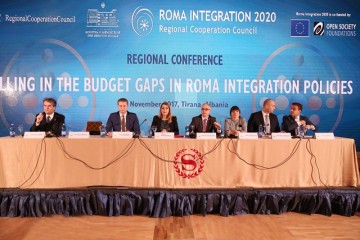
10 November 2017 | News
RCC: Coordinated and Efficient Spending in Roma Integration Policies Needed to Produce Tangible Results
Tirana – The Regional Conference on Filling in the Budget Gaps in Roma Integration Policies, organized by the Cooperation Council (RCC)’s Roma Integration 2020 (RI2020) Action Team, in close cooperation with the Ministry of Health and Social Protection of Albania, has started in Tirana today.
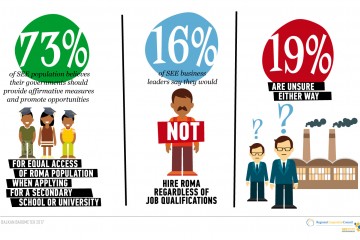
09 November 2017 | News
RCC: Tirana to host Regional Conference on Filling in the Budget Gaps in Roma Integration Policies
Tirana – The Regional Cooperation Council’s (RCC) Roma Integration 2020 (RI2020) Action Team organizes a Conference on 10 November in Tirana, to address the needs and priorities in the Western Balkans and Turkey concerning filling in the budget gaps in Roma Integration Policies, with a specific focus on employment and housing for Roma.
08 November 2017 | News
South East European Military Intelligence Chiefs adopt OSINT assessment on Use of Social Media by Violent Extremists
Budva – Open-source intelligence (OSINT) assessment dedicated to ‘Use of Social Media by violent extremists' has been adopted by the South East European Military Intelligence Chiefs (SEEMIC) at their 9th Conference held on 7 November 2017 in Budva, Montenegro. The event was co-organised by the Regional Cooperation Council (RCC) and the Department for Military Intelligence ...
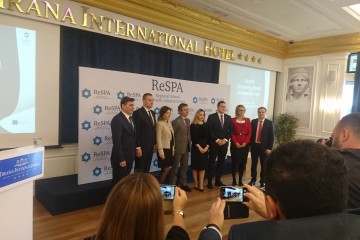
06 November 2017 | News
Ministers in charge of Public Administration Reform from Western Balkan economies endorse Recommendations on Public Participation in decision-making process
Tirana – Ministers in charge of public administration reform from Western Balkan economies endorsed the 'Western Balkans Recommendations on Public Participation', at the 8th Governing Board Meeting at Ministerial level, organised by Regional School of Public Administration (ReSPA), held in Tirana today.
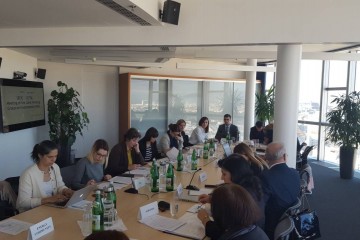
03 November 2017 | News
RCC: Joint Working Group on Investments discusses ways to attract and promote region's investment potentials
Vienna - The Western Balkans Six (WB6) Multi-Action Plan (MAP) for Regional Economic Area (REA) in the area of investments’ policy reform was in the focus of the regular meeting of SEEIC-CEFTA Joint Working Group on Investments (WGI), organized by the Regional Cooperation Council (RCC) in Vienna today.
02 November 2017 | News
RCC hosts Workshop on Improving the Investor State Dispute Settlement in South East Europe
Vienna - The Regional Cooperation Council (RCC) hosted today a workshop on improving the Investor State Dispute Settlement (ISDS) mechanism in South East European (SEE) economies, which is a next step in the implementation of the investment reform agenda in the region.
01 November 2017 | News
National Workshops on Public Employment Services Benchlearning kick-off in Pristina
A series of 12 workshops, two per each of the Western Balkans six economies, on Public Employment Services (PES) benchlearning, organised by the Regional Cooperation Council’s (RCC) Employments and Social Affairs Platform (ESAP), kicked-off in Pristina today.
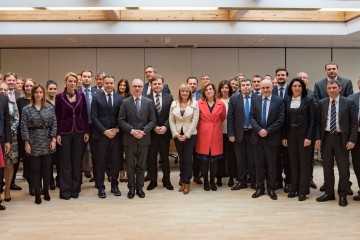
31 October 2017 | News
RCC hosts the first meeting of coordinators for the Western Balkans Regional Economic Area
Brussels - Following the Trieste Western Balkans (WB) Summit and the endorsement of the RCC’s Multi Action Plan (MAP) for a Regional Economic Area (REA) in the WB6, the Regional Cooperation Council (RCC) and the Western Balkans Chamber Investment Forum (CIF), organized the first Meeting of the MAP coordinators that ended in Brussels today.
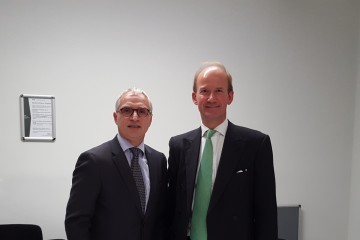
30 October 2017 | News
London: Western Balkans Summit 2018 and Berlin Process in focus of Svilanovic’s meeting with UK Foreign Office and Commonwealth Officials
London – Goran Svilanovic, Regional Cooperation Council’s (RCC) Secretary General met with UK’s Foreign Office and Commonwealth officials Fiona McIlwham, Peter Bainbridge, Director and Deputy Director of Western Balkans Department (EuD - WBD), Andrew Page, Western Balkans Summit 2018 Coordinator and Andrew Staunton, Member of the core team for organisation of the Summit to discuss ...
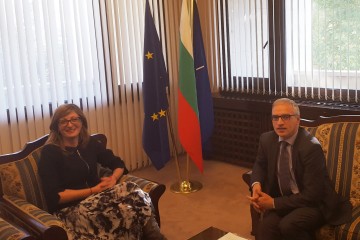
26 October 2017 | News
RCC Secretary General discusses Western Balkans EU perspective with Bulgarian Foreign Minister in Sofia today
Sofia – Goran Svilanovic, Secretary General of the Regional Cooperation Council (RCC), met with Ekaterina Zaharieva, Bulgarian Deputy Prime Minister for Judicial Reform and Minister of Foreign Affairs, in Sofia today. Svilanovic and Zaharieva talked about the priorities of Bulgaria’s upcoming six-month Presidency of the Council of the European Union, starting on 1 January 2018.
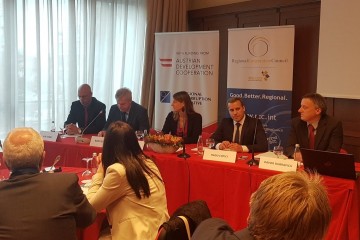
25 October 2017 | News
Preventing Corruption in Public Institutions through Efficient Identification of Risks
Ljubljana - Efficient identification of corruption risks and their assessment in public institutions is the main topic of a two-day Regional Forum which started in Ljubljana, Slovenia today.
25 October 2017 | News
2nd Meeting of Mediators from the Region
Zagreb - Network of Mediators from South East Europe (SEE) concluded their second meeting in Zagreb today, discussing the dispute resolution laws, public awareness on mediation and potentials for improving investment climate in the region. The 2-day meeting gathered representatives of ministries of justice and mediators from SEE. The meeting was organised by the Regional Cooperation Council ...
18 October 2017 | News
Svilanovic at RCC Board meeting: Our efforts were focused on areas where ambitions in the region have grown
Sarajevo – The Regional Cooperation Council (RCC) Secretary General Goran Svilanovic presented the report on activities of the RCC Secretariat in the period 1 April – 31 August 2017 to the RCC Board at the meeting in Sarajevo today. The Board also heard the information and plans on the most important upcoming activities of the organisation, in particular those related to the implementation ...
17 October 2017 | News
RCC: Implementation of the action plan for Regional Economic Area – preparations for the 2018 Western Balkans Digital Summit begin
Sarajevo – Implementation of the Multi-Annual Action Plan (MAP) for the Regional Economic Area (REA), endorsed at the Western Balkans Summit in Trieste this year, commenced today in the area of digital integration.
16 October 2017 | News
Regional Cooperation Council at 6th Summit100 of Business Leaders of Southeast Europe
Skopje – The 6th Business leaders’ Summit100, focusing on connectivity, discussing transport, free trade, infrastructure, branding and promotion of the region, mobility of people, as well as energy and digital agendas, kicked off in Skopje today.
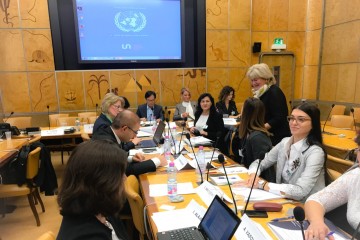
12 October 2017 | News
The region discusses investments and International Investment Agreements
Geneva – The first regional meeting of the South East European (SEE) International Investment Agreements (IIAs) Negotiators was held in Geneva today under the umbrella of the Regional Cooperation Council (RCC), and in cooperation with the UN Conference on Trade and Development (UNCTAD), aiming to initiate the discussion on the main issues in the existing network of IIAs in the region and ...
09 October 2017 | News
RCC’s Balkan Barometer 2017: Unemployment remains the chief concern, while anxiety over corruption grows
Brussels – The Regional Cooperation Council’s (RCC) presented in Brussels today the 2017 edition of the Balkan Barometer (BB), an annual survey of citizens and business communities’ opinion on the situation in the region.
06 October 2017 | News
RCC to present its Balkan Barometer 2017 – a perception survey of citizens and business communities on the situation in the region
Brussels – The Regional Cooperation Council (RCC) is to present its 3rd edition of the public and business opinion survey – Balkan Barometer 2017 in Brussels, Belgium, on 9 October 2017.
05 October 2017 | News
Heads of South East European National Security Authorities convene for their 7th Annual meeting
Belgrade - South East European National Security Authorities’ (SEENSA) forum held its 7th annual meeting at directors’ level in Belgrade, Serbia today.
22 September 2017 | News
Region’s administration representatives endorse Western Balkans Recommendations on Public Participation in legislative and decision-making processes
Sarajevo – The Regional Working Group on Better Regulation, consisting of relevant public administration bodies, endorsed the Western Balkans Recommendations on Public Participation of citizens and civil society in legislative and decision-making processes, at the meeting which ended in Sarajevo today.
21 September 2017 | News
Roma Integration 2020: Budgeting in the region to be improved to reflect measures for integration of Roma
Belgrade - Regional Cooperation Council’s (RCC) Roma Integration 2020 Action Team (RI2020) is given the mandate to work with the governments on developing regional standards for budgeting Roma Integration policies and mainstream budgeting responsible to Roma integration, at the RI2020 Task Force meeting which ended in Belgrade today.
20 September 2017 | News
New York: RCC Secretary General hosts meeting of Western Balkans foreign ministers and EU’s Han, discussing Regional Economic Area
New York – The Secretary General of the Regional Cooperation Council’s (RCC) Goran Svilanovic hosted an informal meeting of the Western Balkans foreign ministers, with the participation of the EU Commissioner for Enlargement and European Neighbourhood Policy Johannes Hahn, organized on the margins of the 72nd Session of the United Nations (UN) General Assembly, in New York today.
14 September 2017 | News
RCC’s ESAP: Belgrade hosts regional training on benchlearning for Public Employment Services in the Western Balkans
Belgrade - The first ever assessors training on benchlearning for representatives of Public Employment Services (PES) from the Western Balkans, organized by the Regional Cooperation Council’ (RCC) Employment and Social Affairs Regional Platform (ESAP) project, was held in Belgrade today.

08 September 2017 | News
RCC supports 5th edition of the International Festival of High School Theatre – JUVENTAFEST
Sarajevo – For the second year in a row the Regional Cooperation Council (RCC) provides support to young regional talent gathered around International Festival of High School Theatre – JUVENTAFEST. 5th edition of this unique Festival that provides an excellent overview of high school theatre production in the region and beyond kicks-off tomorrow.
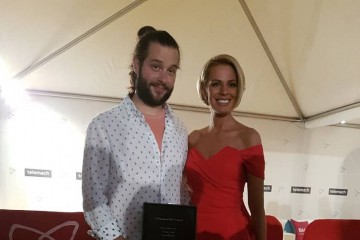
18 August 2017 | News
Sarajevo Film Festival: Heart of Sarajevo for the best student film goes to Neven Samardzic for the film ‘Clean’
Sarajevo – Bosnia and Herzegovina’s film ‘Clean’ (‘Čistoća') was awarded with the 'Heart of Sarajevo' as the Best Student Film of the 23rd Sarajevo Film Festival (SFF), at the official ceremony in Sarajevo last night. This award is being given under the patronage of the Regional Cooperation Council (RCC).
12 August 2017 | News
Sarajevo Film Festival: Competition for Best Student Film kicks-off
Sarajevo – The competition for the 'Heart of Sarajevo' for the Best Student Film of the 23rd Sarajevo Film Festival (SFF), award under the patronage of the Regional Cooperation Council (RCC), officially kicked off today.
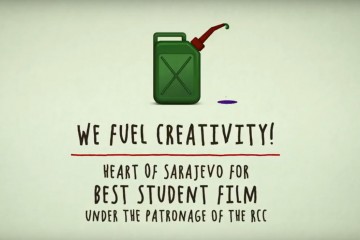
10 August 2017 | News
RCC patron of the 1st Sarajevo Film Festival's Best Student Film Award
Sarajevo – This year the Regional Cooperation Council (RCC) is the international partner of the Sarajevo Film Festival (SFF) 2017 and patron of the 'Heart of Sarajevo' award for the Best Student Film. The Student Film has been introduced in the competition programme of the SFF for the first time.
25 July 2017 | News
RCC hosts regional meeting on development of energy management in public sector
Jahorina - 1st regional meeting on development of system for energy management in public sector, hosted by Regional Cooperation Council (RCC), took place on Jahorina today.
18 July 2017 | News
Representatives of Western Balkan Public Employment Services discuss qualitative benchmarking
Tivat - Representatives of Western Balkan Public Employment Services (PES) met in Tivat today to discuss qualitative benchmarking, in the framework of the Regional Cooperation Council’s (RCC) Employment and Social Affairs Platform (ESAP) regional project.
12 July 2017 | News
Trieste: Six Western Balkans leaders endorse Regional Economic Area
Trieste - The leaders of Western Balkans Six (WB6) endorsed the Multi-annual Action Plan on a Regional Economic Area in the Western Balkans (MAP), at the summit in Trieste today. The MAP has been created to enable unobstructed flow of goods, services, capital and highly skilled labour, making the region more attractive for investment and commerce, accelerating convergence with ...
10 July 2017 | News
Sarajevo: RCC at the Sixth Western Balkans Civil Society Forum
Sarajevo – The Sixth Western Balkans Civil Society Forum, organised by the European Economic and Social Committee (EESC) in cooperation with the Regional Cooperation Council (RCC), opened in Sarajevo today.
06 July 2017 | News
Working Group on Open Science meets in Brussels and explores e-infrastructure possibilities in the region
Brussels – Regional Working Group on Open Science met in Brussels today. It mapped the existing e-infrastructure and made plans for further development in the Western Balkan economies, in order to support further development of the e-infrastructure in the region.
06 July 2017 | News
RCC hosts meeting of the Western Balkans' Judicial Training Institutions
Brussels – Western Balkans' Judicial Training Institutions (WB JTIs) met in Brussels today at a meeting organised by the Regional Cooperation Council (RCC) Secretariat. The meeting discussed future work and cooperation among WB JTIs, relevant European Commission services, European Judicial Training Network and RCC.
05 July 2017 | News
RCC: Svilanovic meets Bildt, Heisbourg, and Cooper in Sarajevo to discuss regional cooperation in context of European integration
Sarajevo - Carl Bildt, former Swedish Prime Minister and Co-Chair of the European Council on Foreign Relations (ECFR), François Heisbourg, Chair of the International Institute for Strategic Studies Council and Chairman of the foundation council of the Geneva Centre for Security Policy, and Robert Cooper, Special Advisor at the European Commission, visited the Regional Cooperation Council (RCC) ...
30 June 2017 | News
SEECP Foreign Ministers and Heads of State and Government endorse RCC’s Annual Report 2016-2017
Dubrovnik - Annual Report of the Regional Cooperation Council (RCC) 2016/2017 was endorsed by the South-East European Cooperation Process (SEECP) Ministers of Foreign Affairs and consecutively by the Heads of State and Government at the meetings held in Dubrovnik today.
29 June 2017 | News
Dubrovnik hosts 10th RCC Annual Meeting
Dubrovnik hosts 10th RCC Annual Meeting Svilanovic: SEE rallied around essential topics to advance the region on the road towards the EU Dubrovnik - Regional Cooperation Council (RCC) Secretary General Goran Svilanovic reported on the organisation’s work in the past year at the tenth Annual Meeting held in Dubrovnik today. This RCC 2016-2017 Annual Report was endorsed by ...
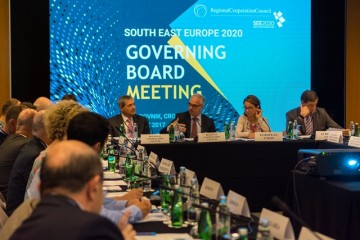
28 June 2017 | News
Annual report on SEE 2020 Strategy implementation endorsed
Dubrovnik – Governing Board of the Regional Cooperation Council’s (RCC) SEE 2020 Strategy (SEE 2020) endorsed the Annual Report on Strategy’s implementation (ARI). The fourth Meeting of the SEE 2020 Governing Board was held in Dubrovnik today, in the eve of the RCC’s Annual meeting.
26 June 2017 | News
RCC to present report on its activities in the past year and the SEE 2020 Development Strategy’s implementation results, at meetings in Dubrovnik
RCC Annual Meeting Regional Cooperation Council and Croatian Chairmanship-in-Office 2016-2017 of the South-East European Cooperation Process (SEECP) are co-organizing RCC’s tenth Annual Meeting. The meeting is expected to endorse Annual Report of the RCC 2016-2017, featuring the work of the organization in the past year. The Report will be presented by the RCC Secretary General, Goran ...
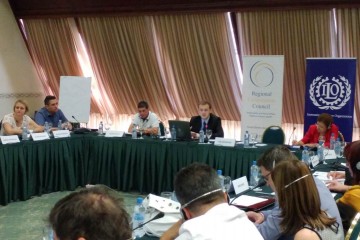
21 June 2017 | News
Skopje: Regional public employment services work together to improve measures leading to reduction of unemployment
Skopje – Labour market statistics officials from the Public Employment Services (PES) of the Western Balkan economies agreed upon a set of quantitative indicators that are to be collected for the PES benchmarking analysis, at the meeting in Skopje today, organized under auspices of joint Regional Cooperation Council’s (RCC) and International Labour Organisation (ILO) regional project ...
20 June 2017 | News
Regional efforts in combating climate challenges discussed at the 5th meeting of the Regional Working Group on Environment
Belgrade – Regional Group on Environment (RWG Env) met for the fifth time in Belgrade today to discuss current environmental challenges and actions forward.
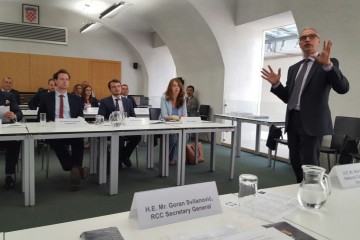
12 June 2017 | News
Training of junior diplomats from South East Europe: crafting the future of the region
Zagreb – Goran Svilanovic, Secretary General of the Regional Cooperation Council (RCC) together with the host, Tomislav Lendic, Croatian Assistant Minister of Foreign and European Affairs (MFEA) in charge of Southeast Europe opened the 1st South-East European Cooperation Process (SEECP) Seminar for Junior Diplomats taking place in Zagreb from 11 – 15 June 2107.
30 May 2017 | News
SEE 2020 Monitoring Committee discusses initial findings of the SEE 2020 Strategy Annual Report on Implementation
Brussels – Monitoring Committee of South East Europe’s 2020 (SEE 2020) Strategy met in Brussels today at the technical meeting focused on monitoring process of the Strategy, to discuss initial findings of the draft Strategy’s Annual Report on Implementation (ARI), review the proposals for the revised headline targets and synergise efforts with other monitoring frameworks in SEE.

25 May 2017 | News
Svilanovic: We need to engage and empower youth, to make them more resilient to violent extremism propaganda
Zagreb – The role of education and civil society in prevention of violent extremism was a topic of the regional workshop, organised by the Regional Cooperation Council (RCC), in Zagreb today.
24 May 2017 | News
Regional Working Group on Investments at its regular meeting in Podgorica
Podgorica – Regular, 7th meeting of Working Group on Investments (WGI) took place in Podgorica today.
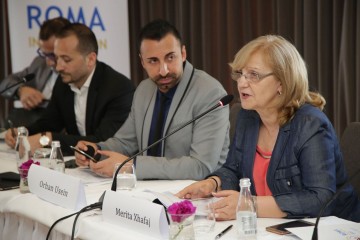
23 May 2017 | News
Tirana Hosts Public Dialogue Forum on Roma Integration
Tirana – A two-day Public Dialogue Forum, discussing the implementation of the National Action Plan for Integration of Roma and Egyptians 2016-2020, opened in Tirana, Albania today. The Forum, focusing on the five main priorities - education, employment, social protection, housing and health with the respective achievements and challenges – has been organized by the Regional Cooperation ...
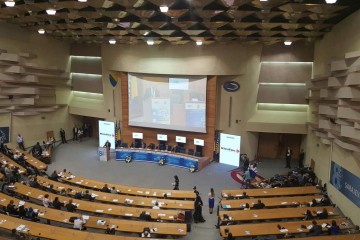
22 May 2017 | News
Sarajevo Business Forum 2017: RCC hosts panel "One Region, One Economy - Connectivity and Potential"
Sarajevo – The Regional Cooperation Council (RCC) hosted a panel "One Region, One Economy - Connectivity and Potential" at Sarajevo Business Forum 2017 (SBF 2017) today. This year’s edition of the SBF 2017 is being co-organized by the RCC.
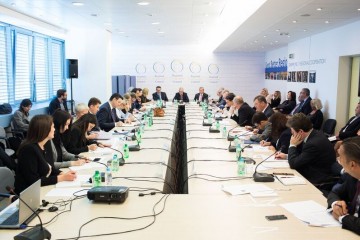
16 May 2017 | News
RCC Board accepts organisation’s Annual Report 2016 – 2017
The Annual Report of the Secretary General of the Regional Cooperation Council (RCC) 2016 – 2017 has been accepted by the organisation’s Board, at its 32nd meeting in Sarajevo today.
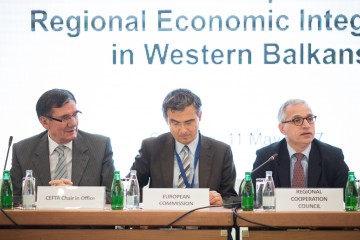
11 May 2017 | News
Western Balkans’ economies continue preparations for the upcoming Triste Summit at the joint RCC-CEFTA-European Commission Workshop
Sarajevo – Representatives of the Western Balkan (WB) six economies coming from ministries in charge of labour, education, trade, investments, digital agenda, foreign affairs as well as representatives of prime ministers gathered in Sarajevo today to identify joint economic integration initiatives and priority areas that could be presented at the Western Balkans Summit in Trieste, ...

10 May 2017 | News
RCC's ESAP Project assists Montenegro in preparing the new Labour Law
Kolasin – Employment and Social Affairs Platform Project (ESAP) of the Regional Cooperation Council (RCC) supported the Montenegrin Ministry of Labour and Social Welfare by providing technical input and assistance to a national workshop on preparing the new Labour Law.
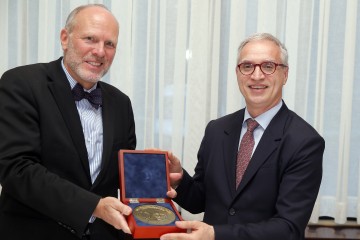
08 May 2017 | News
Goran Svilanovic presented with Dr Elemer Hantos Prize for promotion of economic cooperation in the region
Belgrade – Charles Epping, President of The Central Europe Foundation (CEF), presented Goran Svilanovic, Secretary General of the Regional Cooperation Council (RCC), Dr Elemer Hatnos Prize as recognition of his efforts to promote regional economic cooperation in South East Europe at the award ceremony in Belgrade tonight.
28 April 2017 | News
RCC Secretary General discusses regional cooperation in SEE with Turkey officials
Ankara – The Regional Cooperation Council (RCC) Secretary General, Goran Svilanovic, was in a visit to Ankara for consultations. The visit to Turkey comes within his regular dialogue with the RCC Board Participants. The Secretary General met the Deputy Minister of Foreign Affairs Ahmet Yildiz and high officials from Ministry of Foreign Affairs. He also had talks with representatives ...
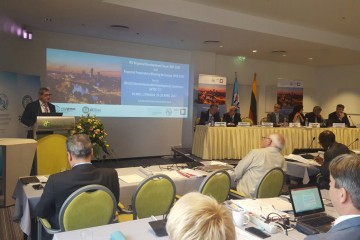
26 April 2017 | News
RCC: Western Balkans is not to be left out from the Pan-European digital infrastructure map
Vilnius – “Western Balkans is not to be left out from the Pan-European digital infrastructure map. However, it must develop future-proof broadband policies and targets and accelerate high-speed broadband roll-out”, said Gazmend Turdiu, Deputy Secretary General of the Regional Cooperation Council (RCC), at the International Telecommunication Union (ITU) Regional Development Forum ...
21 April 2017 | News
Assessment on use of social media by violent extremist discussed by SEEMIC Expert Working Group
Podgorica - South East Europe Military Intelligence Chiefs’ forum - Expert Working Group (SEEMIC EWG) met at their 9th meeting on 20 April 2017 in Podgorica to discuss the draft Open-source intelligence (OSINT) assessment and agenda of the main SEEMIC conference planned later this year.
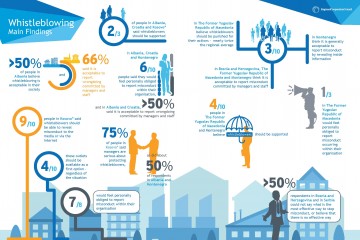
18 April 2017 | News
RCC survey: Only slightly more than half of people surveyed region-wide said whistleblowers should be supported
Sarajevo – Attempting to raise public awareness against corruption in South East Europe (SEE), the Regional Cooperation Council (RCC) surveyed what the public in the region felt towards the whistleblowing, as one of the highly effective tools to expose corruption, crime and other serious wrongdoings. The data analysis of this opinion survey, on both the Whistleblowing and protection ...
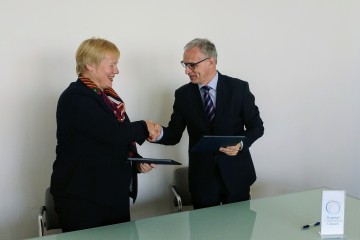
10 April 2017 | News
Germany continues its support to Regional Cooperation Council
Sarajevo - The Regional Cooperation Council (RCC) Secretariat and the German Federal Foreign office (Auswärtige Amt) signed an agreement on financial grant to support RCC’s public awareness activities. The grant agreement of 100, 000 euro is to support RCC communication and public awareness activities in the course of 2017-’18. The agreement was signed by the RCC Secretary General, ...
03 April 2017 | News
RCC launches a website on prevention and countering of violent extremism in South East Europe - www.rcc.int/p-cve
Sarajevo – The website on prevention and countering of violent extremism (P-CVE) in South East Europe (SEE) is operational as of today. The Regional Cooperation Council (RCC) launched the website providing relevant information on P-CVE in SEE, documents related to the regional initiatives, glossary and links to respective institutions dealing with the topic in the region.
31 March 2017 | News
Serbian journalists in a visit to the Regional Cooperation Council Secretariat
Sarajevo – A group of 11 Serbian journalists and representatives of their Government’s Team for social inclusion and poverty reduction visited the Regional Cooperation Council (RCC) Secretariat in Sarajevo today, as a part of the thematic study tour to Bosnia and Herzegovina.

29 March 2017 | News
RCC’s Roma Integration 2020 project at Roma week 2017 in Brussels
Brussels – Orhan Usein, Leader of Regional Cooperation Council’s (RCC) Roma Integration 2020 (RI2020) Action Team presented the work and goals of the RI2020 working on Roma Integration issues in the Western Balkans and Turkey, within the Roma week 2017, taking place in Brussels.
28 March 2017 | News
RCC: Skopje hosts training on corruption proofing of legislation
Skopje/Sarajevo – A second round of the training on corruption proofing of legislation, organized by the Regional Anti-corruption Initiative (RAI) Secretariat with support of the Regional Cooperation Council (RCC) and State Commission for Prevention of Corruption, took place on 27-28 of March 2017 in Skopje.
22 March 2017 | News
SEE group on countering radicalisation and violent extremism and foreign terrorist fighters continue its work under RCC auspices
Skopje/Sarajevo – The third regular meeting of the South East Europe (SEE) National Focal Points (NFP) for countering radicalization and violent extremism (CVE) and foreign terrorist fighters (FTF), took place today in Skopje. The meeting has been organized by the Regional Cooperation Council (RCC), with support of the Ministry of Foreign Affairs of The Former Yugoslav Republic of ...
22 March 2017 | News
Practical and institutional cooperation of regional judiciaries in focus of Podgorica-based events
Podgorica/Sarajevo – Podgorica hosted two events on judicial matters: Regional Seminar on practical issues in the framework of the judicial cooperation in civil, commercial and family matters and the 7th meeting of the Working Group on Justice, on 21-22 March 2017.
21 March 2017 | News
Orhan Usein: Through policies and budgets governments begin to translate commitments to Roma into integration and equality
Skopje/Sarajevo – A two-day regional workshop on budgeting for Roma integration policies, organized by the Regional Cooperation Council’s (RCC) Roma Integration 2020 project (RI2020), took place in Skopje on 20-21 March 2017. The Workshop participants discussed public financing and budgeting allocations for Roma population in the Western Balkan economies.
20 March 2017 | News
RCC presents its activities and core of regional cooperation in South East Europe to young diplomats
Sandanski/Sarajevo - Goran Svilanovic, Secretary General of the Regional Cooperation Council (RCC) and Stefana Greavu, Head of RCC’s Political Department spoke today to young diplomats from all over South East Europe, at the 12th Winter School on Diplomacy, in Sandanski, Bulgaria. This year’s edition of the Winter School of Diplomacy was devoted to EU and NATO in South Eastern Europe ...
17 March 2017 | News
Western Balkans economies to work with Regional Cooperation Council and EU to further economic cooperation
Sarajevo - At the meeting of six Western Balkans Prime Ministers with the European Commission and the European External Action Service in Sarajevo yesterday, the Prime Ministers reaffirmed their commitments on the EU accession path, took stock of the progress made thus far and set out preparations for the next summit hosted by Italy in Trieste on 12 July 2017.
16 March 2017 | News
Svilanovic: Higher level of regional economic integration can alleviate region’s economies
Sarajevo - “To restart convergence with the EU, the Western Balkans (WB) economies need to look outside of their borders and the fairly small national economies,” said the Regional Cooperation Council (RCC) Secretary General, Goran Svilanovic, at the opening of the Third Meeting on Donor Coordination in the WB, in Sarajevo today.
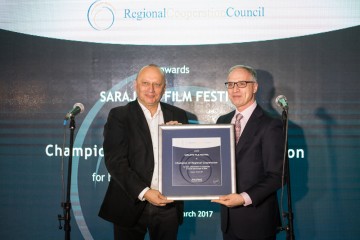
16 March 2017 | News
Champion of Regional Cooperation Award presented to Sarajevo Film Festival
Sarajevo – Sarajevo Film Festival (SFF) was officially presented with Champion of Regional Cooperation award in Sarajevo last night. Goran Svilanovic, Secretary General of the Regional Cooperation Council (RCC) presented the Award to Mirsad Purivatra, Director of SFF thanking him for vision and commitment to promote art and culture within the South East Europe (SEE) and the SEE brand ...

15 March 2017 | News
SEE 2020 triennial Programming Document adopted
Sarajevo – The Regional Cooperation Council (RCC)’s South East Europe (SEE) 2020 Strategy Programing Committee adopted the SEE 2020 Programming Document 2017-2019 at its 5th meeting in Sarajevo today. The document sets out the priority actions for the Strategy implementation in the coming period.
15 March 2017 | News
RCC Board meets in Sarajevo for 31st time
Sarajevo – The Regional Cooperation Council (RCC) Board met for the first time in 2017 in Sarajevo today. The RCC Secretary General, Goran Svilanovic presented the report on activities of the organization’s Secretariat in the period September-December 2016 and informed the Board on its key forthcoming activities.
15 March 2017 | News
RCC to host Third Meeting on Donor Coordination in the Western Balkans
Sarajevo - The Third Meeting on Donor Coordination in the Western Balkans, organized by the Regional Cooperation Council (RCC), is to take place in Sarajevo tomorrow.
14 March 2017 | News
Regional Cooperation Council launches redesigned website
Sarajevo – The Regional Cooperation Council (RCC) launched its redesigned, user friendly website today. The website has undergone significant redesign, reorganisation and technical upgrade to reflect the RCC work as envisaged by the new triennial Strategy and Work Programme 2017-2019 as well as updates of results and achievements in implementation of the South East European (SEE) growth ...
14 March 2017 | News
Sarajevo Film Festival - Champion of Regional Cooperation in South East Europe
Sarajevo – Regional Cooperation Council (RCC) has selected Sarajevo Film Festival (SFF) as the Campion of Regional Cooperation in South East Europe in 2016. The Award will be officially presented to Mirsad Purivatra, Director of SFF by Goran Svilanovic, RCC Secretary General at a ceremony in Sarajevo on 15 March 2017.
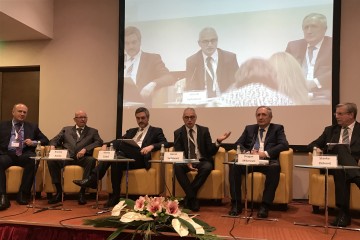
07 March 2017 | News
RCC at Kopaonik Business Forum 2017: Moving forward through regional economic integration
Kopaonik/Sarajevo – Necessity of reforms leading towards regional economic integration as the part of the EU accession process of the Western Balkan economies was an overwhelming position of participants of panel discussion ‘Regional investment projects reform agenda: One region, one economy?’ with the Regional Cooperation Council (RCC) Secretary General, Goran Svilanovic and representatives ...
03 March 2017 | News
RCC presents its report on activities in countering radicalization and violent extremism to SEECP Foreign Ministers
Zagreb/Sarajevo – The Secretary General of the Regional Cooperation Council (RCC), Goran Svilanovic, presented the RCC’s report on activities in countering radicalization and violent extremism (CVE/FTF), at the informal meeting of the ministers of foreign affairs of the South - East European Cooperation Process (SEECP), in Zagreb today.
03 March 2017 | News
Trans-European networks and connectivity agenda in focus of inter-parliamentary conference in Pristina
Pristina/Sarajevo – Trans-European networks policy and connectivity agenda were the focus of discussion of members of parliaments from the enlargement aspirant economies, South-East Europe Cooperation Process Parliamentary Assembly (SEECP PA) and the European Parliament (EP) at inter-parliamentary conference held in Pristina today.

21 February 2017 | News
Skopje: ESAP co-organises National Consultative Meeting on the Employment and Social Reform Programme
Skopje – The Employment and Social Affairs Platform (ESAP) project of the Regional Cooperation Council (RCC) provided support to a National Consultative Meeting on the Employment and Social Reform Programme, held in February 2017 in Skopje.
17 February 2017 | News
Svilanovic: We should turn to regional economic integration of the Western Balkans
MUNICH/SARAJEVO – Perspectives of the South East European economies’ reform processes in light of the current dilemma whether or not they should be continued against the European Union accession background, was the topic elaborately discussed at the BMW Foundation Global Dialogue session held in Munich today.
09 February 2017 | News
RCC at the meeting of ministers of foreign affairs of the Western Balkans six in Skopje
SKOPJE/SARAJEVO – “It is of paramount importance to ensure further progress and reforms in the region, as they are irreversible processes triggered by the EU accession aspirations. Regional Cooperation Council (RCC) is looking forward to continuation of close cooperation with you in making this region prosperous and stable,” said RCC Secretary General Goran Svilanovic, addressing ...
07 February 2017 | News
RCC Secretary General discusses organisation’s activities with EU officials in Brussels
BRUSSELS/SARAJEVO – The Secretary General of the Regional Cooperation Council (RCC), Goran Svilanovic, was in a two-day visit to Brussels where he met with Thomas Mayr-Harting, Managing Director for Europe and Central Asia in the European External Action Service, and Christian Danielsson, Director General for Enlargement at the European Commission. Svilanovic also briefed the Committee ...
16 December 2016 | News
Sarajevo hosts first regional ‘Skills Show’ of high school students
Sarajevo – The first regional Skills Show, aiming to link commercial and education sectors in order to improve the overall quality of education in the region, motivate young people to choose vocational schools and ultimately influence the increase of the employment rate, kicked-off in Sarajevo today. The two-day event will merge the format of professional conference, fair representation ...
16 December 2016 | News
Justice and Home Affairs discussed at EU-Western Balkans Ministerial Forum
Brdo pri Kranju/Sarajevo - Efficiency and cooperation of judiciaries, operational cooperation in matters such as migration, border management and internal security, including counter-terrorism and firearms trafficking were the main topics discussed at the EU-Western Balkans Ministerial Forum on Justice and Home Affairs held under Slovak Presidency of the Council of the European Union ...
13 December 2016 | News
Erhard Busek visits RCC Secretariat in Sarajevo
Sarajevo – Erhard Busek, former Special Co-ordinator of the Stability Pact for South Eastern Europe, predecessor of the Regional Cooperation Council (RCC) visited RCC’s Secretariat in Sarajevo today.
12 December 2016 | News
Roma integration as conditionality of EU accession process
Vienna/Sarajevo – The regional workshop on monitoring and reporting, organised by Roma Integration 2020 (RI2020) Action Team of Regional Cooperation Council (RCC), started in Vienna today. It will provide the participants with the necessary skills for data collection, use of monitoring indicators and reporting on the Roma-relevant policies and programmes that are being implemented ...
08 December 2016 | News
RCC Secretary General meets Croatian Deputy Prime Minister and Minister of Foreign and European Affairs
Hamburg/Sarajevo - The Secretary General of the Regional Cooperation Council (RCC), Goran Svilanovic met with the Deputy Prime Minister and Minister of Foreign and European Affairs of Republic of Croatia, Davor Ivo Stier on the margins of OSCE Ministerial Council Meeting in Hamburg, Germany today.
08 December 2016 | News
THE MEDAL OF THE LOUD: Speak, do not keep silent!
The first regional documentary film on whistleblowers Belgrade/Sarajevo – The Regional Anti-Corruption Initiative (RAI) produced a documentary film, ‘The Medal of the Loud’ , dealing with whistleblowers in the region through testimonials of people who reported corruption, pointed to it as investigative journalists, and representatives of organisations and institutions dealing ...
07 December 2016 | News
RCC’s Svilanovic at Brussels’ Balkans Summit: ‘Business as usual will not work’
Sarajevo/Brussels – “When it comes to the enlargement, ‘business as usual’ is the only policy which will not work“, said Secretary General of the Regional Cooperation Council (RCC), Goran Svilanovic, speaking at the panel ‘EU membership: the long road from vision to reality’ of the Balkans Summit in Brussels today.
02 December 2016 | News
Regional Conference: Better Regulation and Competitiveness in Western Balkans
In the present post-crisis setting of slow growth, high unemployment and fiscal stringency in most economies in this region, the need for improving cost effectiveness and quality of regulation remains critical. Better regulation means changes that improve the quality of regulation, provides a real opportunity to stimulate economic activity, unlocks productivity and supports growth.

02 December 2016 | News
RCC: Setting up priorities for 2017-2019 SEE2020 Strategy implementation in Belgrade
In a series of workshops throughout the Western Balkan economies, Regional Cooperation Council (RCC) met today with Serbian authorities to discuss the needs and priorities of national administration related to the implementation of the South East Europe 20202 (SEE 2020) Strategy in the next three years.
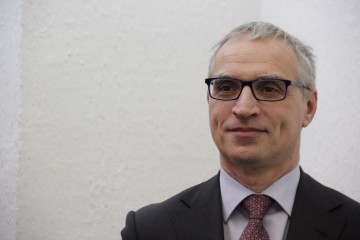
01 December 2016 | News
RCC's Goran Svilanovic awarded the 2016 Elemer Hantos Prize for promoting economic cooperation
Sarajevo – The Central Europe Foundation (CEF) awarded Goran Svilanovic Dr Elemer Hantos Prize as a recognition of his efforts to promote cooperation in the region in his current capacity as Secretary General of the Regional Cooperation Council (RCC), fully respecting Svilanovic’s previous activities as Minister of Foreign Affairs of Serbia and Montenegro (2000 to 2004), Chairman ...
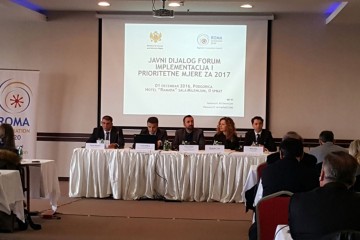
01 December 2016 | News
Roma Integration 2020: The 2016 cycle of Public Dialogue Forums on Roma issues concludes in Podgorica
Podgorica – The 2016 cycle of the Public Dialogue Forums on implementation and priority measures on Roma issues, that took place throughout the region in the past few months, concluded with the Forum in Podgorica today. The events have been organised by the Regional Cooperation Council’s (RCC) Roma Integration 2020 Action Team together with national authorities in Belgrade, Sarajevo, ...

30 November 2016 | News
RCC: SEE 2020 Strategy’s Monitoring Committee meets at the 3rd annual meeting
Sarajevo/Vienna – Monitoring Committee of the South East Europe 2020 growth Strategy (SEE 2020) met at its regular third annual meeting in Vienna today, organised by the Regional Cooperation Council (RCC).
29 November 2016 | News
Launch of Advocacy Strategy for the EU Integration of the Western Balkans hosted by RCC Liaison Office in Brussels
The Regional Cooperation Council (RCC) Liaison Office in Brussels hosted today the official EU launch of the Advocacy Strategy for the EU Integration of the Western Balkans, an event organized by the European Movement International in collaboration with the RCC.

25 November 2016 | News
Western Balkans need to concentrate regional efforts towards digitalisation
Skopje/Sarajevo – The second regional meeting on Broadband Infrastructure Development, organized by the Regional Cooperation Council (RCC) Secretariat took place in Skopje today. The participants of the meeting were acquainted with the EU's newest regulatory framework for broadband deployment and the set of selected best practices from the EU countries. They discussed the telecomm-related ...
24 November 2016 | News
Roma Integration 2020: Public Dialogue Forum on Roma issues in Skopje
Skopje - Public Dialogue Forum on Roma Integration titled “Rules of Procedure of The National Coordination Body, The Roma Information Centres, and The Roma Health Mediators” began in Skopje. The two-day event is organised by the Regional Cooperation Council’s (RCC) Roma Integration 2020 Action Team together with Mr Nezdet Mustafa, Minister without portfolio, National coordinator ...
23 November 2016 | News
Foreign Terrorist Fighters – Challenges for South Eastern Europe
Zagreb - Conference titled Foreign Terrorist Fighters – Challenges for South Eastern Europe: An Integrative and Complementary Approach to Counter – Terrorism and Violent Extremism began at the RACVIAC – Centre for Security Cooperation. The event is being organized in Cooperation with the Regional Cooperation Council (RCC) and with the OSCE Mission to Bosnia and Herzegovina. ...
21 November 2016 | News
Roma Integration 2020: Public Dialogue Forum on Strategy and Action Plan for inclusion of Roma, Ashkali and Egyptians
Pristina - Under the framework of the Regional Cooperation Council’s (RCC) Project Roma Integration 2020, the first Policy Dialogue Forum, jointly organized with the Office for Good Governance of the Office of the Prime Minister, was held in Pristina today.
18 November 2016 | News
Job creation in South East Europe needs reform and harmonization of investment policies
Geneva, Switzerland - Reforming and harmonizing investment policies in South East Europe will help to attract investors, a senior regional official said, at a meeting in Geneva on Thursday to discuss economic cooperation on investment into the region.
14 November 2016 | News
The South East Europe Coalition on Whistleblower Protection meets in Zagreb
Sarajevo/Zagreb - The South East Europe (SEE) Coalition on Whistleblower Protection held its second Annual Meeting, with support of the Regional Cooperation Council (RCC), Regional Anti-corruption Initiative (RAI) and Blueprint for Free Speech (BPfFS), in Zagreb today.
11 November 2016 | News
Tirana: Stepping up regional response in fight against radicalization, violent extremism, terrorism and foreign terrorist fighters in South East Europe in the focus of the RCC-organised conference
Tirana - For the first time in this format key international partners, regional organisations and representatives of governments from South East Europe (SEE) gathered to discuss and agree upon practical recommendations and future steps in fight against radicalization, violent extremism, terrorism and foreign terrorist fighters in the region, at the regional conference organized by the ...
11 November 2016 | News
RCC: SEE 2020 Strategy implementation priorities in the next 3 years, in focus of the Tirana workshop
Sarajevo/Tirana – The Regional Cooperation Council (RCC) Secretariat discussed the priorities for implementation of the South East Europe (SEE) 2020 Development Strategy for the next 3 years with Albanian authorities soliciting comments and feedback for future activities towards the Strategy goals, at workshop in Tirana today.
10 November 2016 | News
RCC with Western Balkan economies presented regional Open Science agenda at 4th EU meeting on Scientific Information
Sarajevo/Brussels – Regional Cooperation Council (RCC) and representatives of seven Western Balkan economies presented their draft plan of activities for the next period and the latest developments in the field of Open Science at the 4th meeting of the network of National Points of Reference on Scientific Information (NPR) of EU member states and the European Commission in Brussels, ...
10 November 2016 | News
Judicial training institutions from Western Balkans and Turkey mapped the most important projects in the region and identified common needs as grounds for future cooperation
Sarajevo/Belgrade – Representatives of the Ministries of Justice and Judicial Training Institutions (JTI) of Western Balkans and Turkey gathered at the Coordination meeting under the auspices of the Regional Cooperation Council (RCC) to map the most important projects in the area of judicial training in the region and to identify both the common needs and possibilities of using the ...
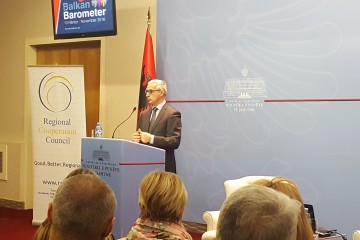
10 November 2016 | News
RCC’ Balkan Barometer survey: Albanians among the most optimistic about their expectations from the European integration
Sarajevo/Tirana - The Albanians are among the most optimistic/hopeful people in the region about their expectations from the European integration process and the benefits deriving from EU membership - 81% of the Albanian respondents believe that EU membership is a good thing, against the South East Europe (SEE) average of 39%, was heard at the presentation of the Regional Cooperation ...
09 November 2016 | News
RCC: Regional 3-year plan of activities and processes in the area of justice agreed at the meeting of the Working Group on Justice
Sarajevo/Belgrade – Justice ministries from the region initially agreed on the framework plan of action for the coming 3-year period, as proposed by the Regional Cooperation Council (RCC) at the 6th meeting of the Working Group on Justice, held in Belgrade on 9 November 2016.
07 November 2016 | News
RCC: Bosnia and Herzegovina works on finalisation of the Action Plan on Roma for 2017-2020 at public dialogue forum in Sarajevo
Sarajevo, 7 November 2016 – Bosnia and Herzegovina works on finalisation of the Action Plan on Roma for 2017-2020 at the public dialogue forum organised by the Roma Integration 2020 project of the Regional Cooperation Council (RCC) in cooperation with the Ministry of Human Rights and Refugees of Bosnia and Herzegovina (BH), held in Sarajevo today.
27 October 2016 | News
Western Balkan's public employment services agree on concrete actions to enhance their work
Belgrade/Sarajevo – Representatives of public employment services (PES) of the Western Balkan economies agreed on concrete steps and actions envisaging future cooperation under the Employment and Social Affairs Platform (ESAP) project at their first meeting that took place in Belgrade, today.
27 October 2016 | News
RCC: Athens hosts 9th meeting of the SEE 2020 Strategy Coordination Board
Sarajevo/Athens – The 9th meeting of the Regional Cooperation Council (RCC)’s South East Europe (SEE) 2020 Strategy Coordination Board was held in Athens, Greece, today.
21 October 2016 | News
RCC: Sarajevo hosts a concert of Balkan traditional music
Sarajevo, 22 October 2016 – Last night Sarajevo was the host of the concert promoting the dialogue of the Balkan people through its colourful traditional music. Spanish artist, maestro Jordi Savall, with ensemble Hesperion XXI and guest musicians from....
21 October 2016 | News
SEE 2020 implementation: Cooperation of Oversight Bodies for asset disclosure and conflict of interest in the region
Sofia/Sarajevo, 21 October 2016 – Exchanging data in the field of asset disclosure and conflict of interest, as part of implementation of Regional Cooperation Council’s (RCC) South East Europe 2020 growth strategy (SEE 2020), was the focus of the 3rd Regional Meeting of the Oversight Bodies that took place in Sofia, Bulgaria on 20-21 October 2016.
20 October 2016 | News
Chisinau: Migration crisis, radicalization and violent extremism leading to terrorism in the focus of SEE military intelligence chiefs meeting
Sarajevo/Chisinau, 20 October 2016 – “The security situation in South East Europe calls for greater responsibility and concerted efforts from all of us in the region”, said Secretary General of the Regional Cooperation Council (RCC) Mr. Goran Svilanović at the opening of the 8th South East Europe Military Intelligence Chiefs (SEEMIC) forum in Chisinau, Moldova today. The event is being ...
18 October 2016 | News
RCC: Initial insights of draft Regional Roaming Study presented to Western Balkans governments and regulatory agencies’
Sarajevo/Brussels – The Regional Cooperation Council (RCC) Secretariat presented the initial insights of the draft Regional Roaming Study to the governments’ and communication regulatory agencies’ representatives from the Western Balkans, in Brussels today.
13 October 2016 | News
RCC: Public dialogue forum on Roma Integration kicks off with public hearing at Serbian National Assembly
Sarajevo/Belgrade - The Roma Integration 2020 project of the Regional Cooperation Council (RCC) presented its activities assisting the Government in the implementation of the Strategy for Social Inclusion of Roma 2016-2025 at the public hearing organised in cooperation with the Committee for Human and Minority Rights and Gender Equality of the Serbian National Assembly, in Belgrade today.
12 October 2016 | News
Organisation’s results and upcoming activities in the focus of 30th RCC Board meeting
Sarajevo, 12 October 2016 – The Regional Cooperation Council (RCC) Secretary General Goran Svilanovic presented to the RCC Board today the implementation and results of the RCC’s Strategy and Work Programme (SWP) 2014-2016, as well as how these feed into RCC’s next three-year strategy 2017-2019.
06 October 2016 | News
Western Balkans Joins the European Open Science Agenda
Seven Western Balkans’ economies joined the European Union (EU) family in pursuing the EU Open Science Agenda at the Open Data and Access in Science meeting organised by the Regional Cooperation Council (RCC) on the margins of the International Open Data Conference (IODC) on 6-7 October 2016.
29 September 2016 | News
The new SEE 2020 annual programming cycle kicks –off
Sarajevo/Vienna, 29 September 2016 – The Regional Cooperation Council (RCC)’s South East Europe (SEE) 2020 Programing Committee agreed upon the concept and timelines of the Strategy implementation work plan in the next three years, at its regular meeting in Vienna today.
29 September 2016 | News
Cyber security, education and training on the agenda of the 6th South East European National Security Authorities’ forum (SEENSA)
Sarajevo/Podgorica – “Regional cooperation of national security authorities (NSA) in South East Europe (SEE) is one of the Regional Cooperation Council’s (RCC) success stories,” said RCC’s Secretary General Goran Svilanović at the opening of the 6th South East European National Security Authorities’ forum (SEENSA) in Podgorica today.
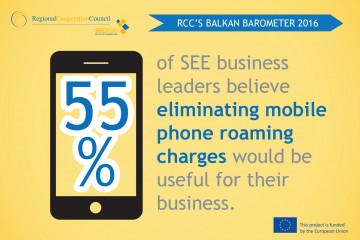
27 September 2016 | News
Roaming in the region could be harmonised with the EU even before accession, RCC to provide support in this
“Further to our long-standing support for regional cooperation in the ICT sphere as part of the South East Europe (SEE) 2020 Strategy, our efforts focus on delivering concrete contributions on two regional initiatives: on roaming and broadband. Roaming is the area where our economies could be harmonised with the EU even before accession, and RCC will support them in this,” said the ...

27 September 2016 | News
RCC Secretary General meets U.S. State Department officials
Sarajevo/Washington – Interventions of Regional Cooperation Council (RCC) in regional cooperation in South East Europe (SEE), with special emphasis on areas of governance, rule of law and security were discussed at the series of regular annual meetings of the organisation's Secretary General, Goran Svilanovic, with officials of the U.S. State Department in Washington D.C in the past ...
22 September 2016 | News
Connection, Communication, Cooperation in South East Europe
Sarajevo/New York - Regional Cooperation Council’s (RCC) Secretary General Goran Svilanovic attended the informal meeting of the Ministers of Foreign Affairs of the South East European Cooperation Process (SEECP), organized on the margins of the 71st Session of the United Nations (UN) General Assembly in New York.
20 September 2016 | News
Joint investigation teams as a tool in fighting organised crime
Podgorica - A conference introducing the topic of joint investigation teams organised by The Southeast European Prosecutors Advisory Group (SEEPAG), Southeast European Law Enforcement Center (SELEC) and Regional Cooperation Council (RCC) kicked-off in Podgorica, Montenegro, today.
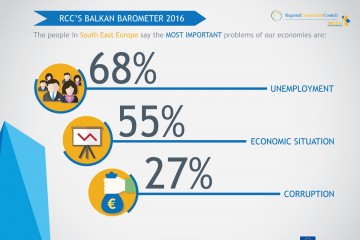
14 September 2016 | News
Efficiency and equity of public institutions and good governance seen as key problems in the region
‘Regional Cooperation Council (RCC) continues to back public administration and decentralization reform efforts of pertinent regional cooperation mechanisms in South East Europe (SEE) alike Network of Associations of Local Authorities of SEE (NALAS) and the Regional School for Public Administration (ReSPA), as good governance has always been at the heart of our activities’, said ...

14 September 2016 | News
Researcher mobility and open science contributing to research excellence
A workshop on successful facilitation of technology transfer and commercialization of research results in the Western Balkans, organized by the Regional Cooperation Council (RCC) and Western Balkan Research and Innovation Center (WISE), took place in Split, Croatia, today.
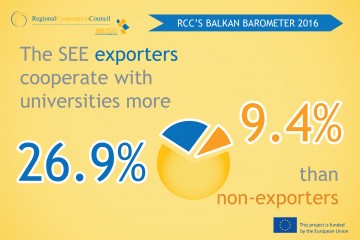
13 September 2016 | News
Svilanovic at Milocer Development Forum: We at the RCC foster multi-dimensional approach to sustainable development
Secretary General of the Regional Cooperation Council (RCC) Goran Svilanovic participated today at the regional Milocer Development Forum in Cetinje (Montenegro) where he presented some of the specific RCC contributions towards strengthening sustainable development in the region.
29 June 2016 | News
ILO and RCC launch project for better labour market governance in the Western Balkans
Sarajevo – The Regional Cooperation Council (RCC) and the International Labour Organization (ILO) will work together to further regional cooperation in order to achieve more effective labour market governance in the Western Balkans. The new joint project, funded by the European Union, was launched in Sarajevo today and presented by Goran Svilanovic, RCC Secretary General, Antonio Graziosi, ...
28 June 2016 | News
RCC and ILO to launch ‘Employment and Social Affairs Platform’ Project
SARAJEVO – The Regional Cooperation Council (RCC) and the International Labour Organisation (ILO) are launching tomorrow (29 June 2016) the “Employment and Social Affairs Platform” (ESAP) project at a one day Conference in Sarajevo. The ESAP project is supported by the European Commission’s Directorate General (DG) for Employment, Social Affairs and Inclusion.
23 June 2016 | News
Svilanovic: “Low credibility of public institutions in South East Europe”
Vienna/Sarajevo – “The credibility of public institutions is low and dissatisfaction with the efficiency and fairness of the public institutions continues to be high”, said Regional Cooperation Council (RCC) Secretary General, Goran Svilanovic, speaking at the “Public Governance as the Foundation of European Integration” conference which started today in Vienna.
21 June 2016 | News
RCC’s Balkan Barometer 2016: The region is moving forward but unemployment, the economic situation and corruption remain the most pressing issues
SARAJEVO – South East European (SEE) economies have started to recover, shows the 2016 edition of the Regional Cooperation Council’s (RCC) Balkan Barometer, which was presented in Sarajevo today.
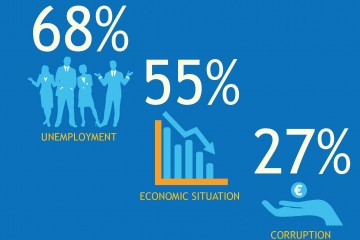
17 June 2016 | News
RCC’s Balkan Barometer 2016: And the people say… jobs!
SARAJEVO – Next week, on Tuesday, 21 June 2016, the Regional Cooperation Council (RCC) is launching this year’s edition of the Balkan Barometer - an annual survey of attitudes, experiences and perceptions across the economies covered by the RCC’s South East Europe (SEE) 2020 Strategy for Jobs and Prosperity in a European Perspective.
14 June 2016 | News
Belgrade audience lauds two female authors from Bosnia and Herzegovina
Belgrade – Two award winning authors from Bosnia and Herzegovina, Lejla Kalamujić (Sarajevo) and Tanja Stupar-Trifunović (Banja Luka), presented their work to the Belgrade audience at the National Library of Serbia, today. This literary afternoon was supported by the Regional Cooperation Council (RCC) and Traduki, a European network for literature and books.
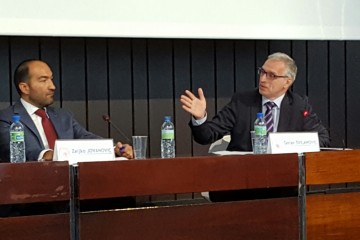
09 June 2016 | News
"Before accession, countries will need to prove tangible progress on Roma inclusion"
Brussels, June the 9th 2016 – The Regional Cooperation Council (RCC), the Open Society Foundations (OSF) and the European Commission (EC) jointly launched the “Roma Integration 2020” initiative today in Brussels. The event brought together Roma integration policy leaders from the Western Balkans and Turkey, civil society organisations from the region, as well as representatives of the ...
07 June 2016 | News
RCC hosts workshop on countering violent extremism in South East Europe
The Regional Cooperation Council (RCC) Secretariat hosted a regional expert workshop on “Factors and drivers underlying radicalization and violent extremism leading to terrorism”, in Sarajevo today. The event, organized with the support of the Organization for Security and Co-operation in Europe (OSCE) and the U.S. Embassy in Sarajevo, is a part of implementation of the RCC’s South ...
02 June 2016 | News
Svilanovic: Making sure that local administrations are well prepared for demanding EU accession process and membership, is our common objective
The Secretary General of the Regional Cooperation Council (RCC), Goran Svilanovic, took part at the Enlargement Day, organised by the European Committee of the Regions in cooperation with DG Neighbourhood and Enlargement Negotiations of the European Commission, in Brussels today.
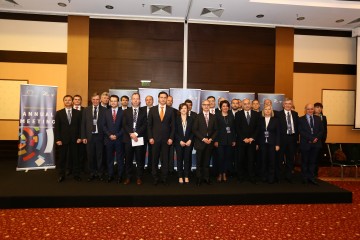
31 May 2016 | News
RCC embarks on new three-year working cycle as the Strategy and Work Programme for 2017-2019 gets endorsed at the organisation’s Annual Meeting
Pravets – The new three-year Strategy and Work Programme (SWP) of the Regional Cooperation Council (RCC) was endorsed at the organisation’s ninth Annual meeting in Pravets (Bulgaria) today. The meeting, co-organized with the Bulgarian Chairmanship-in-Office 2015-2016 of the South-East European Cooperation Process (SEECP) also endorsed the Annual Report of the RCC Secretary General featuring ...
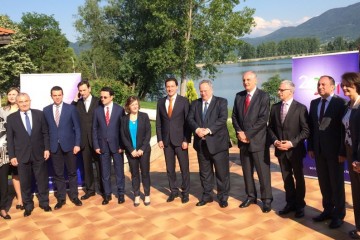
31 May 2016 | News
SEECP foreign ministers endorse the new RCC’s three-year Strategy and Work Programme
Pravets, 31 May 2016 - Meeting in Pravets (Bulgaria) today, the foreign ministers of the South-East European Cooperation Process (SEECP) endorsed the Annual Report of the Regional Cooperation Council (RCC) 2015-2016 presented by the RCC Secretary General Goran Svilanovic, as well as the new three-year Strategy and Work Programme (SWP) of the RCC.
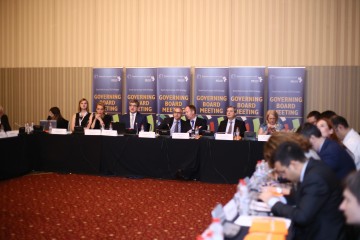
30 May 2016 | News
SEE 2020 Strategy implementation shows a mixed bag of results in the past year
Pravets – The Governing Board of the Regional Cooperation Council’s (RCC) South East Europe 2020 (SEE 2020) Strategy heard the Annual Report on the Strategy’s implementation (ARI) at its third meeting held in Pravets (Bulgaria) today.
23 May 2016 | News
RCC to present the new three-year strategy and work programme at its Annual meeting in Pravets, Bulgaria
Sarajevo - The new three-year Strategy and Work Programme (SWP) of the Regional Cooperation Council (RCC) will be presented at the ninth Annual meeting of the organisation on 31 May 2016 in Pravets, Bulgaria. The meeting, co-organized with the Bulgarian Chairmanship-in-Office 2015-2016 of the South-East European Cooperation Process (SEECP), is expected to endorse the RCC SWP together with ...
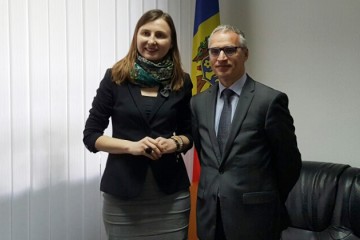
19 May 2016 | News
Furthering security cooperation in South East Europe
Chisinau/Sarajevo – The annual meeting of the Expert working group of the Southeast Europe Military Intelligence Chiefs' Forum (SEEMIC EWG) was held in the Moldovan capital today and was opened by the Regional Cooperation Council (RCC) Secretary General, Goran Svilanovic and Aurel Fondos, the State Secretary in the Defence Ministry of Moldova.
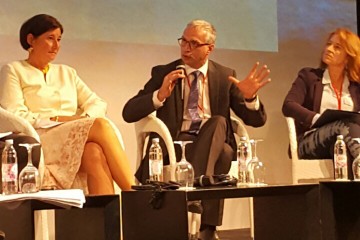
13 May 2016 | News
RCC Secretary General at the Forum of EU Strategy for Adriatic and Ionian Region
The Secretary General of the Regional Cooperation Council (RCC), Goran Svilanovic, spoke today at the 1st Forum of the EU Strategy for the Adriatic and Ionian Region (EUSAIR), in Dubrovnik, Croatia. Svilanovic presented the implementation structure, and programing and monitoring processes, of the RCC’s South East Europe (SEE) 2020 development Strategy, but also spoke about the synergies ...
11 May 2016 | News
RCC Board accepts the new three-year Strategy and Work Programme of the organization
The new three-year Strategy and Work Programme (SWP) of the Regional Cooperation Council (RCC) has been accepted today by the organisation’s Board, at its meeting in Sarajevo. The RCC SWP refers to the period 2017 – 2019, and outlines the organisation’s vision and activities in the future period. The Board also accepted the Annual Report of the Secretary General of the Regional ...
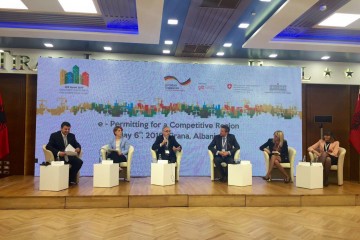
06 May 2016 | News
Furthering the digitalisation in South East Europe
Tirana/Sarajevo – The 2nd International Conference on “E-Permitting for a Competitive Region” that started in Tirana today, will look at the state of issuing electronic permits in the region and thereby the state of digitalisation in South East Europe. Regional Cooperation Council’s (RCC) Secretary General, Goran Svilanovic, took part in a panel discussion on “Regional ...
04 May 2016 | News
RCC at Sarajevo Business Forum: With common market our region can be economically stronger and more competitive
Sarajevo – The 7th International Investments Conference – Sarajevo Business Forum, started today in the capital of Bosnia and Herzegovina. This year’s focus of the conference is on Industrial Capacity Cooperation and on expanding the business opportunities with China.
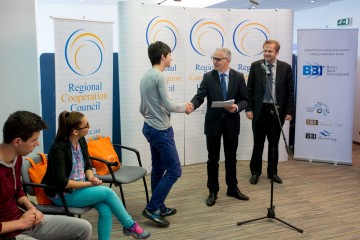
28 April 2016 | News
Ten scholarships for a better future
Sarajevo – Ten pupils and students from Srebrenica and Bratunac received today certificates for scholarships awarded by the Regional Cooperation Council (RCC) in partnership with the BBI bank. Congratulating the pupils and the students, RCC Secretary General, Goran Svilanovic, wished them lots of success in their studies and expressed his hope that once they finish their studies, they ...
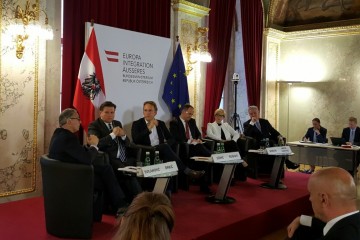
27 April 2016 | News
“EU incomplete without the Western Balkans”
Vienna/Sarajevo – An impressive public panel hosted last night by Austrian Minister for Europe, Integration and Foreign Affairs, Sebastian Kurz, rounded off a two day conference in Vienna called “Energizing the Enlargement Process by Solving Bilateral Disputes”. Set up by the European Fund for the Balkans (EFB) and supported by the Austrian and French Ministries for ...

22 April 2016 | News
RCC and BBI to provide scholarships for ten pupils and students from Srebrenica and Bratunac
Sarajevo – Ten pupils and students from Srebrenica and Bratunac will receive scholarships awarded by the Regional Cooperation Council (RCC) and BBI bank next week. At the ceremony, to be held in Sarajevo next Thursday (28 April 2016), the certificates of scholarship will be presented to pupils and students by BBI Bank Director Amer Bukvic and RCC Secretary General Goran Svilanovic.
20 April 2016 | News
RCC call for proposals - 300.000 EUR for projects supporting implementation of the SEE 2020 Strategy
Sarajevo - The Regional Cooperation Council Secretariat (RCC) is seeking proposals for the implementation of the South East Europe 2020 (SEE 2020) Strategy with financial assistance from the RCC Small Grants Instrument for 2016. The total amount for these grants is 300.000 EUR.
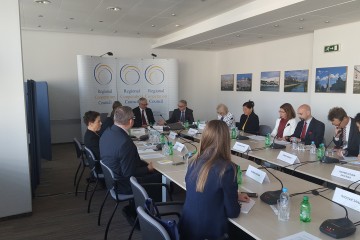
14 April 2016 | News
Synergising RCC and EU macro-regional strategies
The Regional Cooperation Council (RCC) hosted and co-organised today the first part of a two-day meeting of the Steering Group of Priority Area 10 (PA10) of the EU Strategy for the Danube Region (EUSDR). This meeting is an opportunity to present to the PA10 Steering Group and all interested stakeholders the role that the RCC plays in promoting regional cooperation and supporting the ...
13 April 2016 | News
SEE judicial training institutions network established
Bucharest – A two day conference started in Bucharest today, establishing for the first time a Network of Judicial Training Institutions in South East Europe (SEE). The general goal of this initiative is to strengthen cooperation in the field of justice in the Western Balkans and the whole SEE region.
08 April 2016 | News
Svilanovic: International Roma Day excellent opportunity to recall extensive heritage of region’s largest ethnic minority
Today, on the occasion of the International Roma Day, the Secretary General of the Regional Cooperation Council, Goran Svilanovic, extended his congratulations stressing that this is an excellent opportunity to recall rich and extensive heritage and diversity of the region’s largest ethnic minority - Roma.
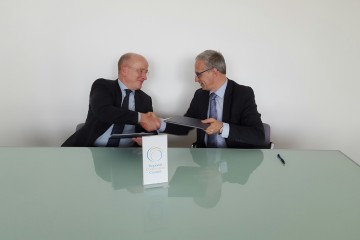
06 April 2016 | News
Continued German support for RCC activities
The Regional Cooperation Council (RCC) Secretariat and the German Federal Foreign office (Auswärtige Amt) signed an agreement today on a 50,000 euro grant to support RCC’s public awareness activities in 2016. The agreement was signed by the RCC Secretary General, Goran Svilanovic and the German Ambassador to Bosnia and Herzegovina, Christian Hellbach.
01 April 2016 | News
Climate change and environment – Crucial issues for SEE
Sarajevo/Podgorica - The First High Level Ministerial Panel on Responding to Climate and Environmental Challenges in South East Europe (SEE) took place today in Podgorica. The meeting was opened by the Montenegrin Minister of Sustainable Development and Tourism Branimir Gvozdenovic; the Secretary General of the Regional Cooperation Council (RCC), Goran Svilanovic; the Executive Director ...

30 March 2016 | News
Climate change and environment issues in focus on Friday in Podgorica
Sarajevo/Podgorica - The Ministry of Sustainable Development and Tourism of Montenegro and the Regional Cooperation Council (RCC) Secretariat are co-organising the First High Level Ministerial Panel on Responding to Climate and Environmental Challenges in South East Europe (SEE) this Friday, 1 April 2016 in Podgorica.
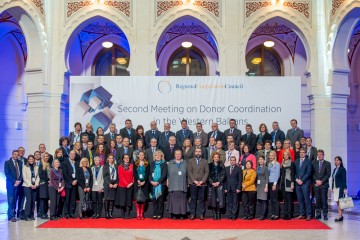
23 March 2016 | News
RCC: Second meeting on donor coordination in the Western Balkans ends in Sarajevo
The Second meeting on Donor Coordination in the Western Balkans, organised by the Regional Cooperation Council (RCC), took place today in Sarajevo. The meeting brought together all the major donors who are active in the Western Balkans as well as representatives of international organisations and Western Balkan governments.
22 March 2016 | News
RCC to host second donor coordination meeting in the Western Balkans
SARAJEVO – The second Meeting on Donor Coordination in the Western Balkans, organized by the Regional Cooperation Council (RCC) Secretariat, will take place in Sarajevo tomorrow. Getting a better understanding of regional donor interventions and helping align those interventions with region’s needs, will be in the focus of this meeting.

22 March 2016 | News
Full house and standing ovation for “Romeo and Juliet”
Sarajevo/Belgrade/Pristina/Tirana - Last night’s “Romeo and Juliet” was in Sarajevo, in the National Theatre, but this was truly such a great example of regional co-operation that it deserves a by-line which mentions the cities which were in one way or another the four pillars for a truly amazing theatrical experience.

18 March 2016 | News
RCC: Strengthening regional cooperation in the field of justice
Sarajevo – The Third Regional Rule of Law Forum for South East Europe kicked off in the Sarajevo City Hall this morning, bringing together over 130 eminent representatives of the regional highest courts, the supreme and constitutional courts, judicial councils, directors of judicial academies and institutions, civil society organisations and representatives in the European Court of ...

16 March 2016 | News
Romeo and Juliet in Sarajevo
Sarajevo/Beograd/Pristina – Sarajevo National Theatre will host a play staged jointly by Belgrade-based Radionica Integracije and Pristina-based Quendra Multimedia on Monday, 21 March 2016. It is about Shakespeare’s Romeo and Juliet against the background of burdened Pristina-Belgrade relations and ways to overcome almost insurmountable borders and barriers. The guest performance ...
14 March 2016 | News
RCC Secretary General speaks to young diplomats from South East Europe about region’s opportunities and challenges
The Secretary General of the Regional Cooperation Council (RCC), Goran Svilanovic, spoke today to young diplomats from all over South East Europe, at the 11th Winter School on Diplomacy, in Sandanski, Bulgaria. The event, co-organized by the RCC, Bulgarian Chairmanship in Office of the South East Europe Cooperation Process (SEEPC), Bulgarian Diplomatic Institute, and the Hanns Seidel ...
10 March 2016 | News
European Training Foundation award for RCC
The European Training Foundation (ETF) has recognized RCC’s efforts towards the ETF’s Entrepreneurial Communities Initiative with a special award yesterday. In its capacity as an Advisory Board member, the RCC has - in the past two years - contributed to the selection of ten good practices along with the ETF partner countries.
09 March 2016 | News
Svilanovic on regional economy - tough but with a glimmer of optimism
Taking part in the 23rd Kopaonik Business Forum yesterday, Regional Cooperation Council (RCC) Secretary General, Goran Svilanovic emphasised that it is impossible to overestimate the importance of regional cooperation and economic consolidation if South East Europe wants to remain competitive on its own, European and global markets.

08 March 2016 | News
German MPs: Regional Cooperation Council has to be strengthened
Members of the German Parliament (Bundestag) from the Social Democratic Party (SDP) have said that the role of the Regional Cooperation Council (RCC) and the Central European Free Trade Agreement (CEFTA) have to be strengthened.
01 March 2016 | News
Three million euro for boosting jobs in the Western Balkans
Brussels - The International Labour Organization (ILO) and the Regional Cooperation Council (RCC) will jointly create a Western Balkans Platform on Employment and Social Affairs in the framework of a new European Commission funded project signed today in Brussels.

01 March 2016 | News
Balkans Bioenergy Task Force kicks-off
The Regional Cooperation Council (RCC) and the Deutsche Gesellschaft für Internationale Zusammenarbeit (GIZ) jointly hosted the kick-off meeting of the Balkans Bioenergy Task Force (BBTF). The main goal of the BBTF is to provide a permanent regional dialogue and an advocacy platform for more structured regional cooperation and networking in the field of bioenergy.
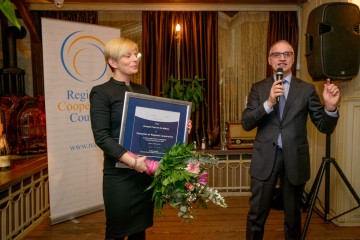
26 February 2016 | News
RCC awards European Fund for the Balkans as 2015 Champion of Regional Cooperation
Sarajevo – The Regional Cooperation Council’s (RCC) recognition for outstanding work in the field of regional cooperation was awarded last night to the European Fund for the Balkans (EFB) which was selected as the Champion of Regional Cooperation for the year 2015.
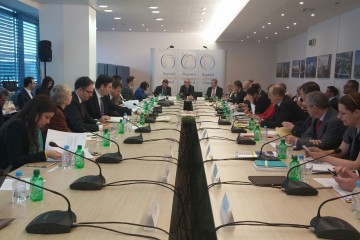
26 February 2016 | News
Sarajevo: RCC Board meets for the first time in 2016
Sarajevo – The 28th meeting of the Regional Cooperation Council (RCC) Board took place in Sarajevo today. RCC Secretary General, Goran Svilanovic, presented the activities of the RCC Secretariat since October 2015 and the Board accepted them.
19 February 2016 | News
RCC to actively participate in future roaming policy in Western Balkans
The Regional Cooperation Council (RCC) will help agree on future roaming policy among the telecommunications regulators in Western Balkans. This was concluded in Skopje today at the first meeting of Open Communications Platform at the level of line ministries and regulatory bodies for electronic communications with the overall aim of further linking the economies, reducing costs and providing ...
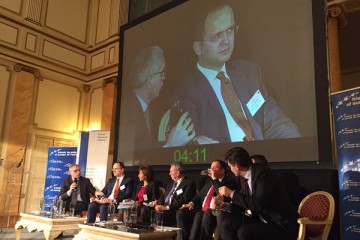
16 February 2016 | News
Political stability, growth and jobs – Svilanovic on strengthening the ties in the region
The challenges but also the opportunities for closer regional cooperation are aplenty in the year which just started, said Regional Cooperation Council (RCC) Secretary General, Goran Svilanovic at today’s one day conference on “Balkan Partnership, strengthening the Region’s ties”, organised by the Friends of Europe in Brussels. Svilanovic said that the RCC is deeply engaged ...
09 February 2016 | News
European Fund for the Balkans - Champion of regional cooperation
Sarajevo, 9 February 2016 – The Regional Cooperation Council (RCC) has selected the European Fund for the Balkans (EFB) as the Champion of Regional Cooperation in the year 2015. The Award will be presented to Hedvig Morvai, the Executive Director of the EFB at a ceremony in Sarajevo on February 25th. The Champion of Regional Cooperation is a recognition of an individual ...
08 February 2016 | News
More work on biodiversity protection a regional “must do”
Sarajevo, February 8th 2016 – Even though the governments of South-East Europe developed an initial political and legal framework for the conservation of biodiversity, the operational implementation is lagging behind and positive results from conservation efforts are limited. In a nutshell, these are the conclusions of last week’s major conference in Belgrade which marked the launch of ...
04 February 2016 | News
Protecting biodiversity on a regional level is a must
Deutsche Gesellschaft für Internationale Zusammenarbeit (GIZ) launched its regional project for Biodiversity today in Belgrade with a two day conference which aims to explore the synergies between current regional biodiveristy conservation initiatives, create targeted partnerships to achieve sustainable goals and set priorities of the subprojects which will be developed. The three year ...
02 February 2016 | News
SEECP ministers discuss migration issues
“In this year, we will continue to see rising hopes for more progress on the European and Euro-Atlantic integration path of the South East European region”, said the Secretary General of the Regional Cooperation Council (RCC) at this morning’s informal meeting of the Ministers of Foreign Affairs of the South East Europe Cooperation Process (SEECP) held in Sofia.
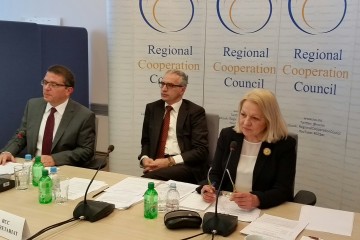
27 January 2016 | News
Flow of recruits for violent extremists, terrorists and foreign fighters must be stopped
Sarajevo, 27 January 2016 - Regional Cooperation Council (RCC) Secretary General, Goran Svilanovic, chaired today’s first meeting of the Group of National focal points for countering radicalization and violent extremism leading to terrorism and foreign terrorist fighters in Southeast Europe.
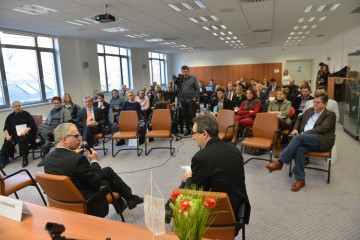
18 December 2015 | News
Regional Cooperation Day in Sarajevo: Strong debate about a tough year
Regional Cooperation Council organised a meeting of civil sector representatives from South East Europe economies and journalists from the region
16 December 2015 | News
RCC: Sarajevo to host Regional Cooperation Day
Sarajevo - Regional Cooperation Council (RCC) is organising a gathering of representatives of civil society and media from the South East Europe region to mark the Regional Cooperation Day.
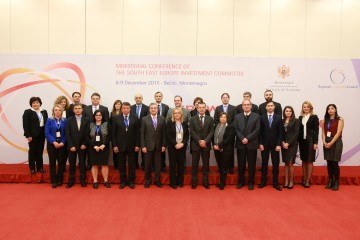
09 December 2015 | News
RCC boosting competitiveness in South East Europe
BUDVA/SARAJEVO - Ministers for Economic Affairs of the Western Balkans gathered today for a conference in Budva and expressed their commitment to continue regional cooperation based on principles of accountability, participation, solidarity and good neighbourly relations. In this way, they will contribute to the growth of competitiveness and development of the economies and business ...

07 December 2015 | News
RCC: “Balkan Spy in Sarajevo” to perform in Belgrade’s Zvezdara Theatre
SARAJEVO/BELGRADE, 7 December 2015 – Regional Cooperation Council (RCC) supported a guest performance of “Balkan spy in Sarajevo” in Zvezdara theatre in Belgrade on Friday, 11 December 2015.
02 December 2015 | News
Pristina hosts Zijah Sokolovic’s one man show
Supported by the Regional Cooperation Council (RCC), the “Qendra Multimedia” arts and cultural centre in Pristina hosted last night the renowned Bosnia and Herzegovina’s actor, writer and director, Zijah Sokolovic. A full house greeted Mr Sokolovic and thunderous applause interrupted his literary/theatrical evening numerous times.
30 November 2015 | News
Zijah Sokolovic in Pristina on 1 December 2015
The Regional Cooperation Council (RCC) will be supporting a theatrical-literary evening of the renowned Bosnia and Herzegovina’s actor, writer and director, Zijah Sokolovic at the Qendra Multimedia, in Pristina, at 20.00h tomorrow.
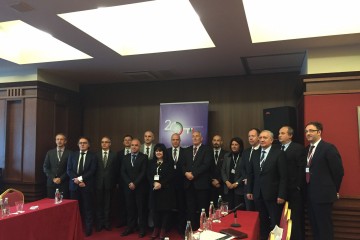
23 November 2015 | News
SEECP Political Directors meet in Sofia
Regional Cooperation Council (RCC) Secretary General Goran Svilanovic attended today’s meeting of Political Directors of the South-East European Cooperation Process (SEECP), the first organised by the current Chair-in-Office, Bulgaria.
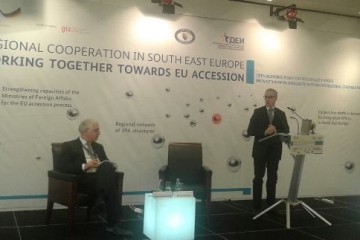
18 November 2015 | News
RCC at the SEE Regional Conference: “Working Together Towards EU Accession”
Sarajevo, 18 November 2015 – Regional Cooperation Council (RCC) Secretary General, Goran Svilanovic highlighted regional cooperation as a key element in fostering reconciliation, good neighbourly relations, stability and prosperity in South East Europe (SEE). “It is also an EU membership pre-condition” said Svilanovic in his keynote speech at a two day regional conference on EU accession ...
05 November 2015 | News
RCC partakes in security issues conference
Thessaloniki/Sarajevo, 5 November 2015 – The northern Greek city of Thessaloniki hosted today the 7th session of the South East Europe Military Intelligence Chiefs’ Forum (SEEMIC), co-chaired by the Regional Cooperation Council (RCC) and Greece.
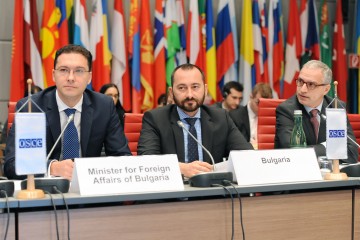
29 October 2015 | News
Better cooperation between the RCC and the OSCE
Vienna/Sarajevo, 29 October 2015 - Ways and means for better cooperation between the Organisation for Security and Cooperation in Europe (OSCE) and the Regional Cooperation Council (RCC) were discussed today at a meeting of the OSCE Permanent Council in Vienna.
16 October 2015 | News
Job creation and dynamising economic life is crucial for the future of South East Europe (SEE) - Inter-parliamentary Conference in Sarajevo ends today
Sarajevo, 15/16 October 2015 – A two day inter-parliamentary conference coorganised by the European Parliament, the Regional Cooperation Council (RCC) and the Parliament of Bosnia and Herzegovina ended today in Sarajevo. It was attended by Members of the European Parliament and Members of Parliament of EU Enlargement countries. Economic Governance and Job creation were the focus of ...
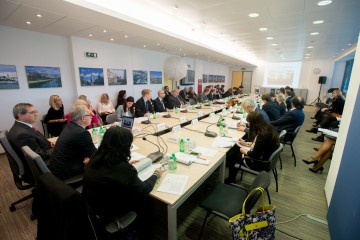
15 October 2015 | News
Meeting of the Board of the Regional Cooperation Council (RCC) in Sarajevo
Sarajevo, 15th October 2015 – The 27th meeting of the RCC Board took place in Sarajevo today. RCC Secretary General, Goran Svilanovic, presented the activities of the RCC Secretariat between April and October 2015 and the Board accepted them. Particular attention was given to RCC’s engagement in those aspects of the Berlin Process which are in line with RCC’s mission and ...
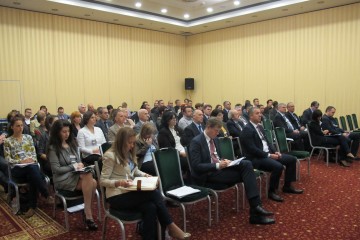
14 October 2015 | News
RCC at the Agricultural Policy Forum (APF) 2015
Pravets, 14 October 2015 - Representatives from members of the Regional Rural Development Standing Working Group (SWG RRD) gathered at the Agricultural Policy Forum (APF) 2015 in the Bulgarian town of Pravets to review the achievements of the APF process so far and the challenges and opportunities for the development of agriculture and rural areas in South Eastern Europe (SEE) over the next ...
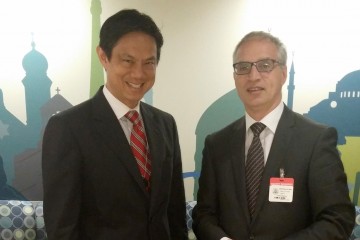
06 October 2015 | News
Countering violent extremism in focus of RCC-State Department talks
Regional Cooperation Council (RCC) Secretary General, Goran Svilanovic and US Deputy Assistant Secretary of State responsible for European and Eurasian affairs, Hoyt Yee, met in Washington yesterday and exchanged views on the current political situation in Southeast Europe (SEE) and the state of the Euro-Atlantic integration process of the region.
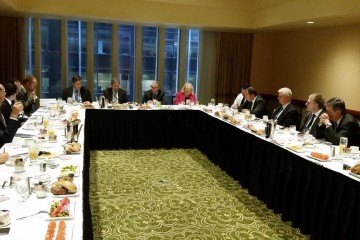
01 October 2015 | News
RCC and regional issues discussed in New York
New York – Regional Cooperation Council (RCC) Secretary General, Goran Svilanovic, attended an informal meeting of the South-East European Cooperation Process (SEECP) Foreign Ministers yesterday in New York. The meeting was hosted by Daniel Mitov, Bulgarian Minister of Foreign Affairs and current Chair in Office (CiO) of the SEECP. Such meetings have become a regular feature ...
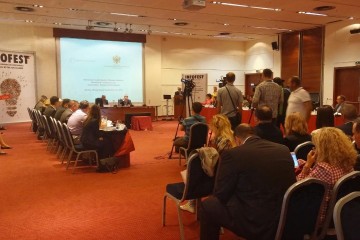
30 September 2015 | News
Towards a Single Information Space
South-East European Ministers responsible for Information Technologies who gathered at the Budva Conference today expressed their strong common interest in participating in the creation of a single information space.
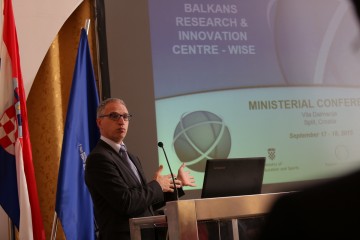
18 September 2015 | News
Western Balkans gets Research and Innovation Centre
Western Balkans ministers of science signed in Split today an agreement on establishment of the Western Balkans Research and Innovation Centre (WISE).
17 September 2015 | News
Split to become headquarters of the Western Balkans Research and Innovation Centre
First Deputy Prime Minister of Croatia Vesna Pusić will open the ministerial conference on the occasion of establishment of the Western Balkans Research and Innovation Centre (WISE) tomorrow in Split. Together with the hosts, Vedran Mornar, Minister of Science, Education and Sports of the Republic of Croatia; Goran Svilanovic, Secretary General of the Regional Cooperation Council, ...
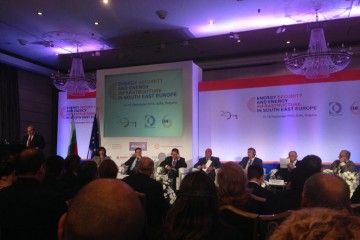
15 September 2015 | News
Sofia: RCC at the conference on energy security and infrastructure in South East Europe
Energy Security and Energy Infrastructure in South East Europe are the focus of a two-day conference that started in Sofia today, organised by the Bulgarian Chairmanship-in-office of the South-East European Cooperation Process (SEECP) and opened by the Bulgarian Prime Minister, Boyko Borissov.
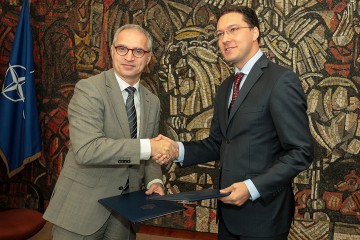
14 September 2015 | News
Svilanovic officially signs Agreement on Assumption of Duties as RCC Secretary General in second term
The Secretary General of the Regional Cooperation Council (RCC), Goran Svilanović, signed the official Agreement on Assumption of Duties of the RCC Secretary General, for the period 1 January 2016 – 31 December 2018. On behalf of the Chairmanship-in-Office of the South-East European Cooperation Process (SEECP), the agreement was signed by the Bulgarian Minister of Foreign Affairs, ...
11 September 2015 | News
RCC Secretary General receives Swedish Ambassador to BiH
Regional Cooperation Council’s (RCC), Secretary General, Goran Svilanovic, received today the Swedish Ambassador to Bosnia and Herzegovina, Fredrik Schiller.
11 September 2015 | News
Roma Decade ends – Roma Integration 2020 picks up
Regional Cooperation Council (RCC) Secretary General, Goran Svilanovic, said that Bosnia and Herzegovina successfully completed its year of chairing the Roma Decade thus completing this process started 10 years go.
09 September 2015 | News
The new Director of MARRI, Tamara Mugosa, visits RCC
The new Director of the Migration, Asylum, Refugees Regional Initiative (MARRI), Ms Tamara Mugosa, paid her first visit the Regional Cooperation Council (RCC) Secretariat.
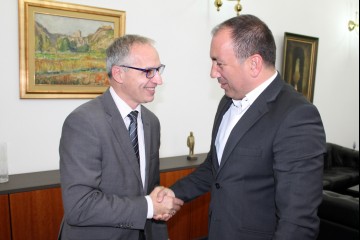
09 September 2015 | News
RCC Secretary General visits Foreign Minister Crnadak
The Secretary General of the Regional Cooperation Council (RCC), Goran Svilanovic, met today in Sarajevo with the Minister of Foreign Affairs of Bosnia and Herzegovina, Igor Crnadak.
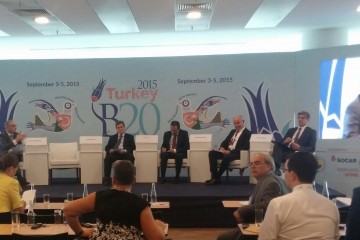
04 September 2015 | News
RCC connecting SEE and Turkish business
“There is a lot of noise about more and better economic cooperation between Turkey and South Eastern Europe. It is time to turn that noise into harmonious music.”
04 September 2015 | News
Integrating South Eastern Europe to global markets: RCC brings together Turkish and SEE businesses
Ankara, 4 September 2015 - The Secretary General of the Regional Cooperation Council (RCC), Goran Svilanović, is to lead the panel on integration of South East Europe into the global markets, at the B20 meeting in Ankara today.
31 August 2015 | News
Rama, Svilanovic and Vucic, tonight in regional TV Talk Show “Okruzenje”
The margins of last Thursday’s Vienna summit of the WB6 leaders and the leaders of the Berlin Process countries and the EU, were rich with events in the days preceding and following the actual Summit.
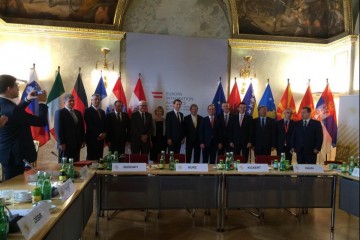
28 August 2015 | News
The Western Balkans Civil Society Forum at the Vienna Summit
The Regional Cooperation Council (RCC) rounded off its participation at the Vienna Summit yesterday with the Secretary General, Goran Svilanovic, participating in the meeting of the Ministers of Foreign Affairs and the SEE2020 Coordinator, Sanjin Arifagic, attending the meeting of Economics ministers.
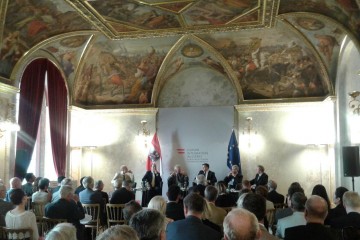
27 August 2015 | News
Tackling tomorrow's issues today - bilateral disputes in the Western Balkans discussed in Vienna
Vienna - Today’s Western Balkans Summit in Vienna is being accompanied by a series of side events that complement the political and economic issues discussed by the WB leaders and the initiators of the Berlin Process – last year’s host Germany, this year’s Austria and next year’s France, as well as the European Commission.
25 August 2015 | News
RCC at the Vienna WB summit
West Balkan and EU leaders will gather in Vienna in the next two days for the continuation of the Berlin Process, widely perceived as an initiative to pursue the EU accession process of the region. The actual Summit and its political discussions will be held on August 27th accompanied by meeting of economic Ministers.

10 August 2015 | News
Civil Society at the upcoming Western Balkans Summit in Vienna
This year’s continuation of the Berlin Process will culminate at the end of August in Vienna when Western Balkans leaders gather for Summit hosted by Austria but also attended by the leaders of Germany, France (which will carry the torch in the next 12 months) as well the European Union.
19 June 2015 | News
RCC Secretary General on the region’s economy
The Bulgarian Chairmanship-in-Office of the South East European Cooperation Process (CiO SEECP) has kicked off its activities with the two-day event in Sofia focusing on the state of regional economy and ways to improve it. Taking part in today’s round table which gathered representatives of the SEE ministries of economy, the Secretary General of the Regional Cooperation Council ...

15 June 2015 | News
Third round of RCC’s ‘Voice of the Region’ competition opens
The third round of the Regional Cooperation Council’s (RCC) competition ‘Voice of the Region’ started off with the theme: Tourism – how to present the beauty of our common home?
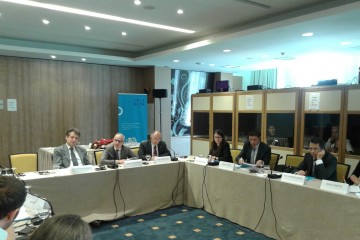
10 June 2015 | News
Svilanovic voices strong support for creation of youth exchange programme for the Western Balkans
Speaking at the conference dedicated to strengthening intercultural youth exchange programmes in the Western Balkans in Sarajevo today, the Secretary General of the Regional Cooperation Council (RCC), Goran Svilanovic, expressed the strong support of the RCC for the initiative to create a youth exchange programme for the Western Balkans.
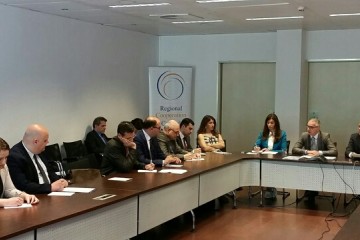
05 June 2015 | News
RCC Secretary General briefs South East Europe’s Ambassadors accredited in Brussels to EU and NATO and EC Director General Christian Danielson
Secretary General of the Regional Cooperation Council (RCC) Goran Svilanovic met today with the Ambassadors of SEECP participants accredited to EU and NATO in Brussels as well as with EC Director General Christian Danielsson.
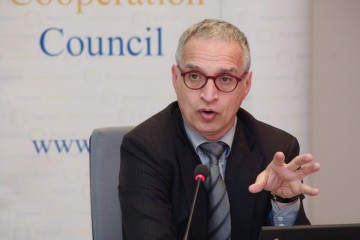
26 May 2015 | News
SEECP summit approves appointment of Goran Svilanovic as RCC Secretary General
Tirana/Sarajevo, 26 May 2015 – Meeting in Tirana today, the participants of the South East European Cooperation Process (SEECP) summit approved the appointment of Goran Svilanovic for a second three year term as the Regional Cooperation Council’s (RCC) Secretary General. The Declaration adopted at the Summit also endorses the RCC’s Annual Report.
22 May 2015 | News
RCC Annual Meeting and presentation of the SEE Development Scoreboard
Tirana/Sarajevo - The RCC’s (Regional Cooperation Council) Annual Meeting in Tirana today heard a strong endorsement of the organisation’s efforts in fostering economic recovery and speeding up the European integration process of the region. The meeting’s host, Albanian Foreign Minister and Chair in Office of the South-East European Cooperation Process (SEECP), Ditmir Bushati, said ...
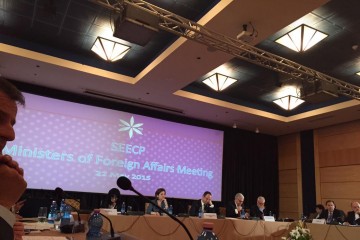
22 May 2015 | News
SEECP Foreign Ministers appoint Goran Svilanovic as RCC Secretary General for a second 3 year term
Meeting in Tirana today, the Foreign ministers of the South- East European Cooperation Process (SEECP) unanimously appointed Goran Svilanovic for a second term as the Regional Cooperation Council’s (RCC) Secretary General. The ministers also adopted the Annual Report of the RCC Secretary General on regional cooperation in South East Europe (SEE).
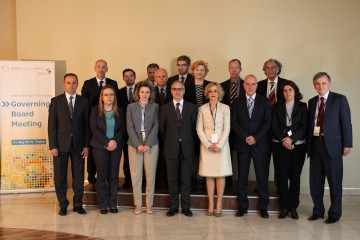
21 May 2015 | News
Governing Board of RCC’s SEE2020 Strategy Meets in Tirana
TIRANA/SARAJEVO – The South East Europe 2020 Strategy (SEE 2020) Governing Board held its second meeting in Tirana today. The SEE 2020 Strategy is the Regional Cooperation Council’s (RCC) primary instrument for boosting growth in the region, creating jobs and assisting the EU accession process. The Strategy was adopted in November 2013 and today’s meeting of the Governing Board was ...
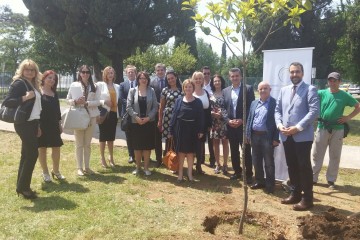
19 May 2015 | News
RCC helps establish the Regional Working Group on Environment
Podgorica/Sarajevo, 18 May 2015 - The inaugural meeting of the Regional Working Group on Environment was held in Podgorica last week (May 14th ) under the auspices of the Regional Cooperation Council.
18 May 2015 | News
RCC to present South East Europe Development Scoreboard
SARAJEVO, 18 May 2015 – The Regional Cooperation Council (RCC) Secretariat will officially launch and present the South East Europe Development Scoreboard (SEEDS) on the sidelines of its Annual Meeting, on the 22nd of May 2015 in Tirana, Albania. SEEDS is a comprehensive but simple web-based platform which enables any user to monitor the implementation of the region’s development ...
15 May 2015 | News
RCC’s ‘Voice of the Region’ competition enters its second round
After the pilot of the Regional Cooperation Council’s (RCC) competition ‘Voice of the region’ proved to be successful, we have a pleasure to invite citizens of South East Europe (SEE) to take part in its second round, starting today.
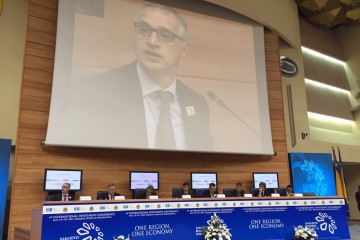
13 May 2015 | News
Goran Svilanovic hosts “One Region, One Economy’ panel at Sarajevo Business Forum
Sarajevo – Regional Cooperation Council (RCC) Secretary General, Goran Svilanovic, hosted today’s panel “One Region – One Economy” at the 6th International investment conference, the Sarajevo Business Forum (SBF).
12 May 2015 | News
RCC Board endorses renewal of mandate for RCC Secretary General Goran Svilanovic
The Board of the Regional Cooperation council met in Sarajevo today ahead of the Annual meeting which will take place in Tirana, later this month.
08 May 2015 | News
RCC Secretary General briefs Austrian parliamentarians on the SEE2020 Strategy
The Regional Cooperation Council (RCC) Secretary General, Goran Svilanovic, briefed Austrian parliamentarians today on the implementation of the SEE2020 Strategy, RCC’s primary instrument for boosting growth and jobs in the region’s economies.
06 May 2015 | News
Regional Cooperation Day in Brussels
Sarajevo/Brussels – The Regional Cooperation Day continued in Brussels with a High Level Conference on cooperation and enlargement in the Western Balkans which included Albanian Foreign Minister, Ditmir Bushati, the EU Commissioner for European Neighbourhood and Enlargement Negotiations, Johannes Hahn, the Head of the Representation of the State of Baden-Württemberg, Johannes Jung ...
06 May 2015 | News
RCC’S Balkan Barometer Presented at the Regional Cooperation Day in Brussels
Sarajevo/Brussels - The Regional Cooperation Day (RCC) kicked off in Brussels with a premiere of the Balkan Barometer (BB), a comprehensive survey encompassing public and business opinion and sentiment on crucial economic and development issues. The Balkan Barometer is a part of an RCC’s “toolbox” in tracking the progress of the South East Europe 2020 Strategy (SEE 2020).
06 May 2015 | News
Regional Cooperation Day ends in Brussels
The Regional Cooperation Day concluded in Brussels with closing remarks by Igor Luksic, Deputy Prime Minister and Minister of Foreign Affairs of Montenegro, MEP Andrej Plenkovic, Vice Chair of the Committee on Foreign Affairs and Andreas Brandstaetter from the Austrian Foreign Ministry.
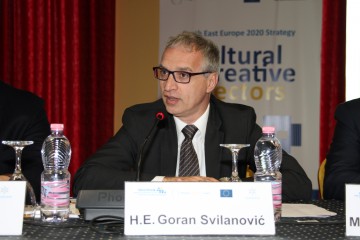
29 April 2015 | News
RCC: Regional programmes in culture and creative industries are an enormous potential for overall development of societies
Eleventh meeting of the Regional Cooperation Council (RCC)’s Task Force on Culture and Society (TFCS) ended in Durres, Albania, today.
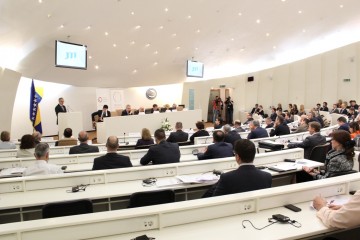
28 April 2015 | News
Combating Shadow Economy: A Necessity for Investments in SEE
SARAJEVO – Ministers of finance, trade or economic development from South East Europe gathered in Sarajevo today to take part in a major conference on combating the shadow economy in the region. The event is co-organised by the Council of Ministers of Bosnia and Herzegovina, the Regional Cooperation Council and Foreign Investors Councils of the region.
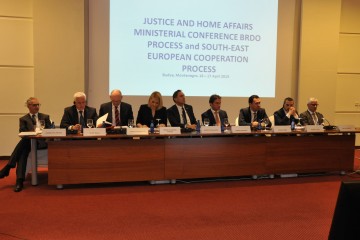
17 April 2015 | News
Justice and Home Affairs Ministers agree on stepping up cooperation in the joint fight against terrorism
SARAJEVO/BUDVA, 17 April 2015 – Ministers of Interior and Justice from South East Europe (SEE) agreed on the importance of a common approach to prevention, detection and fight against terrorism in the region, at the Ministerial Conference on Justice and Home Affairs that ended in Budva, Montenegro today.

16 April 2015 | News
Justice and Home Affairs Ministerial Conference on Terrorism in Budva, 16-17 April 2015
Ministry of Interior of Montenegro, Ministry of Justice of Montenegro, Ministry of Interior of Slovenia and Regional Cooperation Council (RCC), as operational Secretariat of the South-East European Cooperation Process (SEECP), are organising a Justice and Home Affairs Ministerial Conference on Fight against Terrorism which will take place in Budva, Montenegro, on 16-17 May 2015.
15 April 2015 | News
RCC launches “Voice of the region” public competition
SARAJEVO, 15 April 2015 – Regional Cooperation Council (RCC) Secretariat invites citizens from South East Europe (SEE) with writing, video-making or photography skills and talents to take part in the “Voice of the Region” competition. All entries: essays, photos and videos compete for a monthly award of euro 200.
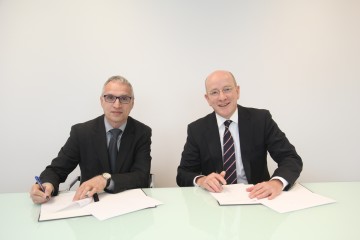
09 April 2015 | News
Germany continues to support RCC’s activities
Sarajevo - Goran Svilanovic, Secretary General of the Regional Cooperation Council Secretariat (RCC) and H.E. Dr Christian Hellbach, German Ambassador to Bosnia and Herzegovina, signed an agreement with which the Federal Republic of Germany continues its support of the RCC.
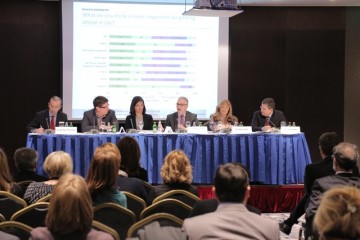
23 March 2015 | News
RCC's SEE2020 Strategy: stocktaking and evaluation continues in Belgrade
“We have gathered here to assess what has been done in the implementation of Regional Cooperation Council’ (RCC) SEE 2020 Strategy, adopted by all the regional governments in November 2013”, said RCC Secretary General, Goran Svilanovic. He stressed that the preliminary results of RCC’s Balkan Barometer[1]survey show that the people’s sentiment about the current economic situation ...
02 March 2015 | News
Implementation and monitoring of RCC’s SEE 2020 strategy discussed in Skopje today
Deputy Prime Minister for Economic Affairs, Fatmir Besimi, Minister of Economy, Bekim Neziri, and Secretary General of the Regional Cooperation Council (RCC), Goran Svilanović, opened a meeting dedicated to the implementation and monitoring of the RCC’s South East Europe (SEE) 2020 development strategy.
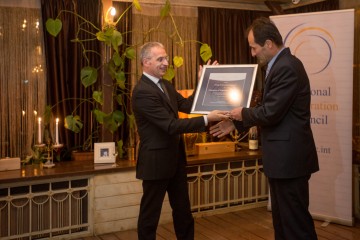
26 February 2015 | News
Regional Cooperation Council recognizes Energy Community Secretariat as Champion of Regional Cooperation for 2014, marks 7th anniversary
SARAJEVO – The Regional Cooperation Council (RCC) selected the Energy Community Secretariat (ECS) as the Champion of Regional Cooperation for 2014. The Award has been presented by the RCC Secretary General, Goran Svilanovic, to the ECS Director, Janez Kopac, at the occasion of seventh anniversary of the RCC.
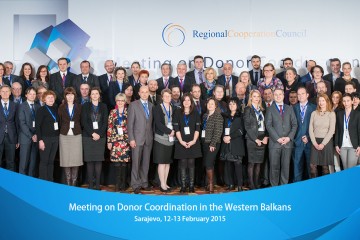
13 February 2015 | News
RCC: Sarajevo hosts Meeting on Donor Coordination in Western Balkans
SARAJEVO – The Regional Cooperation Council (RCC) is hosting a two day meeting on Donor Coordination in the Western Balkans in Sarajevo this Thursday and Friday and bringing together all the major donor organisations and countries as well as recipients.
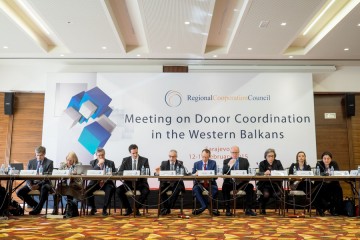
13 February 2015 | News
Donor coordination conference for Western Balkans to be held annually under RCC auspices, concludes Sarajevo meeting
The two day Donor Coordination meeting hosted by the Regional Cooperation Council (RCC) ended today in Sarajevo. Almost a hundred participants from major donor countries and organisations as well as recipients took part in the mapping and coordination of donor activities in the Western Balkans.
09 February 2015 | News
Svilanovic: Unemployment – Problem number 1 in the region
“It’s a great pleasure to be with you here in Tirana to discuss the South East Europe (SEE) 2020 strategy and the main developments in the past year” said Goran Svilanovic, Secretary General of the Regional Cooperation Council (RCC), at the conference dedicated to the monitoring and implementation of RCC’s development strategy for SEE.
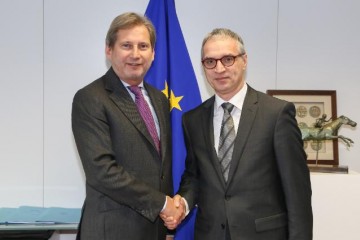
06 February 2015 | News
EU continues to support regional cooperation aimed at wellbeing of citizens
The European Commission will continue to strongly support the activities of the Regional Cooperation Council (RCC) to enhance regional cooperation and promote European integration in South East Europe (SEE). This was confirmed during constructive meeting between RCC Secretary General Goran Svilanovic and the Commissioner for the European Neighbourhood Policy and Enlargement Negotiations, ...
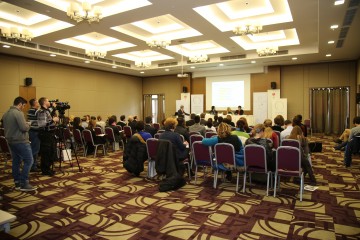
05 February 2015 | News
Podgorica: RCC roadshow on SEE 2020 strategy implementation, monitoring and promotion continues
More than 50 representatives of the Montenegrin administration, international organisations, the business community, academia and civil society organisations, gathered in Podgorica today for a conference dedicated to the monitoring and implementation of the Regional Cooperation Council (RCC)’s South East Europe (SEE) 2020 strategy. The participants also had a chance to see a video showing ...
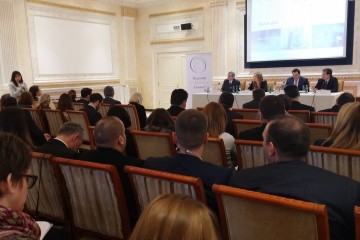
03 February 2015 | News
Employment and economic situation crucial for the region
PRISTINA – The implementation of the Regional Cooperation Council (RCC)’s South East Europe (SEE) 2020 strategy, was the focus of today’s conference in Pristina, organized by the RCC Secretariat in cooperation with the Ministry of Trade and Industry, and the Organisation for Economic Co-operation and Development (OECD). Participants heard about the instruments for measuring the results ...
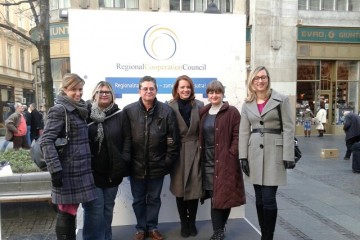
24 December 2014 | News
RCC meets the citizens of Belgrade
With a street installation in Knez Mihailova in the heart of Belgrade (Tuesday, December 23rd), the RCC rounded off its end of year tour which also included Podgorica, Tirana, Skopje, Pristina and Sarajevo.
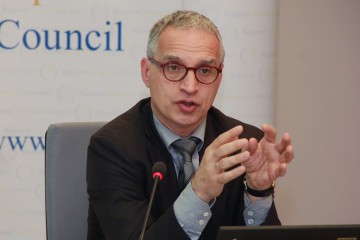
11 December 2014 | News
RCC Secretary General meets SEECP Troika
The Secretary General of the Regional Cooperation Council (RCC), Goran Svilanovic, met today in Sarajevo with the South-East European Cooperation Process (SEECP) Troika (The “Troika” consists of the previous, current and next Chair in office of the SEECP, in this case - Romania, Albania and Bulgaria). The Secretary General informed the Troika on what the RCC has achieved so ...
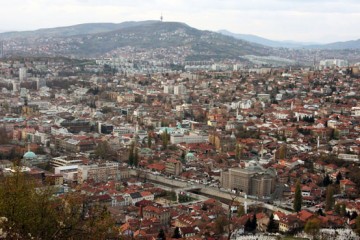
11 December 2014 | News
RCC out on the street to meet citizens in Sarajevo
Working towards the prosperity of Southeast European citizens, the Regional Cooperation Council (RCC) is going out into the streets to ask the citizens how they feel about their lives, their job prospects or the lack of them. It will be an opportunity to discuss regional cooperation, RCC’s ambitious plans to help generate a million jobs by the end of the decade, how happy or unhappy ...
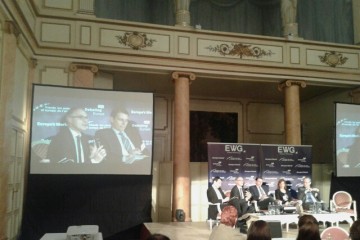
10 December 2014 | News
A kick-start to stalled accession?
Brussels, 9 December 2014: Balkan revival was the topic in Brussels’s Cercle Gaulois grand hall yesterday with Friends of Europe as the host. Guest speakers included the Prime Minister of Albania Edi Rama, MEPs Eduard Kukan and Andrej Plenkovic, the foreign minister of The Former Yugoslav Republic of Macedonia Nikola Poposki, Director General for Enlargement in the European Commission ...
27 November 2014 | News
European Commission supports RCC with 7,15 million euro
A two-year contribution agreement to the amount of 7,150,000.00 euro supporting the activities of the Regional Cooperation Council (RCC) Secretariat in 2015-2016 was signed in Brussels today between the European Commission (EC) and the RCC. This is the first time that the European Commission has signed a two-year contribution agreement which is a clear sign of EC’s support to the RCC’s ...
25 November 2014 | News
RCC out on the street to meet citizens in Prishtina
Working towards the prosperity of Southeast European citizens, the Regional Cooperation Council (RCC) is going out into the streets to ask the citizens how they feel about their lives, their job prospects or the lack of them. It will be an opportunity to discuss regional cooperation, RCC’s ambitious plans to help generate million jobs by the end of the decade, how happy or unhappy ...
21 November 2014 | News
RCC out on the street to meet citizens in Skopje
Working towards the prosperity of Southeast European citizens, the Regional Cooperation Council (RCC) is going out into the streets to ask the citizens how they feel about their lives, their job prospects or the lack of them. It will be an opportunity to discuss regional cooperation, RCC’s ambitious plans to help generate million jobs by the end of the decade, how happy or unhappy ...

10 November 2014 | News
RCC at the Launch of the EU Strategy for the Adriatic and Ionian Region
Regional Cooperation Council’s (RCC) Secretary General Goran Svilanovic is to speak at the Conference launching the European Union’s (EU) Strategy for the Adriatic and Ionian Region (EUSAIR), in Brussels on 18 November 2014.
03 November 2014 | News
RCC out on the streets to meet citizens in Podgorica
Working towards the prosperity of Southeast European citizens, the Regional Cooperation Council (RCC) is going out into the streets to ask the citizens how they feel about their lives, their job prospects or the lack of them. It will be an opportunity to discuss regional cooperation, RCC’s ambitious plans to help generate a million jobs by the end of the decade, how happy or unhappy ...
27 October 2014 | News
Through cultural heritage to more jobs
Dubrovnik - The fields of Arts and Culture and the Cultural heritage rehabilitation are more than just “food for the soul”; they can also be a tool for the creation of wealth and crucially, jobs! This is the underlying message of the two day High-level Regional Conference which started in Dubrovnik today.
23 October 2014 | News
Svilanovic: Strong and vibrant regional economies crucial for EU integration
Belgrade, 23 October 23, 2014 – The Secretary General of the Regional Cooperation Council (RCC), Goran Svilanovic, pointed out today that even though political stability, reconciliation and security are still crucial activities for the RCC, the region as a whole needs to focus on sustainable development and growth. Speaking at the WB6 Meeting on Economic Governance and Connectivity ...
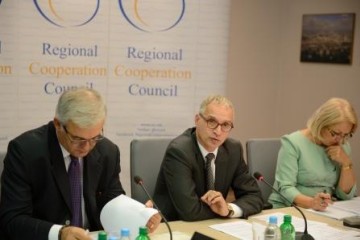
15 October 2014 | News
RCC Board adopts Report on RCC activities April-September 2014
Sarajevo – At the third meeting of the RCC Board this year the RCC Secretary General, Goran Svilanovic, presented a number of activities of the RCC Secretariat in the period April – September 2014 and informed the Board on the most important future activities, especially those related to the implementation of the RCC Strategy and Work Programme 2014-16 and its central pillar: ...
16 September 2014 | News
RCC co-organises the 4th BiH Congress on Roads
SARAJEVO – The Association of Consulting Engineers of Bosnia and Herzegovina (ACE BH) with the support of the Regional Cooperation Council (RCC) and under the auspices of the Ministry of Transport and Communications is organizing the 4th BiH Congress on Roads which will be held on the 18th and 19th September in Sarajevo.
01 September 2014 | News
Berlin conference confirms importance of regional cooperation
Last week’s conference in Berlin, hosted by German Chancellor Angela Merkel, ushered in a new phase of EU accession for the Western Balkans countries, one in which the goals and targets are more clearly defined and assorted in an ongoing process which will be hosted by Austria and then France in the coming years. The Final Declaration by the Chair of the Conference underlined ...
28 August 2014 | News
RCC Secretary General attends Western Balkans conference in Berlin
BERLIN – At the initiative of German Chancellor Angela Merkel and hosted by Vice Chancellor and Minister for Economic Affairs and Energy, Sigmar Gabriel, a discussion on economic potentials and prospects of the Western Balkans kicked off the Western Balkans summit in Berlin.

21 August 2014 | News
RCC and Sarajevo Film Festival’s round table on “Regional cooperation in the audio visual sector”
SARAJEVO – The Regional Cooperation Council (RCC) and the Sarajevo Film Festival are organizing this Friday a round table on regional cooperation in the audio visual sector. This round table, on the margins of the Sarajevo Film Festival, aims to re-confirm the consensus and commitment of the RCC Western Balkans members to contribute and develop further the regional programme ...
28 June 2014 | News
Joint South East European initiative presented to UNESCO
OHRID/SARAJEVO - The Ministers of Culture of Bosnia and Herzegovina, Croatia, Montenegro and Serbia handed over a joint nominations dossier to the United Nations Educational, Scientific and Cultural Organization (UNESCO) Secretary General, Irina Bokova. The “Stećci Nomination Dossier” represents an unprecedented example of regional cooperation in the field of culture and is a joint ...
26 June 2014 | News
South East Europe Investment Committee integrated into Regional Cooperation Council’s structures as of 1 July 2014
The South East Europe Investment Committee (SEEIC) met in Zagreb on 26 June to discuss a range of issues dealing with the economic growth in the region.
20 June 2014 | News
RCC at the meeting of the SEECP Ministers of Foreign Affairs
The Secretary General of the Regional Cooperation Council (RCC), Goran Svilanovic, participated in the formal meeting of the Ministers of Foreign Affairs of the Southeast Europe Cooperation Process (SEECP), in Bucharest today. The Ministers approved the Annual Report of the RCC Secretary General 2013/2014.
19 June 2014 | News
Regional Cooperation Council holds Annual Meeting
BUCHAREST – SARAJEVO – The 6th Annual Meeting of the Regional Cooperation Council (RCC) took place in Bucharest today. The meeting endorsed the report of the RCC Secretary General on Regional Cooperation in South East Europe (SEE) 2013-2014 and assessed the implementation of the RCC Strategy and Work Programme 2011 – 2013.
19 June 2014 | News
Governing Board of the Regional Cooperation Council’s South East Europe 2020 Strategy meets in Bucharest
BUCHAREST – The first ever meeting of the Regional Cooperation Council (RCC) South East Europe (SEE) 2020 Strategy's Governing Board took place in Bucharest today. With low growth and unemployment as the greatest problems of the region, the SEE 2020 Strategy was developed by the RCC to assist the governments in focusing on the economy, job creation and good economic governance.
06 June 2014 | News
RCC to Present its Annual Report and SEE 2020 Scoreboard on 19 June 2014 in Bucharest
SARAJEVO – The 6th Annual Meeting of the Regional Cooperation Council (RCC) will be held in Bucharest, Romania, on 19 June 2014. It is expected to endorse the report of the RCC Secretary General on Regional Cooperation in South East Europe (SEE) 2013-2014, and to assess the implementation of the RCC Strategy and Work Programme 2011 – 2013.
28 May 2014 | News
Implementation of two EU grants for rehabilitation of Western Balkans cultural heritage almost completed
The ninth meeting of the Regional Cooperation Council (RCC) Task Force on Culture and Society (TFCS), marking the entering into the final phase of implementation of the Ljubljana Process II – Rehabilitating Our Common Heritage, ended in Ulcinj, Montenegro, today.
23 May 2014 | News
RCC’s SEE 2020 Strategy: Regional Action Plan in the area of justice approved
Regional Action Plan for South East Europe (SEE) in the area of justice has been unanimously approved by all members at the first meeting of the Working Group on Justice, held under the guidance of the Regional Cooperation Council (RCC) Secretariat, in Ljubljana, Slovenia, today.
22 May 2014 | News
Air Transport potentials in South East Europe focus of Sarajevo Conference
Conference titled “Air Transport as a Driver for Development and Economic Prosperity in the South East Europe” was held at the Regional Cooperation Council (RCC) Secretariat in Sarajevo today.
19 May 2014 | News
RCC calls EU for continuation of urgent assistance to flood-affected countries in the region
BRUSSELS/SARAJEVO – The Secretary General of the Regional Cooperation Council (RCC), Goran Svilanovic, asked for continuation of EU assistance to flood-affected countries in the region, Serbia, Bosnia and Herzegovina and Croatia, during his meeting with the European Union's Commissioner for International Cooperation, Humanitarian Aid and Crisis Response, Kristalina Georgieva, in Brussels ...
14 May 2014 | News
President of Montenegro Filip Vujanović meets with RCC Secretary General Goran Svilanović in Sarajevo
SARAJEVO – Goran Svilanović, Regional Cooperation Council (RCC)’s Secretary General, met with Filip Vujanović, President of Montenegro, at the organisation’s Secretariat in Sarajevo today.
13 May 2014 | News
Serbian Prime Minister Aleksandar Vucic visits Regional Cooperation Council Secretariat
SARAJEVO – Regional Cooperation Council’s (RCC) Secretary General Goran Svilanovic welcomed Serbian delegation led by the Prime Minister Aleksandar Vucic at the RCC Secretariat in Sarajevo today.
24 April 2014 | News
Regional Cooperation Council Board accepts the organisation’s Annual Report
SARAJEVO – The Regional Cooperation Council (RCC) Board accepted the Annual Report of the RCC Secretary General on regional cooperation in South East Europe in the period 2013-2014 at its 23rd meeting held in Sarajevo, Bosnia and Herzegovina, today.
15 April 2014 | News
Public Policy Masters Students from Hague visit RCC Secretariat
Regional Cooperation Council’s (RCC) Secretariat hosted a group of 26 students and professors from the Erasmus Mundus Masters Programme in Public Policy (Mundus MAPP) from Hague, Netherlands today.
02 April 2014 | News
RCC’s SEE 2020 Strategy: Regional Action Plan for implementation of Western Balkans Research and Development Strategy for Innovation adopted
Under the guidance of the Regional Cooperation Council (RCC) Secretariat, the Steering Committee of representatives of ministries of science from the Western Balkan countries, adopted in Split today the Regional Action Plan for 2014, defining specific activities for implementation of the Western Balkans Regional Research and Development (R&D) Strategy for Innovation.
31 March 2014 | News
Regional Cooperation Council Secretariat launches organisation’s redesigned website and social media profiles
SARAJEVO – The Regional Cooperation Council (RCC) Secretariat launched today a redesigned, user friendly version of the organization’s website and its social media profiles.

27 March 2014 | News
Germany supports RCC’s public awareness activities with 50,000 euro grant
Agreement on 50,000 euro grant to support public awareness activities of the Regional Cooperation Council (RCC) Secretariat in 2014 was signed by the RCC Secretary General, Goran Svilanovic and German Ambassador to Bosnia and Herzegovina, Ulrike Knotz in Sarajevo today.
19 March 2014 | News
RCC’s South East Europe 2020 strategy topic of workshop for journalists held in Sarajevo
A two-day workshop devoted to Regional Cooperation Council (RCC)’s South East Europe (SEE) 2020 strategy gathering journalists from the Western Balkan, ended in Sarajevo, Bosnia and Herzegovina, today.
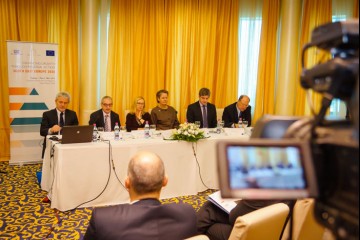
18 March 2014 | News
EU-financed project improving cooperation in South East Europe by strengthening RCC, successfully completes
SARAJEVO – The successful completion of project Improving Cooperation in South-East Europe by Actions for Strengthening the Regional Cooperation Council (RCC) was marked by a final conference that was held in Sarajevo, Bosnia and Herzegovina, today.
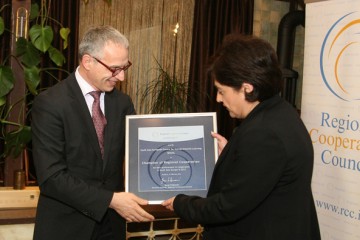
27 February 2014 | News
Regional Cooperation Council presents Champion of Regional Cooperation award for 2013, marks 6th anniversary
SARAJEVO – On the occasion of today’s sixth anniversary of the Regional Cooperation Council (RCC), the organization’s Secretary General Goran Svilanovic presented the South East European Centre for Entrepreneurial Learning (SEECEL) with the Champion of Regional Cooperation award for 2013. The award was handed to Efka Heder, SEECEL Director.
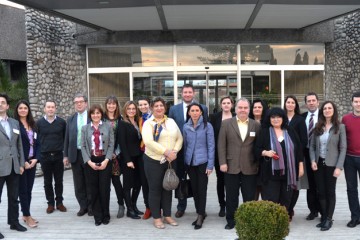
25 February 2014 | News
EU invests 100,000 euro in rehabilitating 8 cultural heritage sites in Western Balkans through RCC Task Force; more funds to follow
SARAJEVO/PODGORICA – 100,000 euro worth works on rehabilitating eight cultural heritage sites in four Western Balkans countries have been completed, informed the meeting of the Regional Cooperation Council (RCC)’s Task Force on Culture and Society that ended in Podgorica, Montenegro, today.
21 January 2014 | News
Regional Cooperation Council Secretary General congratulates Serbia on opening accession talks with European Union
SARAJEVO – Goran Svilanovic, Secretary General of the Regional Cooperation Council (RCC), congratulated Serbia for opening negotiations for a European Union (EU) membership today.

19 December 2013 | News
European Commission supports work of RCC Secretariat with EUR 3.575 million grant
A 3,575,000 euro grant agreement supporting activities of the Regional Cooperation Council (RCC) Secretariat in 2014 was signed today in Brussels between the European Commission (EC) and the Regional Cooperation Council (RCC).
18 December 2013 | News
Svilanović via Twitter: SEE 2020 strategy dependable mechanism of regional economic growth
SARAJEVO – The region of South East Europe (SEE) may progress only if we work together diligently on transforming our economies into more open, competitive and interconnected ones, said the Secretary General of the Regional Cooperation Council (RCC) Goran Svilanović in his first Twitter interview with the regional press on Wednesday. Svilanović presented ambitious goals set by the ...
17 December 2013 | News
RCC Secretary General to interact with regional press via Twitter on SEE 2020 strategy
SARAJEVO – The Secretary General of the Regional Coopration Council Goran Svilanović will be available for Twitter interview on the official RCC account @rccint and via hashtag #SEE2020 on Wednesday, 18 December 2013, from 13.00 until 13.30, dealing with topics covered by the South East Europe 2020 Strategy.
12 December 2013 | News
Panel debate on online media regulation in South East Europe to be held in Belgrade tomorrow
SARAJEVO/BELGRADE – A panel debate on findings of the Academy on Media Law in South East Europe: Online media regulation – Where does regulation end and overregulation start? will take place in Belgrade, tomorrow, 13 December.
21 November 2013 | News
South East Europe 2020 strategy for creating 1 million jobs in the region adopted in Sarajevo today
SARAJEVO – Creation of one million new jobs in South East Europe (SEE) until 2020 is the most important aim of the strategy dubbed “Jobs and Prosperity in a European Perspective”. The RCC’s SEE 2020 strategy was adopted in Sarajevo today at the Ministerial Conference of the South East Europe Investment Committee, co-chaired by the government of Bosnia and Herzegovina and the ...
19 November 2013 | News
Region’s ministers to adopt South East Europe 2020 strategy for creating 1 million jobs in the region
SARAJEVO – The RCC’s South East Europe (SEE) 2020 strategy is to be adopted in Sarajevo this Thursday, 21 November 2013, at the Ministerial Conference of the South East Europe Investment Committee. Creation of one million new jobs in SEE until 2020 is the most important aim of the strategy dubbed “Jobs and Prosperity in a European Perspective”.
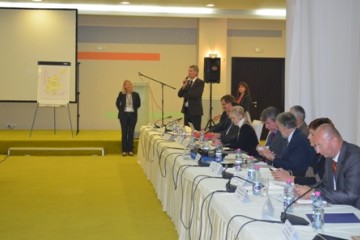
08 November 2013 | News
Sarajevo roundtable agrees to intensify regional cooperation on integrated water resources management in South East Europe
SARAJEVO – Closer regional cooperation of water, energy and environmental sectors on the sustainable use of waters; involvement of private sector in water infrastructure development; and introduction of a regional legal and coordination instrument to ensure achievement of these goals, are key issues South East Europe (SEE) needs to address in water resources management and hydropower ...

05 November 2013 | News
Roundtable on water and energy nexus in transboundary basins in South East Europe to open in Sarajevo tomorrow, hosted by RCC
SARAJEVO – A three-day international roundtable on water and energy nexus in transboundary basins in South East Europe (SEE) will open in Sarajevo, Bosnia and Herzegovina, tomorrow, 6 November.
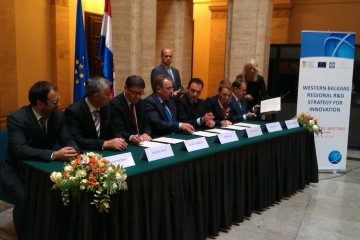
25 October 2013 | News
Western Balkan Countries Develop Joint Strategy for Innovation-Based Economic Growth
ZAGREB – The Western Balkans Regional Research and Development (R&D) Strategy for Innovation was adopted today in Zagreb by the ministers of science from the region during the ministerial meeting on regional R&D.
02 October 2013 | News
Regional Cooperation Council Board holds last meeting in 2013, supports final preparations for SEE 2020 growth strategy
The Regional Cooperation Council (RCC) Board RCC Board heard today a report by Secretary General on activities of the organization’s Secretariat in the period April-September 2013, as well as information on future plans.
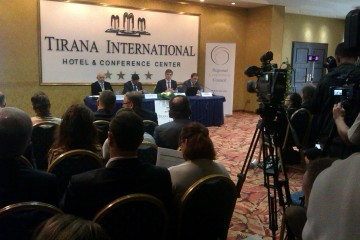
01 October 2013 | News
First version of South East Europe 2020 strategy for creating 1 million jobs presented in seven cities across the region
SARAJEVO/TIRANA – Experts of the Regional Cooperation Council (RCC) Secretariat concluded in Tirana today a series of presentations of the first draft of the South East Europe (SEE) 2020 strategy for creating one million new jobs in the region, with participation of Arben Ahmetaj, Minister of Economic Development, Trade and Entrepreneurship of Albania. The document is being prepared ...
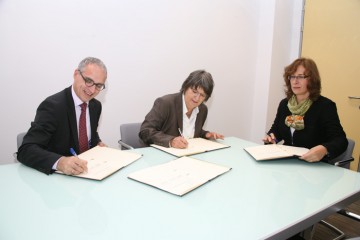
30 September 2013 | News
RCC, GIZ agree to cooperate on foreign trade promotion, energy efficiency, legal reform and modernisation of municipal services
The Regional Cooperation Council (RCC) Secretariat and the German Organization Deutsche Gesellschaft für Internationale Zusammenarbeit (GIZ) signed in Sarajevo today a Memorandum of Understanding on cooperation in foreign trade promotion, energy efficiency, legal reform and modernisation of municipal services. The agreement foresees cooperation between the RCC Secretariat and GIZ until ...
29 September 2013 | News
South East Europe public sector communicators association created in Budva today
BUDVA/SARAJEVO – The 2nd South Eastern European Government Communication Conference concluded today in Budva, Montenegro, with the establishment of the South East Europe Public Sector Communication Association (SEECOM), as an international, non-profit, professional association of senior public sector communicators from the region.
27 September 2013 | News
2nd railway congress ends in Sarajevo, agrees to work on common railway system in South East Europe
SARAJEVO – A two-day Congress on Railways in South East Europe ended in Sarajevo today, with over 250 participants from eleven countries agreeing to work on a common railway system in the region.

09 September 2013 | News
RCC to present South East Europe 2020 strategy for creating 1 million jobs in the region
SARAJEVO – The first draft of the South East Europe (SEE) 2020 strategy for creating one million new jobs in the region will be presented in Skopje tomorrow. The document is being prepared by the Regional Cooperation Council (RCC) Secretariat, in close consultation with governments and initiatives from South East Europe.
05 September 2013 | News
Academy on Media Law in South East Europe calls for more plurality of views in media, proposes ways to increase trust in public service media
SARAJEVO – Participants of the second edition of the Academy on Media Law in South East Europe proposed ways to increase pluralism of content and views in the region and the independence and accountability of public service media, at a three-day event that closed in Sarajevo today.
02 September 2013 | News
Second edition of the Academy on Media Law in South East Europe to kick off in Sarajevo tomorrow
SARAJEVO – The second edition of the Academy on Media Law in South East Europe will open in Sarajevo tomorrow, 3 September. It will focus on issues of media pluralism, public service broadcasting and the freedom of the media on the Internet.
15 July 2013 | News
Three Western Balkans heritage sites chosen for a €2.8 million EU funding, says RCC meeting
SARAJEVO/NOVI SAD – Three Western Balkans sites have been chosen for a €2.8 million worth EU-funded project to support preservation and restoration of cultural heritage in the region, the European Commission announced today at a meeting of the Regional Cooperation Council (RCC) Task Force on Culture and Society, held in Novi Sad, Serbia.
25 June 2013 | News
Head of RCC Expert Pool receives 'Europe Contribution of the Year' award by European Movement in Serbia
Jelica Minic, Head of Expert Pool at the Regional Cooperation Council (RCC) Secretariat, has been awarded the ‘Europe Contribution of the Year’ award by the European Movement in Serbia for her contribution to European integration and values in Serbia.
19 June 2013 | News
Competitiveness working group created under South East Europe 2020 growth strategy, at RCC-hosted meeting in Sarajevo
SARAJEVO – A working group of regional experts on competitiveness was created in Sarajevo today, under the South East Europe 2020 (SEE 2020) growth strategy, at a meeting hosted by the Regional Cooperation Council (RCC).
18 June 2013 | News
RCC meeting to discuss progress in developing South East Europe 2020 growth strategy, in Sarajevo tomorrow
SARAJEVO – The South East Europe Investment Committee (SEEIC) will discuss progress in developing the South East Europe (SEE) 2020 strategy at its meeting in Sarajevo tomorrow. The event will be held under the auspices of the Regional Cooperation Council (RCC) Secretariat.
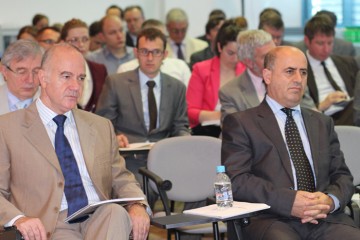
17 June 2013 | News
RCC Secretary General briefs diplomats in Sarajevo of results of the organization's 5th Annual Meeting
Secretary General of the Regional Cooperation Council (RCC), Goran Svilanovic, briefed today the diplomatic community in Sarajevo of results in implementing the RCC Strategy and Work Programme 2011-2013, the outcome of the RCC Annual Meeting held in Ohrid last month, and the state of regional cooperation in South East Europe.
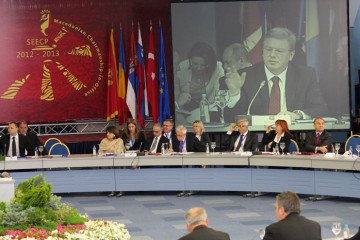
31 May 2013 | News
South East European ministers of foreign affairs express support to RCC work, hail its SEE 2020 growth strategy
OHRID/SARAJEVO – Ministers of Foreign Affairs of the South-East European Cooperation Process (SEECP) approved in Ohrid today the annual report of the Regional Cooperation Council (RCC) Secretary General and the organization’s work programme for 2014-2016, focused on SEE 2020 – a Job-Creating Growth and EU Integration Strategy.
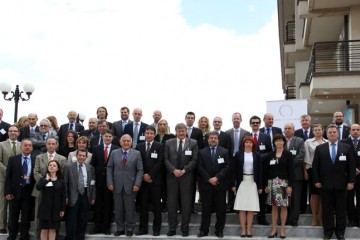
30 May 2013 | News
Regional Cooperation Council key forum for all-inclusive regional cooperation in South East Europe, say organization’s participants
OHRID/SARAJEVO – The Regional Cooperation Council (RCC) is a key forum for inclusive regional cooperation in South East Europe, participants of the 5th Annual Meeting of the organization agreed in Ohrid today, while endorsing its new strategy for the 2014-2016 period and the annual report of the RCC Secretary General.
30 May 2013 | News
Annual Meeting endorsed new Regional Cooperation Council strategy and annual report
OHRID/SARAJEVO – The 5th Annual Meeting of the Regional Cooperation Council (RCC) endorsed the organization’s new strategy for the 2014-2016 period and the Annual Report of the RCC Secretary General. The meeting was held in Ohrid on 30th May 2013.
24 May 2013 | News
Conference on strategic communication between security institutions and media in South East Europe to open in Skopje
SKOPJE – A conference on strengthening cooperation and communication between security institutions and public service media from South East Europe will open in Skopje on Monday, 27 May 2013.
16 May 2013 | News
UN Special Rapporteur in the field of cultural rights pays visit to RCC Secretariat
Farida Shaheed, United Nations (UN) Special Rapporteur in the field of cultural rights, visited the Regional Cooperation Council (RCC) Secretariat today, to learn about efforts in fostering cultural and education cooperation in South East Europe.
16 May 2013 | News
Regional Cooperation Council Secretary General meets chief executive of Vienna Economic Forum
Goran Svilanovic, Regional Cooperation Council (RCC) Secretary General, met today with Ambassador Elena Kirtcheva, Secretary General of the Vienna Economic Forum (VEF), at the premises of the RCC Secretariat in Sarajevo.

26 April 2013 | News
10 aviation organizations to sign letter of intent on joint service provision in South East Europe, under RCC auspices
SARAJEVO – Representatives of 10 national aviation authorities and air navigation service providers will sign a Letter of Intent on the Joint Service Provision Area Initiative in South East Europe, in Sarajevo, on 29 April, under the auspices of the Regional Cooperation Council (RCC).
25 April 2013 | News
Regional Cooperation Council Board adopts the organization’s new three-year strategy and work programme
The Regional Cooperation Council (RCC) Board adopted today the RCC Strategy and Work Programme 2014-2016, centred around implementation of the South East Europe 2020 (SEE 2020) strategy, as the organization's contribution to overcoming economic crisis in the region.
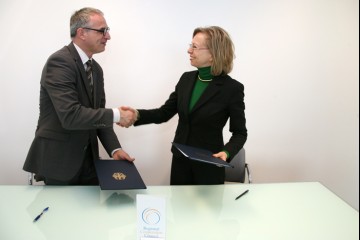
22 April 2013 | News
Germany supports work of RCC Secretariat with a 50,000 euro grant
A 50,000 euro grant agreement supporting activities of the Regional Cooperation Council (RCC) Secretariat in 2013 was signed by Goran Svilanovic, RCC Secretary General, and Ulrike Knotz, German Ambassador to Bosnia and Herzegovina, in Sarajevo today.
19 March 2013 | News
New work programme of South East Europe Investment Committee to focus on SEE 2020 growth strategy
SARAJEVO - The South East Europe Investment Committee (SEEIC) of the Regional Cooperation Council (RCC) adopted an updated work programme at its meeting in Sarajevo today, focused on development of the South East Europe 2020 regional growth strategy.
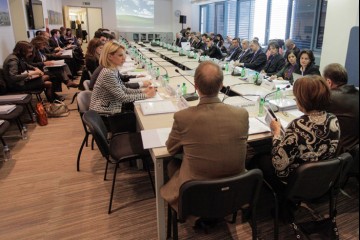
18 March 2013 | News
South East Europe 2020 growth strategy in focus of regional meeting, to be held in Sarajevo tomorrow, under RCC auspices
SARAJEVO – Development of the South East Europe (SEE) 2020 regional growth strategy and its implementation will be the main topics of the 12th South East Europe Investment Committee (SEEIC) Meeting, which will be held in Sarajevo tomorrow.
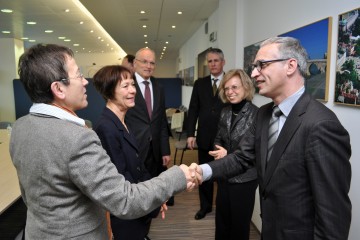
11 March 2013 | News
Seven German ambassadors from Western Balkans and foreign ministry discuss regional issues, express support to RCC work
SARAJEVO - Ambassadors of Germany in Belgrade, Podgorica, Prishtina, Sarajevo, Skopje and Tirana, accompanied by colleagues from the foreign ministry, discussed political situation in Western Balkans and the region’s European perspective during a visit to the Regional Cooperation Council (RCC) Secretariat in Sarajevo today.
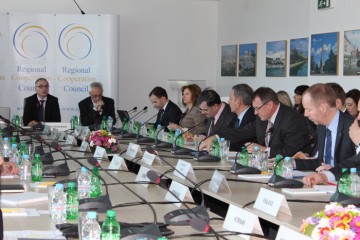
28 February 2013 | News
Regional Cooperation Council Board amends statutory documents to reflect EU-mediated agreement on Kosovo* regional representation
At its first meeting in 2013, the Regional Cooperation Council (RCC) Board decided to amend the statute and the list of participants of the organization, reflecting the results of the EU-mediated dialogue between Belgrade and Prishtina.
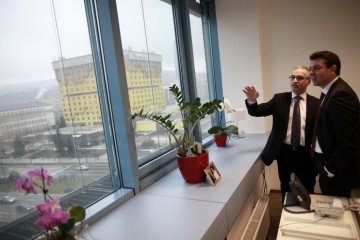
27 February 2013 | News
Foreign Minister Poposki visits RCC Secretariat, backs organization’s goals and activities
The current Chair-in-Office of the South-East European Cooperation Process (SEECP) and Minister of Foreign Affairs of the Former Yugoslav Republic of Macedonia, Nikola Poposki, paid a visit to the RCC Secretariat today to express support to the activities of the organization and congratulate Secretary General Goran Svilanovic on his recent appointment to the post.
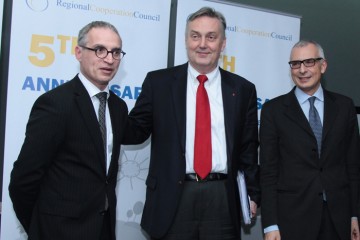
26 February 2013 | News
Regional Cooperation Council to mark its 5th anniversary, inaugurate Champion of Regional Cooperation award
SARAJEVO – A panel discussion and an award for best achievement in cooperation in South East Europe will be central elements of the marking of the fifth anniversary of the Regional Cooperation Council (RCC), in Sarajevo tomorrow.
07 February 2013 | News
Regional Cooperation Council receives award for extraordinary contribution to humanism
The Regional Cooperation Council (RCC) received in Sarajevo today the traditional Sloboda (Freedom) award of the International Peace Centre Sarajevo (IPC) for an extraordinary contribution to humanism, fight for human rights and freedom in Bosnia and Herzegovina, Europe and the world. The award was presented at a special opening ceremony of the 29th international festival Sarajevo Winter 2013.
08 January 2013 | News
New Secretary General of the Regional Cooperation Council takes up post
SARAJEVO – Goran Svilanović, the new Secretary General of the Regional Cooperation Council (RCC), has assumed his duties in Sarajevo today.

10 December 2012 | News
Regional Cooperation Council wins award for extraordinary contribution to humanism
SARAJEVO – The International Peace Centre Sarajevo (IPC) assigned its traditional Sloboda (Freedom) award to the Regional Cooperation Council (RCC) for an extraordinary contribution to humanism, fight for human rights and freedom in Bosnia and Herzegovina, Europe and the world.
21 November 2012 | News
Western Balkans policy on new skills for new jobs to be adopted at RCC, FES co-organized event in Sarajevo, tomorrow
SARAJEVO, 21 November 2012 – A policy paper on ‘new skills for new jobs’ in the Western Balkans is expected to be adopted at a meeting hosted by the Regional Cooperation Council (RCC) Secretariat, in Sarajevo, tomorrow.
13 November 2012 | News
Museums network in South East Europe established at RCC-organized ministerial conference in Skopje
SARAJEVO/SKOPJE – South East European Museums Network, which will enhance cross-border cooperation between these cultural institutions, was established at a ministerial conference held in Skopje today.
12 November 2012 | News
Preservation of cultural heritage in South East Europe in focus of Skopje meeting, held under RCC auspices
SARAJEVO/SKOPJE – Funds for rehabilitating South East European cultural heritage, including a 2.8 million euro worth project, will be presented at a meeting of the Regional Cooperation Council’s Task Force on Culture and Society, which began in Skopje today.
09 November 2012 | News
Western Balkans ministers adopt 11 targets for regional economic growth by 2020, under RCC auspices
SARAJEVO/TIRANA – Western Balkans economy ministers adopted today 11 targets for smart, sustainable and inclusive growth in the region, to be reached by 2020. The commitment was made at the ministerial conference of the Regional Cooperation Council (RCC)'s South East Europe Investment Committee (SEEIC), held in Tirana today.
18 October 2012 | News
Regional Cooperation Council Board discusses state of cooperation in South East Europe, thanks outgoing Secretary General Biscevic
The last meeting in 2012 of the Regional Cooperation Council (RCC) Board heard today a report by RCC Secretary General Hido Biscevic on activities of the organization’s Secretariat in the period May-October 2012, primarily in relation to results achieved in the implementation of the RCC Strategy and Work Programme 2011-2013, as well as information on the future ...
04 October 2012 | News
2.2 million euro project boosting women entrepreneurship in South East Europe kicks off
Women-led enterprises have direct impact on economic development, as they reduce use of safety net services and bring higher social and tax benefits for the economy, said Jelica Minic, Deputy Regional Cooperation Council (RCC) Secretary General, at the Bosnia and Herzegovina launch of the project Women entrepreneurship – a job creation engine for South East Europe, in Sarajevo, today.
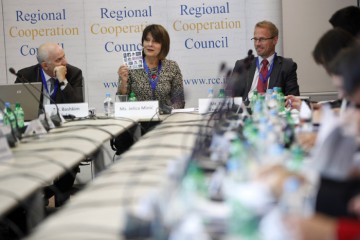
03 October 2012 | News
Nine targets of regional 2020 strategy supported by South East Europe Investment Committee, under RCC auspices
SARAJEVO – A set of nine targets for integrated, smart, inclusive and sustainable growth in the region until 2020 was supported by the members of the South East Europe Investment Committee (SEEIC), during a meeting held at the Regional Cooperation Council (RCC) Secretariat in Sarajevo today.
03 October 2012 | News
Lifelong learning and non-formal adult education in South East Europe focus of RCC, dvv international conference in Sarajevo
SARAJEVO – The conference Lifelong Learning and Non-formal Adult Education in South East Europe will discuss ways to build knowledge-based society in the region by increasing participation in adult learning, in Sarajevo, tomorrow.
02 October 2012 | News
Entire society must join forces to fight violent extremism, agrees South East European meeting in Istanbul today
ISTANBUL/SARAJEVO – Prevention, awareness-raising, advanced use of information and communication technologies, engaged civil society, and public-private partnerships are crucial in countering violent extremism, concluded a South East European workshop that ended in Istanbul today.
02 October 2012 | News
South East Europe Investment Committee to back initial targets for regional 2020 strategy, at RCC-hosted meeting in Sarajevo
SARAJEVO – The South East Europe Investment Committee (SEEIC) is expected to back initial flagship targets for the South East Europe (SEE) 2020 Strategy at its meeting in Sarajevo, tomorrow.
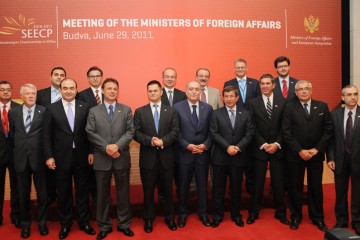
27 September 2012 | News
As South East European ministers discuss measures to consolidate cooperation, RCC Secretary General Biscevic is awarded Bulgarian Golden Laurel medal
As South East European ministers discuss measures to consolidate cooperation, RCC Secretary General Biscevic is awarded Bulgarian Golden Laurel medal
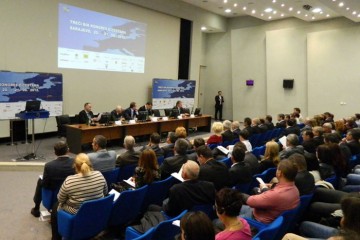
21 September 2012 | News
3rd road congress wraps up in Sarajevo, agrees ways to develop road infrastructure in South East Europe
SARAJEVO – A two-day Road Congress in South East Europe ended in Sarajevo today, with over 400 participants from ten countries agreeing to establish a professional regional forum for the development of the road sector.
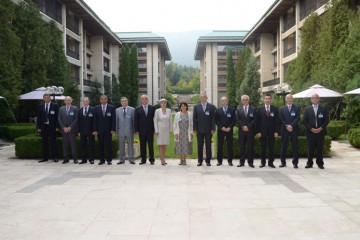
19 September 2012 | News
South East European Military Intelligence Chiefs meet in Sofia
The 4th conference of the South East European Military Intelligence Chiefs (SEEMIC) was held in Sofia today focusing on military-political and security situation in South East Europe. Special attention was devoted to challenges facing the military intelligence organizations associated with activities of various terrorist and extremist structures, organized crime and illegal trafficking in ...

12 September 2012 | News
RCC, EC organized meeting proposes extension of Single European Sky Programme in South East Europe beyond 2012
OHRID/SARAJEVO – The third Governing Body meeting of the Implementation of Single European Sky (ISIS) Programme in South East Europe ended in Ohrid today, approving a progress report and proposing ISIS continuation beyond 2012.
11 July 2012 | News
Investment in modern technologies at core of efficient economy, says RCC hosted meeting of e-South East Europe initiative
SARAJEVO – A meeting of the electronic-South East Europe (eSEE) initiative ended in Sarajevo today with a conclusion that competitiveness in South East Europe has benefited from investments in information and communication technologies (ICT), which play an important role in jobs creation of every country in the region.
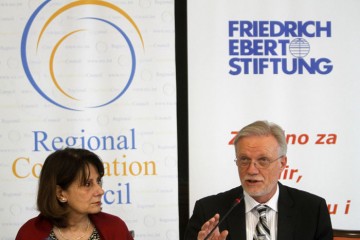
11 July 2012 | News
Long-term social development in Western Balkans to be discussed at RCC, FES event in Sarajevo, tomorrow
SARAJEVO – A two-day regional conference New Skills for New Jobs in Western Balkans will open in Sarajevo tomorrow. The event will discuss steps to establish a long-term vision of social development in the region, in line also with EU social agenda.
28 June 2012 | News
RCC Task Force on Culture and Society meeting agrees to reinforce protection of cultural heritage in South East Europe
The Third Meeting of the Regional Cooperation Council (RCC) Task Force on Culture and Society (TFCS) ended today in Prčanj, Montenegro, with an agreement to finalize the establishment of Ljubljana Process national task forces, necessary for implementing the project ‘Sustaining the Rehabilitation of Cultural Heritage in the Western Balkans’.
22 June 2012 | News
RCC briefs diplomats in Sarajevo of results of its 4th Annual Meeting
The Secretariat of the Regional Cooperation Council (RCC) briefed today the diplomatic community in Sarajevo of results of the 4th Annual Meeting of the organization and the related South-East European Cooperation Process (SEECP) events, held in Belgrade last week.
20 June 2012 | News
Germany grants 50,000 euro to support work of RCC Secretariat
The Regional Cooperation Council (RCC) Secretary General, Hido Biscevic, and German Ambassador to Bosnia and Herzegovina, Ulrike Knotz, signed in Sarajevo today a 50,000 euro grant agreement in support of the work of the RCC Secretariat in 2012.

18 June 2012 | News
Regional access to finance forum to be held in Sarajevo tomorrow, under RCC, USAID and Sida auspices
SARAJEVO – A regional access to finance forum titled SEEnovate: Supporting Intelligent Growth, showcasing the most up to date investment and business opportunities in South East Europe and bringing over 30 equity investors, will be held in Sarajevo, Bosnia and Herzegovina, tomorrow, 19 June.
15 June 2012 | News
South East European Heads of State and Government praise RCC work, thank outgoing and approve of new Secretary General
BELGRADE/SARAJEVO – The Heads of State and Government of the South-East European Cooperation Process (SEECP) praised in Belgrade today the achievements of the Regional Cooperation Council (RCC) and its Secretary General Hido Bisevic, approving at the same time of the election of his successor Goran Svilanovic.
14 June 2012 | News
South East European foreign ministers appoint Goran Svilanović as the new Secretary General of the Regional Cooperation Council
BELGRADE/SARAJEVO – Goran Svilanović has been appointed the new Secretary General of the Regional Cooperation Council (RCC) by the ministers of foreign affairs of the states participating in the South-East European Cooperation Process (SEECP), at their meeting held in Belgrade today.
13 June 2012 | News
Annual Meeting endorses RCC annual report and nomination of new Secretary General
BELGRADE/SARAJEVO – The 4th Annual Meeting of the Regional Cooperation Council (RCC) endorsed in Belgrade today the Annual Report of the organization’s Secretary General and the nomination of Goran Svilanovic as the next RCC Secretary General for a three-year period, effective as of 1 January 2013.
08 June 2012 | News
1st media law academy in SEE ends in Zagreb, makes recommendations on public service media remit, media pluralism and professionalism
ZAGREB, 8 June 2012 – The first Academy on Media Law in South East Europe wrapped up its work in Zagreb, Croatia, today, with a set of recommendations to enhance public service media remit, media pluralism and responsibility.
31 May 2012 | News
First academy on media law in South East Europe to kick off in Zagreb
ZAGREB – The first academy on media law in South East Europe will open in Zagreb, Croatia, on Monday, 4 June, under the auspices of the Regional Cooperation Council (RCC), with support of the Friedrich Ebert Foundation, the OSCE Representative on Freedom of the Media, and the OSCE Mission to Bosnia and Herzegovina.
30 May 2012 | News
South East European experts prepare regional conventions on criminal, civil and commercial matters, under RCC auspices
BUCHAREST/SARAJEVO – Two regional conventions, on criminal and on civil and commercial matters, were discussed by over 70 South East European experts in justice and home affairs at a meeting in Bucharest today, held under the auspices of the Regional Cooperation Council (RCC) Secretariat.

28 May 2012 | News
Conference on investigative journalism and data protection in South East Europe to open in Pula, Croatia
ZAGREB/SARAJEVO/PULA – A conference to promote investigative journalism and journalistic independence in South East Europe, while respecting data protection principles, will open in Pula, Croatia, on Wednesday, 30 May.
25 May 2012 | News
RCC-supported conference discusses higher education in Western Balkans
A two-day international conference in support of higher education reform in Western Balkans ended in Petrovac, Montenegro, today. The event discussed the role of professional administrators and public-private partnerships in developing higher education systems in the region, as well as new institutionalised arrangements for regional cooperation.
15 May 2012 | News
Regional Cooperation Council Board meets in Sarajevo, accepts annual, financial reports
The second meeting of the Regional Cooperation Council (RCC) Board in 2012 accepted today the Annual Report 2011-2012 of the organization’s Secretary General. It also approved the Secretary General’s financial report for 2011.
25 April 2012 | News
RCC’s Southeast Europe Investment Committee adopts 2-year work programme in Sarajevo, to boost region’s competitiveness
SARAJEVO – The Southeast Europe Investment Committee (SEEIC) adopted its two-year Work Programme for 2012-2013 in Sarajevo today, at the first meeting held under the umbrella of the Regional Cooperation Council (RCC) Secretariat.

25 April 2012 | News
Greater involvement of girls in ICT to be promoted in Sarajevo by Ministry of Communications, RCC, and partners
SARAJEVO – Opportunities for study, work and personal development that information and communication technologies (ICT) offer to girls will be in focus of International Girls in ICT Day to be marked in Sarajevo, Bosnia and Herzegovina, tomorrow.
26 March 2012 | News
Eight South East European stock exchanges to sign platform for joint action, under RCC auspices in Sarajevo
SARAJEVO – Directors of eight South East European (SEE) securities (stock) exchanges will sign a Platform for Joint Action under the auspices of the Regional Cooperation Council (RCC) Secretariat, in Sarajevo, tomorrow, 27 March.
16 March 2012 | News
CEI project of strengthening the RCC launched in Sarajevo to support stronger regional cooperation in Western Balkans
More than 50 participants of the kick-off meeting for the project Improving Cooperation in South-East Europe by Actions for Strengthening the Regional Cooperation Council (RCC) agreed in Sarajevo today that enhancing RCC role is vital for upgrading regional cooperation.
15 March 2012 | News
Project to improve cooperation in South East Europe by strengthening RCC to kick-off in Sarajevo tomorrow
SARAJEVO – The project Improving Cooperation in South-East Europe by Actions for Strengthening the Regional Cooperation Council (RCC) will be launched in Sarajevo tomorrow, at a kick-off meeting organized by the Central European Initiative (CEI) in cooperation with the RCC Secretariat.
15 March 2012 | News
Regional Cooperation Council Board holds its first meeting in 2012, in Sarajevo
Assessment of the first year of implementation of the Regional Cooperation Council (RCC) Strategy and Work Programme 2011-2013, and the report of the organization’s Secretary General on the activities of the Secretariat over the past three months, were in focus of today’s meeting of the RCC Board, held in Sarajevo.
13 March 2012 | News
Regional cooperation in South East Europe, EU membership focus of 4th RCC anniversary celebration
SARAJEVO – The 4th anniversary of the Regional Cooperation Council (RCC) will be marked in Sarajevo tomorrow with a panel discussion From ownership to responsibility: Regional cooperation in South East Europe and EU membership.
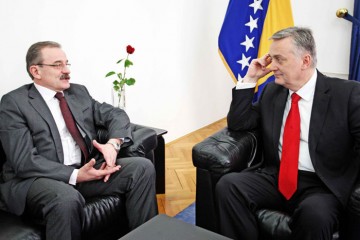
13 March 2012 | News
RCC Secretary General, BiH Foreign Minister meet in Sarajevo
Secretary General of the Regional Cooperation Council (RCC), Hido Biscevic, held consultations with the new Minister of Foreign Affairs of Bosnia and Herzegovina, Zlatko Lagumdzija, in Sarajevo today.
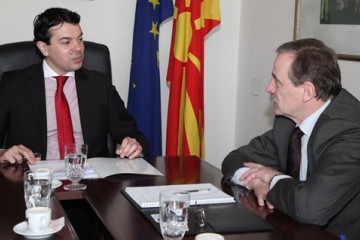
06 March 2012 | News
RCC Secretary General meets Minister of Foreign Affairs in Skopje
Hido Biscevic, Secretary General of the Regional Cooperation Council (RCC), met in Skopje today with Nikola Poposki, Minister of Foreign Affairs, of the Former Yugoslav Republic of Macedonia, as the incoming chair of the South-East European Cooperation Process (SEECP).
22 February 2012 | News
RCC, European Parliament to bring together Western Balkan parliamentarians to discuss environmental policy, in Sarajevo
SARAJEVO – The European Union (EU) environmental policy and Western Balkans environmental trends and perspectives will be the topic of a two-day parliamentary seminar hosted by the Regional Cooperation Council (RCC) Secretariat in Sarajevo, on 23-24 February.
31 January 2012 | News
RCC Secretary General, Serbian Foreign Minister meet in Belgrade
Hido Biscevic, Secretary General of the Regional Cooperation Council (RCC), met in Belgrade today with Vuk Jeremic, Minister of Foreign Affairs of Serbia and the current chair of the South-East European Cooperation Process (SEECP), to talk about regional cooperation and political developments in South East Europe.
13 December 2011 | News
Conference on the role of Civil Society Networks in the Western Balkans and Turkey starts in Sarajevo
SARAJEVO – A two-day conference on civil society organisation (CSO) networks in the Western Balkan countries and Turkey started today in Sarajevo. It aims at enhancing their structured participation in the EU accession process, and at their greater involvement in the implementation of the Regional Cooperation Council (RCC) strategy.
12 December 2011 | News
Western Balkans civil society to discuss greater participation in EU accession and RCC strategy implementation, at Sarajevo conference
SARAJEVO – A two-day conference on civil society networks in the Western Balkan countries and Turkey, in support of their greater participation in the EU accession process and in implementing the Regional Cooperation Council strategy, will be opened in Sarajevo tomorrow.
08 December 2011 | News
Head of LSE institute to speak about perceptions of crisis-struck Europe, sign agreement with RCC, in Sarajevo
SARAJEVO – The impact of the current euro-zone crisis on perceptions of ‘Europe’ will be the topic of a lecture by Professor Kevin Featherstone, Head of the European Institute at the London School of Economics and Political Science (LSE), to be held at the Sarajevo School of Economics and Business (EFSA), tomorrow.
08 December 2011 | News
Regional Cooperation Council Board meets in Sarajevo today, adopts budget
The Board of the Regional Cooperation Council (RCC) reviewed today in Sarajevo the activities of the organization over the past three months, adopted the RCC Secretariat’s budget for 2012, and provided guidance for the future work of the organization.
02 December 2011 | News
South East European conference evaluates regional needs in justice, home affairs and security cooperation, under RCC auspices
BELGRADE/SARAJEVO – A two-day conference to evaluate regional needs in justice, home affairs and security cooperation ended in Belgrade today, establishing mechanisms to foster South East European cooperation on criminal investigations and protection of fundamental rights.
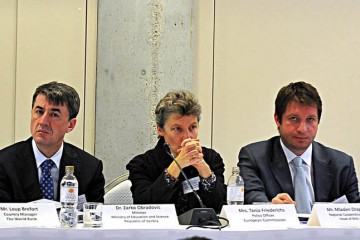
24 November 2011 | News
Western Balkans’ research and development strategy project launched in Belgrade, with RCC support
BELGRADE/SARAJEVO – A two-year project to develop a strategy for regional dimension of Research and Innovation cooperation in the Western Balkans has been launched today, in Belgrade, Serbia.
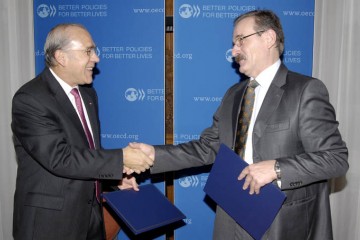
24 November 2011 | News
Ministerial conference in Paris welcomes management transfer of South East Europe Investment Committee from OECD to RCC
PARIS/SARAJEVO – The management of the South East Europe Investment Committee (SEEIC) has been transferred today to the Regional Cooperation Council (RCC) at a ministerial conference held in Paris, France.
16 November 2011 | News
131 million euro European Commission strategy for Western Balkan discussed at Regional Cooperation Council in Sarajevo
SARAJEVO – More than 70 participants, representing beneficiaries from the Western Balkans and Turkey, took part in the latest Instrument for Pre-accession Assistance (IPA) Multi-Beneficiary Programme Coordination Meeting on regional cooperation that ends in Sarajevo today.
16 November 2011 | News
European Commission’s Director General for Enlargement visits RCC Secretariat
Director General for Enlargement of the European Commission, Stefano Sannino, visited the Regional Cooperation Council (RCC) Secretariat in Sarajevo today, to discuss regional cooperation with RCC Secretary General, Hido Biscevic.
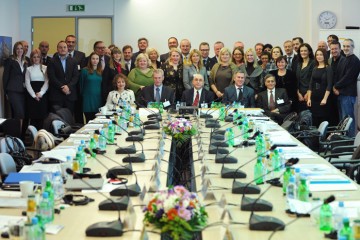
14 November 2011 | News
Independence, sustainability of public service media in South East Europe needs to be strengthened, agrees Sarajevo conference
SARAJEVO – The economic standing, editorial independence and autonomy of public service media need to be improved, to avert political interference, achieve managerial stability, ensure sustainability and stable funding for the public service media, in order for them to fulfill their role, concluded participants of an international seminar on public broadcasting, held in Sarajevo today.
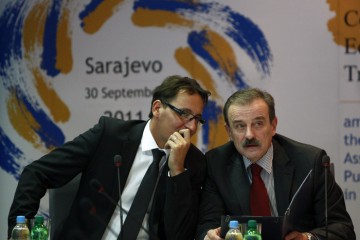
11 November 2011 | News
Seminar on freedom, independence and sustainability of public service media in South East Europe to open in Sarajevo on Monday
SARAJEVO – Over 50 participants from the Regional Cooperation Council’s 13 South East European members will discuss independence and sustainability of the region’s public service media in Sarajevo, on Monday, 14 November.
10 November 2011 | News
RCC Secretary General Biščević meets EU Commissioner Füle over regional cooperation
Secretary General of the Regional Cooperation Council (RCC), Hido Biščević, met in Brussels today with EU Commissioner for Enlargement and European Neighbourhood Policy, Štefan Füle, to talk about current situation in the region and regional cooperation in view of the last month’s European Commission’s Enlargement Package.
07 November 2011 | News
High level meeting on information society development takes place in Tirana, boosts commitment to regional growth
TIRANA/SARAJEVO – A high level meeting on information society development has commenced in Tirana, with a goal to reap the full potential of the Information and Communication Technologies (ICTs) to spur innovation, economic growth, regional competitiveness and improved quality of life in South East Europe.
25 October 2011 | News
RCC-hosted South East European social agenda week to open in Sarajevo today
SARAJEVO – A social agenda week will begin in Sarajevo today, focusing on social economy and creation of new jobs in South East Europe over the next decade. The event will be hosted by the Regional Cooperation Council (RCC) Secretariat.
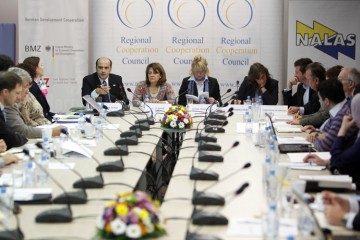
24 October 2011 | News
Conference on urban planning in South East Europe takes place in Sarajevo today, under RCC auspices
SARAJEVO – Regulation of informal settlements was the topic of a conference on urban planning in South East Europe, which took place today at the Regional Cooperation Council (RCC) Secretariat in Sarajevo, Bosnia and Herzegovina.
13 October 2011 | News
South East European health ministers foster inclusion of health into all policies, tackle killer diseases, at RCC- and WHO-supported forum
BANJA LUKA/SARAJEVO/COPENHAGEN – Health ministers from South East Europe are devoting two days to considering how to involve other crucial sectors in reducing death and disease in their countries. The Third Health Ministers’ Forum is meeting in Banja Luka, Bosnia and Herzegovina, on 13–14 October 2011, attended by health ministers and high-level officials from the 10 countries ...
13 October 2011 | News
Twelve South East European military intelligence chiefs step up cooperation in Sarajevo today, under RCC auspices
SARAJEVO – Chiefs and senior officials of military intelligence from 12 South East European countries, members of the Regional Cooperation Council (RCC), agreed in Sarajevo today to move forward regional cooperation in the field of intelligence exchange and adopted rules of procedures to put the cooperation in practice.
10 October 2011 | News
South East European health ministers to tackle killer diseases together, with RCC and WHO support
BANJA LUKA/SARAJEVO/COPENHAGEN – Health ministers and high level officials from Albania, Bosnia and Herzegovina, Bulgaria, Croatia, The Former Yugoslav Republic of Macedonia, Montenegro, Moldova, Romania, Serbia, Slovenia and Israel will hold their third ministerial forum in Banja Luka, Bosnia and Herzegovina, on 13-14 October 2011.
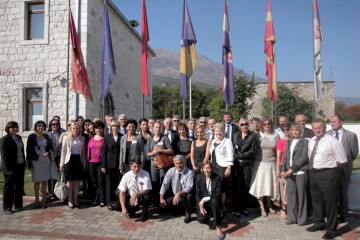
06 October 2011 | News
First training of South East European education inspectors concludes in Montenegro today, supported by RCC
DANILOVGRAD/SARAJEVO – The first regional training of education inspectors ended today at the Regional School for Public Administration (ReSPA) in Danilovgrad, Montenegro.
05 October 2011 | News
RCC Secretary General, Albanian Deputy Prime Minister meet ahead of key European decisions affecting the region
Hido Biscevic, Secretary General of the Regional Cooperation Council (RCC), met today in Tirana with Edmond Haxhinasto, Deputy Prime Minister and Minister of Foreign Affairs of the Republic of Albania, to discuss regional cooperation and developments in South East Europe ahead of European Union’s progress reports due later this month.
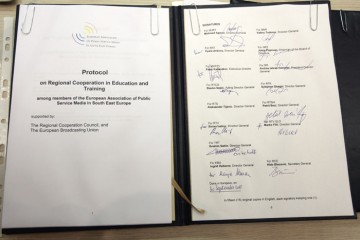
30 September 2011 | News
Protocol on regional cooperation among South East European public media signed in Sarajevo, under RCC auspices
SARAJEVO – Directors general of 12 public broadcasters signed today in Sarajevo a Protocol on Regional Cooperation in Education and Training among members of the European Association of Public Service Media in South East Europe, under the auspices of the Regional Cooperation Council (RCC) Secretariat.
28 September 2011 | News
Directors general of South East European public media to sign cooperation protocol in Sarajevo, with RCC support
SARAJEVO – Directors general of 13 public service broadcasters from South East Europe, supported by the Regional Cooperation Council (RCC) and the European Broadcasting Union (EBU), will sign a protocol on regional cooperation in Sarajevo on Friday, 30 September.
23 September 2011 | News
RCC Secretary General meets South East European foreign ministers in New York
Secretary General of the Regional Cooperation Council (RCC), Hido Biscevic, took part in an informal meeting of ministers of foreign affairs of the South-East European Cooperation Process (SEECP), the Central European Initiative (CEI) and the Adriatic-Ionian Initiative (AII), held in New York today at the margins of the UN General Assembly session.
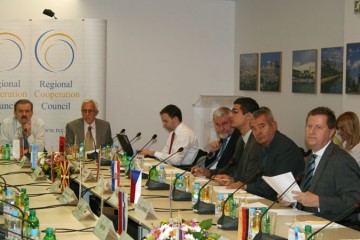
15 September 2011 | News
RCC Board meets in Sarajevo to discuss activities of the organization
The 28-member Board of the Regional Cooperation Council (RCC) met in Sarajevo today, to review activities of the past trimester and set course for the work of the organization until the end of the year.

07 September 2011 | News
RCC, EC organize second meeting on implementation of Single European Sky in South East Europe
SOLIN/SARAJEVO – The second conference of the Governing Body for the Implementation of Single European Sky in South East Europe (ISIS Programme) concluded today in Solin, Croatia, with a recommendation that competent ministers extend ISIS Programme to a third phase after 2012.
07 September 2011 | News
RCC Secretary General discusses regional affairs and organization’s activities with senior U.S. and World Bank officials
Hido Biscevic, Secretary General of the Regional Cooperation Council (RCC), met yesterday in Washington D.C. with Phil Reeker, United States Deputy Assistant Secretary of State, and a number of senior U.S. officials; as well as with Philippe Le Houerou, Vice President of the World Bank for Europe and Central Asia Region.
13 July 2011 | News
RCC, SIDA sign 2.2 million Euros agreement to support women entrepreneurship in South East Europe
The Regional Cooperation Council (RCC) Secretariat and Swedish International Development Cooperation Agency (SIDA) signed today in Sarajevo a 2.2 million Euros worth agreement aiming to boost women entrepreneurship in South East Europe (SEE) through combined public and private sector effort.
11 July 2011 | News
RCC organizes preparatory meeting for ministerial conference on Western Balkans strategy for research and development
Zagreb hosted a preparatory meeting today for the Ministerial Conference on Regional Strategy for Research and Development for Innovation for Western Balkans, to be held in November 2011. The event was organized by the Regional Cooperation Council (RCC) Secretariat.
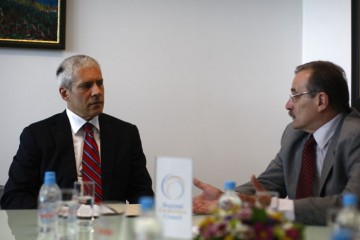
06 July 2011 | News
Serbian President Tadic gives full support to RCC activities in promoting regional cooperation in South East Europe
SARAJEVO – President of the Republic of Serbia, Boris Tadic, paid a visit today to the Secretariat of the Regional Cooperation Council (RCC) in Sarajevo, where he expressed full support to the work of the organization during his meeting with RCC Secretary General Hido Biscevic.
06 July 2011 | News
RCC to host first meeting on implementation of regional strategy on justice and home affairs in South East Europe
SARAJEVO – The first meeting of the Steering Group on Regional Strategy on Justice and Home Affairs, designed to facilitate the Strategy implementation, will open in Sarajevo tomorrow, under the auspices of the Regional Cooperation Council (RCC) Secretariat.
05 July 2011 | News
RCC Secretariat briefs diplomatic community in Sarajevo on implementation of its work strategy and results of 3rd Annual Meeting
The Secretariat of the Regional Cooperation Council (RCC) presented today the first results of implementation of the organization’s Strategy and Work Programme 2011-2013 to the diplomatic community in Sarajevo. The briefing follows last week’s RCC Annual Meeting and related South-East European Cooperation Process (SEECP) events in Budva, Montenegro.
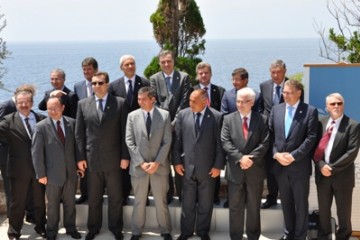
30 June 2011 | News
Heads of State and Government of South East Europe praise work of Regional Cooperation Council
BUDVA/SARAJEVO – The Heads of State and Government of the South-East European Cooperation Process (SEECP) praised today in Budva the successful implementation of the Regional Cooperation Council (RCC) Strategy and Work Programme 2011-2013, endorsing the Annual Report of its Secretary General.
29 June 2011 | News
South East European foreign ministers voice support to RCC activities, endorse its Annual Report
BUDVA/SARAJEVO – Ministers of Foreign Affairs of the South-East European Cooperation Process (SEECP) countries commended today the work of the Regional Cooperation Council (RCC) and its Secretary General at a meeting in Budva, Montenegro.
28 June 2011 | News
Regional cooperation in South East Europe encouraging, says RCC Secretary General at the organization’s Annual Meeting
BUDVA/SARAJEVO – “Regional cooperation in South East Europe has exhibited encouraging signs over the past year“ said Hido Biscevic, Secretary General of the Regional Cooperation Council (RCC), while opening the organization's third Annual Meeting in the Montenegrin town of Becici near Budva, on 28 June 2011.
24 June 2011 | News
Annual Meeting of Regional Cooperation Council to be held in Budva, Montenegro
BUDVA/SARAJEVO – The third Annual Meeting of the Regional Cooperation Council (RCC), will take place in the Montenegrin town of Becici near Budva, on 28 June 2011.
23 June 2011 | News
Regional Cooperation Council’s Task Force on Culture and Society constituted in Cetinje today
CETINJE/SARAJEVO – “The Regional Cooperation Council (RCC) Task Force on Culture and Society will promote cooperation in preserving the cultural heritage of South East Europe”, said Hido Biscevic, RCC Secretary General, at today’s constitutive meeting of the Task Force in Cetinje, Montenegro.
21 June 2011 | News
Regional Cooperation Council Task Force on Culture and Society to begin work in Cetinje
CETINJE/SARAJEVO – The Secretariat of the Regional Cooperation Council (RCC) Task Force on Culture and Society will be opened on Wednesday, 22 June 2011, at the premises of the Montenegrin Ministry of Culture, in Cetinje.

21 June 2011 | News
RCC Secretary General takes part in EU-Western Balkans ministerial meeting
Hido Biscevic, Secretary General of the Regional Cooperation Council (RCC), took part in the ministerial meeting EU-Western Balkans: Western Balkans Forum, held in Luxembourg yesterday.
15 June 2011 | News
RCC role in Parliamentary Dimension of South-East European Cooperation Process important, Speakers of Parliament say
The role of the Regional Cooperation Council (RCC) in the context of the Parliamentary Dimension of the South-East European Cooperation Process (SEECP) was recognized as important by the participants of the 9th Conference of the SEECP Speakers of Parliament, which took place in Becici, Montenegro, on 13-15 June 2011.
25 May 2011 | News
First meeting of national security authorities from South East Europe to discuss regional platform for exchange of classified information
SOFIA – The first meeting of heads of national security authorities from South East European countries – members of the Regional Cooperation Council (RCC) – will take place in Sofia, Bulgaria, on 25-27 May 2011.
25 May 2011 | News
RCC Secretary General and European Commission Director discuss transport priorities in South East Europe
Hido Biscevic, Secretary General of the Regional Cooperation Council (RCC), met today with Marjeta Jager, Director for General Policy at the Directorate General for Mobility and Transport (DG MOVE) of the European Commission, to discuss transport sector priorities in South East Europe.

24 May 2011 | News
RCC to host first meeting on social agenda for the Western Balkans
SARAJEVO – A two-day conference to discuss possible development of regional social agenda for the Western Balkans is to open in Sarajevo, tomorrow. It will address issues of employment, poverty reduction and social inclusion.
16 May 2011 | News
RCC to host fundraising event for International Sava River Basin Commission projects
SARAJEVO – A roundtable on fundraising for projects of the International Sava River Basin Commission (ISRBC) will be held at the Regional Cooperation Council (RCC) Secretariat in Sarajevo, tomorrow, 17 May.
12 May 2011 | News
RCC Board reviews progress in implementation of organization's 2011-2013 strategy
The second meeting of the Board of the Regional Cooperation Council (RCC) in 2011, held in Sarajevo today, reviewed work of the RCC Secretariat over the past two months and discussed its future activities.
28 April 2011 | News
Regional Cooperation Council website introduces new user-friendly features
SARAJEVO – The Regional Cooperation Council (RCC) Secretariat launched today several new online features, designed to diversify user-friendly access to the content of the organization’s website.
19 April 2011 | News
Conference on road infrastructure safety in South East Europe to open in Sarajevo tomorrow
SARAJEVO – The second Conference on Road Infrastructure Safety Management in South East Europe, aimed at halving the number of traffic accidents in the region by 2020, will open in Sarajevo tomorrow.
31 March 2011 | News
Western Balkans and Europe 2020 conference agrees RCC best suited to help align regional programmes with Europe 2020
BRUSSELS/SARAJEVO – Over 100 participants of a Western Balkans and Europe 2020 – Towards Convergence and Growth conference of regional initiatives and international donors concluded in Brussels today that the Regional Cooperation Council (RCC) is the institution most apt to help align regional programmes with goals of Europe 2020 strategy of the European Union (EU).
24 March 2011 | News
RCC-organized conference on Western Balkans and Europe 2020 to discuss growth in the region, gather close to 50 institutions and donors
SARAJEVO/BRUSSELS – A Western Balkans and Europe 2020 – Towards Convergence and Growth coordination meeting of regional initiatives and interested donor institutions will take place in Brussels, on 30-31 March 2011. The event will be organized by the Regional Cooperation Council (RCC) Secretariat.
22 March 2011 | News
Sarajevo meeting discusses security sector reform in Western Balkans
Representatives of seven regional civil society organizations (CSOs) – from Belgrade, Podgorica, Pristina, Sarajevo, Skopje, Tirana and Zagreb – analyzed in Sarajevo today security sector reforms (SSR) in the Western Balkans, at a roundtable co-organized by the Regional Cooperation Council (RCC) Secretariat.
17 March 2011 | News
South East European ministers to endorse regional strategy on justice and home affairs, prepared under RCC auspices
BUDVA/SARAJEVO – A two-day conference of ministers of justice and interior of the South-East European Cooperation Process (SEECP), which is expected to endorse the Regional Strategic Document on Justice and Home Affairs 2011-2013 developed by the Regional Cooperation Council (RCC) Secretariat and relevant stakeholders from the region, commenced in Budva today.
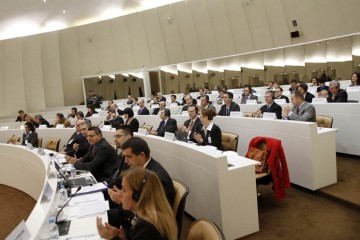
16 March 2011 | News
Role of Western Balkan parliaments in EU accession to be debated in Sarajevo, under RCC and EC auspices
SARAJEVO – Role of national parliaments in Western Balkans and Turkey in negotiations for EU accession will be discussed at a meeting hosted by the Regional Cooperation Council (RCC) Secretariat in Sarajevo, on 17-18 March.
15 March 2011 | News
South East European defense ministers stress RCC’s importance in regional cooperation
In a Joint Statement adopted in Budva today, Ministers of Defense of the South-East European Cooperation Process (SEECP) stressed the importance of defense and security cooperation in fostering general stability and development in the region.
08 March 2011 | News
Regional Cooperation Council Board holds its first meeting in 2011 in Sarajevo today
The Board of the Regional Cooperation Council (RCC) met in Sarajevo today to review the activities of the organization over the past three months and provide guidance for the period ahead.
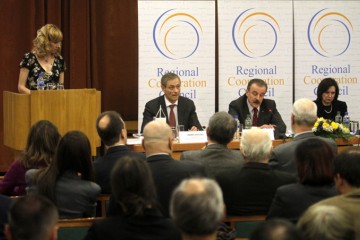
04 March 2011 | News
Prospects for regional cooperation in South East Europe in 2011 and beyond focus of the 3rd RCC anniversary celebration
SARAJEVO – A panel discussion South East Europe in 2011 and Beyond: Sharing the Same Vision will be held in Sarajevo, on Monday, 7 March, to mark the third anniversary of the Regional Cooperation Council (RCC).
24 February 2011 | News
Role of parliaments in legislative process and government oversight discussed in Sarajevo, under EP and RCC auspices
SARAJEVO – A two-day seminar on the role of parliaments in the legislative process and in the government oversight in Western Balkans will wrap up in Sarajevo today at the premises of the Regional Cooperation Council (RCC) Secretariat.
28 January 2011 | News
Montenegrin Foreign Minister, RCC Secretary General sign protocol on hosting regional task force on culture and society
BECICI/SARAJEVO – A protocol on the host country arrangements for the Secretariat of the Regional Cooperation Council (RCC) Task Force on Culture and Society was signed this evening by Montenegrin Minister of Foreign Affairs and European Integration, Milan Rocen, and RCC Secretary General, Hido Biscevic, in Becici, Montenegro.
26 January 2011 | News
RCC Secretariat and Association of Balkan Chambers sign cooperation agreement today
Secretary General of the Regional Cooperation Council (RCC), Hido Biščević, and the President of the Foreign Trade Chamber of Bosnia and Herzegovina, Veselin Poljašević, on behalf of the Association of Balkan Chambers (ABC), signed today at the RCC premises in Sarajevo a memorandum of understanding on cooperation in economic and investment development.
25 January 2011 | News
Integration of e-infrastructures in South East Europe to be discussed in Sarajevo, with Bosnia and Herzegovina government and RCC support
SARAJEVO – The sixth meeting of the South East European Research Area for e-Infrastructures (SEERA-EI), organized by the Ministry of Communication and Transport of Bosnia and Herzegovina and hosted by the Regional Cooperation Council (RCC) Secretariat, will commence in Sarajevo tomorrow.
16 December 2010 | News
RCC Secretary General and EU Commissioner for Regional Policy discuss cooperation
Secretary General of the Regional Cooperation Council (RCC), Hido Biscevic, met in Brussels yesterday with EU Commissioner for Regional Policy, Johannes Hahn, and exchanged views on RCC activities related to implementation of the RCC Strategy and Work Programme 2011-2013.
15 December 2010 | News
RCC-supported conference of National Councils of European Movement in South East Europe held in Podgorica
A conference of National Councils of the European Movement in South East Europe, which gathered representatives of ten countries from the region, was held in Podgorica today. The event was co-organized by the European Movement of Montenegro and the Regional Cooperation Council (RCC) Secretariat, under the auspices of the Montenegrin Chairmanship-in-Office of the South-East European Cooperation ...
13 December 2010 | News
RCC Secretary General, EU Enlargement Director General agree 2010 successful for regional cooperation
Secretary General of the Regional Cooperation Council (RCC), Hido Biscevic, met in Brussels today with the European Commission's Director General for Enlargement, Michael Leigh, to discuss preparations for implementation of the RCC Strategy and Work Programme 2011-2013, and evaluate the progress made thus far.
10 December 2010 | News
RCC Secretary General meets EU Commissioner for Enlargement
Secretary General of the Regional Cooperation Council (RCC), Hido Biscevic, met in Brussels yesterday with the EU Commissioner for Enlargement and Neighbourhood Policy, Stefan Fuele, to discuss regional cooperation in South East Europe.
02 December 2010 | News
Regional Cooperation Council Board meets in Sarajevo today
The 28-member Board of the Regional Cooperation Council (RCC) heard in Sarajevo today a report by RCC Secretary General Hido Biscevic on the activities of the organization’s Secretariat since September 2010 and the information on the work planned for the next three months.
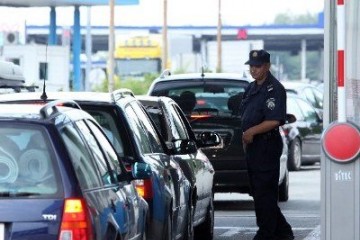
29 November 2010 | News
RCC hosts conference to finalize draft South East European strategy on justice and security cooperation
SARAJEVO – A two-day conference of national authorities, regional organizations and international partners on justice and security cooperation in South East Europe is to open in Sarajevo tomorrow, under the auspices of the Regional Cooperation Council (RCC) Secretariat.
29 November 2010 | News
RCC Secretary General meets officials of upcoming Hungarian EU Presidency
The Secretary General of the Regional Cooperation Council (RCC), Hido Biscevic, held a series of meetings in Budapest today with officials of the Hungarian Ministry of Foreign Affairs, in the context of Hungary’s takeover of the Presidency of the European Union (EU) on 1 January 2011.

22 November 2010 | News
Stronger national airspace authorities in South East Europe focus of a Sarajevo workshop, organized by RCC and Belgian EU Presidency
SARAJEVO – A three-day workshop on establishment and empowerment of airspace National Supervisory Authorities (NSA), will open tomorrow at the Regional Cooperation Council (RCC) Secretariat, in Sarajevo, Bosnia and Herzegovina.
15 November 2010 | News
RCC Secretary General meets Slovenian Foreign Minister over cooperation in South East Europe
The Secretary General of the Regional Cooperation Council (RCC), Hido Biscevic, met today with Slovenian Foreign Minister Samuel Zbogar and Ambassador Mitja Strukelj, National Coordinator for the Western Balkans, to discuss political situation and regional cooperation in South East Europe.
25 October 2010 | News
Workshop on national coordination and regional cooperation in counter-terrorism matters in South East Europe to open in Sarajevo
SARAJEVO – Implementation of effective national coordination and regional cooperation strategies to counter terrorism will be in focus of a high-level workshop targeting countries of South East Europe, which will open in Sarajevo on Wednesday, 27 October 2010. The event will be co-hosted by the Ministry of Security of Bosnia and Herzegovina and the Regional Cooperation Council (RCC) Secretariat.

24 October 2010 | News
Energy Community, RCC to host workshop on reducing emissions in the energy sector in South East Europe
SARAJEVO – A two-day workshop on reducing pollutions from the power industry in South East Europe will commence in Sarajevo tomorrow, co-organized by the Secretariats of the Energy Community (EnC) and the Regional Cooperation Council (RCC).

19 October 2010 | News
Inspectors to seek ways of improving quality of education in South East Europe, with RCC and OSCE support
SARAJEVO – Role of inspectors in education quality assurance in South East Europe will be in focus of a two-day regional conference that will open in Sarajevo tomorrow, at the Regional Cooperation Council (RCC) Secretariat.
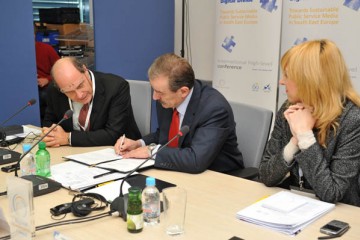
15 October 2010 | News
Sarajevo conference calls on European institutions to support public media in digital transition for South East Europe
SARAJEVO – Broadcasters and government officials pledged to ensure a smooth digital transition in South East Europe and called on European institutions for financial support in the interests of European cohesion.
13 October 2010 | News
International conference on digitalization and sustainability of public broadcasting in South East Europe to commence in Sarajevo tomorrow
SARAJEVO – A two-day international conference on digitalization and sustainability of public service media in South East Europe will open in Sarajevo tomorrow, under the auspices of the Regional Cooperation Council (RCC) Secretariat and the European Broadcasting Union (EBU).
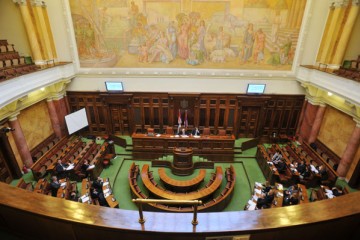
12 October 2010 | News
South East European parliamentarians agree in Belgrade to boost regional cooperation in fighting poverty and social exclusion
BELGRADE/SARAJEVO – A regional conference on the role of national parliaments in fighting poverty and social exclusion concluded in Belgrade today, with a pledge to increase inter-parliamentary cooperation in order to decrease impoverishment levels in South East Europe.

08 October 2010 | News
South-East and Eastern European initiative on sustainable energy development launched in Trieste today
TRIESTE/SARAJEVO – A regional initiative on sustainable energy development was launched today in Trieste, Italy, at its first task force meeting. The meeting was organized jointly by the Regional Cooperation Council (RCC) Secretariat and the Executive Secretariat of the Central European Initiative (CEI).
06 October 2010 | News
RCC Secretary General discusses regional cooperation with Bulgarian officials
The Secretary General of the Regional Cooperation Council (RCC), Hido Biscevic, held consultations in Sofia today with Deputy Ministers of Foreign Affairs, Energy and Transport, Milen Ljutzkanov, Mario Kosev and Ivaylo Moskovski, respectively, as well as Ambassador at Large for Energy Security and Climate Change, Peter Poptchev.
30 September 2010 | News
Nine South East European military intelligence chiefs sign cooperation statement in Belgrade today, under RCC auspices
BELGRADE – A statement on cooperation among military intelligence institutions of Regional Cooperation Council (RCC) members from South East Europe was signed in Belgrade today by nine military intelligence chiefs from the region. The signatories of the first such statement in the region agreed to establish and develop cooperation in the field of security threats, and join efforts in improving ...
30 September 2010 | News
OSCE organizes workshop on democratic policing in South-Eastern Europe, with Regional Cooperation Council support
SARAJEVO – A regional workshop on democratic policing organized by the OSCE Strategic Police Matters Unit with the support of the Regional Cooperation Council (RCC) started in Sarajevo today.

29 September 2010 | News
International conference on higher education reform concludes in Dubrovnik today
DUBROVNIK/SARAJEVO – A three-day international forum on higher education reform ended today in Dubrovnik, Croatia, agreeing to focus on a strategic development of Western Balkans’ education capacity over the next 10 years, in the context of the EU higher education area.
29 September 2010 | News
OSCE- and RCC-supported workshop on democratic policing in South East Europe to open in Sarajevo tomorrow
SARAJEVO – A two-day workshop on democratic policing in South East Europe will open in Sarajevo tomorrow, at the premises of the Regional Cooperation Council (RCC) Secretariat. The event has been organized together with the Organization for Security and Co-operation in Europe (OSCE).
22 September 2010 | News
Istanbul conference creates platform for further advancing women entrepreneurs’ networks in South East Europe
ISTANBUL/SARAJEVO – Participants of the First Forum for South East European (SEE) Women Entrepreneurs, agreed today in Istanbul to create a permanent platform for the exchange of experiences and good practices and promote further advancement of women entrepreneurs’ networks in the region.
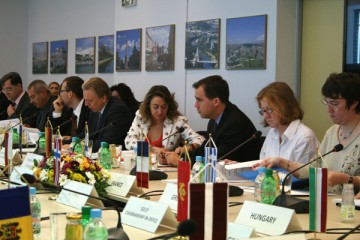
16 September 2010 | News
Regional Cooperation Council’s Task Force on Culture and Society established today
A Regional Cooperation Council (RCC) Task Force on Culture and Society has been established today, by the decision of the Organization’s 28-member Board, which met in Sarajevo.
15 September 2010 | News
RCC Secretary General to outline the organization’s new three-year strategy at a press conference in Sarajevo tomorrow
SARAJEVO – The Secretary General of the Regional Cooperation Council (RCC), Hido Biscevic, will present the organization’s new strategy for 2011-2013, and outline the main activities scheduled for this autumn, at a press conference in Sarajevo, tomorrow, 16 September.
10 September 2010 | News
The first meeting of South East European political directors under Montenegrin leadership held in Podgorica today
The first meeting of political directors of the South-East European Cooperation Process (SEECP) under the Montenegrin Chairmanship-in-Office, held in Podgorica today, discussed the priorities of the Chairmanship and the situation in the region.

08 September 2010 | News
Improved air connectivity, increased air traffic and its safety, goals of South East European conference held in Montenegro
BUDVA/SARAJEVO – A conference on the Implementation of Single European Sky in South East Europe (ISIS Programme) agreed today that improved air traffic regulation will stimulate connectivity and create new market opportunities in the region.
29 July 2010 | News
Representatives of RCC Secretariat and Montenegrin SEECP Chairmanship-in-Office meet in Sarajevo
The Secretary General of the Regional Cooperation Council (RCC), Hido Biscevic, held today in Sarajevo consultations with Montenegrin Deputy Minister of Foreign Affairs, Nebojsa Kaludjerovic, representing the rotating Chairmanship-in-Office of the South-East European Cooperation Process (SEECP) taken over by Montenegro at the SEECP Summit in Istanbul in June 2010.
14 July 2010 | News
RCC Secretary General presents the organization’s new strategy at COWEB Capitals meeting
The RCC Secretary General Hido Biscevic presented today to the COWEB Capitals meeting in Brussels the organization’s Strategy and Work Programme 2011-13, adopted last month, and received support to the organization’s work by the participants.
07 July 2010 | News
RCC hosts first meeting for preparing South East European strategy on justice and home affairs
The first meeting of the South East European Steering Group for Regional Strategy on Justice and Home Affairs 2011-2013, ended in Sarajevo today at the Regional Cooperation Council (RCC) Secretariat, which is coordinating the preparation of the document.

30 June 2010 | News
RCC Secretary General discusses energy and transport projects with Albanian officials
The Secretary General of the Regional Cooperation Council (RCC) Hido Biscevic met in Tirana today with top Albanian officials to discuss concrete regional projects, primarily in the energy and transport sectors.
29 June 2010 | News
RCC Secretary General discusses regional cooperation in Pristina
The RCC Secretary General Hido Biscevic visited Pristina today to discuss development opportunities in the context of regional cooperation in South East Europe.

25 June 2010 | News
Regional Cooperation Council Secretariat to host e-leadership workshop in Sarajevo on Monday
SARAJEVO – A two-day regional e-leadership workshop will open at the Regional Cooperation Council (RCC) in Sarajevo on Monday, 28 June. The event is co-organized by the RCC Secretariat and the eLeadership Programme for the Western Balkans of the United Nations Development Programme, with support of the Italian Government.
25 June 2010 | News
Albanian parliament hosts workshop on Energy Community, with Regional Cooperation Council support
Implementation of the Energy Community (EnC) Treaty was the main topic of a workshop on Energy Community and Regional Sustainability, which took place in Tirana today. The event was co-organized by the Regional Cooperation Council (RCC) Secretariat and the Albanian national assembly, with support of the EnC Secretariat.

23 June 2010 | News
South East European heads of state give full support to the Regional Cooperation Council, approve appointment of its Secretary General
ISTANBUL/SARAJEVO – The Heads of State and Government of the South East European Cooperation Process (SEECP) expressed today at the summit meeting in Istanbul their appreciation for the work of the Regional Cooperation Council (RCC) in transforming the current advanced regional cooperation to a new level, focusing on concrete and targeted projects aimed at regional recovery and economic ...

22 June 2010 | News
South East European foreign ministers re-appoint Hido Biscevic as Secretary General of the Regional Cooperation Council
ISTANBUL/SARAJEVO – The ministers of foreign affairs of the states participating in the South-East European Cooperation Process (SEECP) re-appointed Hido Biscevic as the Secretary General of the Regional Cooperation Council (RCC), at their meeting in Istanbul today.

22 June 2010 | News
Annual Meeting endorses new RCC strategy, annual report and nomination of Secretary General
ISTANBUL/SARAJEVO – The Annual Meeting of the Regional Cooperation Council (RCC), held in Istanbul today, endorsed the organization’s 2011-2013 Strategy and Work Programme, and the Annual Report of its Secretary General for the past year’s activities.
12 June 2010 | News
RCC Secretary General and EU Enlargement Commissioner discuss EU policy towards South East Europe
RCC Secretary General, Hido Biscevic, and EU Commissioner for Enlargement and European Neighbourhood Policy, Stefan Fuele, agreed at their meeting in Brussels yesterday that the last week’s high level EU-Western Balkans meeting and recent activities of political leaders from South East Europe affirmed the EU perspective of all the countries...

07 June 2010 | News
RCC Secretary General takes part in the 8th conference of SEECP speakers of parliament
The Secretary General of the Regional Cooperation Council (RCC), Hido Biscevic, participated today in the 8th meeting of speakers of parliament of the South-East European Cooperation Process (SEECP) participating states, held in Antalya. The event was organized by the Republic of Turkey, which holds the rotating SEECP Chairmanship-in-Office.
02 June 2010 | News
RCC Secretary General hails messages of EU-Western Balkans meeting in Sarajevo, and new era of regional relations
SARAJEVO – “The Regional Cooperation Council (RCC) strongly supports political meetings, statements and decisions that lead to a new era of relations in South East Europe, based on trust, dialogue and tolerance”, said RCC Secretary General, Hido Biscevic, at today’s high level EU-Western Balkans meeting in Sarajevo, organized by the Spanish Presidency with the support of the EU.

21 May 2010 | News
South East European conference agrees in Bucharest today on the need to strengthen regional efforts in fighting corruption
BUCHAREST/SARAJEVO – Participants of a two-day regional South East European (SEE) anti-corruption conference concluded in Bucharest today that countries in this part of Europe should develop more effective mechanisms to fight corruption.

19 May 2010 | News
Bucharest-held regional anti-corruption conference to present study on corruption in nine South East European countries
SARAJEVO/BUCHAREST – A two-day regional South East European anti-corruption conference will open in Bucharest tomorrow, 20 May.The event is to present and debate a study on integrity and resistance to corruption of the judicial systems in nine South East European countries...

18 May 2010 | News
RCC Board finalizes discussions on the organization’s three-year strategy
Members of the Regional Cooperation Council (RCC) Board supported in Sarajevo today the concept of the 2011-2013 strategy and work programme of the organization, and agreed to finalize it in time for the approval by the RCC Annual Meeting in Istanbul, Turkey, on 22 June.

17 May 2010 | News
European Movements from South East Europe meet for the first time in Sarajevo, under RCC auspices
SARAJEVO – National European Movement Councils from eight South East European countries met in Sarajevo today for the first time to discuss greater civil society involvement in regional cooperation. The event was hosted by the Regional Cooperation Council (RCC) Secretariat.

29 April 2010 | News
Biscevic, Djelic agree on the importance of regional projects as a developement stimulus
“The main goal of the series of visits to the RCC members from South East Europe, I have undertook, is pinpointing the national projects that could be implemented on a regional level, thus creating a climate for invigorated economic development of the region as a whole,” said Regional Cooperation Council (RCC) Secretary General, Hido Biscevic, at the meeting with Serbian Deputy Prime ...

29 April 2010 | News
Secretary General with PM Gruevski: Cooperation on joint projects a way to accelerated development
As part of visits to the Regional Cooperation Council members from South East Europe, the Secretary General Hido Biscevic met yesterday in Skopje with the Prime Minister of The Former Yugoslav Republic of Macedonia, Nikola Gruevski, and informed him on the finalization of the Strategy and Work Programme of the organization for the 2011-2013 period.
27 April 2010 | News
RCC national coordinators from South East Europe discuss new strategy of the organization
The Regional Cooperation Council (RCC) national coordinators from South East Europe met today to discuss the draft organization’s strategy for 2011-2013, with the aim of its finalization and subsequent approval by the RCC Board on 18 May 2010.

14 April 2010 | News
Regional Cooperation Council launches redesigned website and new publication, a monthly newsletter
SARAJEVO – The Regional Cooperation Council (RCC) Secretariat launched today a redesigned version of the organization’s website and a new publication, the monthly e-newsletter.
09 April 2010 | News
RCC Secretary General joins experts in addressing economic crisis in South East Europe
Hido Biščević, Secretary General of the Regional Cooperation Council (RCC), took part in a conference of ministers of economy and finance of the South-East European Cooperation Process (SEECP), which is being held in Istanbul, Turkey, on 8-10 April 2010.

09 April 2010 | News
Young Turkish diplomats visit RCC Secretariat
Within the framework of a training programme that envisages a tour throughout the Balkan countries, a group of seventy-two young Turkish diplomats were welcomed today in the premises of the Regional Cooperation Council (RCC) Secretariat by Deputy RCC Secretary General, Jelica Minić.
08 April 2010 | News
RCC Secretary General holds talks with Turkish officials
The Secretary General of the Regional Cooperation Council (RCC), Hido Biščević, met today with Ambassador Feridun Sinirlioğlu, Undersecretary of the Ministry of Foreign Affairs of Turkey, and Ambassador Şanıvar Olgun, Turkish RCC National Coordinator, to discuss future activities of the organization.

31 March 2010 | News
RCC hosts preparatory meeting for the Conference of SEECP Speakers of Parliament
A two-day preparatory meeting for the 8th Conference of the South-East European Cooperation Process (SEECP) Speakers of Parliament ended in Sarajevo today with the participants agreeing on the outline programme and discussing the main aspects of the final declaration of the Conference.
30 March 2010 | News
RCC Secretary General, officials of the Republic of Moldova discuss joint activities
Secretary General of the Regional Cooperation Council (RCC) Hido Biscevic met today with high-level officials of the Republic of Moldova to outline the organization’s priorities in the next three years and the ways the Republic of Moldova can take best advantage of regional cooperation in South East Europe.
24 March 2010 | News
Deputy RCC Secretary General welcomes publication of OECD Investment Reform Index 2010
Deputy Secretary General of the Regional Cooperation Council (RCC) Jelica Minic welcomed today the launch of the OECD Investment Reform Index 2010 report, the preparation of which was initiated at the RCC offices in Sarajevo in September 2008. The report was prepared based on inputs from governments, independent experts and the private sector in South East Europe, using over 100 indicators.

09 March 2010 | News
Public research institutes instrumental to upgrading Western Balkans competitiveness, concludes regional workshop
ISTANBUL/SARAJEVO – The role of public research institutes in technological development of the Western Balkan countries is instrumental to upgrading the competitiveness of the region, participants of a two-day South East European workshop agreed in Istanbul today.
09 March 2010 | News
Future RCC role in focus of talks between the organization’s Secretary General and EC Director General for Enlargement
Future role of the RCC and its Strategic Work Programme for 2011-2013 was in focus of a meeting between RCC Secretary General Hido Biscevic and Director General for Enlargement in the European Commission Michael Leigh, held in Brussels today.

04 March 2010 | News
RCC Board starts discussing the organization's strategy for the next three years
SARAJEVO – The Regional Cooperation Council (RCC) Board discussed today the first draft of the new, three-year Strategic Work Programme of the organization for the period 2011-2013.
26 February 2010 | News
RCC Secretary General and Montenegrin Prime Minister discuss cooperation
The RCC Secretary General, Hido Biscevic, and the Montenegrin Prime Minister, Milo Djukanovic, discussed in Podgorica today political developments in South East Europe (SEE) and importance of the SEE countries’ steady progress towards EU integration.

23 February 2010 | News
International conference on overcoming economic crisis in Western Balkans to mark 2nd RCC anniversary
SARAJEVO – A two-day regional conference “Western Balkans in 2020 – Overcoming the Economic Crisis and Developing Competitive Economies” will open in Sarajevo tomorrow. The event, organized by the Regional Cooperation Council (RCC) Secretariat, will also mark the 2nd anniversary of the organization.

17 February 2010 | News
RCC Secretary General holds talks with Chairman of BiH Council of Ministers
The RCC Secretary General, Hido Biscevic, met today with the Chairman of the Council of Ministers of Bosnia and Herzegovina, Nikola Spiric, and informed him of the new phase of RCC activities following the initial period of the organization’s profiling as the key driver of regional cooperation in South East Europe (SEE).
10 February 2010 | News
RCC-organized workshop on air transport in South East Europe to take place in Sarajevo
SARAJEVO – A workshop on importance of air transport for the economic and social development of South East Europe will open in Sarajevo tomorrow, 11 February, under the auspices of the Regional Cooperation Council (RCC) Secretariat.
22 December 2009 | News
First meeting of Regional Expert Network on Energy in South East Europe takes place at RCC Secretariat
A two-day initial meeting of the Regional Expert Network on Energy in South East Europe (SEE), which ended today at the RCC Secretariat in Sarajevo, discussed the energy policies in the region and its future activities, and produced appropriate documents in terms of its work plan and agenda.

18 December 2009 | News
RCC delegation visits Institute for Prospective Technological Studies
The delegation of the Regional Cooperation Council (RCC) Secretariat, headed by the Deputy RCC Secretary General, Jelica Minić, visited the Joint Research Centre – Institute for Prospective Technological Studies (JRC-IPTS) in Seville, Spain on 18 December 2009. The meeting, hosted by IPTS Director, Peter Kind, and co-organized by the Centre for eGovernance Development in South East Europe, ...

17 December 2009 | News
Preparation of South East European justice and home affairs strategy starts in Sarajevo, under RCC auspices
SARAJEVO – A two-day conference on multi-annual South East European (SEE) strategy on justice and home affairs ended in Sarajevo today. The event, organized by the Regional Cooperation Council (RCC) Secretariat, marked the beginning of work on this important regional document.

15 December 2009 | News
RCC, Standing Working Group to promote regional rural development in South East Europe
Secretary General of the Regional Cooperation Council (RCC), Hido Biščević, and the Chairman of the Assembly of the Standing Working Group for Regional Rural Development (SWG RRD), Dušan Nešković, signed today at the RCC Secretariat in Sarajevo a Memorandum of Understanding (MoU) on cooperation on rural development in South East Europe.
14 December 2009 | News
Workshop on energy security for Bosnia and Herzegovina lawmakers to take place in Sarajevo tomorrow
SARAJEVO – The workshop “Energy Community and Regional Security“, will be held in Sarajevo tomorrow, focusing on the implementation of Energy Community (EnC) Treaty and related market developments in South East Europe. The event is co-organized by the Regional Cooperation Council (RCC) Secretariat and the Parliamentary Assembly of Bosnia and Herzegovina, with support of the EnC Secretariat.

11 December 2009 | News
First preparatory meeting of South East European Women Entrepreneurs Conference held at RCC Secretariat
The organizational board of the South East European Women Entrepreneurs drafted today at the RCC Secretariat in Sarajevo relevant documents and agreed on further steps in preparing its 2010 Conference, which will be held in the framework of the Turkish Chairmanship-in-Office of the South-East European Cooperation Process (SEECP).

09 December 2009 | News
Reforms, confirmed European perspective and development cooperation set base for advancement of South East Europe, says RCC head at Western Balkans conference in Brussels
BRUSSELS – “The EU enlargement process must continue to be based upon the principle of fulfilment of accession criteria, on one hand, and on full confirmation of the European perspective for all countries of South East Europe, on the other“, said Hido Biscevic, Secretary General of the Regional Cooperation Council (RCC), at a high-level conference on the Western Balkans, held in Brussels ...
07 December 2009 | News
High-level Western Balkans conference to be held in Brussels on Wednesday, under EU auspices and with RCC support
SARAJEVO/BRUSSELS – A conference on the Western Balkans “Overcoming the economic crisis – from regional cooperation to EU membership” will take place in Brussels, on Wednesday, 9 December. The event will be organized by the Swedish EU Presidency and the European Commission, in cooperation with the Regional Cooperation Council.
03 December 2009 | News
RCC Board discusses future strategic focuses of organization's activities and supports efforts of its Secretariat in Sarajevo
SARAJEVO – The 29 members of the Regional Cooperation Council (RCC) Board discussed today in Sarajevo further strategic prioritization of activities of the organization and gave full support to its Secretariat in these efforts.

27 November 2009 | News
South East European Public-Private Partnership Network to be launched in Sarajevo next week
SARAJEVO – The South East European Public-Private Partnership (SEE PPP) Network will be launched in Sarajevo on Monday, 30 November, under the auspices of the Regional Cooperation Council (RCC) Secretariat.
24 November 2009 | News
RCC hosts workshop on enhancing cooperation in combating illicit drug trafficking in South East Europe
On 23-24 November 2009, the RCC Secretariat hosted in Sarajevo a regional workshop on enhancing comprehensive cooperation in combating illicit drugs trafficking in South East Europe (SEE). The event was organized together with the Strategic Police Matters Unit of the Organization for Security and Co-operation in Europe (OSCE).
13 November 2009 | News
RCC Secretary General takes part in a summit of Heads of Government of the Central European Initiative
The RCC Secretary General, Hido Biščević, participated in a meeting of Heads of Government of the Member States of the Central European Initiative (CEI) in Bucharest today. Secretary General Biščević extended his congratulations on the occasion of the twentieth anniversary of successful cooperation and achievements of the Central European Initiative.
29 October 2009 | News
Sarajevo conference on higher education in Western Balkans to open at Regional Cooperation Council tomorrow
SARAJEVO – A two-day conference on higher education ‘Building Capacity for Change in the Western Balkans’ will tomorrow open in Sarajevo at the Regional Cooperation Council (RCC) Secretariat. The event is organized by the RCC Secretariat, in cooperation with the Universities of Novi Sad, Sarajevo and Zagreb.

22 October 2009 | News
OECD, RCC bring together policy makers and experts in Sarajevo to increase parliamentary involvement in better business regulation in South East Europe
SARAJEVO – Policy makers and experts from South East Europe (SEE) and the Organisation for Economic Co-operation and Development (OECD) gathered today at the Regional Cooperation Council (RCC) Secretariat in Sarajevo to streamline co-operation between parliaments and governments in order to develop a more attractive and competitive business environment in SEE.

20 October 2009 | News
RCC hosts lecture ‘Global Economic Crisis: Implications and the Way Out, for Turkey, Bosnia and Herzegovina and the Western Balkans'
A panel lecture Global Economic Crisis: Implications and the Way Out for Turkey, Bosnia and Herzegovina and the Western Balkans was organized in Sarajevo today by the Regional Cooperation Council (RCC) Secretariat, the Economic Policy Research Foundation of Turkey (TEPAV) and the Faculty of Economics of the University of Sarajevo.

16 October 2009 | News
Forty South East European journalists agree in Sarajevo today to shape new image of the region, under RCC and OSCE auspices
SARAJEVO – Forty journalists and editors from leading South East European (SEE) media outlets agreed in Sarajevo today that the region needs the media to shape its new image, promote greater journalistic responsibility and maintenance of highest possible professional standards.

12 October 2009 | News
South East European journalists to talk in Sarajevo about media role in the region, under RCC and OSCE auspices
SARAJEVO – Journalists and editors from leading South East European media outlets will gather in Sarajevo on 15-16 October to discuss their role in shaping a new image of the region as a place of tolerance, progress and European values.
09 October 2009 | News
RCC Secretary General takes part in informal meeting of South East European Foreign Ministers in Istanbul
The RCC Secretary General Hido Biščević participated in Istanbul in the first informal meeting of the Ministers of Foreign Affairs of the South-East European Cooperation Process (SEECP) under the Turkish SEECP Chairmanship.
08 October 2009 | News
RCC Secretariat hosts 1st Working Group Meeting of Education Reform Initiative of South East Europe
The 1st Working Group Meeting of the Education Reform Initiative of South East Europe (ERI SEE) concluded today at the RCC Secretariat in Sarajevo. The two-day event gathered representatives of education ministries from South East Europe.

30 September 2009 | News
RCC to support stronger women entrepreneurship in South East Europe
SARAJEVO – A regional project aimed at supporting women entrepreneurship in South East Europe (SEE), focusing on expansion and job creation of women-owned businesses, will be launched at a stakeholders meeting at the Regional Cooperation Council (RCC) Secretariat in Sarajevo tomorrow, 1 October.
24 September 2009 | News
RCC, UNDP to organize ministerial conference on generating public private partnerships in South East Europe, in Sarajevo
SARAJEVO – A ministerial conference aimed at generating public private partnerships in South East Europe will be held in Sarajevo tomorrow, 25 September, co-organized by the Regional Cooperation Council (RCC) Secretariat and the United Nations Development Programme (UNDP) in Bosnia and Herzegovina.
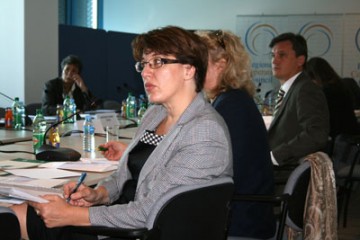
17 September 2009 | News
First meeting of prominent experts from South East Europe on regional response to economic crisis takes place in Sarajevo under RCC auspices
SARAJEVO – A panel of high-level experts from South East Europe (SEE) met in Sarajevo today to stimulate in depth discussion on regional response to global economic crisis. The first such meeting in the region was held under the auspices of the Regional Cooperation Council (RCC) Secretariat.
16 September 2009 | News
RCC, MARRI to promote rule of law principles in South East Europe
Secretary General of the Regional Cooperation Council (RCC), Hido Biscevic, and Director of the Migration, Asylum, Refugees Regional Initiative (MARRI), Trpe Stojanovski, signed today at the RCC Secretariat in Sarajevo a Memorandum of Understanding on development of an effective regional cooperation on issues of migration, asylum, refugee return, visa policies and border management.
15 September 2009 | News
RCC Board discusses situation in South East Europe and praises work of the organization’s Secretariat in Sarajevo
SARAJEVO – The Secretary General of the Regional Cooperation Council (RCC), Hido Biscevic, presented his latest quarterly report on the activities of the RCC Secretariat to the 29 members of the organization's Board, who gathered in Sarajevo today. The report covers the period between 9 May and 9 September 2009.

06 September 2009 | News
RCC to gather experts on regional research and development strategy for the Western Balkans, in Sarajevo
SARAJEVO – An expert meeting on developing the Regional Strategy for Research and Development for the Western Balkans will be held on Monday, 7 September 2009, at the Regional Cooperation Council (RCC) Secretariat in Sarajevo. The meeting is a follow-up to the Ministerial Conference organized in Sarajevo on 24 April 2009 by the RCC Secretariat and the Czech Republic.
03 September 2009 | News
Senior Greek officials commend work of RCC and its Secretary General
The RCC Secretary General, Hido Biščević, held talks in Greece today with Deputy Minister of Foreign Affairs, Yannis Valinakis, and the Ministry's Secretary General for European Affairs, Dimitrios Katsoudas. The officials discussed political developments in South East Europe and challenges in this respect.
22 July 2009 | News
US to continue strong support to Regional Cooperation Council, senior official tells RCC Secretary General
WASHINGTON/SARAJEVO – The United States will continue its strong support to the Regional Cooperation Council (RCC) as key partner in maintaining Euro-Atlantic perspective of the countries of South East Europe (SEE), senior US State Department officials told RCC Secretary General Hido Biscevic during his two-day visit to Washington, which ends today.
16 July 2009 | News
First preparatory meeting on establishing South East European Firefighting Regional Center held in Sarajevo under RCC auspices
The first preparatory meeting on the establishment of the South East European Firefighting Regional Center (SEEFREC) was held at the Regional Cooperation Council (RCC) Secretariat in Sarajevo on 15-16 July 2009.
23 June 2009 | News
RCC Secretariat presents its mission, priorities and activities to European and Euro-Atlantic institutions in Brussels
BRUSSELS/SARAJEVO – Experts of the Regional Cooperation Council (RCC) Secretariat presented today the mission, priorities and activities of the organization to representatives of European and Euro-Atlantic institutions active in Brussels. The event took place in the premises of the RCC Secretariat’s Liaison Office.
22 June 2009 | News
South East European Employment and Social Policy Network to hold first meeting under RCC umbrella in Sarajevo tomorrow
SARAJEVO – The Regional Cooperation Council (RCC) Secretariat will tomorrow, for the first time under its umbrella, host a meeting of the Employment and Social Policy Network of South East Europe (SEE), in its premises in Sarajevo.

21 June 2009 | News
Regional Cooperation Council to host meeting on strengthening social dialogue in South East Europe, in Sarajevo tomorrow
SARAJEVO – A regional meeting on strengthening social dialogue in South East Europe (SEE) will take place at the premises of the Regional Cooperation Council (RCC) Secretariat in Sarajevo tomorrow. The event is co-organized by the RCC Secretariat and the Friedrich Ebert Foundation’s Regional Project on Labour Relations and Social Dialogue in South East Europe.
08 June 2009 | News
RCC co-organized workshop on energy security held in Belgrade
A workshop “Energy Community and Regional Security”, co-organized by the Assembly of the Republic of Serbia and the Regional Cooperation Council (RCC) Secretariat, with support of the Energy Community (EC) Secretariat, was held in Belgrade today.
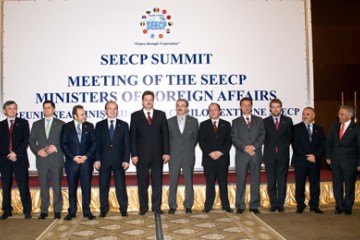
05 June 2009 | News
Good neighbourly accommodations and development cooperation essential for progress in South East Europe, said RCC Secretary General at the Summit of regional leaders
CHISINAU/SARAJEVO – “Good neighbourly accommodations are essential for moving South East Europe (SEE) forward at the time of challenging regional agenda and the adverse effects of the current economic and financial crisis“, said Hido Biscevic, Secretary General of the Regional Cooperation Council (RCC), at the meeting of the SEE Heads of State and Government, held in Chisinau today.
04 June 2009 | News
First RCC Annual Meeting endorses Secretary General’s Annual Report and Strategic Work Programme of the organization
CHISINAU/SARAJEVO – The first Annual Meeting of the Regional Cooperation Council (RCC), held in Chisinau today, endorsed the RCC Secretary General’s Annual Report on regional co-operation in SEE and the 2009-2010 Strategic Work Programme of the organization.

28 May 2009 | News
Regional meeting on protection of endangered habitats and species in South East Europe to take place in Sarajevo
SARAJEVO – A regional meeting on NATURA 2000 (protection of sites for endangered habitats and species) will be held in Sarajevo tomorrow. The event is organized by the Regional Environmental Center for Central and Eastern Europe (REC), under the EU-funded Regional Environmental Reconstruction Programme for South Eastern Europe (REReP), in cooperation with the Regional Cooperation Council ...
22 May 2009 | News
Regional cooperation needed to address security challenges in South East Europe, defence policy directors agree in Sofia
SOFIA/SARAJEVO – Multinational cooperation is very much needed to address present security challenges in South East Europe (SEE), SEE defence policy directors agreed at a meeting in Sofia today.
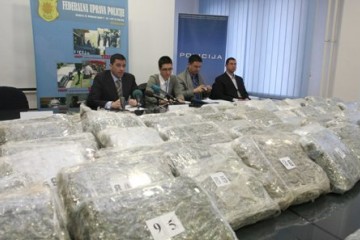
21 May 2009 | News
UNODC and Regional Cooperation Council to promote security and justice in South East Europe
VIENNA – Cooperation between the United Nations Office on Drugs and Crime (UNODC) and the Regional Cooperation Council (RCC) was enhanced today with the signing of a Memorandum of Understanding to build security and the rule of law in South East Europe. A joint priority will be to address the challenges posed by illicit drugs and organized crime in the region.
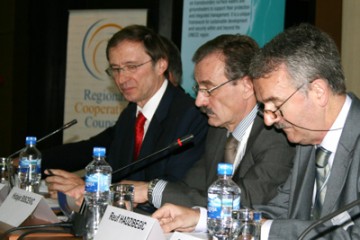
20 May 2009 | News
Shared water resources management important component of stability in South East Europe, agrees RCC-hosted international conference
SARAJEVO – A three-day International Workshop on Integrated Transboundary Water Resources Management in South Eastern Europe (SEE) concluded in Sarajevo today that cooperation on shared water resources management is a crucial component of stability and prosperity in SEE. The event was co-organized by the Regional Cooperation Council (RCC) Secretariat and the United Nations Economic Commission ...
19 May 2009 | News
RCC Secretary General meets EU High Representative for Common Foreign and Security Policy
During a visit to Sarajevo today, the EU High Representative for the Common Foreign and Security Policy, Javier Solana, met with the RCC Secretary General, Hido Biscevic, to reiterate EU support to RCC activities.
17 May 2009 | News
International workshop on management of water resources in South East Europe to start in Sarajevo tomorrow
SARAJEVO – A three-day international workshop on management of transboundary water resources in South East Europe (SEE), co-organized by the Regional Cooperation Council (RCC) Secretariat and the United Nations Economic Commission for Europe (UNECE) will open in Sarajevo tomorrow, 18 May.
14 May 2009 | News
RCC Board accepts the organization's 2008 Annual Report on regional cooperation in South East Europe
SARAJEVO – The 29 members of the Board of the Regional Cooperation Council (RCC) accepted in Sarajevo today the 2008 Annual Report of the RCC Secretary General on regional cooperation in South East Europe.
12 May 2009 | News
RCC Secretariat and CEI Executive Secretariat to strengthen cooperation
Secretary General of the Regional Cooperation Council (RCC), Hido Biščević, and Secretary General of the Central European Initiative Executive Secretariat (CEI-ES), Ambassador Pietro Ercole Ago, signed in Sarajevo today a Memorandum of Understanding (MoU) that formalized cooperation between the two institutions.

04 May 2009 | News
Regional cooperation key to any progress of South East Europe, Croatian President says at RCC in Sarajevo
SARAJEVO – “Regional cooperation is key to any significant advancement of South East Europe (SEE), and the Regional Cooperation Council (RCC) plays an indispensible role in making this progress happen”, President of the Republic of Croatia, Stjepan Mesic, said at the RCC Secretariat in Sarajevo today.
03 May 2009 | News
Croatian President to visit Regional Cooperation Council Secretariat in Sarajevo
SARAJEVO – President of the Republic of Croatia, Stjepan Mesic, will tomorrow pay a visit to the Secretariat of the Regional Cooperation Council (RCC) in Sarajevo, to highlight support to the organization and the importance Croatia attributes to regional cooperation.
30 April 2009 | News
RCC Secretary General gains support of Swiss officials for RCC projects
The Secretary General of the Regional Cooperation Council (RCC), Hido Biscevic, held consultations in Berne today with the Deputy State Secretary of the Swiss Federal Department of Foreign Affairs, Pierre Helg, on cooperation among RCC members and upcoming projects in the organization’s priority areas of economic and social development, infrastructure and energy, justice and home ...

24 April 2009 | News
Education, research and innovation key to Western Balkans development, region’s ministers agree in Sarajevo today
SARAJEVO – Western Balkans ministers agreed today in Sarajevo to launch preparations of a regional research strategy, under the auspices of the Regional Cooperation Council (RCC) Secretariat and the Czech Presidency of the European Union.
22 April 2009 | News
Ministerial conference launching regional research strategy to be held in Sarajevo on Friday
SARAJEVO – A ministerial conference to launch a regional research strategy for the Western Balkans will take place in Sarajevo, on Friday, 24 April. The event will be co-hosted by the Regional Cooperation Council (RCC) Secretariat and the Czech Presidency of the European Union.
20 April 2009 | News
RCC Secretary General speaks to Council of Europe Development Bank officials
The RCC Secretary General Hido Biscevic met today in Paris with officials of the Council of Europe Development Bank, including the Bank’s Vice Governor Imre Tarafas, to explore the ways the two institutions can cooperate the best in the future.
16 April 2009 | News
RCC Secretary General meets Hungarian officials over RCC priorities
The RCC Secretary General Hido Biscevic held consultations in Budapest today with State Secretary of the Hungarian Ministry of Foreign Affairs, Gabor Szentivanyi, and other ministry officials, on RCC work and Hungarian contribution to the activities of the organization.
14 April 2009 | News
RCC Secretary General holds consultations with Czech EU Presidency and delivers lecture at Prague Institute for International Relations
Within regular consultations with the EU Presidency, the RCC Secretary General, Hido Biscevic, met today with the First Czech Deputy Foreign Minister, Tomas Pojar, to discuss current situation in South East Europe (SEE) and cooperation between the RCC and the Presidency.

08 April 2009 | News
RCC work tremendously important for the region and Europe, Czech, French and Swedish Foreign Ministers say in Sarajevo
SARAJEVO – “The work of the Regional Cooperation Council (RCC) Secretariat is tremendously important for the countries of the region and for all of Europe”, said Minister of Foreign Affairs of the Kingdom of Sweden, Carl Bildt, at the RCC Secretariat’s premises in Sarajevo today.
07 April 2009 | News
Czech, French and Swedish Foreign Ministers to visit Regional Cooperation Council Secretariat in Sarajevo
SARAJEVO – Minister of Foreign Affairs of the Czech Republic and current President of the Council of the European Union, Karel Schwarzenberg, Minister of Foreign and European Affairs of the French Republic, Bernard Kouchner, and Minister of Foreign Affairs of the Kingdom of Sweden, Carl Bildt, will tomorrow visit the Secretariat of the Regional Cooperation Council (RCC) in Sarajevo.

07 April 2009 | News
RCC-hosted international conference agrees to strengthen efforts in fighting stolen vehicle crime in South East Europe
SARAJEVO, 7 April 2009 – The 5th conference of the Bled Process on Stolen Vehicle Crime agreed in Sarajevo today to strengthen regional efforts in fighting this crime in South East Europe (SEE). The event was co-organized by the Regional Cooperation Council (RCC) Secretariat and the Southeast Europe Police Chiefs Association (SEPCA).
06 April 2009 | News
Regional Cooperation Council to host international conference on stolen vehicle crime, in Sarajevo tomorrow
SARAJEVO – The 5th conference of the Bled Process on Stolen Vehicle Crime will take place tomorrow at the premises of the Regional Cooperation Council (RCC) Secretariat in Sarajevo. The event is jointly organized by the RCC and the Southeast Europe Police Chiefs Association (SEPCA).
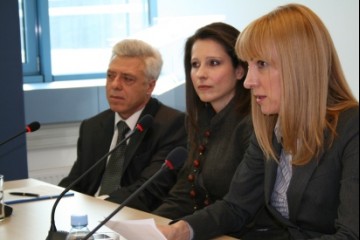
02 April 2009 | News
South East European experts in electronic government gather in Sarajevo to promote information society development
SARAJEVO – A workshop on electronic government (eGovernment), promoting information society in South East Europe (SEE) as a platform for economic growth, competitiveness, social inclusion and high quality of living, was held at the premises of the Regional Cooperation Council (RCC) Secretariat in Sarajevo today.
25 March 2009 | News
RCC Secretary General holds consultations with 2010 Spanish EU presidency
The RCC Secretary General Hido Biscevic met in Madrid today with the Secretary of State for Europe at the Spanish Ministry of Foreign Affairs, Diego López Garrido, and other high-level officials of the Ministry, for consultations on RCC activities and the role of Spain as a future EU presidency holder.
24 March 2009 | News
South East Europe should apply pre-accession reforms, work together to counter economic crisis, say RCC head, EU commissioner
BRUSSELS/SARAJEVO – South East European countries aspiring to join the EU should apply the necessary pre-accession reforms, continue with regional cooperation and mutual assistance, and decouple accession talks from bilateral issues, concluded Secretary General of the Regional Cooperation Council (RCC) Hido Biscevic and EU Commissioner for Enlargement Olli Rehn at a meeting in Brussels ...
06 March 2009 | News
German Minister of State to deliver lecture on regional cooperation stability and way to EU, at RCC in Sarajevo
SARAJEVO – Member of the German Bundestag and Minister of State at the Foreign Office of the Federal Republic of Germany, Gernot Erler, will deliver a lecture on regional cooperation stability and the way to the EU at the premises of the Regional Cooperation Council (RCC) Secretariat in Sarajevo, on Tuesday, 10 March.
05 March 2009 | News
29 RCC Board members discuss future cooperation with representatives of 18 initiatives active in South East Europe
SARAJEVO – The 29 members of the Regional Cooperation Council (RCC) Board gathered today in Sarajevo to discuss cooperation with 18 regional taskforces and initiatives active in South East Europe (SEE) and to review RCC activities since December 2008.
26 February 2009 | News
Regional Cooperation Council to mark its first anniversary tomorrow, in Sarajevo
SARAJEVO – The Regional Cooperation Council (RCC) will tomorrow mark the first anniversary since it has been established at a historic meeting in Sofia on 27 February 2008 that demonstrated dedication to strengthen regional ownership and cooperation in South East Europe (SEE).
19 February 2009 | News
RCC National Coordinators from South East Europe meet in Sarajevo
National Coordinators from RCC members from South East Europe (SEE) held their first meeting in 2009 in Sarajevo today, to discuss the most recent RCC activities.
18 February 2009 | News
Swedish Foreign Minister says RCC role of utmost importance for South East Europe
STOCKHOLM/SARAJEVO – The role of the Regional Cooperation Council (RCC) is of utmost importance for cooperation in South East Europe (SEE) and completion of the region’s EU integration processes, Swedish Foreign Minister Carl Bildt told RCC Secretary General Hido Biscevic at a meeting in Stockholm yesterday.
12 February 2009 | News
RCC Secretary General invites Skopje to propose projects with neighbours to fully utilize EU funds available
SKOPJE/SARAJEVO – “I invite Skopje authorities to propose projects to be implemented under the EU’s Multi-beneficiary Instrument for Pre-accession Assistance (MB IPA) Programme, and take full advantage of cooperation links the Regional Cooperation Council (RCC) has built with EU institutions for this purpose”, RCC Secretary General Hido Biscevic told Prime Minister of The Former Yugoslav ...
10 February 2009 | News
EU role in preserving South East European market from crisis vital, RCC Secretary General tells European Commission
BRUSSELS/SARAJEVO – In times of economic crisis, a key strategic interest of South East European countries is to ensure that the regional market, as one of the most dynamic emerging markets in the world, is preserved and economic activities enhanced, said Secretary General of the Regional Cooperation Council (RCC), Hido Biščević, at a meeting with EU Commission’s Director General for ...
04 February 2009 | News
RCC Secretary General meets Chair of BiH Council of Ministers over investment initiative
The RCC Secretary General, Hido Biscevic, met today the Chairman of the Council of Ministers of Bosnia and Herzegovina, Nikola Spiric, to discuss investment possibilities in South East Europe.
03 February 2009 | News
RCC leadership discusses European perspective of South East Europe, at a regional meeting in Belgrade
The “European Perspective of South East Europe (SEE) in the Time of Challenges: Dealing with Economic and Energy Crisis” was the topic of a regional meeting held in Belgrade, on 2-3 February 2009.
31 January 2009 | News
Knowledge, political will, responsibility and compromise, tools for shaping South East Europe relations, says RCC Secretary General in Moldova
CHISINAU/SARAJEVO – “Added urgency, self-responsibility and solidarity among the countries of South East Europe (SEE) are the key tools in ensuring continued positive trends in regional cooperation in SEE”, said the Secretary General of the Regional Cooperation Council (RCC), Hido Biscevic, in Chisinau yesterday.
19 January 2009 | News
Enhanced political dialogue based on compromise and realism, essential for Bosnia-Herzegovina to optimize EU funds, RCC Secretary General tells Prime Ministers Dodik and Brankovic
SARAJEVO – The Regional Cooperation Council (RCC) working platforms and new opportunities it opens up to Bosnia and Herzegovina in terms of much needed accelerated development were topics of separate talks the RCC Secretary General Hido Biscevic held with Prime Ministers of the two BiH entities over the last few days.
19 January 2009 | News
RCC Secretariat to present its mission, priorities and activities to Bosnia and Herzegovina officials
SARAJEVO – Experts of the Regional Cooperation Council (RCC) Secretariat will tomorrow present in detail its mission, priorities and activities to Bosnia and Herzegovina (BiH) authorities. The presentation, organized jointly with the BiH government, will take place at the premises of the RCC Secretariat in Sarajevo.
08 January 2009 | News
RCC Secretary General asks Russian and Ukrainian Prime Ministers to take steps to restoring gas supply to South East Europe
SARAJEVO – The Secretary General of the Regional Cooperation Council (RCC), Hido Biscevic, sent a letter today to the Russian Prime Minister Vladimir Putin, conveying greatest concerns in South East Europe (SEE) over the present gas supply cut-off and urging Prime Minister Putin to consider looming humanitarian catastrophe in the Balkans.
19 December 2008 | News
Chair of EP Delegation for Relations with the Countries of South East Europe visits RCC Secretariat
The Chairwoman of the European Parliament’s Delegation for Relations with the Countries of South East Europe, Doris Pack, met today with the RCC Secretary General Hido Biscevic at the premises of the RCC Secretariat in Sarajevo.
16 December 2008 | News
RCC Secretariat announces winners of its Essay and Photo Contest 2008
SARAJEVO – The Secretariat of the Regional Cooperation Council (RCC) announced today the winners of its Essay and Photo Contest 2008, which was open for submission of the works in September/October 2008.
12 December 2008 | News
29 members of RCC Board meet in Sarajevo to discuss current and future activities of the organisation
SARAJEVO – The 29 members of the Regional Cooperation Council (RCC) Board met in Sarajevo today to discuss RCC work in the last quarter of 2008 and the activities planned for 2009.
12 December 2008 | News
Southeast European parliamentarians to discuss regional energy reforms in Sarajevo
SARAJEVO – Parliamentarians from Southeast Europe will address the ways of supporting regional energy reforms, in Sarajevo, on Monday. The event will be co-organized by the Parliamentary Assembly of Bosnia and Herzegovina and the Secretariat of the Regional Cooperation Council (RCC).
10 December 2008 | News
Sustained reform policies key to EU integration of Southeast Europe, say Albanian Prime Minister, RCC Secretary General
TIRANA/SARAJEVO – Southeast Europe (SEE) is maintaining continuous measured progress towards European integration by carrying out sustained reform policies in the region, said the Albanian Prime Minister Sali Berisha and the Secretary General of the Regional Cooperation Council (RCC) Hido Biščević at a meeting in Tirana yesterday.
09 December 2008 | News
Establishment of international law enforcement coordination units in Western Balkans launched in Vienna today
VIENNA/SARAJEVO – The opening conference of the EU-funded project to establish the International Law Enforcement Coordination Units (ILECUs) in the Western Balkans was held in Vienna, today, under the auspices of the Austrian Ministry of Interior, relevant Slovenian and Romanian ministries, and the Secretariat of the Regional Cooperation Council (RCC).
05 December 2008 | News
RCC Secretary General takes part in 16th OSCE Ministerial Meeting
The RCC Secretary General Hido Biscevic participated at the 16th Ministerial Council Meeting of the Organisation for Security and Cooperation in Europe (OSCE) that took place in Helsinki on 4-5 December 2008.
02 December 2008 | News
RCC Secretariat concludes 2008 series of presentations across Southeast European capitals in Ankara today
ANKARA/SARAJEVO – Experts of the Regional Cooperation Council (RCC) Secretariat ended in Ankara today a series of presentations on the organization’s work across Southeast Europe (SEE).
29 November 2008 | News
Close ties between Central and Southeast Europe important for EU enlargement, says RCC Secretary General in Chisinau
CHISINAU/SARAJEVO – Nurturing of close ties between Central European Initiative (CEI) and South-East European Cooperation Process (SEECP) is an important impetus for EU enlargement, said the RCC Secretary General Hido Biščević at the meeting of CEI Heads of Government held in Chisinau, Moldova, yesterday.
27 November 2008 | News
RCC Secretary General underpins joint cooperation as prerequisite for economic growth in Southeast Europe
ISTANBUL/SARAJEVO – Joint cooperation in Southeast Europe is a prerequisite for regional economic growth and development, said the RCC Secretary General Hido Biscevic at the two-day Balkan Economic Summit that ends in Istanbul today.
21 November 2008 | News
RCC Secretary General discusses organization’s activities with Irish officials
The RCC Secretary General Hido Biscevic received support of the Irish Government to the work of the RCC Secretariat at a consultative meeting held with representatives of the Irish Department of Foreign Affairs on 20 November 2008.
20 November 2008 | News
Southeast Europe must be preserved from spillover effects of world financial crisis, says RCC Secretary General at EBRD in London
LONDON/SARAJEVO – Southeast Europe (SEE) remains a top priority for the investment policy of the European Bank for Reconstruction and Development (EBRD), the Bank’s Vice President Horst Reichenbach told the RCC Secretary General Hido Biscevic at their meeting in London yesterday.
18 November 2008 | News
RCC Secretary General holds consultations with UK officials
The RCC Secretary General Hido Biscevic met today in London with the Director of the Western Balkans at the British Foreign and Commonwealth Office (FCO), Daniel Fearn, and other FCO officials, for consultations regarding the activities of the RCC Secretariat.
14 November 2008 | News
Environmental ministers launch plan for adapting to climate change in Southeast Europe
SARAJEVO – Five ministers launched the Southeast European (SEE) Climate Change Framework Action Plan for Adaptation at a conference held in Sarajevo today, thus making a concrete commitment to regional cooperation in combating climate change.
13 November 2008 | News
RCC to host first ministerial conference on combating climate change in Southeast Europe
SARAJEVO – The Secretariat of the Regional Cooperation Council (RCC) will host the first Ministerial Conference on Combating Climate Change in Southeast Europe (SEE), in Sarajevo tomorrow.
07 November 2008 | News
Regional cooperation in justice and home affairs indispensible to EU integration of Southeast Europe, says RCC Secretary General
ZAGREB/SARAJEVO – Regional cooperation in fighting organized crime and corruption, reforming judicial system, combating illegal migration, visa liberalization, and strengthening border management are of particular importance for reaching Southeast Europe’s strategic goal of European and Euro-Atlantic integration, said the RCC Secretary General Hido Biscevic at the two-day EU-Western Balkans ...
07 November 2008 | News
RCC National Coordinators from Southeast Europe meet in Sarajevo
The RCC National Coordinators from Southeast Europe met in Sarajevo today to discuss the regional cooperation priorities and level of harmonization of national activities and strategies with the RCC Strategic Work Programme 2008-2009 as well as with the Multi-beneficiary IPA Programme 2008 priorities.
04 November 2008 | News
RCC Secretary General addresses European Parliament’s Working Group on Western Balkans
BRUSSELS/SARAJEVO – The RCC Secretary General Hido Biscevic exchanged views today in Brussels with the European Parliament (EP) rapporteurs for the Western Balkans on RCC activities, and on political situation and developments in Southeast Europe (SEE).
31 October 2008 | News
RCC Secretary General takes part in World Economic Forum on Europe and Central Asia
The RCC Secretary General Hido Biscevic participated in the work of the World Economic Forum on Europe and Central Asia, which concluded in Istanbul today.
30 October 2008 | News
RCC Secretary General invites Southeast European businessmen for a stronger cooperation in regional development projects
ISTANBUL/SARAJEVO – The RCC Secretary General Hido Biscevic invited a stronger engagement in regional projects of prominent Southeast European (SEE) businessmen and members of wider international business community, at a meeting of the Business Advisory Council for South Eastern Europe (BAC), held in Istanbul today.
24 October 2008 | News
RCC to host first meeting of Electronic South East Europe Initiative and Broadband South East Europe Taskforce
SARAJEVO – The Regional Cooperation Council (RCC) Secretariat will for the first time under its umbrella host a meeting of the Electronic South East Europe (eSEE) Initiative Working Group and the Broadband South East Europe Taskforce (bSEE), at its premises in Sarajevo, on 27 and 28 October.
24 October 2008 | News
Zurich conference presents Southeastern and Central Europe Catastrophe Risk Insurance Facility to the countries of the region
ZURICH/SARAJEVO – A conference discussing the potential of establishing the Southeastern and Central Europe Catastrophe Risk Insurance Facility (SECE-CRIF), organized by the World Bank, the Regional Cooperation Council (RCC) Secretariat, and the UN Secretariat of International Strategy for Disaster Reduction (UN/ISDR), was held today in Zurich, Switzerland.
24 October 2008 | News
Southeast Europe should make best use of its potential for energy transport routes, says RCC Secretary General in Prague
PRAGUE/SARAJEVO – The Southeast European governments should design transnational projects in energy sector to enhance regional energy infrastructure links and make the best use of geo-economic potential for transport routes from energy sources through Southeast Europe to Western Europe, said RCC Secretary General Hido Biscevic at the two-day Prague European Energy Forum which ends today.
23 October 2008 | News
Southeast European airliners to elaborate project of enhanced air transport cooperation in the region under RCC auspices
DUBROVNIK/SARAJEVO – Southeast European airliners agreed at a meeting in Dubrovnik yesterday that air traffic cooperation in the region should be enhanced to improve air connections, increase competitiveness and better position Southeast Europe on the European air transport market.
23 October 2008 | News
Montenegro signs SEECP charter on good neighborly relations
Montenegrin Prime Minister Milo Djukanovic signed today in Bucharest the South-East European Cooperation Process (SEECP) Charter on Good Neighborly Relations, Stability, Security and Cooperation in Souheastern Europe, thus fully formalizing Montenegro’s participation in the SEECP.
21 October 2008 | News
Promoting stability in Southeast Europe remains important priority, say RCC and NATO officials
BRUSSELS/SARAJEVO – Southeast Europe remains a NATO priority in terms of strengthening the security in the region, said Ambassador Claudio Bisogniero, the Alliance’s Deputy Secretary General, at a meeting with the RCC Secretary General, Hido Biscevic, in Brussels yesterday.
20 October 2008 | News
RCC’s inclusive approach to regional cooperation important for further development of Southeast Europe, says EU Commissioner Rehn
BRUSSELS/SARAJEVO – The EU Commissioner for Enlargement Olli Rehn commended the RCC Secretary General Hido Biscevic in Brussels today for the organization’s successful and pragmatic approach to regional cooperation, which enables the countries of Southeast Europe to work together on developmental projects in the light of their still evident differences.
17 October 2008 | News
Regional Cooperation Council Secretariat to open its Liaison Office in Brussels on 20 October
SARAJEVO/BRUSSELS – The Regional Cooperation Council (RCC) Secretariat will host a cocktail reception in Brussels on Monday, 20 October, to officially mark the opening of its Liaison Office with Euro-Atlantic institutions.
16 October 2008 | News
Accelerated reforms, self-responsibility conditions for lasting prosperity in Southeast Europe, says RCC Secretary General in Ankara
ANKARA/SARAJEVO – Doubled efforts are needed to solve the remaining open issues in Southeast Europe and create conditions for lasting prosperity and good relations in the region, said RCC Secretary General Hido Biscevic during his political consultations with Ambassador Ertugrul Apakan, Undersecretary of the Turkish Ministry of Foreign Affairs, in Ankara yesterday.
11 October 2008 | News
Pragmatic solutions needed to place Kosovo within RCC scope of work, says organization’s Secretary General in Berlin
BERLIN/SARAJEVO – The role of the RCC is to encourage the countries in Southeast Europe to strengthen mutual cooperation on concrete developmental projects of interest to all the peoples in the region, said RCC Secretary General Hido Biscevic at an international conference held in Berlin yesterday.
10 October 2008 | News
RCC Secretariat to host meeting of key initiatives active in Central, Southeast Europe and Black Sea region
SARAJEVO – The Secretariat of the Regional Cooperation Council (RCC) will host a coordination meeting of the Adriatic-Ionian Initiative (AII), the Permanent International Secretariat of the Organisation of the Black Sea Economic Cooperation (BSEC PERMIS) and the Central European Initiative (CEI), at its premises in Sarajevo, on Monday, 13 October.
09 October 2008 | News
OECD, European Commission, Regional Cooperation Council to present report on ways to increase competitiveness in the Western Balkans
SARAJEVO – The study “Defining and Strengthening Sector Specific Sources of Competitiveness in the Western Balkans – Recommendation for a Regional Investment Strategy” will be presented tomorrow at the premises of the Regional Cooperation Council (RCC) Secretariat in Sarajevo.
08 October 2008 | News
RCC Secretary General moderates Crans Montana Forum session on EU enlargement and regional cooperation
The RCC Secretary General Hido Biscevic moderated the plenary session of Crans Montana Forum in Sarajevo on 8 October 2008, dedicated to the European enlargement and regional cooperation.
07 October 2008 | News
Croatia’s EU accession talks to have positive impact on advancement of Euro-Atlantic integration of entire Southeast Europe, says RCC Secretary General
ZAGREB/SARAJEVO – Croatia’s role in promoting cooperation in Southeast Europe and the expected positive impact of the country’s EU accession talks on the European integration prospects of the entire region, were the central themes of the talks between the RCC Secretary General Hido Biscevic and the Croatian Minister of Foreign Affairs Gordan Jandrokovic, in Zagreb today.
06 October 2008 | News
RCC Secretary General presents quarterly report to members of the organization’s Board
SARAJEVO – The RCC Secretary General Hido Biscevic presented today his quarterly report to the 29 members of the RCC Board, at their first meeting at the premises of the RCC Secretariat in Sarajevo.
02 October 2008 | News
Pristina invited to participate in development projects in Southeast Europe by RCC Secretary General
PRISTINA/SARAJEVO – The RCC Secretary General, Hido Biscevic, discussed with high officials in Pristina yesterday the most beneficial ways of utilizing RCC networking capacities to ensure faster development of the organization’s every Southeast European member.
01 October 2008 | News
RCC launches series of presentations throughout Southeast Europe on its mission, priorities and activities
CHISINAU/SARAJEVO – Deputy Secretary General of the Regional Cooperation Council (RCC), Jelica Minic, and Senior Experts of the organization started today in Chisinau a series of presentations accross Southeast Europe on RCC mission, priorities and activities.
26 September 2008 | News
RCC Board met in Sarajevo on 6 October
The 29 members of the RCC Board met for the first time at the premises of the RCC Secretariat in Sarajevo on 6 October 2008.
25 September 2008 | News
Bosnia and Herzegovina should take advantage of regional projects, say RCC Secretary General and Chairman of BiH Council of Ministers
SARAJEVO – The ways Bosnia and Herzegovina (BiH) can take the best advantage of the projects advocated by the Regional Cooperation Council (RCC) was the main point of discussion between the RCC Secretary General Hido Biscevic and the Chairman of the BiH Council of Ministers, Nikola Spiric, held in Sarajevo yesterday.
19 September 2008 | News
Southeast Europe at crossroads, needs faster EU integration to avoid stagnation, says RCC Secretary General at conference in Prague
PRAGUE/SARAJEVO – Southeast Europe needs faster reform pace in order to speed up EU integration and avoid dangerous stagnation, said the RCC Secretary General, Hido Biscevic, at a conference on further EU enlargement organized by the incoming Czech EU Presidency and ANO pro Evropu non-governmental organization in Prague yesterday.
15 September 2008 | News
OECD and RCC to kick-off preparation of Southeast Europe Investment Reform Index 2009
SARAJEVO – The Regional Cooperation Council (RCC) and its partner, the Organization for Economic Cooperation and Development (OECD), will tomorrow hold a kick-off meeting initiating the preparation of the Southeast Europe Investment Reform Index 2009 (IRI 2009), at the RCC offices in Sarajevo.
12 September 2008 | News
RCC to host first meeting of key Southeast Europe initiatives and international partners on justice and home affairs issues
SARAJEVO – The Regional Cooperation Council (RCC) will host the first meeting of six regional initiatives and 20 international organizations active in the field of justice and home affairs in the Southeast Europe, in Sarajevo on 15-16 September.
10 September 2008 | News
RCC Secretariat announces Essay and Photo Contest 2008
The Regional Cooperation Council (RCC) Secretariat launched today its first Essay and Photo Contest with the theme Regional Cooperation in Southeast Europe.
29 August 2008 | News
RCC Secretariat and Kingdom of Belgium sign Headquarters Agreement for RCC Liaison Office in Brussels
BRUSSELS/SARAJEVO – The RCC Secretary General Hido Biscevic and the President of the Comité Interministériel pour la Politique de Siège (CIPS), Ambassador Michel Godfrind, signed today in Brussels a Headquarters Agreement between the RCC Secretariat and the Kingdom of Belgium, establishing a legal basis for operation and activities of the RCC Liaison Office in Brussels.
27 July 2008 | News
SEE Heads of Government meet in Salzburg
The RCC Secretary General Hido Biscevic participated in the annual informal meeting of Heads of Government of Southeast European (SEE) countries organized by the Austrian Chancellor Alfred Gusenbauer in Salzburg on 27 July 2008.
19 July 2008 | News
Regional cooperation key for progress in Southeast Europe, say RCC Secretary General, Montenegrin Prime Minister
PODGORICA/SARAJEVO – The RCC Secretary General Hido Biscevic received full support of the Montenegrin Prime Minister Milo Djukanovic in Podgorica yesterday for RCC efforts in promoting cooperation in Southeast Europe.
16 July 2008 | News
World Bank Vice President gives full support to RCC, stresses fire-fighting and waterway use as areas of joint focus
SARAJEVO – At a meeting with the RCC Secretary General Hido Biscevic in Sarajevo today, the World Bank Vice President for Europe and Central Asia, Shigeo Katsu, expressed his complete support to the work of the RCC and to the development of joint cooperation between the two organizations.
11 July 2008 | News
Role of RCC National Coordinators to be strengthened, says organization’s Secretary General
ATHENS/SARAJEVO – The ways of enhancing the role of RCC National Coordinators was in the centre of talks between the RCC Secretary General Hido Biscevic and the Greek Deputy Foreign Minister Yannis Valinakis in Athens yesterday.
10 July 2008 | News
RCC Secretary General praises Serbia's commitment to regional cooperation at a meeting in Belgrade
BELGRADE/SARAJEVO - The RCC Secretary General Hido Biscevic thanked the Serbian Government for its contribution to the RCC work at a meeting with the State Secretary of the Serbian Foreign Ministry Radojko Bogojevic in Belgrade yesterday.
09 July 2008 | News
RCC Secretary General starts his round of political consultations with leaders in South Eastern Europe
SOFIA/SARAJEVO - The RCC Secretary General Hido Biscevic started in Sofia yesterday his round of political consultations with high-level officials of Southeast European countries.
01 July 2008 | News
RCC and Council of Europe chiefs stress importance of building human capital in South Eastern Europe
STRASBOURG/SARAJEVO – Education and building of human capital in South Eastern Europe were highlighted as joint priorities of the RCC and the Council of Europe (CoE), at the meeting of the RCC Secretary General Hido Biscevic and the CoE Deputy Secretary General Maud De Boer-Buquichcio in Strasbourg today.
30 June 2008 | News
RCC National Coordinators from SEE hold first meeting in Sarajevo
The 30 June 2008 meeting at the premises of the RCC Secretariat in Sarajevo assessed the level of harmonization of national activities and strategies with the 2008-2009 RCC Strategic Work Programme, and with the priorities of the 2008 Multi-beneficiary Instrument for Pre-accession Assistance (IPA) Programme of the European Commission.
27 June 2008 | News
RCC Secretary General takes part in ministerial meeting on implementation of Energy Community Treaty for SEE
BRUSSELS/SARAJEVO – Implementation of the Treaty Establishing the Energy Community for South Eastern Europe was the topic of the meeting of the EC Ministerial Council held in Brussels today.
27 June 2008 | News
RCC national coordinators from South Eastern Europe to hold first meeting in Sarajevo
SARAJEVO – The first meeting of Regional Cooperation Council (RCC) National Coordinators from South East European countries will take place in Sarajevo on Monday, 30 June, at the premises of the RCC Secretariat.
24 June 2008 | News
Political and economic situation in South Eastern Europe topic of European policy summit, with RCC Secretary General's participation
SARAJEVO/BRUSSELS – The Secretary General of the Regional Cooperation Council (RCC) Hido Biscevic participated today in the European Policy Summit "A Balkans Balance Sheet" focusing on current political and economic situation affecting the Western Balkans.

17 June 2008 | News
RCC Secretary General welcomes signing of Stabilization and Association Agreement between EU, Bosnia and Herzegovina
SARAJEVO – The Secretary General of the Regional Cooperation Council (RCC), Hido Biscevic, welcomed the signing of the Stabilization and Association Agreement (SAA) between the European Union and Bosnia and Herzegovina in Luxembourg yesterday.
16 June 2008 | News
RCC Secretary General and Moldovan President meet over priorities of the organization
CHISINAU/SARAJEVO – The Secretary General of the Regional Cooperation Council (RCC), Hido Biscevic, started today his two-day visit to the Republic of Moldova to discuss future RCC work and priorities during the country's Chairmanship of the South East European Cooperation Process (SEECP).
14 June 2008 | News
Task force on building human capital in South Eastern Europe launched
LJUBLJANA/SARAJEVO – A regional Task Force on Fostering and Building Human Capital in South Eastern Europe was launched in Ljubljana yesterday, under the auspices of the Regional Cooperation Council (RCC).
06 June 2008 | News
Development perspectives in South Eastern Europe, role of RCC topics of Western Balkans forum
ROME/SARAJEVO – Participants of a two-day Western Balkans Strategic Forum, which ended in Rome today, discussed investments into the region and the role the Regional Cooperation Council (RCC) can play in this respect. The Forum was organized by the European Bank for Reconstruction and Development (EBRD).
02 June 2008 | News
RCC and UNECE heads discuss ways of fostering sustainable economic growth in South Eastern Europe
SARAJEVO – Identifying ways of fostering sustainable economic growth in South Eastern Europe was the main topic of today’s meeting in Sarajevo between the RCC Secretary General Hido Biscevic and the Executive Secretary of the UN Economic Commission for Europe (UNECE), Marek Belka.
30 May 2008 | News
RCC Secretary General discusses organization’s work, South Eastern Europe affairs with high US and World Bank officials
WASHINGTON/SARAJEVO – The Secretary General of the Regional Cooperation Council (RCC) Hido Biscevic informed the officials of the US Department of State and the World Bank of the start of RCC’s work and of the latest developments in South Eastern Europe, ending his two-day working visit to Washington today.
28 May 2008 | News
RCC Secretariat and European Commission officials discuss ways of linking EC programmes and RCC priorities
BRUSSELS/SARAJEVO – The officials of the Regional Cooperation Council (RCC) Secretariat ended today the three-day working visit to the European Commission (EC) in Brussels, marking the beginning of intense cooperation and consultations between the two institutions.
23 May 2008 | News
OECD and Regional Cooperation Council team up to boost regional business climate in South Eastern Europe
PARIS/SARAJEVO – Policymakers and government representatives from throughout South Eastern Europe (SEE) met in Paris today to identify ways of boosting economic reform in the region, the major challenges ahead and the role of collaboration between the OECD and the Regional Cooperation Council (RCC) – now the key regional body promoting economic and social reforms in the region.
21 May 2008 | News
Heads of State and Government of South Eastern Europe endorse the RCC strategy for 2008-2009
POMORIE, BULGARIA – The Heads of State and Government of the South-East European Cooperation Process (SEECP) endorsed the 2008-2009 Strategic Work Programme of the Regional Cooperation Council (RCC), presented to them by the RCC Secretary General Hido Biscevic in Pomorie today.
21 May 2008 | News
RCC Board adopts the organization’s 2008-2009 Strategic Work Programme
On 20 May 2008 in Pomorie, Bulgaria, the RCC Board adopted a report by the RCC Secretary General Hido Biscevic on transformation of the Stability Pact for South Eastern Europe into the Regional Cooperation Council, as well as the RCC Strategic Work Programme for 2008-2009 and the appointments to the positions in the RCC Secretariat.
20 May 2008 | News
Ministers of Foreign Affairs of South Eastern Europe approve the RCC strategy for 2008-2009
POMORIE, BULGARIA – The Ministers of Foreign Affairs of the South-East European Cooperation Process (SEECP) approved in Pomorie today the 2008-2009 Strategic Work Programme of the Regional Cooperation Council (RCC), presented to them by the RCC Secretary General Hido Biscevic.
20 May 2008 | News
Regional Cooperation Council Board adopts the organization’s strategic work programme for 2008-2009
POMORIE, BULGARIA – The Regional Cooperation Council (RCC) Board adopted the 2008-2009 Strategic Work Programme of the organization at a meeting held in the Bulgarian city of Pomorie today.
19 May 2008 | News
Three-day SEECP summit events start in Pomorie, Bulgaria
On 19 May 2008, the political directors of the South-East European Cooperation Process (SEECP) are meeting in Pomorie, Bulgaria, to prepare for the Ministerial and Summit meetings on 20 and 21 May.
16 May 2008 | News
Regional Cooperation Council launches website at www.rcc.int
SARAJEVO – The Regional Cooperation Council (RCC) today launched its newly designed website, which can be visited at www.rcc.int.
28 April 2008 | News
RCC work and staff presented to the public
On 28 April 2008, the Secretary General of the Regional Cooperation Council (RCC), Hido Biščević, presented the media with RCC priorities, staff and premises. The event was also attended by the Special Coordinator of the Stability Pact for South Eastern Europe, Erhard Busek.
25 April 2008 | News
Regional Cooperation Council Secretary General to host first public event at the organization’s head office in Sarajevo
SARAJEVO – The Secretary General of the Regional Co-operation Council (RCC), Hido Biscevic, will present to the public the RCC Secretariat staff and offices, as well as the organization’s work priorities, on Monday, 28 April.
11 April 2008 | News
RCC Secretary General and Moldovan Prime Minister discuss priorities of upcoming Moldovan regional chairmanship
CHISINAU/SARAJEVO – The Secretary General of the Regional Cooperation Council (RCC), Hido Biscevic, met in Chisinau today with the Moldovan Prime Minister Zinaida Grecieanii, to discuss priorities of the upcoming Moldovan Chairmanship of the South Eastern Europe Cooperation Process (SEECP).
09 April 2008 | News
First ministerial meeting on disaster preparedness and prevention in South Eastern Europe takes place in Sofia
SARAJEVO – The first ministerial meeting on disaster preparedness and prevention in South Eastern Europe, held today in Sofia, Bulgaria, pointed to a need to strengthen regional cooperation in this important field and take joint action to cope with fires, floods and earthquakes.
17 March 2008 | News
RCC and OSCE Secretary Generals agree on priority areas of cooperation in South Eastern Europe
SARAJEVO – Justice, home affairs, security and parliamentary support will be in focus of cooperation between the Regional Cooperation Council (RCC) and the Organization for Security and Co-operation in Europe (OSCE), the organizations’ Secretary Generals, respectively, Hido Biscevic and Marc Perrin de Brichambaut, agreed at a meeting in Sarajevo today.
14 March 2008 | News
RCC and OSCE Secretary Generals to discuss regional situation and future cooperation in Sarajevo
SARAJEVO – The Secretary Generals of the Regional Cooperation Council (RCC) and the Organization for Security and Co-operation in Europe (OSCE), respectively, Hido Biscevic and Marc Perrin de Brichambaut, will meet in Sarajevo on Monday, 17 March 2008.
13 March 2008 | News
Spokesperson of the Regional Cooperation Council takes up post
SARAJEVO – The first Spokesperson of the Regional Cooperation Council (RCC), Dinka Zivalj, has taken up her post. A Croatian national, Ms Zivalj recently served as the Head of Press and Public Information of the OSCE Mission to Serbia. She earlier worked as the Spokesperson/Media Development Officer of the OSCE Presence in Albania, as well as with the public affairs office of the OSCE ...