

Kapetanović: With expected shortage of more than 190,000 workers in the next five years, we need a deeper productivity leap to transform
28 April 2026
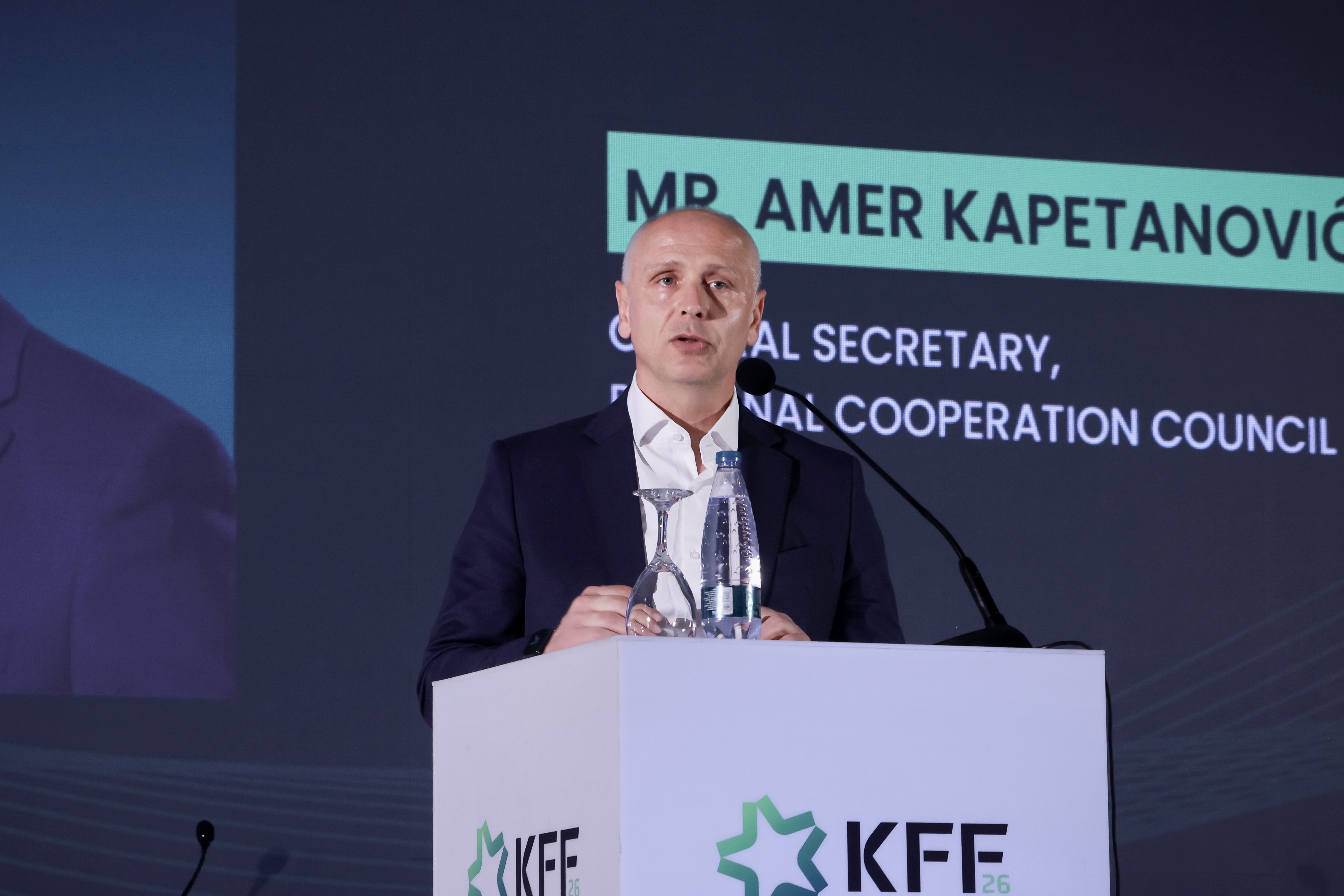
RCC Secretary General Amer Kapetanovic gave a key-note speech at the KFF2026 business forum held in Pristina on 28 April 2026 (Photo: RCC/Valdrin Xhemaj)
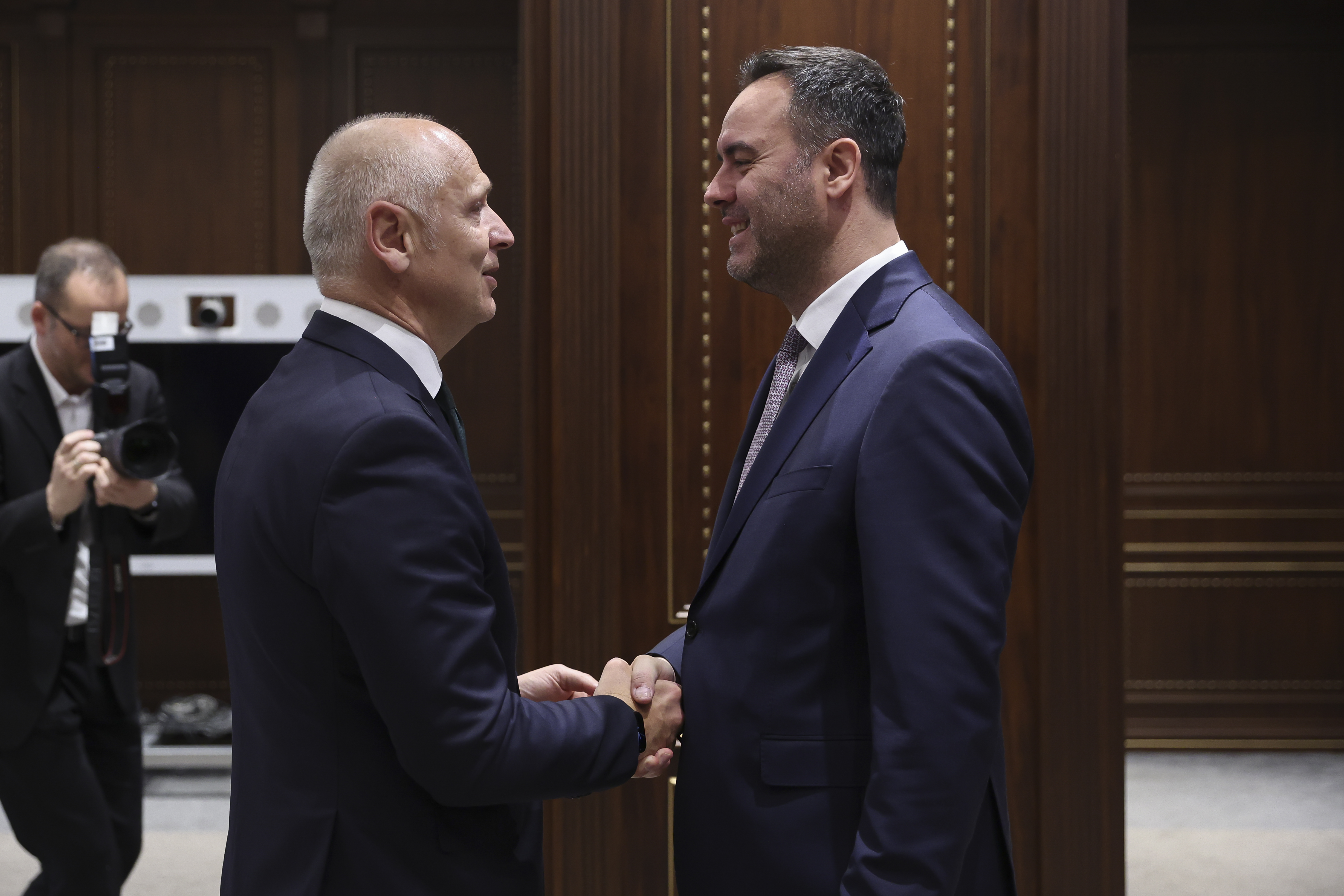
RCC Secretary General Amer Kapetanovic met with Deputy Prime Minister and Minister of Foreign Affairs and Diaspora Glauk Konjufca in Pristina on 28 April 2026 (Photo: RCC/Valdrin Xhemaj)
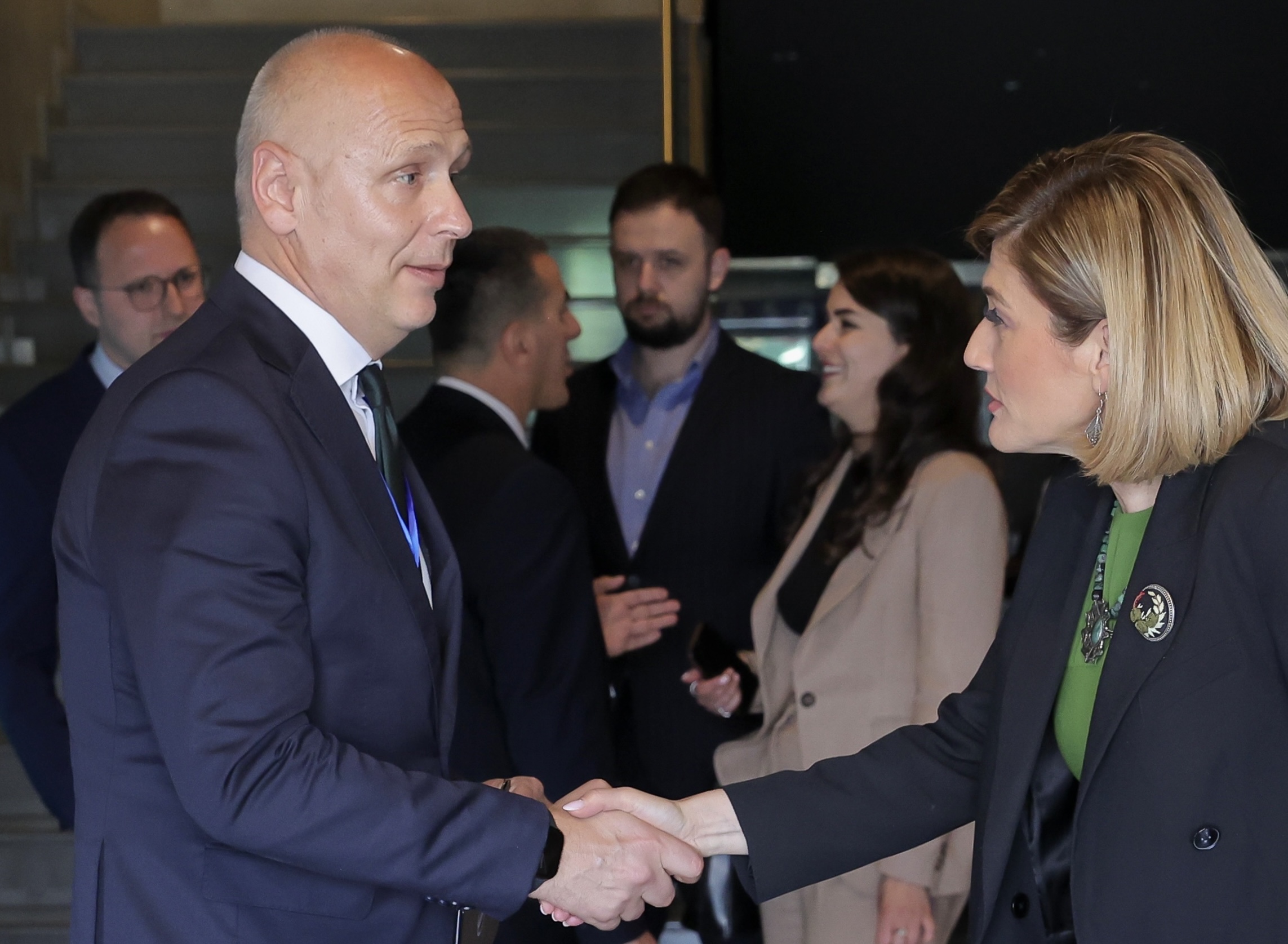
RCC Secretary General Amer Kapetanovic met with Minister of Industry, Entrepreneurship, Trade and Innovation Mimoza Kusari-Lila in Pristina on 28 April 2026 (Photo: RCC/Valdrin Xhemaj)
Pristina, 28 April 2026 – The Western Balkans Six (WB6) need a new growth model based on productivity, trust and stronger regional economic integration, said Secretary General of the Regional Cooperation Council (RCC) Amer Kapetanović in his keynote speech at the KFF2026 business forum in Pristina today.
“The Western Balkans Six face a strategic choice: either they move towards a productivity-led model, or they risk becoming economies of labour scarcity, fiscal pressure and permanent semi-convergence,” said Kapetanović.
He noted that the region’s working-age population is projected to fall by nearly one-fifth by 2050, while the Western Balkans Six could face a shortage of more than 190,000 workers in the next five years. At the same time, labour productivity remains at only around 40% of the EU average.
“Growth alone will not deliver convergence without transformation, and our region cannot indefinitely rely on cheaper labour, remittances, public spending or construction-led expansion. Without a deeper productivity leap, we will continue growing, but not transforming,” said RCC Secretary General.
Pointing to the Common Regional Market as a practical productivity and growth tool, Kapetanović said that it can give SMEs a wider market, enable skills mobility, reduce the cost of regional fragmentation, simplify procedures, align standards and make the WB6 a more credible regional value chain connected to the EU Single Market. He also underlined the need to address the region’s structural trust deficit, stressing that “productivity does not grow in uncertainty.”
Concluding his keynote speech, “Demographics, productivity and growth in the Western Balkans”, Kapetanović underlined that with stronger regional functionality, deeper integration with the European economic space and a renewed focus on delivery, the Western Balkans can move from brain drain to brain regain, creating new opportunities for talent to return, invest and lead.
During his visit to Pristina, RCC Secretary General also met with Deputy Prime Minister and Minister of Foreign Affairs and Diaspora Glauk Konjufca and Minister of Industry, Entrepreneurship, Trade and Innovation Mimoza Kusari-Lila, discussing opportunities for concrete results of regional cooperation, citizens and talent mobility, stronger entrepreneurship and innovation, as well as advancing the Common Regional Market as a practical tool for growth, competitiveness, stronger value chains and closer integration with the EU Single Market.
Speech by RCC Secretary General
More information on the Forum
***
The Regional Cooperation Council (RCC) is a regionally owned and led political cooperation framework, established in 2008 as the successor to the Stability Pact for South Eastern Europe. Serving as the operational secretariat of the South-East European Cooperation Process (SEECP), the RCC provides the institutional structure and political space necessary to sustain dialogue across South East Europe. Its Board brings together 25 participants, including 14 EU Member States and 5 G20 members, reflecting its broad international relevance. Headquartered in Sarajevo, with a Liaison Office in Brussels, the RCC acts as a bridge between regional priorities and European and global decision-making.